Best Neighbourhoods and Emirate Districts for Luxury Suite Hotels
Downtown Dubai and the Burj Khalifa District
Dubai Marina and Palm Jumeirah
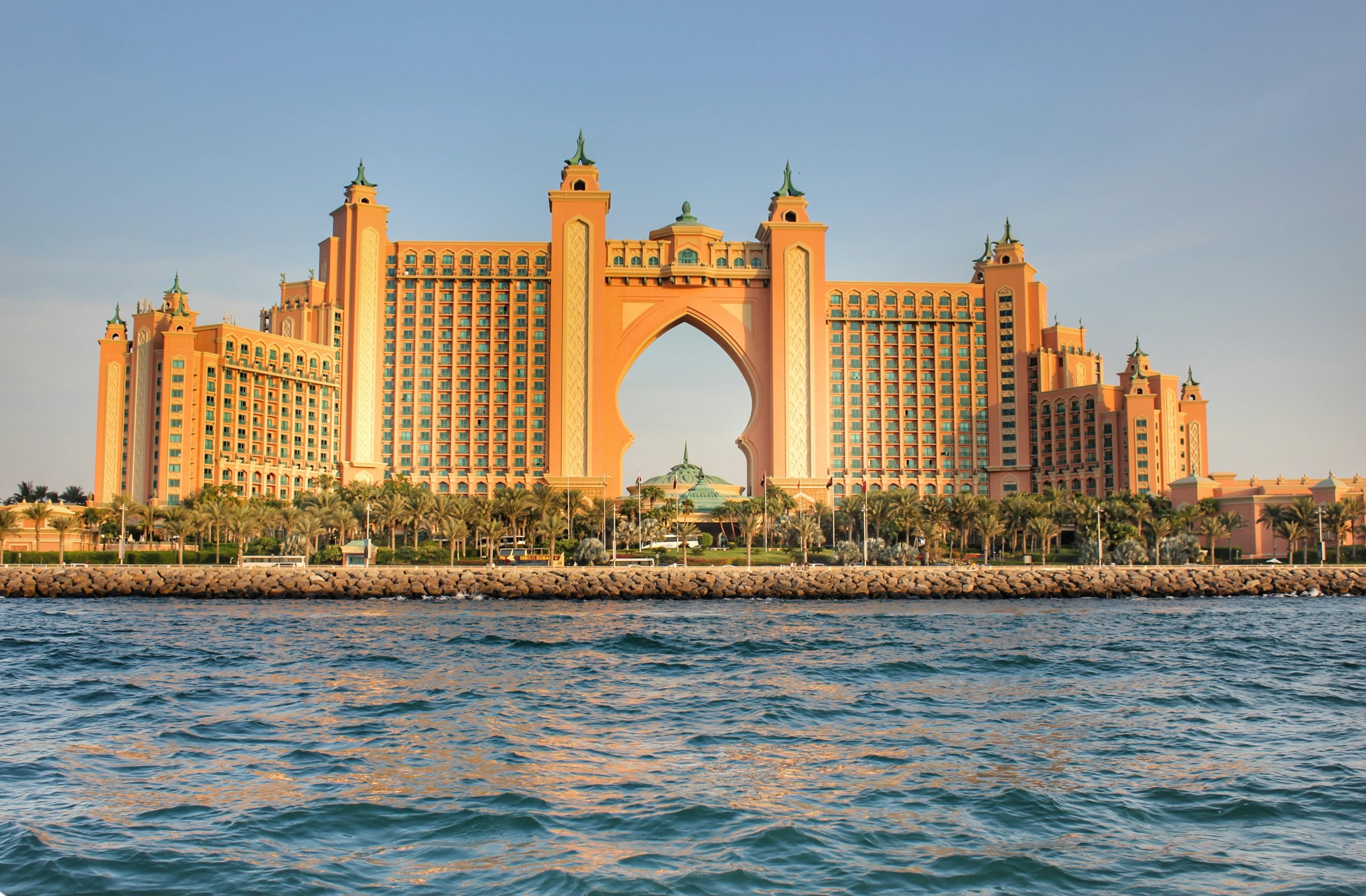
The Marina district and the Palm Jumeirah peninsula represent the UAE's residential-luxury crossover. Properties on the Palm are predominantly resort-format, low-rise, water-fronting, with private beach access and villa-style suites that function more like temporary residences than hotel rooms. The Marina itself offers a more urban environment, with towers rising directly from the water and a walkable promenade. Suites in this zone are frequently larger in floor plan, with separate living quarters and terrace access, and appeal to travelers with longer stays in mind.
Abu Dhabi's Corniche and Saadiyat Island
Abu Dhabi presents a different register from Dubai, more deliberate, less performative. The Corniche offers the emirate's traditional luxury address, with grand-scale properties facing the Gulf. Saadiyat Island, however, has become the more architecturally significant zone, positioned adjacent to the Louvre Abu Dhabi and anchored by several resort properties with a distinct cultural orientation. Suites here are typically integrated into low-density resort campuses with private beach access and an aesthetic that references regional design traditions. It is the correct address for travelers whose priorities include cultural programming alongside accommodation quality.
Ras Al Khaimah and the Northern Emirates
Ras Al Khaimah occupies a distinct position in the UAE luxury market, less urban, more topographical. The Hajar Mountains and a long coastline provide a physical context that Dubai's flat desert plain cannot replicate. Several significant resort properties have established themselves here, offering overwater villas, mountain-facing infinity pools, and a quieter service tempo. For travelers seeking spatial remove from the commercial intensity of Dubai, the northern emirate represents a credible and increasingly considered alternative.
When to Visit the United Arab Emirates
The UAE's climate is binary in practical terms. From November through April, temperatures across the emirates are temperate (typically ranging from 18°C to 28°C) and outdoor amenities function fully. This is the primary season for luxury travel, and room rates, particularly in resort properties, reflect the demand. The period from December through February sees the highest concentration of international visitors and coincides with several significant cultural and sporting events.
Summer months (June through September) are climatically extreme, with temperatures regularly exceeding 40°C and humidity levels along the coast that make outdoor exposure limited to early morning. Some properties offer substantially reduced rates during this period, and travelers who prioritize interior architecture, spa infrastructure, and dining over outdoor experience can find genuine value. Abu Dhabi and Dubai have invested heavily in indoor cultural programming that operates year-round.
Key calendar references include Art Dubai in March, the Dubai World Cup horse racing event in late March, Abu Dhabi Formula 1 Grand Prix in late November, and the Dubai Shopping Festival in January and February. These dates command premium pricing and should be factored into any planning exercise.
Local Luxury Standards: How the UAE Classifies Its Hotels
The UAE applies a formal star classification system administered by the Department of Economy and Tourism in Dubai and corresponding bodies in each emirate. The five-star category is broad and encompasses properties of materially different quality. A secondary designation (occasionally referenced as a five-star deluxe or seven-star in informal usage) has no official regulatory basis but is used by certain properties to signal a tier above the standard classification.
The UAE does not operate a Palace designation equivalent to France's national system. However, membership in international luxury consortia, including The Leading Hotels of the World and Preferred Hotels & Resorts Legend Collection, functions as a credible signal of quality. Several properties in Abu Dhabi and Dubai hold these affiliations and are subject to periodic independent inspection. Brand flags from established ultra-luxury groups (Aman, Four Seasons, Rosewood, Jumeirah) also serve as reliable proxies for suite quality, as these operators apply consistent global standards at the property level.
How to Choose the Best Suite in the UAE
Suite selection in the UAE requires clarity about what the experience should deliver. The market spans genuinely different typologies: high-rise urban suites in Dubai's towers, overwater bungalows in Ras Al Khaimah, palatial ground-floor residences in Abu Dhabi, and beach-facing villas on the Palm. Each operates according to a different logic and attracts a different traveler.
For high-floor urban suites, verify the precise floor and orientation before confirming. View composition is a primary differentiator and varies significantly within the same property. For resort suites, assess pool-to-suite distance, privacy architecture, and whether butler service is genuinely dedicated or pooled across multiple units. In overwater categories, structural quality of the deck, water clarity, and marine access are meaningful variables that photographs do not reliably convey.
Seasonality affects more than pricing, it affects which amenities are operationally relevant. A suite with an outdoor terrace pool has different utility in February than in August. Practical advice: confirm with the property directly which facilities remain fully operational during the intended travel dates.
The Value of Curation in the UAE Hotel Market
The UAE hotel inventory is large and marketed aggressively. OTA platforms list hundreds of five-star properties across Dubai alone, with little structural differentiation between a genuinely exceptional suite and a standard high-floor room with upgraded nomenclature. The category language (Sky Suite, Panoramic Suite, Royal Suite) is applied inconsistently across properties and offers limited predictive value without contextual knowledge of the specific building and floor configuration.
An editorially curated platform applies consistent evaluation criteria across the inventory and surfaces only those suites that meet a defined material standard. This reduces decision friction, eliminates false equivalencies, and allows the traveler to allocate research time elsewhere. For a market as large and commercially noisy as the UAE, curation is not a convenience, it is a functional necessity for accurate decision-making.
Frequently Asked Questions About Luxury Suites in the UAE
What is the difference between a luxury suite in Dubai and one in Abu Dhabi?
Dubai's suite market is oriented around architectural spectacle, altitude, and proximity to commercial and entertainment infrastructure. Abu Dhabi's offering tends toward larger-scale resort campuses, cultural adjacency, and a more formal service tradition. The choice depends on whether the traveler's priority is urban engagement or spatial remove.
Are UAE hotel suites subject to any independent quality certification?
Official star classification is administered by each emirate's tourism authority. Independent quality signals include membership in The Leading Hotels of the World, Forbes Travel Guide ratings, and brand affiliation with operators that apply global standards. No single certification covers all properties comprehensively.