Where to stay in Dubai: understanding the city's distinct luxury zones
Downtown Dubai and the Business Bay corridor
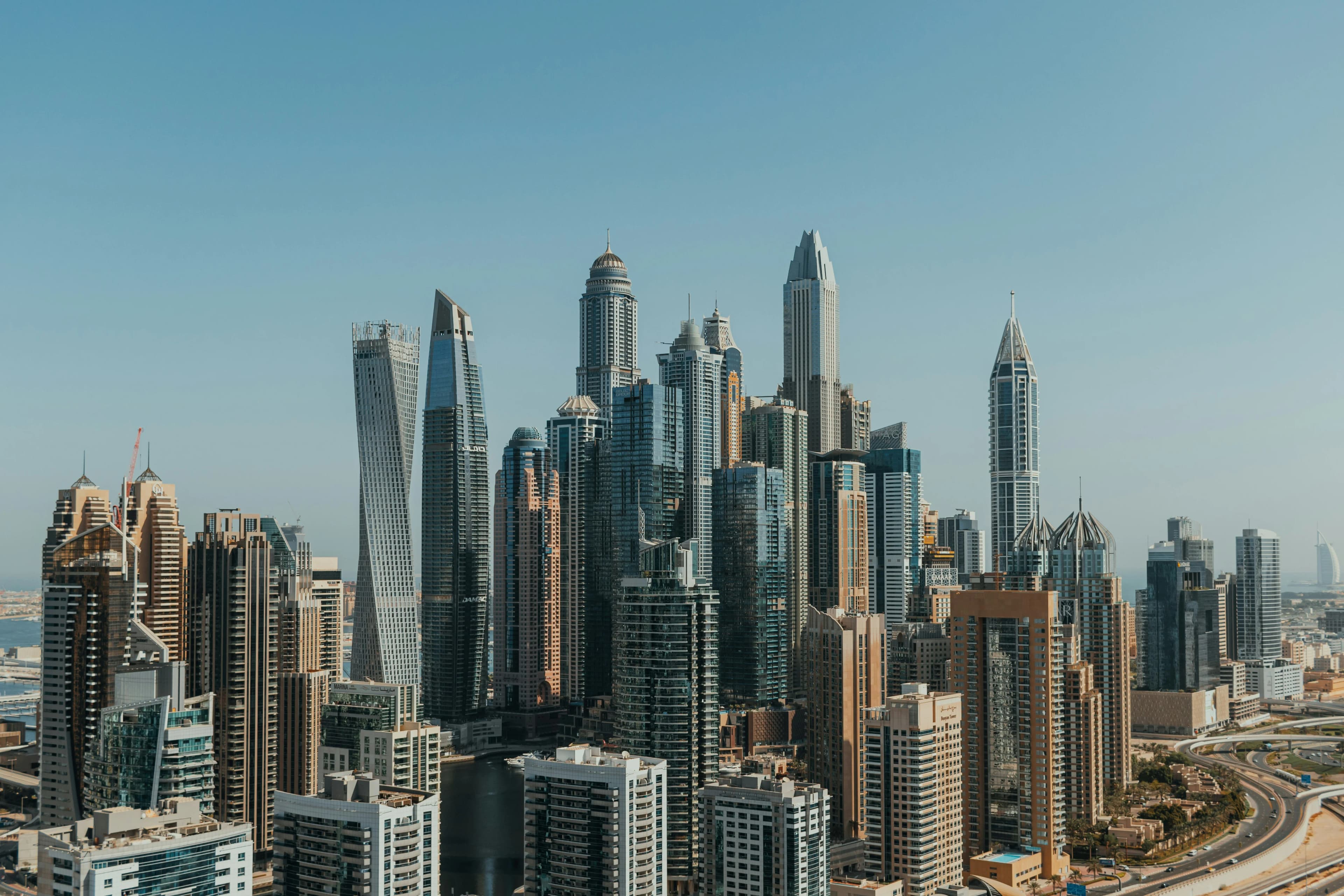
This is the city's most concentrated expression of vertical ambition. Hotels here place suites at altitude, offering direct sightlines toward the Burj Khalifa and the Dubai Fountain. The aesthetic is polished, high-contrast, and unapologetically urban. Suites in this corridor tend to prioritise panoramic glazing, private balconies, and floor plans that feel proportional to the skyline they face. This zone suits travelers whose primary orientation is cultural, commercial, or culinary.
The Palm Jumeirah and the coastal fringe
The Palm and the adjacent JBR coastline represent Dubai's aspiration toward resort living. Properties here are largely horizontal rather than vertical, spread across private beach frontages with direct Gulf access. Suites in this zone are typically larger in absolute terms, with outdoor space, private pools, and a slower circulatory rhythm. The relationship with water is central. Guests who prioritise physical deconfinement over proximity to the city's commercial core will find this corridor more aligned with their intentions.
DIFC and the luxury residential envelope
The Dubai International Financial Centre and its immediate surroundings represent the city's most design-literate accommodation offer. Boutique-format properties and brand flagships coexist in this zone, and suites here often reflect a more restrained material palette than those found on the waterfront. The neighbourhood functions as a walkable arts and dining district, with the Gate precinct and Alserkal Avenue within reach. For guests whose interest in Dubai is cultural and gastronomic rather than purely resort-oriented, this zone deserves serious consideration.
When to visit Dubai for a luxury suite stay
The seasonality of Dubai is straightforward but worth understanding precisely. The optimal window runs from October through April, when daytime temperatures sit between 22 and 30 degrees Celsius and outdoor terraces, pools, and beach access become genuinely usable. This is also when the city's event calendar peaks: Art Dubai, the Dubai International Film Festival, and the Dubai Shopping Festival all fall within this window, creating moments of concentrated cultural and social activity.
The summer months, May through September, bring extreme heat that makes outdoor movement uncomfortable for much of the day. However, rates across the luxury hotel sector drop significantly during this period, and properties often introduce extended suite packages designed to keep guests within their air-conditioned environments. Travelers who prioritise interior architecture and spa-focused stays can find significant value in this shoulder season.
Ramadan, which shifts annually according to the lunar calendar, alters the city's rhythm in ways that are worth anticipating. Certain outdoor amenities and dining venues adjust their hours, but high-end hotels maintain full service throughout. Some guests find the quieter pace of Ramadan evenings, particularly after iftar, to be among the more atmospherically distinctive experiences the city offers.
Local luxury standards: what defines a top-tier suite in Dubai
Dubai does not have a domestic prestige classification equivalent to the French Palace designation, but the city's hotel sector operates with its own internal hierarchy that is legible to experienced travelers. The relevant markers are different here.
The first is the concept of the branded residence model. Several of the city's most significant properties are integrated into mixed-use developments that combine hotel suites with privately owned residences. This produces living formats that exceed conventional hotel typologies in terms of kitchen infrastructure, storage, and domestic functionality. For extended stays or family travel, this model is architecturally relevant.
The second is the treatment of outdoor space. At this latitude, a private plunge pool or terrace with a sun canopy is not a decorative addition. It is functional infrastructure. The best suites in Dubai are designed around outdoor living as a core proposition, not an afterthought.
The third is butler and concierge integration. At the upper tier of the Dubai luxury hotel market, dedicated floor butlers and pre-arrival customisation are standard rather than exceptional. The quality of this service layer, its responsiveness and knowledge depth, is a meaningful differentiator between properties that appear comparable on paper.
How to choose the right luxury suite in Dubai
Several variables are specific to Dubai and worth weighing carefully before committing to a property.
Orientation and floor position matter more here than in most cities. Dubai's skyline is dense and its coastal geometry is particular. A suite that appears to offer a Gulf view may in practice face an interior courtyard or an adjacent tower, depending on its position within the building. Precise floor and orientation data are essential inputs to any serious suite selection process.
The question of architectural register is also relevant. Dubai's luxury hotel inventory spans a wide stylistic range, from neo-Arabesque palatial formats to rigorously contemporary structures with exposed concrete and imported stone. Neither is inherently superior, but they produce very different sensory environments. Guests should be honest about which register aligns with their preferences rather than defaulting to reputation alone.
Pool and beach access logistics deserve attention at properties that emphasise resort facilities. Private beach access at peak season in Dubai is a managed experience, and understanding how a given property allocates and services its outdoor space is a practical consideration that affects day-to-day quality of stay.
Why a curated selection by La Suite makes a difference in Dubai
Dubai's luxury hotel market is one of the most commercially aggressive in the world. The city hosts dozens of internationally recognised brands, each with its own sales infrastructure and incentive to present their offer favourably. For a traveler approaching the market without prior knowledge, the volume of options and the consistency of high-production marketing makes genuine differentiation difficult to identify.
La Suite's approach to Dubai is architectural and experiential rather than commercial. The selection criteria focus on the quality of the suite itself: its spatial logic, material quality, outlook, and service infrastructure. Properties are assessed against a consistent standard rather than ranked by brand prestige or room rate. The result is a curated view of the market that removes noise and surfaces the properties most likely to meet the specific needs of a design-literate, experience-oriented traveler.
For a city that rewards specific knowledge and penalises generic choices, a curated selection by La Suite is the most efficient path to the right decision.