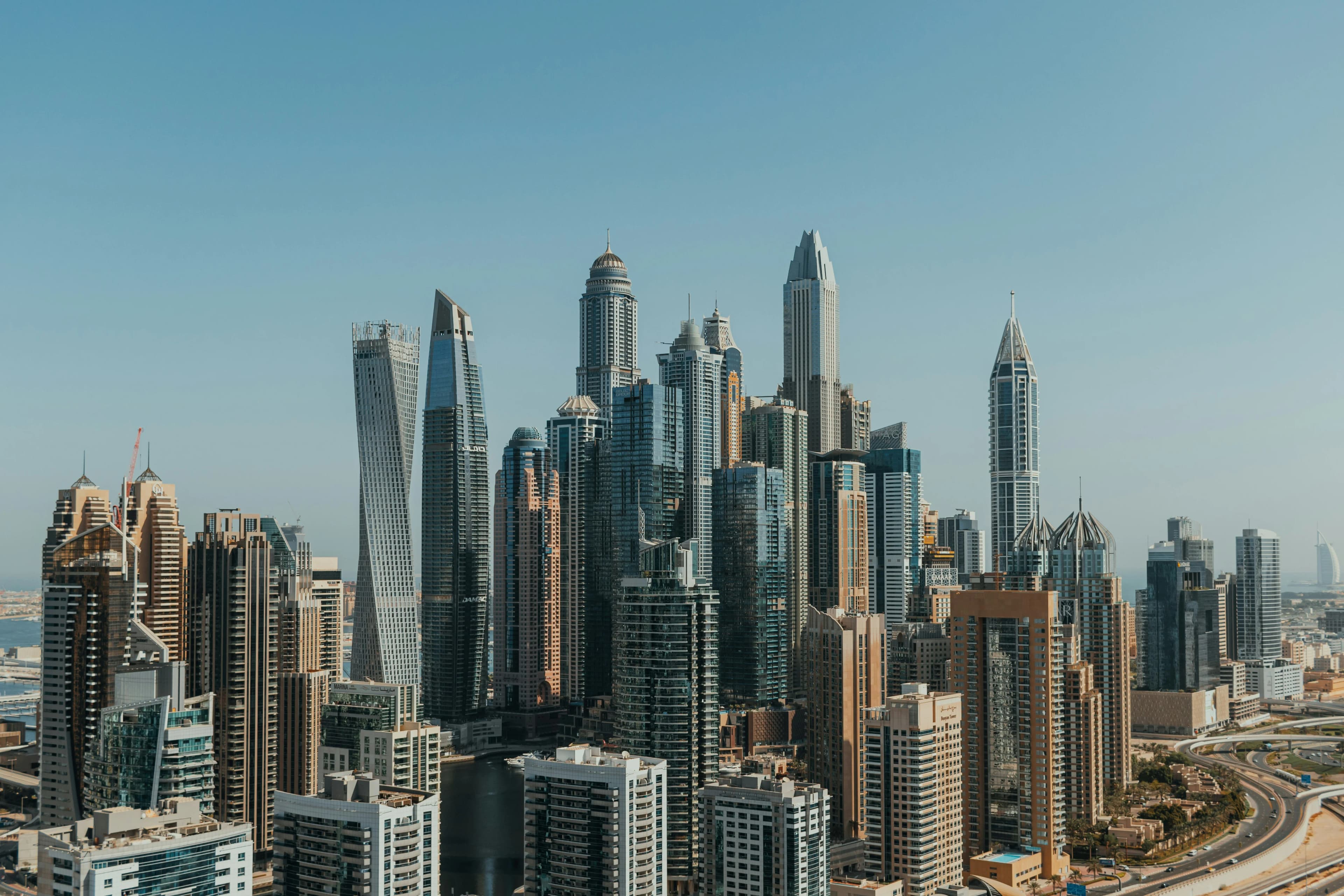
Understanding Madinat Jumeirah as a luxury destination
What distinguishes Madinat Jumeirah from other concentrated resort precincts in the United Arab Emirates is its architectural coherence. The complex was developed with a specific visual brief, and subsequent additions have adhered to that brief with notable discipline. This matters for suite travelers: the spatial logic of the buildings, the orientation of terraces, and the placement of private pools are all conditioned by the same planning sensibility. The result is a destination where the physical experience of a luxury hotel suite extends outward into its surroundings rather than being isolated from them.
Areas within Madinat Jumeirah and their distinct character
The resort core and waterway-facing positions
The central zone of Madinat Jumeirah, where the internal waterways are widest and the Burj Al Arab is most directly present on the horizon, commands the highest suite premiums and the most considered room orientations. Suites positioned above the waterways benefit from the ambient sound of moving water and from a degree of visual separation from other guests that tower hotels cannot replicate. The abra network also provides a functional alternative to internal corridor movement, which subtly changes the tempo of a stay.
Beach-facing positions and Jumeirah Beach Road adjacency
The western edge of the complex, where the resort meets its private beach on the Arabian Gulf, offers a different register. Here, suites are oriented toward the open water rather than the internal landscape. The architectural density thins, terraces are larger, and the acoustic environment shifts toward the sea. This zone suits travelers for whom the beach relationship is primary and the souk and waterway network secondary. Both orientations exist within a short walking distance of each other, but the experiential difference between them is meaningful.
When to visit Madinat Jumeirah
Dubai's climate divides cleanly into two operative seasons for luxury travelers. The period from October through April delivers consistent daytime temperatures between 20 and 32 degrees Celsius, low humidity, and clear skies. This is when outdoor terraces, beach positions, and the waterway network of Madinat Jumeirah are fully functional and at their most rewarding. Suite bookings during this window, particularly across the Dubai Shopping Festival in January and February, require early planning as availability at the preferred room categories contracts significantly.
The summer months, May through September, bring temperatures that regularly exceed 40 degrees Celsius with elevated humidity. The resort remains operational, and hotel operators use this period to offer substantial rate adjustments across suite categories. For guests whose itinerary is primarily interior-focused, whether for business, wellness, or cultural programming, a summer visit to Madinat Jumeirah is a pragmatic choice. The beach and waterway experiences are largely suspended by the heat, but the quality of suite interiors, spa facilities, and dining remains fully intact. The Middle East travel calendar means that certain periods during Ramadan also reward advance inquiry, as the social and culinary atmosphere of the resort shifts in ways that many guests find genuinely distinctive.
Local luxury standards: what to expect from top-tier suites in Madinat Jumeirah
The UAE does not operate a nationally standardized prestige label equivalent to France's Palace designation, but Madinat Jumeirah's hotels have historically positioned themselves at the top of the regional market through spatial generosity, staff-to-guest ratios, and the quality of their food and beverage programming. Within the complex, suite categories are meaningfully differentiated: entry-level suites typically offer between 80 and 100 square meters, while senior suite categories extend well beyond 200 square meters with dedicated butler service, private pool terraces, and separate living and dining areas.
The architectural vocabulary of the suites mirrors the exterior language of the complex: carved woodwork, geometric tile patterns, and a palette that references the natural materials of the Gulf region. This is not a destination for travelers seeking a spare, contemporary minimalism. The aesthetic is warm, layered, and deliberately referential. Guests who have previously stayed in design-forward urban hotels in Europe or Asia should calibrate their expectations accordingly: Madinat Jumeirah offers a specific and internally consistent aesthetic, executed at a high level of craft.
How to choose the best suite in Madinat Jumeirah
Waterway view versus sea view
The single most consequential decision for a Madinat Jumeirah suite is the orientation of the primary view. Waterway-facing suites place the Burj Al Arab on the horizon and the internal landscape in the foreground. Sea-facing suites open to the Arabian Gulf and the wider Jumeirah coastline. Neither is categorically superior: the choice depends on what the guest intends to use as the primary visual and sensory reference during the stay. Travelers for whom the Burj Al Arab sightline is part of the reason for choosing this district should request specific room orientations explicitly at the time of booking.
Private pool terrace availability
A subset of suites within the complex includes private plunge pools on their terraces. These are architecturally integrated rather than retrofitted, and they represent a meaningful upgrade in the summer months when the shared beach environment is less practical. Availability of these categories is limited, and they are typically held in senior suite tiers. Confirming the precise terrace dimensions and pool depth in advance is advisable, as published photography does not always convey scale accurately.
Butler service and in-suite dining
Dedicated butler service is available at the higher suite tiers across Madinat Jumeirah's hotels. The practical implications for a luxury stay are significant: private dining arrangements, spa coordination, transport scheduling, and access to restaurant reservations within the complex can all be managed through a single point of contact. For guests traveling with family or in small groups, this service tier changes the functional experience of the stay in ways that justify the category premium.
Why a curated selection by La Suite matters here
Madinat Jumeirah presents a specific curation challenge: the density of suite options within a single resort complex, combined with the significant variation in orientation, view, and service tier, means that unguided selection often produces a result that is acceptable but not optimal. The difference between a suite that delivers on the promise of this district and one that does not is frequently a matter of specific room placement rather than hotel choice.
La Suite's approach to this destination is to identify suite categories that perform consistently against the criteria that matter most to discerning travelers: spatial quality, view integrity, service reliability, and the coherence of the in-room aesthetic. The curated selection by La Suite removes the research burden and focuses the guest's attention on the options most likely to deliver a genuinely differentiated experience. For a destination as layered and internally complex as Madinat Jumeirah, that focus is not a convenience. It is a meaningful contribution to the quality of the stay.