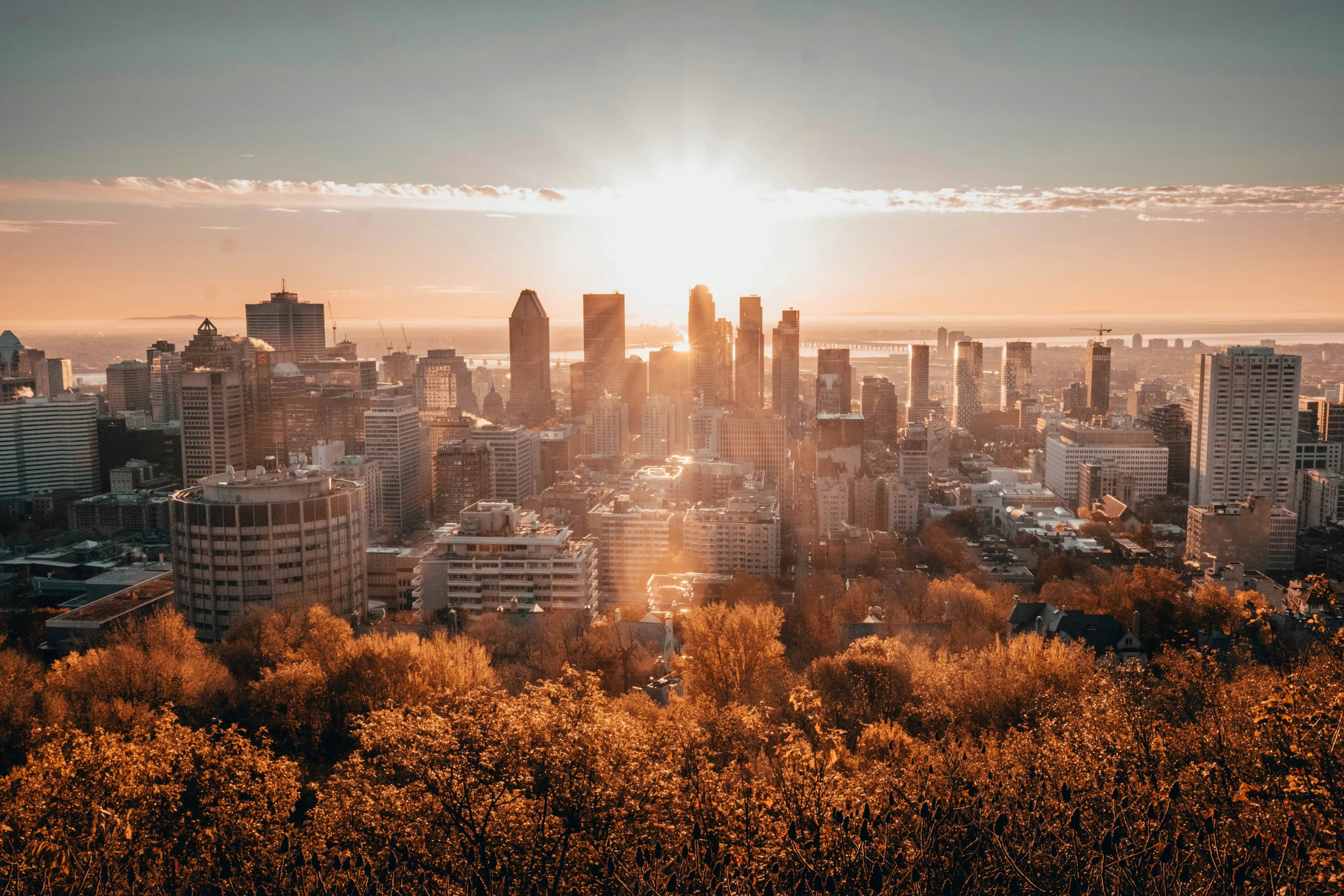
Where to stay in Montréal: the city's distinct luxury territories
Old Montréal (Vieux-Montréal)
The oldest part of the city is built on a grid of cobblestone streets, 18th and 19th century stone warehouses, and neoclassical facades that speak directly to Montréal's mercantile past. This is the neighbourhood that attracts travelers with an architectural sensibility. Luxury hotels here tend to occupy converted heritage buildings: former banks, warehouses, and ecclesiastical structures repurposed into properties with dramatic original stonework, exposed timber, and exceptional ceiling heights. A luxury suite in this district carries the weight of history without sacrificing contemporary comfort. The Basilique Notre-Dame sits a short walk from most addresses, and the Vieux-Port waterfront provides a reference point for orientation.
Le Golden Square Mile and downtown
The stretch of Sherbrooke Street West that once housed the wealthiest families in Canada, known as the Golden Square Mile, remains one of the most architecturally coherent residential blocks in the country. The adjacent downtown core houses the majority of Montréal's larger luxury hotel inventory, with access to cultural institutions including the Musée des beaux-arts de Montréal, the concert halls of Place des Arts, and the city's most established fine dining addresses. Suites here tend toward the contemporary: high floors, city skyline views, and the full infrastructure of an urban luxury hotel.
Le Plateau-Mont-Royal and Mile End
These neighbourhoods represent a different register of Montréal: creative, independent, with a density of design studios, independent bookshops, and some of the city's most respected restaurants. Boutique properties in this area offer proximity to a Montréal that operates on its own terms, away from convention centres and corporate itineraries. Suite options are more limited here but often more considered in their design approach.
When to visit Montréal for a luxury suite experience
Montréal operates across four genuinely distinct seasons, each of which reshapes the city's character.
Summer (June to August) is the peak demand period, driven by a dense calendar of festivals including the Festival International de Jazz de Montréal, which is one of the largest jazz gatherings in the world, and the Osheaga music festival held at Parc Jean-Drapeau. Hotel rates and suite availability tighten considerably during these weeks. Travelers who plan around these events should expect to secure reservations several months in advance.
September and October represent arguably the strongest value proposition for suite travel in Montréal. The summer crowds thin, the foliage on Mont Royal shifts to deep amber and burgundy, and the city's restaurant culture enters its most focused season. The Formula 1 Canadian Grand Prix, held at Circuit Gilles Villeneuve on Île Notre-Dame, takes place in June and functions as one of the highest-demand weekends of the year for luxury hotel inventory.
Winter in Montréal (December through March) is not for those with a low tolerance for cold. Temperatures regularly fall below minus fifteen degrees Celsius. However, the city has adapted in notable ways: the Underground City (RÉSO) connects thirty-three kilometres of subterranean passages linking hotels, restaurants, and retail. For suite travelers, winter offers the city's quietest rates and an atmosphere that is distinctly Montréalais: intimate, interior-focused, with a hospitality culture that comes into its own during the darker months.
Local luxury standards: what defines a top-tier suite in Montréal
Canada does not operate a formal national hotel classification equivalent to France's Palace designation. The country's luxury hotel market is largely shaped by international brand standards, independent operators, and the assessments of Forbes Travel Guide, which awards its Star ratings to properties meeting specific service and facility criteria.
Montréal's finest suites typically share several characteristics: generous square footage by North American urban standards, architectural integrity (whether through heritage preservation or deliberate contemporary design), and a service culture that reflects the city's particular hospitality ethos, one shaped by both French tradition and a cosmopolitan openness. In heritage properties, expect original structural elements: exposed stone, timber beams, or cast iron columns integrated into the suite's design language. In modern towers, floor-to-ceiling glazing and access to private terraces above the city are the defining spatial features.
The city's culinary reputation is serious and well-founded. A luxury hotel in Montréal is expected to reflect this: from in-suite dining menus drawing on local producers to bar programs curated by bartenders of national profile. Suites that include dedicated dining areas or private kitchen facilities are particularly relevant to travelers who intend to engage with the local food culture beyond restaurant visits.
How to choose the right suite in Montréal
The primary distinction for suite selection in Montréal is architectural: heritage versus contemporary. Both offer compelling cases.
Heritage suites in Vieux-Montréal offer a spatial experience that cannot be replicated in a modern building. The thickness of stone walls, the scale of original structural elements, and the visual relationship between old architecture and contemporary interiors create a sensory environment unique to this neighbourhood. The trade-off is that views are often urban and close-range rather than panoramic.
Contemporary suites in the downtown core or at the city's newer luxury addresses offer different spatial logic: height, light, and connection to the skyline and, in some orientations, Mont Royal. These properties typically carry a full amenity infrastructure including spa facilities, rooftop access, and private event spaces relevant to business travelers or those marking significant occasions.
A further consideration is proximity to specific cultural engagements. Travelers arriving for the Jazz Festival or for performances at Place des Arts will benefit from properties within walking distance of these venues. Those arriving for the Grand Prix will find that proximity to the island circuit and to the entertainment district around Crescent Street is a relevant logistical factor.
Why a curated selection makes the difference in Montréal
Montréal's luxury hotel market is concentrated enough that the best properties are identifiable, but varied enough in character that choosing without a considered framework leads to mismatches between traveler expectations and actual experience. A suite that is technically well-appointed but positioned in a neighbourhood that does not align with the traveler's intentions is a poor allocation of time and spend.
La Suite approaches Montréal as an editorial project, not a search index. The curated selection by La Suite reflects properties assessed for design coherence, spatial quality, service culture, and the particular character of each address within the city's landscape. For travelers who choose Montréal deliberately, the suite should be chosen with equal intention.