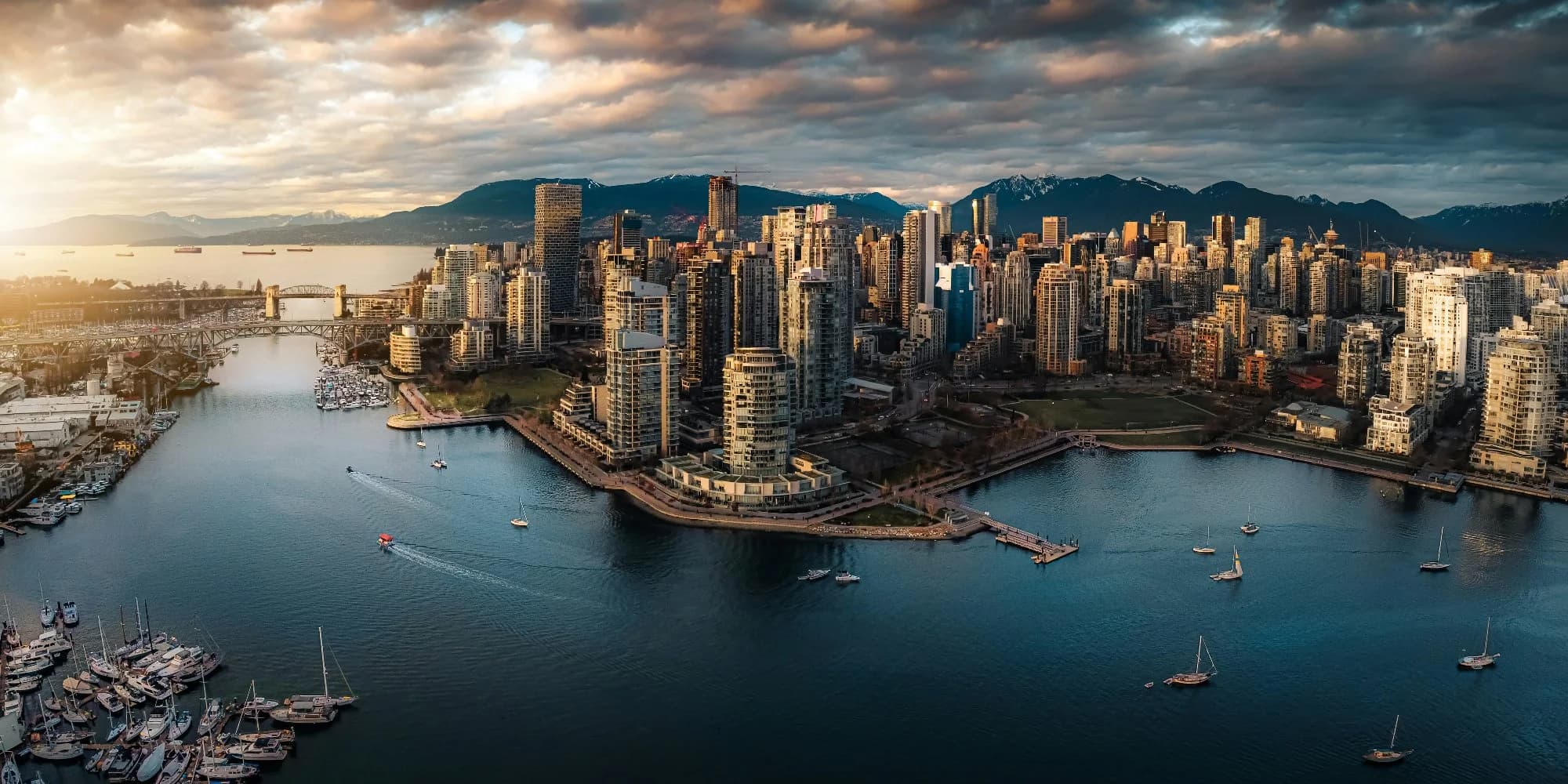
Understanding Vancouver as a luxury suite destination
The city sits at the intersection of Pacific Rim influence and North American scale. That combination produces a hospitality culture that prioritizes precision and restraint over ostentation. Suites here tend toward clean material palettes, generous square footage, and considered views. The luxury hotel market in Vancouver has matured significantly since the early 2000s, and the upper tier now reflects international standards while maintaining a legible local identity.
Best areas to stay in Vancouver for a suite experience
Coal Harbour and the downtown waterfront
The Coal Harbour corridor represents the most concentrated zone of high-end hotel inventory in the city. Suites here look directly onto the marina, Burrard Inlet, and the North Shore mountains. The spatial logic is immediate: glass, water, elevation. This area suits travelers who want the city's financial and cultural core within walking distance while maintaining a sense of remove. The seawall is directly accessible, connecting the district to Stanley Park without requiring a vehicle.
Yaletown
Yaletown sits on the northern edge of False Creek and carries the architectural residue of its warehouse district origins. The neighborhood has evolved into one of Vancouver's most design-forward residential and hospitality zones. Suites in this area tend to favor converted industrial aesthetics with contemporary interventions: exposed concrete, high ceilings, and a more editorial sensibility than the waterfront corridor. The proximity to the South Granville gallery district and the Olympic Village adds cultural texture for travelers with specific design or culinary interests.
West End and English Bay
For travelers who prioritize the residential character of a neighborhood over urban density, the West End offers a more layered experience. English Bay Beach is one of the few urban beaches in North America with genuine resort-adjacent atmosphere. Suites with south or west-facing orientation capture evening light over the water in a way that is architecturally significant. The neighborhood is walkable, quieter than the downtown core, and maintains proximity to Stanley Park.
North Shore: West Vancouver
For those willing to cross the Burrard Inlet via the Lions Gate Bridge, West Vancouver offers a distinct type of luxury accommodation embedded in coastal forest. Properties here tend to operate at a smaller scale with a higher degree of privacy. The trade-off is distance from the urban core, but the environmental quality, mountain access, and quietude make this a credible alternative for travelers whose primary interest is nature proximity rather than metropolitan engagement.
When to visit Vancouver for a luxury stay
Vancouver's climate diverges sharply from the interior of British Columbia. The city itself receives significant rainfall between October and April, while July and August deliver consistent sun, warm temperatures, and the full activation of outdoor culture. For suite travelers with flexibility, late June through September represents the optimal window: daylight extends past 9pm in midsummer, the seawall and parks operate at their best, and the city's event calendar reaches its peak density.
The Whistler Blackcomb ski season, roughly December through April, redirects a portion of the city's luxury traveler base northward, but Vancouver itself maintains a quieter appeal during this period for travelers interested in arts, gastronomy, and indoor cultural programming. The Vancouver International Film Festival in late September draws an industry-aware audience that coincides with optimal late-summer conditions. Cherry blossom season in late March and early April provides a distinct visual register, drawing travelers from Asia in particular.
Local luxury standards: what to expect from top-tier suites in Vancouver
Canada does not operate a formal national hotel classification system equivalent to France's Palace designation or Singapore's Five Star Plus category. Assessment in Vancouver's luxury hotel sector is largely governed by Forbes Travel Guide star ratings and Preferred Hotels memberships, both of which carry meaningful operational weight at the upper tier.
What distinguishes the best luxury hotel suites in Vancouver is a consistent emphasis on spatial generosity and material quality. Expect suite categories to offer genuine separation between living and sleeping areas, in-suite dining infrastructure, and dedicated concierge access. The city's position as a Pacific gateway means that many properties carry a specific fluency in Japanese, Mandarin, and Korean hospitality conventions, which influences both staffing and amenity curation.
Suites in Vancouver's premier properties will typically include curated local touches: Pacific Northwest art commissions, locally sourced bath products, and seasonal menu programming that reflects the city's extraordinary access to Dungeness crab, Pacific salmon, and foraged ingredients from British Columbia's interior.
How to choose the right suite in Vancouver
The primary decision axis in Vancouver is orientation: water-facing versus city-facing versus mountain-facing. Each produces a fundamentally different experiential register. Travelers arriving for the first time with a specific interest in the city's geographic identity should prioritize suites with northern or western exposure, which offer the most direct compositional relationship between urban architecture and natural landscape.
A secondary consideration is the choice between large-format hotel properties and smaller boutique operations. The city's larger hotels offer more comprehensive in-house programming, spa infrastructure, and multiple dining options. Boutique properties, particularly in neighborhoods like Yaletown or Kitsilano, offer a more edited experience with higher staff-to-guest ratios and greater customization.
Travelers with extended stays should also consider proximity to the city's transit infrastructure. Vancouver operates one of the most efficient urban rail systems in North America; the SkyTrain connects the downtown core to the airport in approximately 25 minutes and reaches the eastern neighborhoods without requiring a vehicle. Suite selection near a SkyTrain corridor meaningfully expands access range without compromising residential quiet.
Why curation matters in Vancouver's luxury hotel market
Vancouver's luxury hotel landscape is smaller than those of comparable global cities, which makes independent assessment more important, not less. The city does not have the volume of five-star properties found in London, Paris, or Tokyo, and the difference in quality between the upper tier and the mid-tier is significant. A curated selection by La Suite removes that uncertainty, presenting only properties that meet a consistent editorial standard across design, service, and spatial quality.
La Suite's approach to Vancouver reflects the same discipline applied across every destination on the platform: properties are assessed on architecture, suite configuration, service model, and the specific quality of the guest experience rather than aggregate review scores or brand affiliation. For the traveler who wants to spend minimal time researching and maximum time experiencing, that curation represents the most efficient entry point into the city's best hotel suites.