Best areas to stay in Alabama for a luxury suite experience
Birmingham and the Appalachian foothills
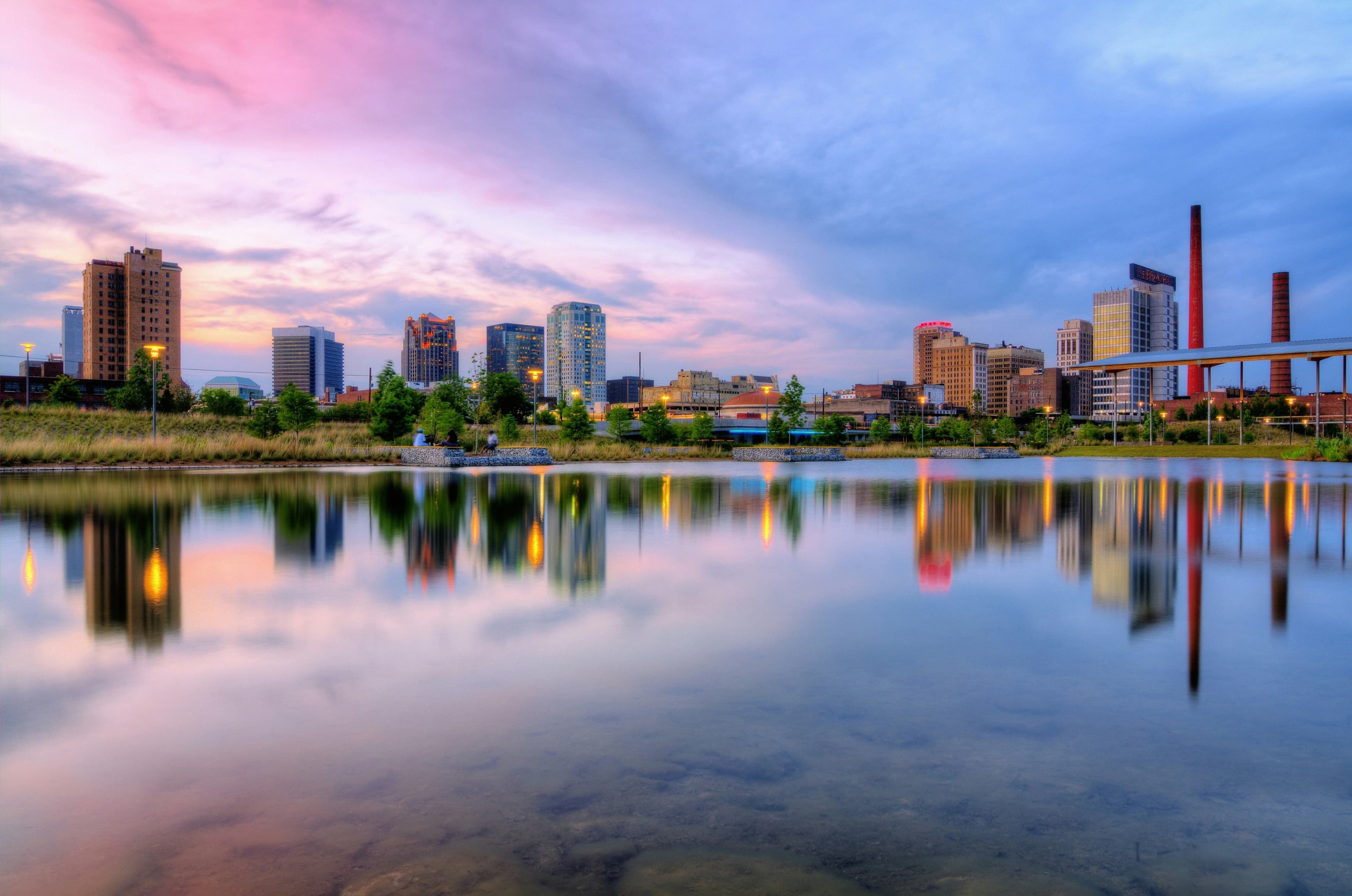
The state's largest city has undergone a quiet but significant transformation over the past decade. A once-industrial urban core now supports a considered hospitality scene anchored by adaptive reuse architecture, serious restaurant culture, and a creative class that has reshaped the city's self-image. The surrounding Appalachian foothills add a dimension of natural retreat, with forested ridgelines and lakes accessible within an hour of the city center. Suites in this corridor tend toward contemporary interiors with a strong architectural sensibility.
Mobile and the Gulf Coast
Alabama's only saltwater coastline stretches along the Gulf of Mexico, from the historic port city of Mobile to the barrier islands of Gulf Shores and Orange Beach. Mobile itself carries a layered colonial history, predating New Orleans as a French settlement, and its architecture reflects that depth. The Gulf Coast properties, by contrast, lean toward the horizontal: low-rise structures oriented toward open water, where the quality of light at dusk is a genuine aesthetic event. Suite selection here often hinges on direct beach access and the orientation of primary living spaces toward the water.
The Black Belt and antebellum corridor
Central Alabama's Black Belt region, named for its dark, fertile soil, contains some of the most historically significant architecture in the American South. Plantation-era estates and Greek Revival structures have been converted into intimate hotel properties offering a caliber of privacy that larger resort formats cannot replicate. This is deliberate, unhurried travel territory, suited to those who prioritize space, silence, and historical immersion over amenity programming.
Huntsville and the Tennessee Valley
Huntsville presents a counterintuitive luxury proposition: a mid-sized city with a significant aerospace and technology sector that has driven demand for sophisticated hospitality. The Tennessee Valley setting provides a physical backdrop of rivers and reservoir lakes. Suites here tend to attract business travelers and design-conscious visitors drawn by the area's growing cultural infrastructure, including its recently expanded museum and arts presence.
When to visit Alabama for the finest suite experience
Alabama's climate follows a humid subtropical pattern, with long, warm summers and mild winters. The practical implications for suite travelers are specific and worth understanding before finalizing dates.
Spring, from March through May, is widely regarded as the most favorable season. Temperatures are temperate, the state's extensive longleaf pine forests and dogwood groves are in full expression, and cultural programming peaks across Birmingham and Mobile. The Azalea Trail Festival in Mobile, one of the oldest civic flower festivals in the United States, draws significant regional attendance and affects suite availability in the city.
Fall, from September through November, offers comparable temperatures with lower humidity and a distinct quality of afternoon light that photographers and design-minded travelers consistently note. Gulf Coast properties are particularly appealing in this window, as summer crowds have cleared and sea temperatures remain comfortable into October.
Summer is the high season for Gulf Coast properties, with suite availability tightening significantly from late June through August. Those seeking coastal access should plan and confirm reservations well in advance. Birmingham and Huntsville remain more accessible during this period.
Winter in Alabama is mild by national standards, with average lows rarely falling below freezing in the southern half of the state. For travelers prioritizing privacy and favorable rates, January and February represent an underutilized window, particularly for interior properties and historic estate conversions.
Local luxury standards: what to expect from top-tier suites in Alabama
Alabama does not operate within a formal prestige classification system comparable to France's Palace designation. The relevant frameworks are the Forbes Travel Guide star ratings and the AAA Five Diamond standard, both of which reward consistent, personalized service alongside physical quality of facilities.
Within the Southern hospitality tradition, top-tier Alabama suites typically emphasize scale of space over technological novelty. Ceiling heights, private terraces or verandas, and the quality of soft furnishings are strong indicators of a property's commitment to the suite experience. In historic conversions, original architectural detailing, including plasterwork, heart pine floors, and period millwork, functions as a primary value marker.
Gulf Coast suite standards are increasingly competitive, with newer developments incorporating the design language of the broader Caribbean and Gulf resort market: open floor plans, indoor-outdoor integration, and spa-level bathroom specifications. The gap between the region's best properties and national luxury benchmarks has narrowed considerably in the past five years.
How to choose the right luxury suite in Alabama
The decision framework for Alabama suite selection begins with a clear understanding of what the trip is designed to deliver. The state's geography is dispersed, and driving distances between major areas are significant. A Gulf Coast itinerary and a Birmingham-based itinerary require fundamentally different properties and should not be treated as interchangeable.
For historic character, prioritize the antebellum corridor and Mobile's older hotel stock. For contemporary design and urban dining access, Birmingham's central neighborhoods offer the strongest concentration of recent hospitality investment. For open water and physical decompression, the Gulf Coast barrier island properties deliver a sensory register that is not replicated elsewhere in the state.
Practical considerations include veranda orientation for Gulf Coast properties (sunset versus sunrise exposure), suite floor placement in historic buildings where elevator access may be limited, and proximity to the specific cultural sites or natural areas that anchor the trip's purpose. Alabama's best properties tend to have small suite inventories, which means availability is more constrained than the state's relatively low profile might suggest.
Why a curated selection by La Suite matters in Alabama
Alabama is not a destination with an oversaturated luxury hotel market. The number of properties meeting genuine suite-level standards is finite, and identifying them requires moving past aggregator platforms that apply inconsistent quality criteria and surface mid-market options alongside legitimate luxury offerings.
La Suite applies a consistent editorial standard: space, design integrity, service caliber, and the specific quality of the suite experience as distinct from the broader hotel product. In a state where the finest accommodations are often found in converted historic properties or smaller independent hotels with limited digital visibility, curation is the operative tool. The La Suite selection for Alabama is built on direct assessment criteria, ensuring that each listed property meets the expectations of travelers for whom the suite is not an upgrade but a baseline requirement.