Where to stay in Connecticut for a luxury suite experience
The Litchfield Hills
Northwestern Connecticut, anchored by the Litchfield Hills, is the state's most consistently refined rural landscape. Rolling terrain, preserved farmland, and towns such as Washington and Litchfield itself define an aesthetic that is agricultural without being rustic. Properties here tend to occupy historic estates or converted manor houses, offering suites with direct access to private grounds. The pace is intentional. Guests come to disengage from urban density, and the suite becomes the primary environment.
The Connecticut shoreline
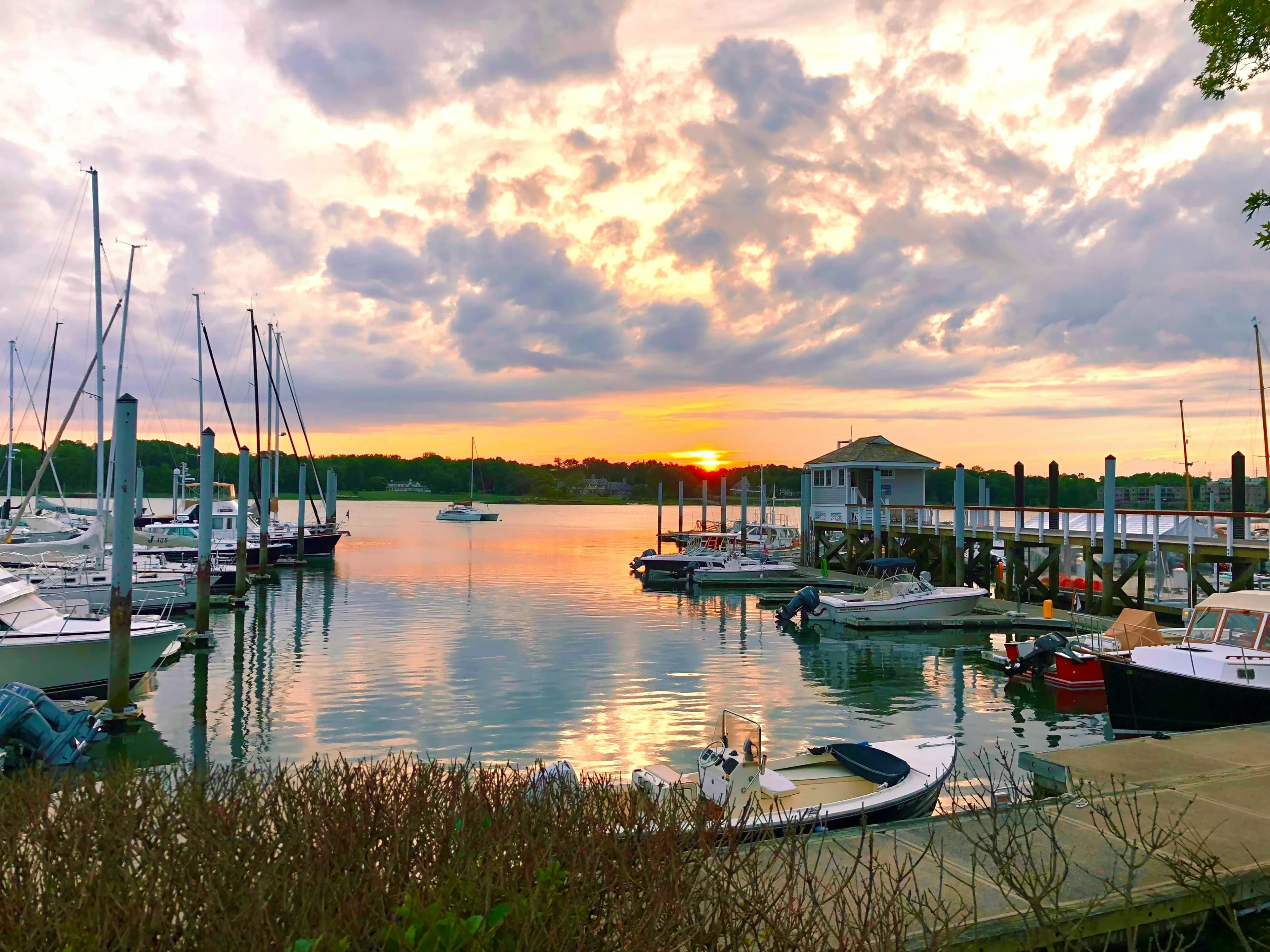
The coastline along Long Island Sound stretches from Greenwich in the southwest to Stonington in the northeast. Towns such as Old Lyme, Essex, and Mystic carry a maritime history that is visible in their architecture and proportions. Luxury hotel properties along this corridor position themselves between the water and New England's inland character. A suite with water views here operates differently from a coastal suite in a resort market. The context is quieter, more residential in scale, and specifically suited to guests who prefer discretion over spectacle.
The Connecticut River Valley
The central valley, following the Connecticut River south from the Massachusetts border to the Sound, holds a concentration of cultural institutions, academic towns, and preserved historic fabric. Haddam, Chester, and the surrounding towns offer a more intimate version of New England's intellectual landscape. Accommodations here tend toward boutique scale, with suites that prioritize interior quality over expansive grounds.
Greenwich and the Gold Coast
The southwestern corner of Connecticut, particularly the towns along the Merritt Parkway corridor and the shore from Greenwich to Westport, functions as an extension of New York's financial and cultural economy. Properties in this zone cater to a clientele that moves between the city and the country with frequency. Suites here combine urban-standard service with the spatial advantages of a non-urban footprint.
When to visit Connecticut for the best suite availability and experience
Connecticut's calendar has two peak periods, each with distinct characteristics for the luxury traveler.
Autumn, from late September through November, is the state's most visually coherent season. Foliage across the Litchfield Hills and the river valleys follows a reliable sequence, and demand for suite accommodations at the better rural properties rises accordingly. Booking windows of six to eight weeks are standard for weekends during peak foliage.
Summer, from June through August, drives demand along the shoreline. The coastal towns attract a mix of day visitors and those staying for extended periods. For suite travelers, the early and late portions of the summer season (June and the first half of September) offer better availability and a less compressed atmosphere.
Spring and winter are underutilized seasons that offer specific advantages. Winter in the Litchfield Hills, particularly around the holidays, has its own gravity. Several properties offer reduced rates for multi-night stays, and the interior quality of a well-appointed suite becomes more central when outdoor programming recedes.
Understanding Connecticut's luxury hospitality standards
Connecticut does not have a formal state-level designation equivalent to France's Palace classification. Quality is communicated through other signals: Forbes Travel Guide ratings, Relais and Chateaux membership, and the operational standards maintained by independent properties with established reputations.
The state's luxury hotel landscape is not large in volume. What exists tends toward the boutique end of the spectrum, with a small number of full-service properties offering suite-level accommodation at the standards expected by discerning travelers. The absence of mass-market resort infrastructure is, for many guests, precisely the point.
Suite design in Connecticut's better properties reflects the state's architectural heritage: Georgian and Federal details, original wide-plank flooring, fireplaces that function rather than perform, and proportions calibrated to the building's original purpose. Modern insertions, where they exist, are typically handled with restraint. Spatial quality, natural light, and material integrity tend to take precedence over amenity maximalism.
How to choose the right suite in Connecticut
The primary decision axis for Connecticut is geography relative to purpose. A guest prioritizing landscape immersion and privacy will find the Litchfield Hills more aligned with those requirements than the shoreline, which carries more ambient activity in summer months. Conversely, a guest seeking proximity to cultural programming or sailing will find the coastal towns more functional.
Architectural character is the second consideration. Connecticut's historic stock is significant. Properties occupying original 18th or early 19th century structures offer a spatial and sensory experience that newer builds cannot replicate. If period architecture is a priority, it is worth verifying that the suite in question occupies original fabric rather than a contemporary addition.
A third consideration is connectivity. Connecticut's position between New York and Boston makes it accessible from both directions, but internal travel within the state is almost entirely road-dependent. A suite at a rural property without access to a vehicle requires advance planning for any off-property movement.
Finally, seasonal programming varies significantly between properties. Some of the better rural estates offer curated experiences (culinary residencies, equestrian access, artist-in-residence programming) that are seasonal in nature. Aligning the visit with relevant programming adds a layer of value that the suite alone cannot provide.
Why a curated selection by La Suite matters in Connecticut
Connecticut's luxury hotel inventory is smaller and less publicized than that of comparable destinations. The properties that perform at the highest level are often independent, with limited marketing presence relative to their actual quality. Standard booking platforms do not differentiate between a suite that meets baseline expectations and one that represents a genuine architectural or experiential proposition.
La Suite applies a consistent editorial standard to the selection process. Properties are assessed on spatial quality, material integrity, service architecture, and the coherence of the guest experience from arrival to departure. In a market like Connecticut, where the signal-to-noise ratio in general travel content is low, that curatorial function has direct practical value. The traveler arrives at a shortlist that has already resolved the primary uncertainties.