Hudson Valley

Hudson Valley

Hotels with luxury suites in Hudson Valley

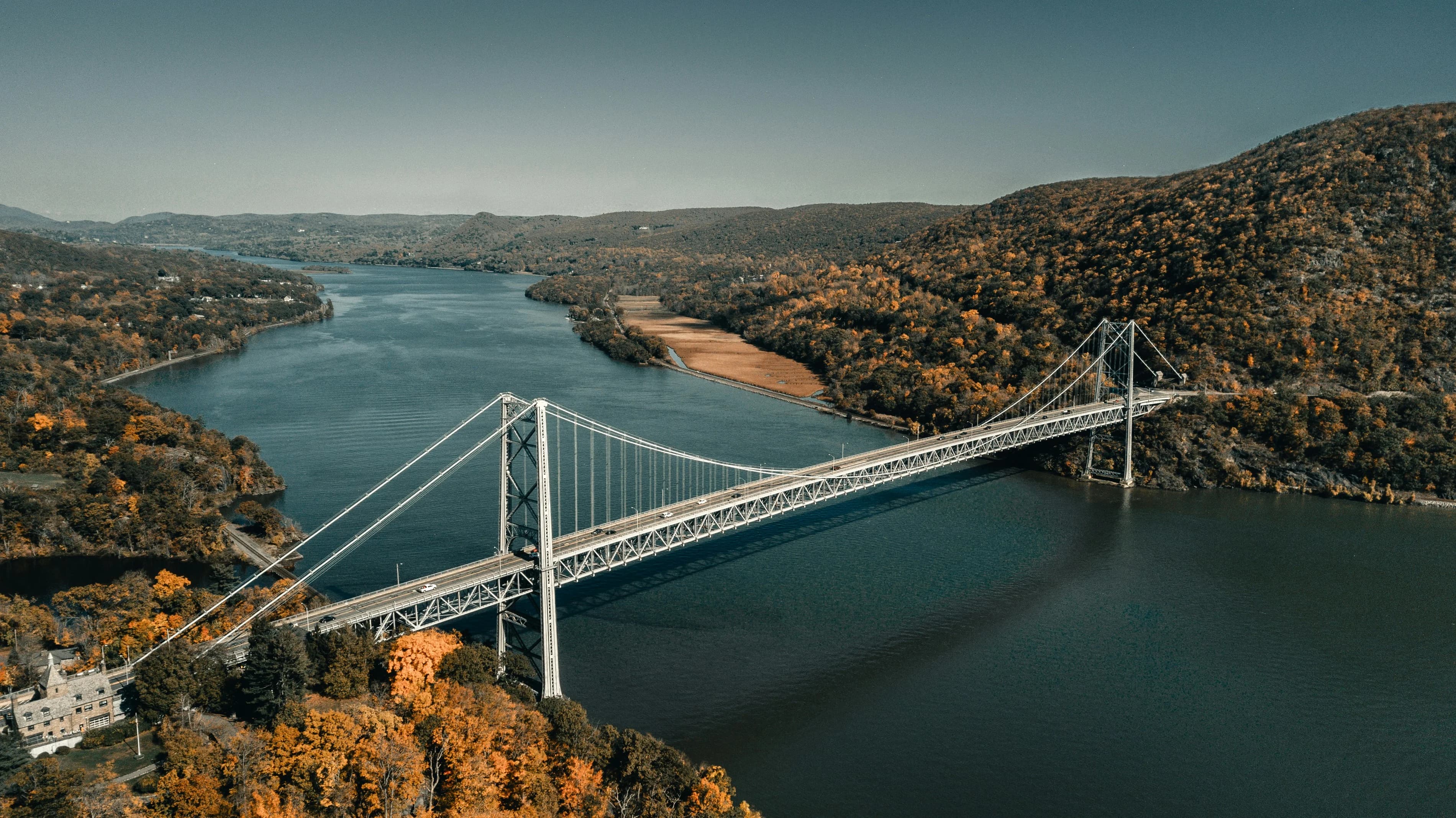
Hudson Valley stretches roughly 150 miles along the western bank of the Hudson River from Westchester County north to Columbia County. Each segment of this corridor carries a distinct character, and where you base yourself shapes the entire tone of a stay.

List modeShow map

2 hotels available

Scribner's Catskill Lodge, a Member of Design Hotels
More information

Just a half mile from Hunter Mountain, this New York accommodations offers free Wi-Fi, and cabin styled rooms. New York Zipline Adventures is 1 mile away. Fireplaces and cathedral ceilings are offere

Scribner Suite

Scribner Suite

56 m²

This signature suite has a queen bed, a sunken living room with a fireplace, floor-to-ceiling glass door, private terrace with mountain views, additional loft sleeping area with 2 double beds and WiFi

Discover
Suite with Mountain View

Suite with Mountain View

49 m²

The pool with a view and fireplace are the standout features of this suite. The air-conditioned suite has 1 bedroom and 1 bathroom with a shower and a hairdryer. A seating area with a TV, a sofa and a

Discover
Quadruple Room - Disability Access

Quadruple Room - Disability Access

74 m²

This suite's standout features are the pool with a view and fireplace. This spacious suite includes 1 living room, 1 separate bedroom and 1 bathroom with a shower and free toiletries. This wheelchair

Discover
Quadruple Room

Quadruple Room

51 m²

The pool with a view and fireplace are the special features of this triple room. The spacious triple room provides air conditioning, a mini-bar, as well as a private bathroom featuring a shower and a

Discover
Deluxe Family Suite

Deluxe Family Suite

74 m²

This suite's standout features are the pool with a view and fireplace. This spacious suite includes 1 living room, 1 separate bedroom and 1 bathroom with a shower and free toiletries. This suite is ai

Discover
Deluxe Queen Room with Two Queen Beds

Deluxe Queen Room with Two Queen Beds

42 m²

This room features 2 queen beds, mountain views, dark maple wood floors, custom furniture, floor-to-ceiling glass window, private terrace, rain shower, hand-crafted terracotta bathroom tiles, Hudson M

Discover
Loft

Loft

46 m²

The pool with a view and fireplace are the standout features of this quadruple room. The spacious quadruple room features air conditioning, a seating area, a terrace with mountain views as well as a p

Discover
See the other suites

Wildflower Farms, Auberge Collection

Wildflower Farms, Auberge Collection, Gardiner

Pet friendlyBarSpa and wellness centerSwimming pool
More information

Located in Gardiner, 1.3 miles from DM Weil Gallery, Wildflower Farms, Auberge Collection has accommodations with a seasonal outdoor swimming pool, free private parking, a fitness center and a garden.

King Room with Garden View

King Room with Garden View

60 m²

The spacious triple room features a mini-bar, a tea and coffee maker and a seating area. The unit has 1 bed.

Discover
King Room with Balcony

King Room with Balcony

44 m²

The double room offers a mini-bar and a tea and coffee maker. The unit offers 1 bed.

Discover
King Room with Mountain View

King Room with Mountain View

60 m²

The spacious triple room provides a mini-bar, a tea and coffee maker and a seating area. The unit offers 1 bed.

Discover

Best areas to stay in Hudson Valley for a luxury suite experience

The lower valley, anchored by Westchester and Dutchess counties, is closest to New York City and historically dense with landed estates. Properties here tend toward the architectural formal: stone manor houses, symmetrical facades, and grounds designed for visual order rather than wilderness. The guest profile skews toward weekend travelers from the city who want distance without disconnection.

The mid-valley, around the towns of Rhinebeck, Kingston, and Hudson, is where the region's creative and agricultural identity becomes most legible. Farm-to-table culture is not a marketing phrase here but a structural reality, given the density of working farms and the decades-long presence of the Culinary Institute of America in Hyde Park. Converted properties, including former estates and industrial buildings adapted for hospitality, offer suite experiences that are architecturally specific rather than generic.

The upper valley, reaching into Greene and Columbia counties, carries a rawer quality. The Catskill Mountains form the western edge of the corridor, and properties in this zone tend to emphasize landscape proximity over historical reference. Suites here are often designed around views, with materials that reference the surrounding terrain directly.

When to visit Hudson Valley for the best suite experience

Hudson Valley operates on a clear seasonal rhythm that experienced travelers use to their advantage.

Late September through early November is the period most associated with the region: fall foliage transforms the hillsides and river edges into a precise study in amber, ochre, and deep red. Demand for luxury hotel suites peaks during this window, and availability compresses significantly at well-regarded properties. Booking well in advance is structural advice, not optional guidance.

Spring, from April through early June, offers a different quality: quieter roads, blooming orchards, and a softness to the light that the autumn season does not replicate. Many smaller properties operate at lower occupancy during this period, and suite rates can reflect that.

Summer brings a more social atmosphere, with outdoor cultural programming, farmers markets at full capacity, and the Hudson Valley Shakespeare Festival drawing culturally engaged visitors. The river itself becomes a presence in summer that it is not during other seasons.

Winter is genuinely cold and genuinely quiet. For travelers who treat a suite as a primary destination rather than a base, this is an underrated season. Fireplaces become functional, not decorative, and the absence of foliage exposes the valley's underlying topography in a way that rewards the architecturally curious.

Local luxury standards: what to expect from top suites in Hudson Valley

The United States does not operate a formal designation system for luxury hotels equivalent to France's Palace label. However, Hudson Valley has developed its own informal hierarchy of property types, each carrying distinct expectations.

Historic inn conversions form the backbone of the region's upper tier. Properties in this category occupy buildings with documented histories, often spanning the 18th or 19th centuries, and the best of them balance preservation with considered modern intervention. A suite in a well-restored Hudson Valley inn will typically feature original architectural elements: wide-plank floors, exposed timber, or proportioned rooms that reflect pre-industrial construction norms.

Resort properties, particularly those developed or significantly renovated in the past two decades, tend toward a different register: spa facilities, curated local produce programs, and suite layouts designed for extended stays rather than overnight transits. These properties often sit on significant acreage, and the relationship between interior space and exterior landscape is a defining design consideration.

Boutique conversions, including former farmhouses, mill buildings, and carriage houses, represent the most design-specific end of the spectrum. These properties are smaller, often with fewer than twenty rooms, and a suite in this category carries an intimacy that larger resort properties cannot replicate.

How to choose the best luxury suite in Hudson Valley

Several practical considerations apply specifically to this region and do not generalize to other destinations.

River views versus mountain views represent a genuine fork. Properties situated along the Hudson River's eastern bank offer west-facing orientation and views of the Catskills at sunset. Properties on the western side of the valley reverse that dynamic. The distinction matters for travelers who are sensitive to light quality and landscape orientation in their choice of suite.

Historic architecture carries trade-offs. Rooms in genuinely old buildings often have irregular proportions, lower ceilings in upper floors, and limited acoustic separation. The most accomplished properties address these characteristics directly through design intervention rather than concealment. A suite in a converted 19th-century estate is a different sensory proposition from a purpose-built suite in a contemporary property, and the decision should be made consciously.

Access and mobility are worth factoring. Hudson Valley is not a walkable destination. Most properties require a car, and the distances between the region's cultural and culinary anchors are real. Suites that offer on-property programming, including dining, spa, and curated excursions, reduce dependency on independent transport and tend to deliver a more coherent stay.

Finally, seasonality affects the physical experience of specific suite types. A suite with a large terrace or external living space carries significantly different value in October than in February. Matching the suite's design to the travel season is a detail that rewards attention.

Why a curated selection by La Suite matters in Hudson Valley

Hudson Valley's luxury hospitality market has expanded considerably over the past fifteen years, and the range of what presents itself as a premium property is wide. Marketing language in this segment has become uniform to the point of unreliability, and the gap between a photographed room and a lived experience is often substantial.

La Suite approaches Hudson Valley as an editorial exercise: each property is assessed against criteria that prioritize spatial quality, architectural integrity, service consistency, and the coherence of the overall guest experience. The result is a curated selection that removes the noise from the decision process. For travelers whose time is finite and whose standards are specific, that curation is the practical starting point for any serious engagement with the region's finest luxury hotel suites.

Frequently asked questions

What makes Hudson Valley a destination for luxury suite travel?

Hudson Valley offers a combination of historic architectural stock, significant natural landscape, and a mature culinary culture that positions it as one of the northeastern United States' most considered luxury destinations. The density of converted estates and purpose-designed resort properties gives travelers a genuine range of suite experiences, from intimate inn conversions to full-scale resort stays on substantial acreage. The proximity to New York City (roughly two hours by car or train) adds practical appeal for both domestic and international visitors.

Which part of Hudson Valley is best for a high-end hotel stay?

The mid-valley corridor, covering Dutchess and Columbia counties and towns such as Rhinebeck, Hudson, and Hyde Park, is generally considered the strongest concentration of upper-tier hospitality in the region. This area combines architectural character, agricultural depth, and cultural programming in a way that the lower and upper valley do not replicate at the same density. That said, travelers prioritizing landscape immersion over cultural access may prefer properties further north toward the Catskill foothills.

When is the best time to book a luxury suite in Hudson Valley?

Fall foliage season, running from late September through late October, represents peak demand across all property tiers, and suites at well-regarded properties are typically reserved months in advance for this window. Spring (April to June) and early summer offer a quieter alternative with softer rates and less competition for availability. Winter is underrated for travelers who prioritize seclusion and interiority over outdoor programming.

Are there luxury suites in Hudson Valley with historic architecture?

Yes. The region has a significant concentration of properties occupying buildings from the 18th and 19th centuries, including former estates, Federal-style inns, and converted agricultural structures. The best of these properties have undertaken serious architectural restoration rather than superficial renovation, and suites in these buildings carry original features such as wide-plank floors, proportioned fireplaces, and period millwork alongside contemporary amenities.

What is the difference between a luxury inn suite and a resort suite in Hudson Valley?

A luxury inn suite in Hudson Valley typically occupies a smaller, architecturally specific property with an intimate scale, often fewer than twenty rooms, and a design philosophy rooted in the building's history. A resort suite tends to be set within a larger operation with full-service amenities including spa facilities, multiple dining options, and structured guest programming. The choice depends on whether the traveler prioritizes architectural character and quiet or comprehensive on-property infrastructure.

Do Hudson Valley luxury hotels offer farm-to-table dining as part of the suite experience?

Many of the region's upper-tier properties have formalized relationships with local farms, and some operate their own kitchen gardens or working farm components. Given Hudson Valley's identity as one of the most agriculturally productive regions in the Northeast, and the presence of the Culinary Institute of America in Hyde Park, the farm-to-table proposition here has genuine structural credibility rather than being purely a marketing posture. In-suite dining or private dining arrangements are available at several properties.

How do I choose between a river-view and a mountain-view suite in Hudson Valley?

Properties on the eastern bank of the Hudson River typically offer west-facing views toward the Catskill Mountains, catching sunset light over the river. Properties on the western bank reverse this orientation. River-view suites tend toward a more horizontal, pastoral quality, while mountain-facing suites carry a more dramatic vertical register. The decision is primarily aesthetic and depends on the traveler's preference for light quality, landscape character, and the time of year, given seasonal changes in both.

What should I know about accessing Hudson Valley luxury hotels without a car?

Amtrak's Empire Service runs along the eastern bank of the Hudson River, with stops at Yonkers, Croton-Harmon, Poughkeepsie, Rhinecliff, Hudson, and other stations, making rail access to key parts of the valley genuinely viable from New York City. However, most individual properties are not within walking distance of train stations, and arranging transfers in advance is advisable. Several upper-tier properties offer car services or concierge-arranged transportation as part of their suite packages.

Are Hudson Valley luxury suites suitable for extended stays or workcation travel?

A number of properties in the region have adapted their suite offerings to accommodate extended stays, with workspace infrastructure, reliable high-speed connectivity, and in-suite kitchen facilities or private dining arrangements. The landscape and pace of Hudson Valley make it a functional choice for travelers combining focused work with deliberate leisure. Properties with significant acreage and on-site amenities are particularly well-suited to stays of four nights or more.

How does La Suite curate its selection of luxury hotel suites in Hudson Valley?

La Suite assesses each property against criteria covering spatial quality, architectural coherence, service consistency, and the integrity of the overall guest experience. In a market where marketing language has become largely uniform, this editorial approach filters out properties that present well photographically but do not deliver at the level their positioning implies. The result is a selection built for travelers with specific standards and finite time, focused on suites that merit the stay on practical and experiential grounds.