Where to stay in Maryland: distinct territories for suite travel
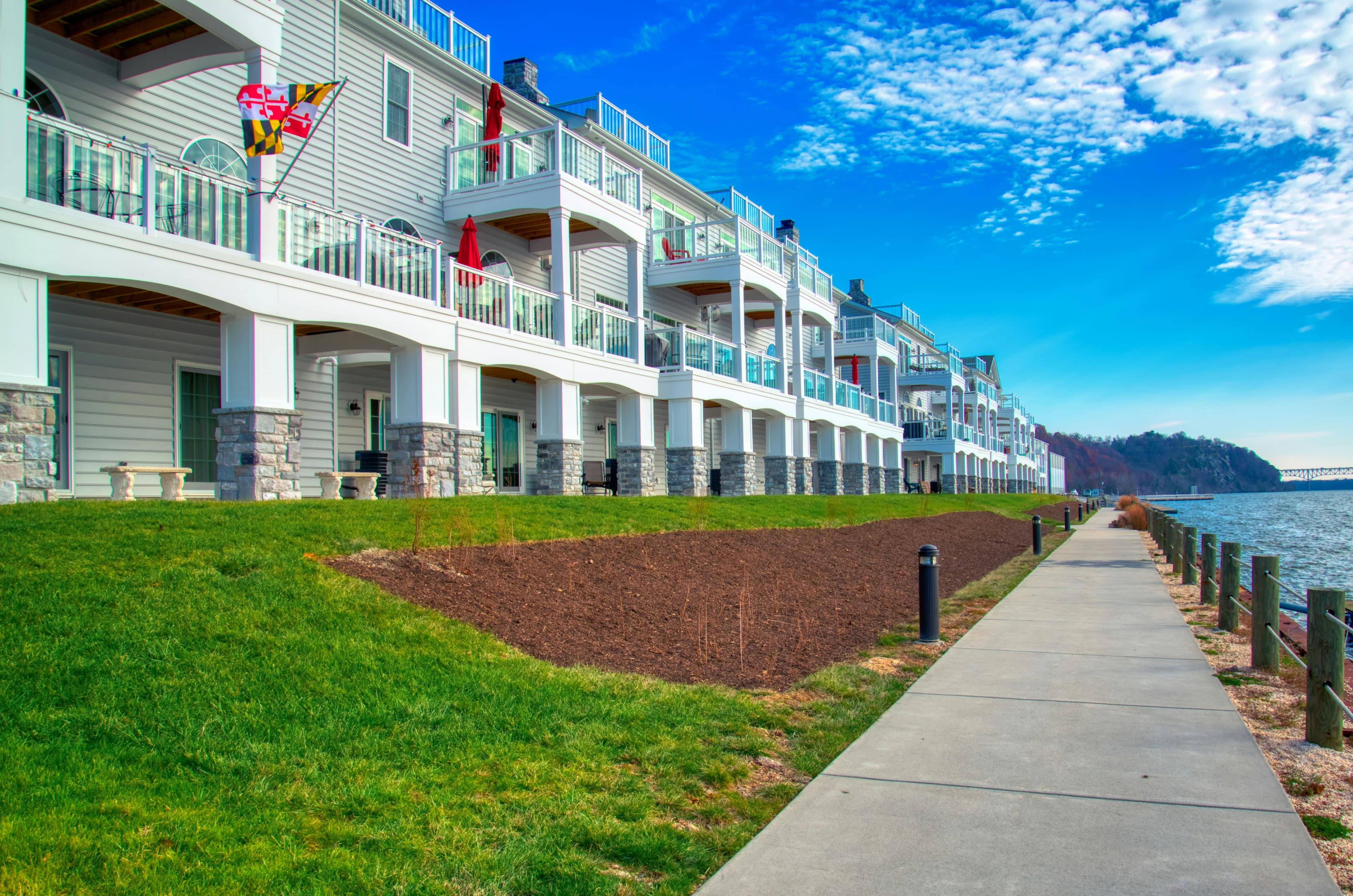
The Chesapeake Bay region, including the Eastern Shore, defines what most discerning travelers associate with Maryland at its most particular. The Bay's 64,000 square miles of tidal estuary shape a landscape of narrow peninsulas, working waterfronts, and low-country light that is unlike anything else on the East Coast. Properties here tend to occupy historic waterfront positions, and the finest suites are oriented toward water views and the rhythms of maritime life. Towns like St. Michaels and Easton on the Eastern Shore have cultivated a quiet, design-aware hospitality culture that rewards extended stays.
Annapolis, the state capital, carries a distinct institutional gravity. As one of the oldest port cities in North America and the home of the United States Naval Academy, it offers a compressed historic core where Federal-period architecture, sailing culture, and political history coexist. Luxury hotel suites here tend to reflect that layered provenance, occupying converted historic structures or purpose-built properties designed to address the harbor.
The DC corridor, encompassing Bethesda and the Maryland suburbs immediately adjacent to the capital, functions as an extension of Washington's professional and diplomatic infrastructure. Properties in this zone serve a more transactional travel pattern, though several offer suites calibrated to the expectations of government, legal, and media clientele who require space, privacy, and proximity to federal institutions.
Western Maryland, anchored by the Catoctin and Appalachian ridgelines, is less traveled and operates at a different pace. The area around Frederick and the mountain counties appeals to travelers seeking landscape immersion over urban programming. Suite stays here tend toward inn-scale properties with strong regional identity.
When to visit Maryland for a luxury suite stay
Maryland's mid-Atlantic climate produces four distinct seasons, each with implications for how the destination performs as a luxury travel proposition.
Late spring, from mid-April through June, is the most reliable window for Chesapeake Bay travel. The water temperature supports sailing and kayaking, the blue crab season opens in earnest, and the light over the Bay has a particular clarity that defines the region's visual identity. Demand for premier suites on the Eastern Shore rises sharply during this period, and inventory at smaller boutique properties can be limited.
Summer through July and August is peak season for waterfront properties, driven by regional demand from Washington DC, Baltimore, and Philadelphia. Rates reflect this compression. Travelers who plan this period should engage with the Eastern Shore well in advance, particularly around major sailing events and the Plein Air Easton arts festival, which draws significant cultural attention in late July.
Autumn is arguably Maryland's most photogenic season and the period most amenable to a more deliberate travel pace. Foliage in the western counties peaks in October, while the Bay transitions into its oyster season, which runs through the cooler months. Properties across the state tend to offer more availability and more competitive rate structures from September onward.
Winter on the Eastern Shore is spare and atmospheric. The crowds are absent, the landscape contracts to its essential forms, and several properties offer a quality of solitude that is impossible to replicate in warmer months. For travelers who prioritize privacy and interior comfort over outdoor programming, winter suites in coastal Maryland represent a considered proposition.
Understanding luxury hospitality standards in Maryland
Maryland does not operate within a formal prestige classification system equivalent to France's Palace designation or Italy's five-star grand hotel category. The American hotel rating ecosystem relies primarily on AAA diamond ratings and Forbes Travel Guide star designations, both of which are applied nationally rather than regionally.
Within this framework, the highest-performing properties in Maryland tend to cluster around two typologies. The first is the historic conversion: former maritime estates, colonial-era inns, and Federal-period commercial buildings adapted into boutique hotels where the suite offering is inseparable from the architectural fabric. These properties reward travelers who read physical context as part of the luxury proposition.
The second typology is the contemporary waterfront hotel, typically found in Annapolis or along the Bay, where the suite is designed around views, terrace access, and proximity to water-based activities. The service model in these properties tends to be less formal than equivalent European counterparts but equally precise in its attention to guest needs.
Maryland also has a meaningful tradition of small-scale inn hospitality, particularly on the Eastern Shore, where properties with six to twenty rooms operate at a standard of personal service that larger hotels cannot replicate. Several of these inns offer suite-category rooms that function as the most intimate and architecturally coherent accommodation available in the state.
How to choose the right luxury suite in Maryland
The primary variable in any Maryland suite decision is orientation: toward water or away from it. The Chesapeake Bay is the organizing principle of the state's luxury travel geography, and suites with direct water access or unobstructed Bay views command a meaningful premium. For many travelers, this premium is justified by the specific quality of light, sound, and spatial openness that proximity to the Bay provides.
A second consideration is the relationship between suite scale and property scale. In a twenty-room Eastern Shore inn, a suite-category room occupies a different psychological position than the same square footage in a two-hundred-room conference hotel in the DC suburbs. The former offers genuine privacy and a sense of occasion. The latter offers infrastructure and efficiency. Neither is wrong, but they serve different travel objectives.
Historical authenticity is a third variable worth interrogating. Maryland's oldest properties carry genuine architectural provenance, with wide-plank floors, original millwork, and room proportions that reflect pre-industrial construction logic. These details are not cosmetic. They produce a sensory environment that purpose-built contemporary properties cannot fully approximate. Travelers who respond to material history should weight this criterion accordingly.
Finally, seasonal timing should influence suite selection. Waterfront suites on the Eastern Shore are optimized for warm-weather stays, when terrace and outdoor access is functional. Interior suites in historic Annapolis properties or western Maryland inns perform consistently across seasons and may represent a more versatile choice for off-peak travel.
Why curated selection matters in Maryland's luxury suite market
Maryland's luxury accommodation market is smaller and less legible than comparable East Coast destinations. The supply of genuinely high-performing suites is concentrated in a limited number of properties, and the gap between a well-marketed mid-range hotel and a truly considered suite experience is not always visible through standard booking channels.
La Suite's curation process is designed to resolve exactly this problem. Rather than aggregating inventory by star rating or user review volume, the selection methodology focuses on the specific qualities that define a suite as architecturally and experientially coherent: spatial proportion, material quality, view orientation, service precision, and the degree to which the property understands and responds to its physical context.
In a market like Maryland, where the finest experiences are often found at smaller, independently operated properties rather than global brand flagships, this approach is particularly consequential. The curated selection by La Suite identifies the suites that reward deliberate travelers, filtering out properties that meet category criteria on paper but fail to deliver a coherent luxury experience in practice.