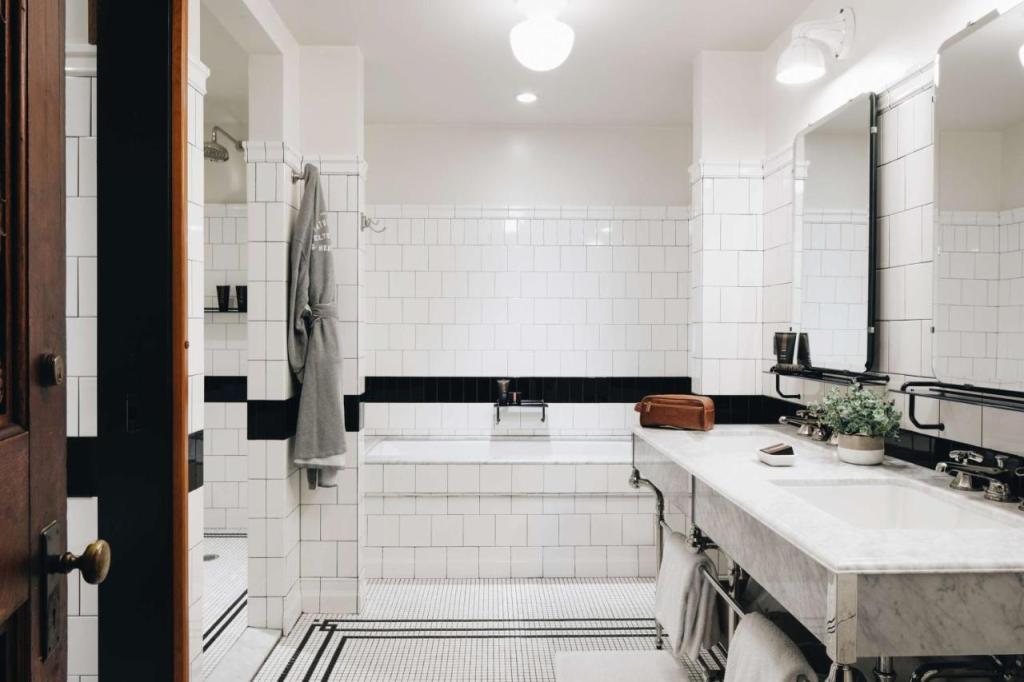
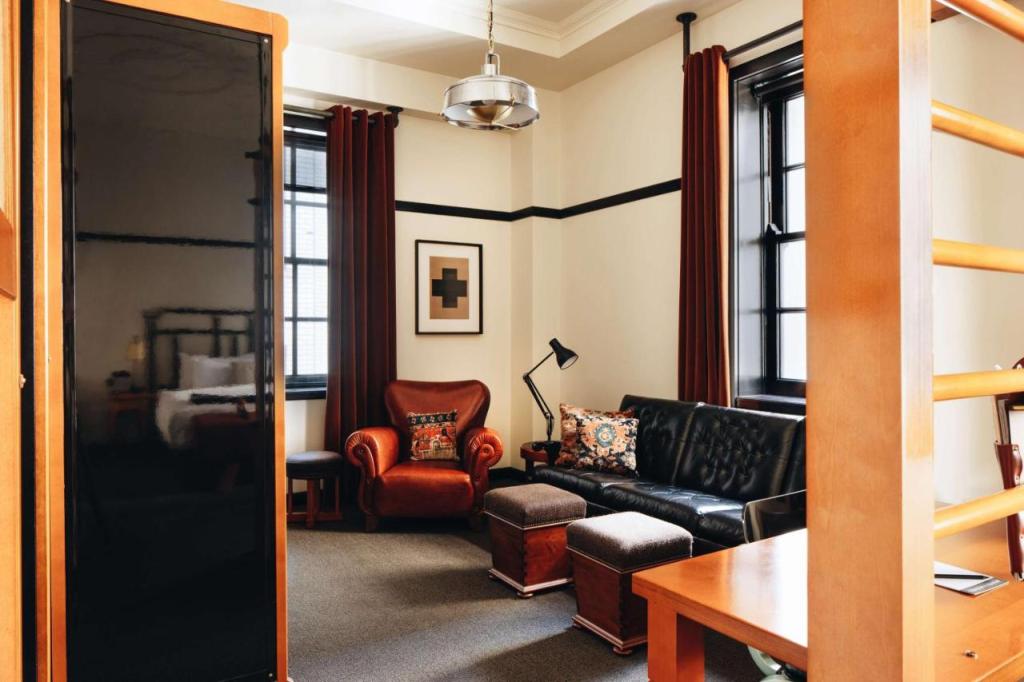
A rooftop bar overlooking Millennium Park, unique dining options and a social games room awaits at the Chicago Athletic Association, part of Hyatt. This hotel, located in a landmark building in downto

Michigan divides naturally into two peninsulas, each with its own character and its own category of high-end accommodation.
20 hotels available

A rooftop bar overlooking Millennium Park, unique dining options and a social games room awaits at the Chicago Athletic Association, part of Hyatt. This hotel, located in a landmark building in downto

Just steps away from the luxury shopping, dining and entertainment on Michigan Avenue’s Magnificent Mile, this downtown Chicago hotel features skyline city views, an on-site restaurant and lavish spa.

Just blocks away from the luxury shopping, dining and entertainment of Michigan Avenue’s Magnificent Mile, this boutique hotel is located in the heart of the Loop in downtown Chicago and offers a roof

Sitting on Michigan Avenue and the Chicago River in a historic landmark building, LondonHouse features Chicago’s only tri-level rooftop bar. The hotel is less than 10 minutes’ walk from Millennium Par

Elegant Accommodations Nobu Hotel Chicago in Chicago offers luxurious rooms with private bathrooms, free WiFi, and modern amenities. Guests enjoy amenities such as a sauna, fitness center, indoor

Quintessentially Chicago with a landmark address just steps from historic Water Tower Park and the famed Michigan Avenue, is where you’ll find the reimagined Park Hyatt Chicago - a residential oasis f

Prime Location Pendry Chicago is located in Chicago city center, offering easy access to key attractions. Ohio Street Beach is a 19-minute walk away, while Millennium Park lies 1969 feet nearby. The A

Just 2 blocks away from the famed shopping, dining and entertainment on the Magnificent Mile, this luxury Chicago Gold Coast hotel is housed in a 32-floor prism glass building featuring stunning views

Steps away from the iconic shopping, dining and entertainment of Michigan Avenue’s Magnificent Mile, this downtown Chicago boutique hotel puts a spin on modern luxury and comfort. Each lifestyle-focus

Located among the bustling restaurant scene in the city’s West Loop neighborhood, this downtown Chicago hotel features on-site dining, a rooftop lounge and garden and contemporary guest rooms with fre

Overlooking iconic Lake Michigan, The Gwen, a Luxury Collection Hotel, Michigan Avenue Chicago is located in the heart of downtown and offers unparalleled amenities and services, including on-site res

Just 2 blocks away from the famed shopping, dining and entertainment on Michigan Avenue’s Magnificent Mile, this luxury hotel towers above the city in a skyscraper designed by renowned architect Mies

Located along the Magnificent Mile, this Chicago hotel is a 5-minute walk from the Museum of Contemporary Art. The hotel provides a full-service Asian-inspired spa, award-winning restaurants, and spac

Located atop the famous Water Tower Place in Chicago’s Gold Coast district, this hotel offers artfully decorated guest rooms that feature city of lake views from large picture windows. The luxury shop

Located in the heart of Chicago’s Wicker Park neighborhood, this historic hotel is located 3 miles away from the shopping, dining and entertainment on the Magnificent Mile. On-site dining and free WiF

Elegant Accommodations The St. Regis Chicago in Chicago offers luxurious rooms with air-conditioning, private bathrooms, and modern amenities. Guests enjoy lake, city, or river views, ensuring a comfo

Located in the Chicago city center, this luxury boutique hotel features an on-site restaurant and complimentary property-wide WiFi access. Shopping and dining on Michigan Avenue is 2 minutes’ walk awa

Featuring stunning views from every area of the hotel, this landmark building of stainless steel and tinted glass stands 92-stories above the Loop and North Michigan Avenue along the Chicago River. Lu

A Gold Coast landmark reframed with architectural precision. The rooftop skyline view is Chicago at its most compositional.

Located in Chicago's prestigious Gold Coast neighborhood, Waldorf Astoria Chicago offers a sophisticated retreat with timeless French-inspired elegance. Guests are welcomed by a stunning private court
Detroit anchors the southern portion of the Lower Peninsula with a cultural density that surprises visitors unfamiliar with its recent architectural and culinary evolution. The city's Midcentury industrial legacy has been absorbed into a new creative fabric, and its better hotels reflect that tension between weight and lightness. A luxury suite in Detroit places the traveler within reach of the Detroit Institute of Arts, the Eastern Market, and a restaurant scene that now draws serious national attention.
Moving north along Lake Michigan's eastern shore, the Traverse City corridor and the Old Mission Peninsula offer a different register entirely. This is wine country, orchard country, and in summer, one of the most sought-after shoreline destinations in the Midwest. Suite accommodations in this zone tend to emphasize views, outdoor access, and proximity to the water over urban amenity. The Grand Traverse Bay region rewards guests who value natural light, seasonal produce, and a measured distance from density.
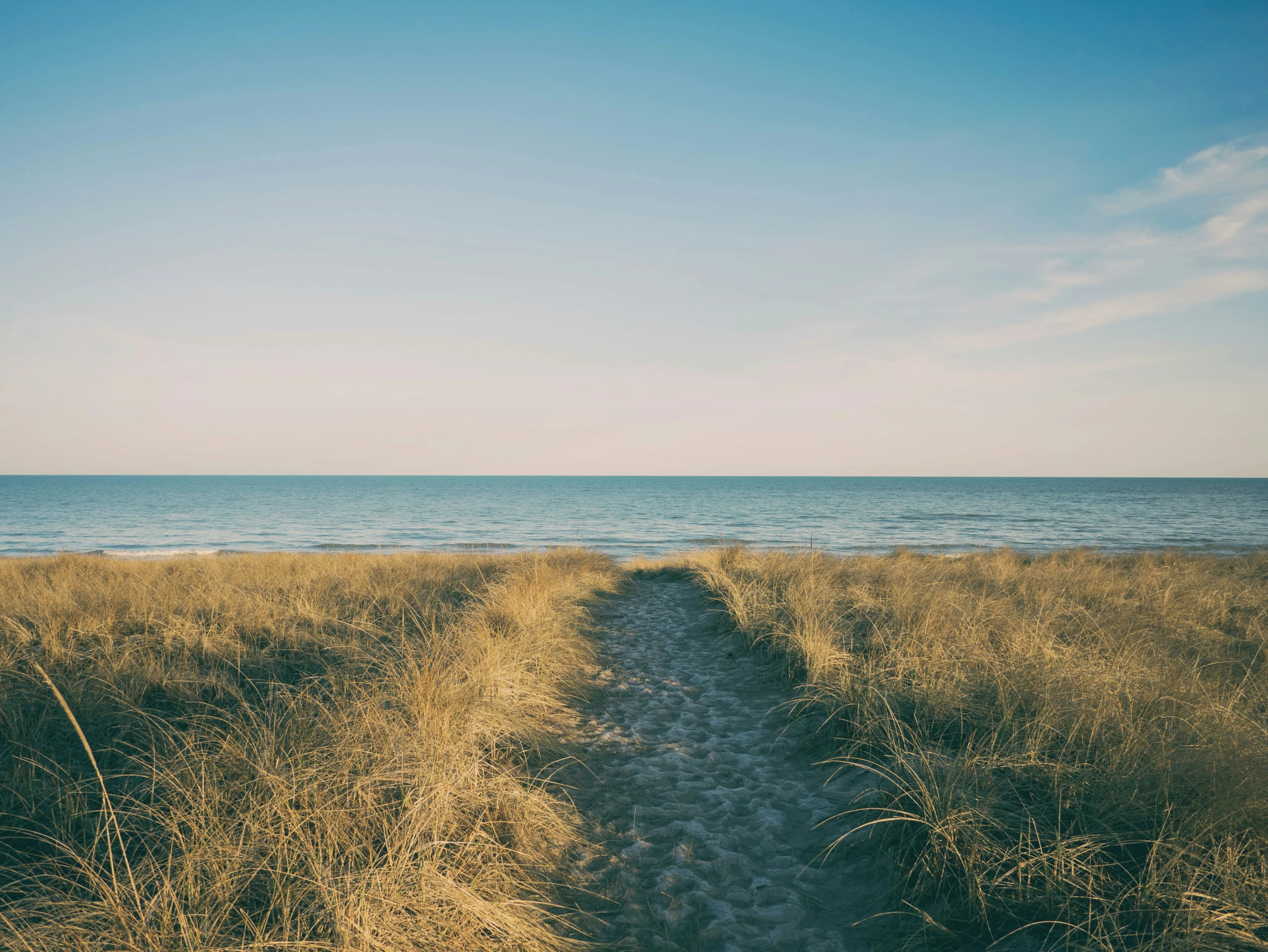
The Sleeping Bear Dunes National Lakeshore area, further north, draws travelers for its geological particularity: massive sand formations rising directly from Lake Michigan's edge. Properties near here skew toward boutique scale, where the suite experience is intimate and landscape-oriented rather than grand in the traditional sense.
Michigan's Upper Peninsula is one of the genuinely underrepresented luxury destinations in the continental United States. It is sparsely populated, heavily forested, and bordered by three of the five Great Lakes. For travelers who define luxury through isolation, access to intact natural environments, and the absence of crowds, this territory offers something that no coastal resort can replicate. High-end lodge-style accommodations here operate on a different set of values: the quality of silence, the proximity to waterfalls and copper-era mining landscapes, and the rhythm of a place that has never been optimized for mass tourism.
Michigan's four seasons are genuinely distinct, and the optimal travel window depends entirely on what the guest is seeking.
Summer (June through August) is peak season along the Great Lakes shore. Suite availability tightens considerably in lakefront and northern destinations, and rates reflect that compression. Advance planning of three to six months is advisable for the better properties in the Traverse City and Petoskey corridors.
Autumn (September through October) represents Michigan at perhaps its most photogenic: hardwood forests shift across the full spectrum from gold to deep red, and the air carries a clarity that summer's humidity obscures. Demand drops relative to summer, and suite rates become more negotiable at many properties. This is the season favored by travelers who prioritize visual atmosphere and culinary depth (harvest season aligns with the regional wine and orchard calendar).
Winter brings a particular kind of traveler to the Upper Peninsula and to ski-oriented zones around Boyne Mountain and Crystal Mountain in the Lower Peninsula. These guests are seeking specific conditions: snow, stillness, and the contrast between exterior cold and interior warmth. A suite with a fireplace and a forest view in January is a very specific luxury, and it is one Michigan can deliver with conviction.
Spring is the quietest and most variable season. Travelers who can work around unpredictable weather will find exceptional availability and rate flexibility at properties that are otherwise competitive in summer.
Michigan does not have a single dominant prestige classification equivalent to France's Palace designation or Italy's Relais and Chateaux density. The luxury market here is more distributed and more varied in its reference points.
At the higher end, guests should look for properties that demonstrate material quality in their interiors: natural stone, locally sourced wood, textiles that reflect the regional environment rather than generic hospitality aesthetics. The best luxury hotel suites in Michigan tend to draw on the state's vernacular architecture, its Arts and Crafts heritage (the region has a documented connection to the broader Craftsman movement), and its relationship to water and landscape.
Suite amenities at top-tier Michigan properties typically include private terraces or balconies oriented toward a lake or forest view, deep soaking tubs, and in some cases private beach or dock access. Service culture in Michigan leans toward warmth over formality, which distinguishes it from comparable luxury in coastal markets like New England or California. Guests should calibrate expectations accordingly: the experience is more personal and less scripted, which many find preferable.
The first decision is geographic: urban or natural. Detroit offers a suite experience rooted in architecture, culture, and dining. Northern Michigan and the Upper Peninsula offer suites defined by space, water, and seasonal atmosphere. These are not interchangeable.
The second consideration is scale. Michigan's luxury suite market includes large resort properties (particularly around Traverse City and Boyne) and small boutique operations with fewer than twenty rooms. The boutique end offers more distinctive spatial experiences and more attentive service ratios. The resort end offers broader amenity sets: spa facilities, multiple dining options, and organized outdoor programming.
Travelers should also consider seasonality as an active design variable. A suite chosen specifically for a summer lake view may function very differently in November. If travel dates fall outside peak season, it is worth verifying which amenities remain operational and whether the property's core identity holds across the calendar.
Finally, connectivity matters in ways it does not in urban destinations. Parts of northern Michigan and the Upper Peninsula have limited cellular coverage and no commercial air service. The best properties account for this in their experience design, providing what guests need on-site rather than directing them outward.
Michigan's hotel market contains significant variation in what presents itself as luxury and what actually delivers at that level. Marketing language in hospitality is permissive, and the distance between a property's self-description and its actual suite quality can be considerable.
The curated selection by La Suite applies a consistent editorial standard: spatial generosity, material integrity, service attentiveness, and an environment that justifies the investment of time and money. In a market as geographically dispersed and qualitatively uneven as Michigan, that filter does real work. It removes the research burden and surfaces the properties that will actually perform for the specific traveler, in the specific season, at the specific moment they are planning.

The primary zones for high-quality suite accommodations in Michigan are Detroit for urban cultural access, the Traverse City and Petoskey corridors for Great Lakes shoreline stays, and the Upper Peninsula for remote, nature-immersive lodge experiences. Each area operates on a distinct set of values and amenities, so the right choice depends on whether the traveler is seeking urban engagement or landscape immersion.
Summer (June to August) is peak season along the Great Lakes, and prime suites in northern Michigan often require three to six months of advance booking. Autumn is widely considered the most atmospheric season, with strong foliage, harvest-season dining, and better suite availability than summer. Winter is ideal for travelers seeking fireplace-and-forest seclusion, particularly around ski destinations in the Lower Peninsula.
Michigan's suite experience is shaped by its relationship to fresh water: the Great Lakes provide a shoreline context that is geographically unique in the continental United States. Service culture leans personal rather than formal, and the best properties draw on local architectural and craft traditions rather than imported hospitality aesthetics. The result is a more intimate and place-specific luxury than is typical in coastal markets.
Yes. Detroit's hotel market has developed considerably over the past decade, with several properties offering high-specification suites in proximity to the city's major cultural institutions, including the Detroit Institute of Arts and the Eastern Market. The city's architectural legacy, including its Art Deco and Modernist building stock, informs the interior character of its better hotel offerings.
In northern Michigan, the defining suite features are orientation (lake views, dune proximity, or forest exposure), outdoor access (private terraces, beach access, or dock availability), and the quality of materials used in the interior fit-out. The best properties in this zone also maintain strong seasonal programming around sailing, hiking, and regional wine and food culture.
For travelers who define quality through solitude, intact natural environments, and genuine remoteness, the Upper Peninsula is one of the most underrated destinations in the United States. It is bordered by three Great Lakes, contains significant wilderness areas, and supports a category of high-end lodge accommodation that prioritizes the quality of the surrounding environment over conventional resort amenities.
For summer travel along the Great Lakes shore, three to six months of advance notice is appropriate for the better properties. Autumn and winter bookings offer more flexibility, though unique properties in the Upper Peninsula or boutique operations in northern Michigan can fill quickly regardless of season due to their limited room counts.
Michigan's suite market spans several formats: urban suites in Detroit with city views and cultural proximity, lakefront suites in the Traverse City and Petoskey areas with direct water access, boutique lodge suites in the northern Lower Peninsula with forest exposure, and remote wilderness lodges in the Upper Peninsula. Each format corresponds to a different traveler profile and a different definition of privacy and comfort.
Michigan does not have a single dominant prestige classification system equivalent to France's Palace designation. However, several properties in the state hold Forbes Travel Guide or AAA Four and Five Diamond ratings, which provide a reliable baseline for suite quality assessment. La Suite applies its own editorial criteria focused on spatial quality, material integrity, and service attentiveness, independent of formal classification systems.
La Suite evaluates Michigan properties on a set of consistent criteria: the spatial generosity of the suite itself, the quality of materials and finishes, the attentiveness and character of service delivery, and the coherence of the surrounding environment with the overall guest experience. In a market as geographically diverse and qualitatively variable as Michigan, this editorial filter is designed to surface the properties that will genuinely perform at the level the traveler expects.