Where to stay in New Mexico for a high-end suite experience
Santa Fe and the high desert plateau
Santa Fe sits at roughly 7,000 feet elevation, a fact that quietly governs everything about it: the quality of the light, the temperature differential between day and night, and the pace at which the city moves. As the oldest state capital in the United States, its architecture is almost entirely governed by adobe and territorial building codes, which means the built environment has a visual coherence rarely found in American cities. The luxury hotel offer here reflects that constraint productively. Properties in Santa Fe tend toward low-rise, courtyard-centered design, with interiors that draw on Pueblo Revival traditions, locally woven textiles, and Native American and Hispanic art. Suite stays in this area pair naturally with the Canyon Road gallery district, the Georgia O'Keeffe Museum, and access to the surrounding Sangre de Cristo Mountains.
Taos and the northern mountains
Taos carries a more austere, painterly quality. The Taos Pueblo, a continuously inhabited UNESCO World Heritage Site, anchors the area's cultural identity, and the surrounding landscape of high mesa and dramatic gorge has drawn artists and writers since the early twentieth century. Luxury accommodations here tend to be smaller in scale, often independently owned, with a strong emphasis on local craft and materiality. The Taos Ski Valley, about eighteen miles from the town plaza, extends the seasonal appeal through winter months and offers a contrasting alpine context for suite-level stays.
Albuquerque and the Rio Grande corridor
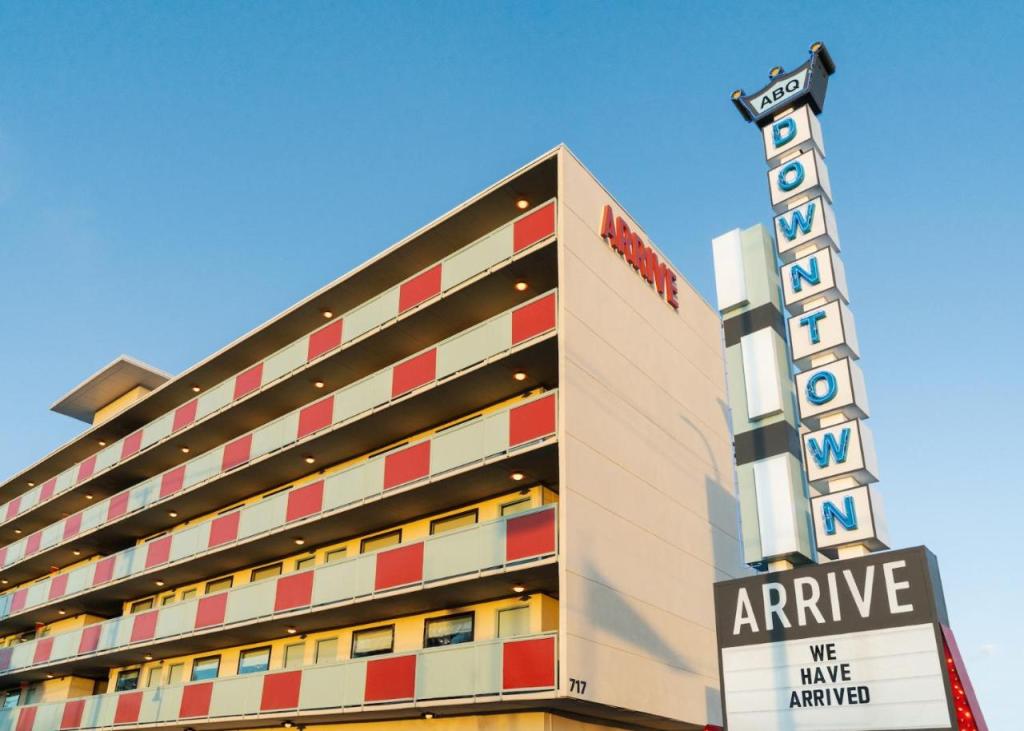
Albuquerque is New Mexico's largest city, positioned along the Rio Grande at a lower elevation than Santa Fe. Its Old Town district, established in 1706, provides a historic core, while the broader city offers access to the Sandia Mountains to the east. The luxury hotel market here is more limited than Santa Fe's, but select properties in and around the city provide contemporary suite offerings with strong connectivity for travelers combining leisure with business.
The southeast and the Chihuahuan Desert
Roswell, White Sands National Park, and the Guadalupe Mountains define the southern and eastern reaches of the state. White Sands, with its gypsum dune fields, is visually unlike almost anywhere else in North America. Luxury accommodation options in this part of New Mexico are fewer and more isolated, which for the right traveler is precisely the point. A suite stay near White Sands or in the Lincoln National Forest area prioritizes proximity to landscape over urban amenity.
When to visit New Mexico for suite travel
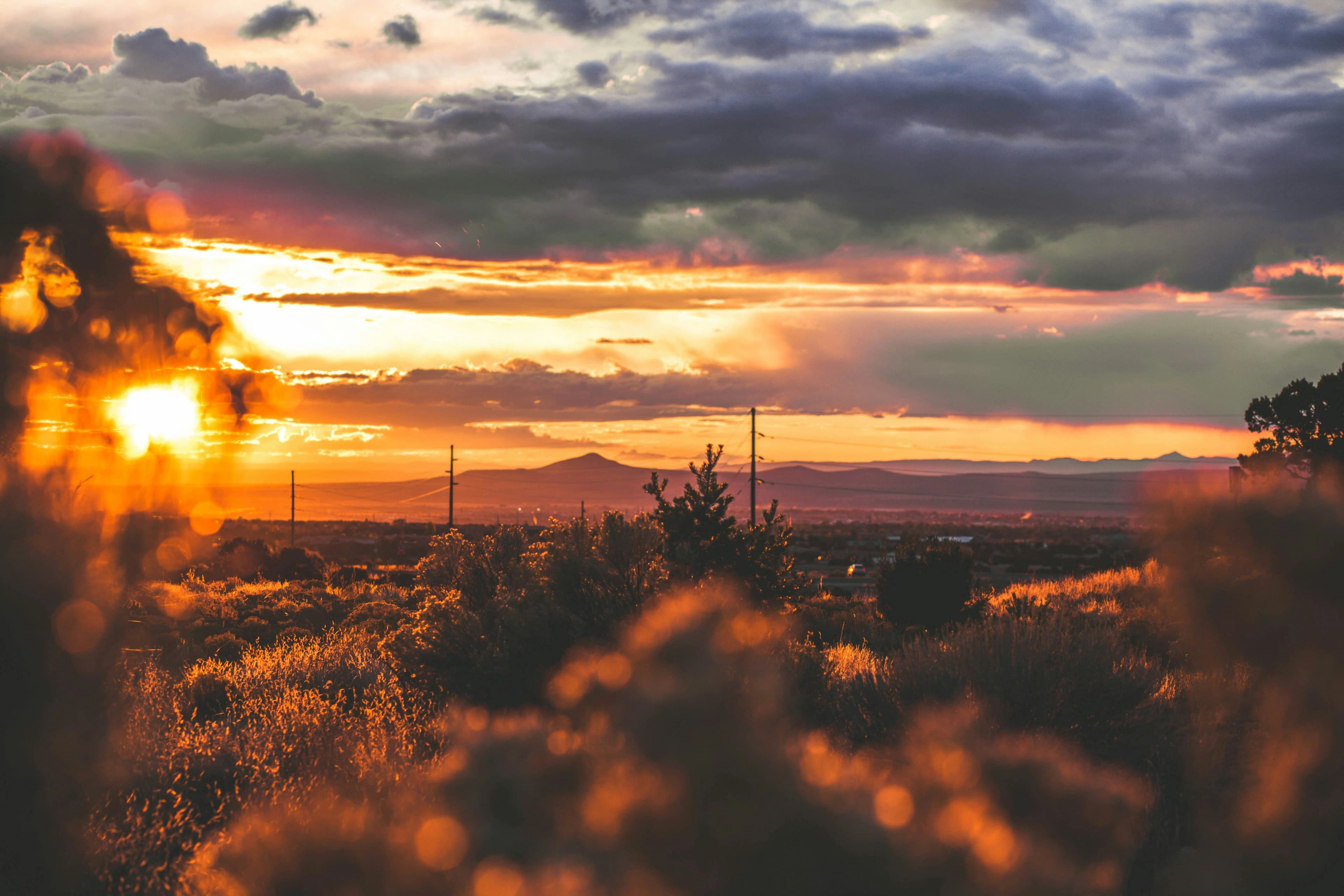
New Mexico's climate is generally semi-arid, with over three hundred days of sunshine annually. That said, the state's elevation range, from roughly 2,800 feet in the southeast to over 13,000 feet in the Sangre de Cristo Mountains, means conditions vary considerably by location and season.
Spring, from late March through May, offers mild temperatures, wildflower blooms at lower elevations, and relatively light tourist pressure. This is a considered window for travelers prioritizing availability and value at the suite level. Summer brings the monsoon season to much of the state, typically from July through September, with afternoon thunderstorms that clear to produce dramatic evening light. The Santa Fe Opera season runs from late June through August, drawing an internationally minded audience and increasing demand for premium accommodations in the capital. The International Balloon Fiesta in Albuquerque, held each October, is one of the largest ballooning events in the world and creates significant demand across the city's hotel inventory. Fall, from September through November, is widely regarded as the optimal season: the cottonwood trees along the Rio Grande and in northern mountain valleys turn gold, temperatures are stable, and cultural programming across Santa Fe and Taos is at its most concentrated. Winter offers quieter conditions, reduced pricing at many properties, and skiing access in Taos and the Santa Fe Ski Basin.
Understanding luxury standards in New Mexico
New Mexico does not operate on the same luxury vocabulary as, say, New York or Miami. The prestige markers here are more calibrated, more material, and more regionally specific. Understanding them matters when selecting a suite.
The most respected properties in the state are those that engage authentically with the Pueblo Revival and Spanish Colonial architectural traditions without reducing them to decoration. Genuine luxury in this context means hand-plastered adobe walls, vigas and latillas in the ceilings, kiva fireplaces, locally sourced stone, and commissioned work by Native American and Hispanic artists. A suite that integrates these elements with precision and restraint communicates a different kind of prestige than one simply importing generic five-star conventions.
New Mexico is also one of the few American states where Indigenous-owned and operated hospitality enterprises exist at a meaningful scale. Several properties on or adjacent to Pueblo land offer suite-level accommodations that combine cultural depth with contemporary comfort. These are distinct from standard resort offerings and deserve direct consideration by travelers for whom place-specificity is a primary value.
Spa culture in New Mexico frequently draws on Indigenous healing traditions, high-altitude skincare protocols, and locally sourced botanicals from the Rio Grande basin. At the best properties, this is expressed through thoughtfully designed treatment menus rather than generic wellness programming.
How to choose the right suite in New Mexico
Several practical considerations apply specifically to New Mexico suite selection.
Altitude is a genuine factor. Santa Fe and Taos sit above 6,900 feet. Travelers who have not previously spent time at elevation should select suites with climate controls capable of managing the significant day-to-night temperature swings, and should factor in that the first day at altitude can affect sleep quality and energy levels. A suite with outdoor terrace access to experience the evening air is a different proposition here than at sea level.
Architecture type shapes the sensory experience fundamentally. Adobe construction retains heat at night and stays cool during the day, producing a thermal rhythm that is part of the experience of staying in northern New Mexico. Travelers who prioritize this quality should confirm that their chosen property uses authentic construction methods rather than synthetic stucco approximations.
Proximity to landscape versus proximity to cultural programming is the central trade-off. Properties closer to Canyon Road and the Santa Fe Plaza offer walkability to galleries and restaurants. Properties further out, in the foothills or on Pueblo land, offer a more immersive natural and cultural context with a corresponding need for private transport. The decision depends entirely on how the traveler intends to use their time.
Suite size in New Mexico often means private outdoor space: portal terraces, enclosed courtyards, or access to garden areas. This matters more than square footage in climates where evenings outdoors are a primary pleasure for a significant portion of the year.
Why curated selection matters in New Mexico
The luxury hotel market in New Mexico is relatively small and, at the upper end, genuinely uneven in quality. There are properties with exceptional architecture and indifferent service; there are others with strong hospitality cultures housed in less distinguished buildings. For a traveler arriving from London, New York, or Los Angeles with limited time, navigating that landscape independently requires research that most people at this level do not have the bandwidth to do well.
The curated selection by La Suite addresses this directly. Rather than presenting an exhaustive inventory, La Suite applies editorial criteria to identify the suites in New Mexico that meet a consistent standard across architecture, space, privacy, and experience. The result is a much shorter list of properties that actually perform at the level implied by their positioning. For New Mexico specifically, where the market requires regional fluency to navigate, that curation is not a convenience. It is the product.