Where to stay in Oregon: distinct territories for luxury travelers
The Oregon Coast
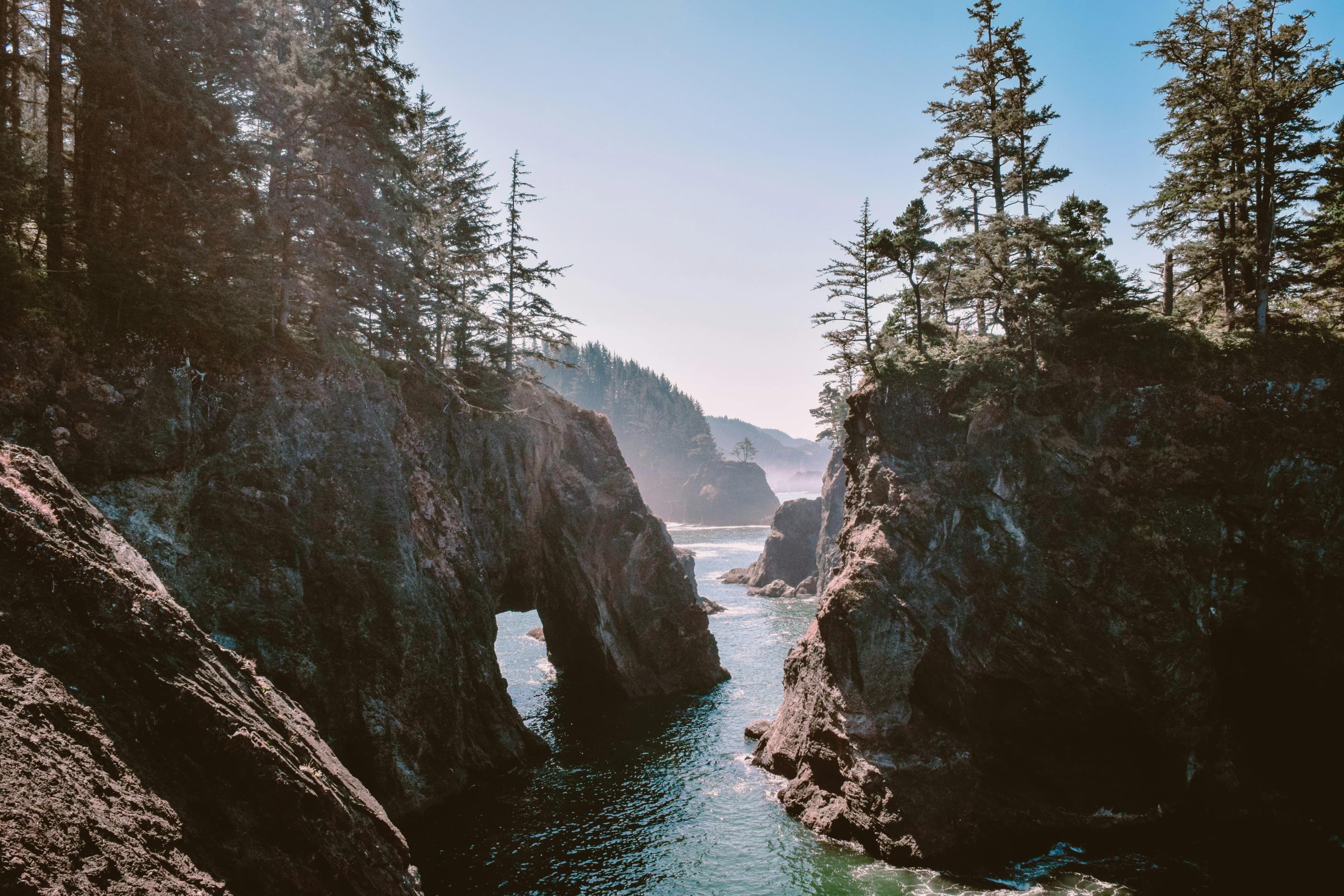
Stretching roughly 362 miles from the Columbia River south to the California border, the Oregon Coast is notably undeveloped by American standards. State law mandates public access to the entire shoreline, which has preserved its raw, elemental quality. The landscape here tends toward drama: basalt headlands, sea stacks, persistent maritime fog, and surf conditions that make swimming largely impractical but make contemplation almost involuntary. Suites positioned along this corridor tend to prioritise views and architectural framing over resort-style amenity stacks. The towns of Cannon Beach, Manzanita, and Depoe Bay each carry a particular character, ranging from gallery culture to near-total quiet.
Portland and the Willamette Valley
The Willamette Valley runs roughly 150 miles south from Portland, and its combination of serious wine production, working farms, and proximity to a culturally self-aware city creates an unusual luxury context. Oregon's wine identity is built primarily on Pinot Noir, with the Dundee Hills and Chehalem Mountains appellations carrying particular prestige among sommeliers and collectors. Portland itself rewards visitors who engage with it on its own terms: the food culture is ingredient-driven and chef-led, the design and architecture scene is internationally referenced, and the city's compact geography rewards walking. Luxury hotel suites here tend toward the design-forward and the architecturally considered, reflecting the city's broader aesthetic literacy.
Bend and Central Oregon
East of the Cascades, the climate shifts abruptly. Bend sits at approximately 3,600 feet elevation in a high desert environment characterised by more than 300 days of sunshine annually and proximity to volcanic geology. The Newberry National Volcanic Monument, obsidian flows, and the Three Sisters Wilderness create a landscape unlike anything on the coast. Suites in this corridor attract travelers interested in active engagement with the outdoors, from fly fishing on the Deschutes River to hiking across lava fields, and the standard of property here has risen considerably in recent years.
Southern Oregon and the Rogue Valley
Southern Oregon carries a quieter reputation, which is part of its appeal. The Rogue Valley produces Tempranillo and Syrah under conditions that distinguish it sharply from Willamette Valley viticulture. Ashland, home to the Oregon Shakespeare Festival (one of the largest regional theatre festivals in North America), adds a cultural dimension rarely associated with rural Pacific Northwest stays. Properties in this region often occupy former agricultural land, with suites designed around the specific relationship between interior space and the surrounding valley or canyon topography.
When to visit Oregon for a luxury suite stay
Oregon's seasons are legible and worth planning around with care. The coast and western valleys experience a temperate oceanic climate: mild, wet winters and dry summers. The interior high desert operates on a more continental schedule with cold winters and warm, dry summers.
Late spring (May and June) offers a productive balance: wildflower bloom in the Cascades and Columbia River Gorge, the first outdoor dining conditions in Portland, and significantly fewer visitors than the peak summer window. July and August bring the driest conditions statewide and the highest demand for premium suites across all regions. Booking lead times for well-positioned coastal properties and Willamette Valley retreats in this period can extend to several months.
Autumn (September through October) is arguably the most rewarding window for wine-focused travel. Harvest season in the Willamette Valley activates a different rhythm entirely, with winery access and harvest events shaping the calendar. The light in this period, particularly in the valley and along the coast, is notably different from summer: lower angle, longer shadows, and a quality that rewards photographers and design-attentive travelers alike.
Winter on the Oregon Coast is a legitimate travel proposition for those who find something compelling in storm-watching from an enclosed, well-appointed suite. Several coastal properties explicitly cater to this with fire-forward interior design and elevated room service programmes.
Understanding luxury standards in Oregon
Oregon does not operate within a formal national luxury hotel classification system equivalent to France's Palace designation. The AAA Five Diamond rating and Forbes Travel Guide Star ratings are the most commonly referenced independent quality benchmarks, though neither is universally applied across the state's independent and boutique properties.
The most consequential distinction in Oregon luxury hospitality is between large-format resort properties and smaller independent retreats. Resort properties in Central Oregon and along the coast offer comprehensive on-site programming: spa facilities, multiple dining formats, and activity coordination. Independent boutique properties, which are particularly concentrated in the Willamette Valley and Southern Oregon, operate on a more personal and architecturally distinctive model, with suites that often reflect a specific design philosophy rather than a brand standard.
Sustainability credentials are meaningful in Oregon's hospitality context. The state has a developed culture of environmental accountability, and several leading properties hold certification through programmes such as the Oregon Green Certification or the LEED building standard. For certain travelers, this represents a genuine differentiator rather than a peripheral consideration.
How to choose the right luxury suite in Oregon
The primary decision in Oregon suite selection is geographic: coast, valley, city, or high desert. Each creates a fundamentally different experiential frame, and combining two or more across a single trip is entirely practical given the state's road network.
Beyond geography, consider the relationship between the suite and its immediate landscape. Oregon's finest properties are designed with specific site conditions in mind: a suite facing the Pacific should offer unobstructed sightlines and acoustic insulation from wind. A valley property should position outdoor terraces to engage with the surrounding vineyard or forest edge rather than simply appending them as afterthoughts.
Suite scale matters differently here than in urban luxury contexts. In a coastal or forested setting, a suite with a private deck or fireplace often delivers more experiential value than sheer square footage. Interior material quality, including stone, timber, and textiles that reference local craft traditions, is a reliable indicator of design intention at the property level.
Practical note: Oregon charges no sales tax, which has a marginal but real effect on the overall cost calculation for extended luxury stays compared with California or Washington.
Why curated selection matters in Oregon
Oregon's luxury accommodation market is relatively dispersed and unevenly documented. The state's most compelling suites are not always found through standard booking platforms, which tend to surface volume-driven results rather than architecturally or experientially exceptional properties. Several of the most considered retreats operate at limited scale, with only a handful of true suites, and become effectively invisible in undifferentiated search environments.
La Suite applies an editorial filter to this landscape, assessing each property against criteria that include spatial design, material quality, site relationship, and the specificity of the experience on offer. The curated selection by La Suite reflects a consistent standard of judgment rather than an aggregation of user reviews or paid placement. For travelers approaching Oregon as a serious destination rather than a default choice, that distinction is the difference between a considered trip and a generic one.