Best areas to stay in the Coachella Valley
Palm Springs
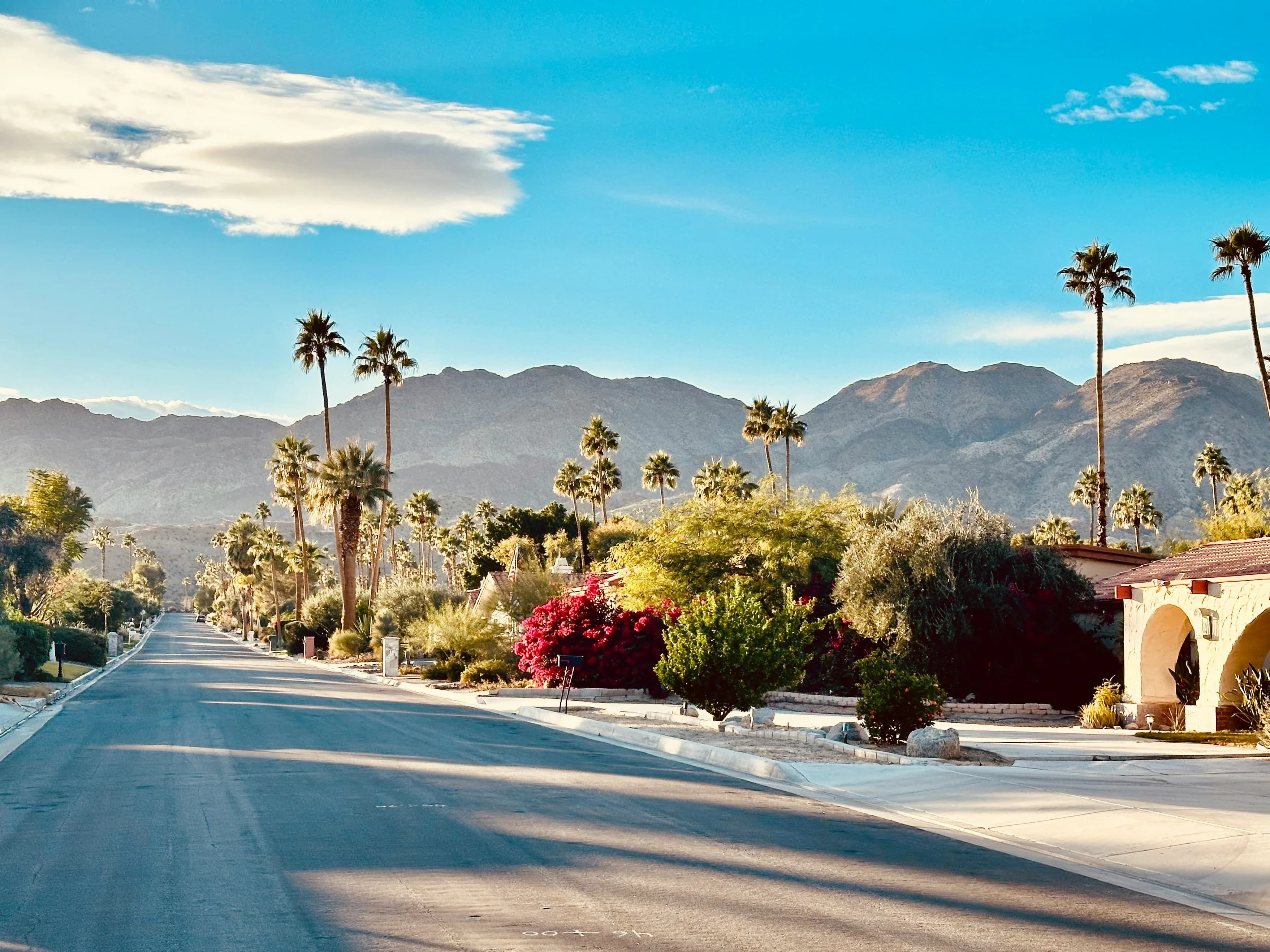
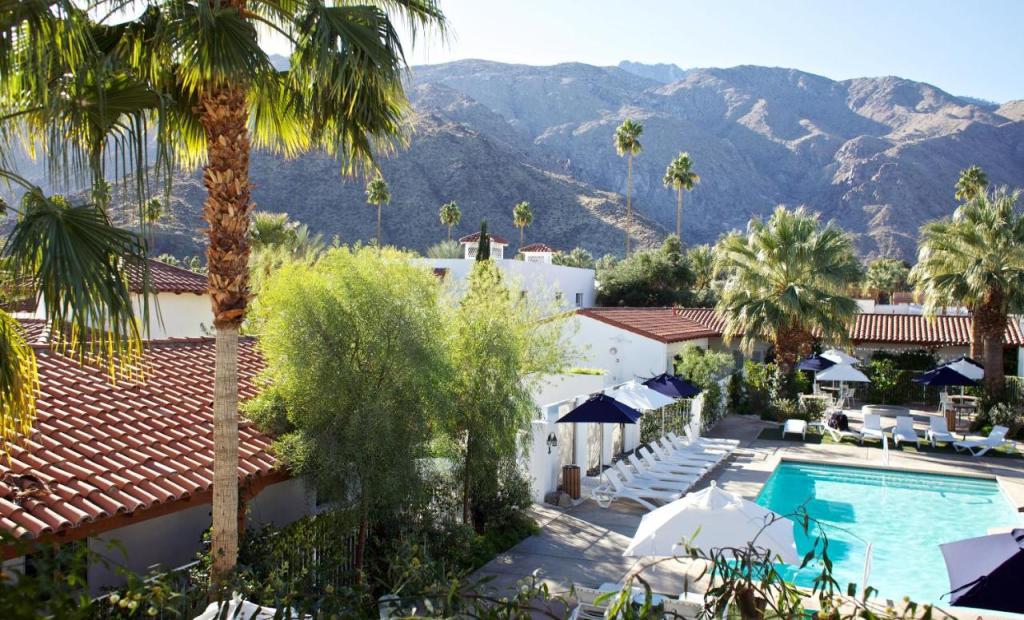
Palm Springs is the architectural and cultural anchor of the valley. Its grid of residential streets contains one of the largest concentrations of mid-century modern architecture in the United States, work by Albert Frey, John Lautner, Richard Neutra, and Donald Wexler, among others. Luxury hotels here tend to engage directly with that lineage, whether through careful restoration of postwar structures or through new builds that adopt the same principles: clean lines, indoor-outdoor continuity, and an almost theatrical relationship with the desert landscape. Suites in Palm Springs often feature private plunge pools or direct garden access, reflecting the local conviction that outdoor space is not an amenity but a structural given.
Palm Desert and Rancho Mirage
Moving southeast, Palm Desert and Rancho Mirage shift the register toward resort-scale hospitality. Properties here tend to occupy larger footprints, with golf courses, spa facilities, and suite inventories designed for extended stays. El Paseo, Palm Desert's main retail corridor, functions as the valley's equivalent of a high-end shopping street, with galleries and restaurants that draw a consistent affluent clientele. Suites in this corridor often prioritize scale and privacy over architectural distinctiveness, making them well suited to travelers whose primary concern is comfort and seclusion rather than design immersion.
La Quinta and Indian Wells
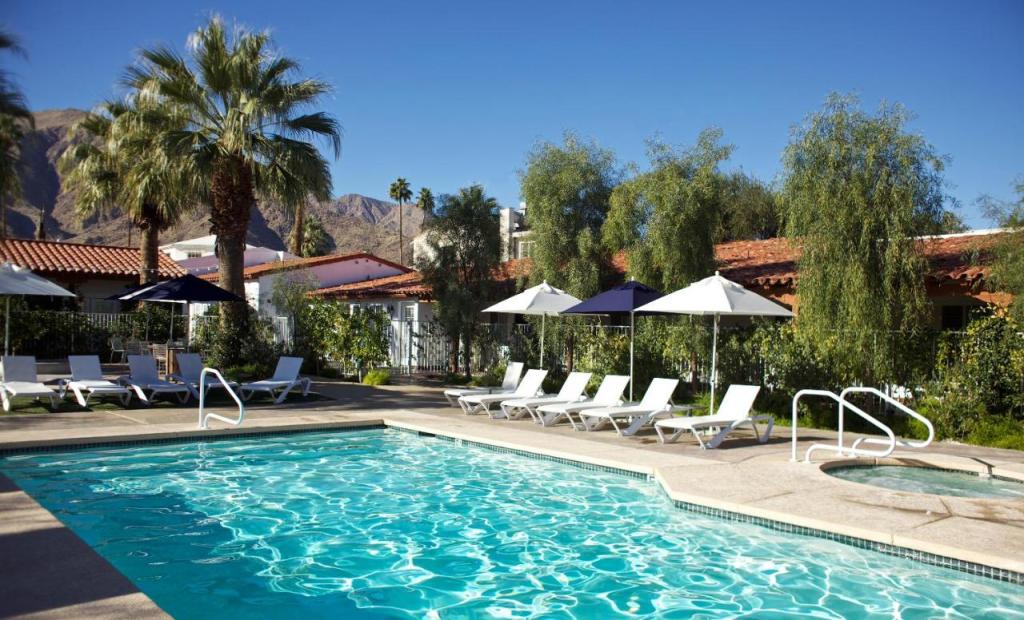
La Quinta and Indian Wells represent the quieter, more residential end of the valley's luxury spectrum. La Quinta, in particular, carries a specific historical weight: the La Quinta Hotel, opened in 1926, was one of the earliest resort properties in the region and attracted a clientele that included Frank Capra and Greta Garbo. Contemporary luxury stays in this area tend toward larger suite configurations, hacienda-influenced architecture, and grounds designed for genuine seclusion. Indian Wells hosts the BNP Paribas Open, one of the most significant tennis tournaments on the ATP and WTA tours, which concentrates high-end demand in the area each March.
When to visit the Coachella Valley
The valley operates on a seasonal rhythm that is more compressed than most American resort destinations. The primary luxury season runs from October through May, when daytime temperatures sit between 70 and 90 degrees Fahrenheit and evenings are consistently cool. Summer months, from June through September, see temperatures regularly exceeding 110 degrees Fahrenheit, which drives a significant portion of the permanent resident population out of the valley and reduces occupancy at many properties. Some luxury hotels close partially or entirely during the peak summer period.
Within the primary season, several events concentrate demand and affect suite availability. The Coachella Valley Music and Arts Festival, held across two consecutive weekends in April, draws an international audience and generates some of the highest room rates in the valley's calendar. The Stagecoach Country Music Festival follows immediately after on the same site. The BNP Paribas Open in Indian Wells, typically held in early March, represents the other major demand spike, particularly for properties in the eastern valley. Travelers seeking optimal suite availability combined with favorable rates should consider November, February outside of tennis week, or the very beginning of October.
The Modernism Week event, held each February in Palm Springs, is worth noting for design-oriented travelers. It draws architects, collectors, and preservationists for a program of home tours, lectures, and exhibitions centered on mid-century modern design. Suite inventory during this period is tight and books well in advance.
Local luxury standards in the Coachella Valley
The Coachella Valley does not operate within a formal national prestige classification system comparable to France's Palace designation. California luxury hotels are rated through standard industry frameworks, including Forbes Travel Guide stars and AAA Diamond ratings, but local excellence is more reliably read through specific property characteristics than through official labels.
The defining features of a high-tier suite in the valley are consistent: private outdoor space with a plunge pool or access to a secluded courtyard, architecturally considered interiors that engage with the desert setting, and a staff-to-guest ratio that supports genuinely personalized service. Properties that perform best in these categories tend to be smaller in scale, often under one hundred rooms, which allows for a level of attention that larger resort complexes cannot match. The distinction between a suite at a large conference-oriented resort and a suite at a design-led boutique property in this valley is pronounced, and the price differential does not always reflect the experiential gap.
Indoor-outdoor design is not optional here. The desert climate, for the months when the valley is most habitable, is specifically engineered for it. Properties that treat outdoor space as a secondary consideration are, in a functional sense, working against the landscape rather than with it.
How to choose the best suite in the Coachella Valley
Several practical considerations apply specifically to this destination. First, orientation matters. Suites with mountain views to the west or southwest benefit from the most dramatic light, particularly at the end of the day when the San Jacinto range catches direct sun and the shadows deepen across the valley floor. North-facing rooms lose this entirely.
Second, pool configuration is a meaningful differentiator. Shared pools at luxury resort properties are common and often well-maintained, but a suite with a dedicated private plunge pool or a semi-private courtyard pool changes the character of a stay in a way that is specific to this climate. In the cooler months, a heated private pool used before sunrise or after sunset is a sensory experience that justifies the rate premium.
Third, consider proximity to the airport. Palm Springs International Airport sits within the city limits and serves direct routes from Los Angeles, San Francisco, Seattle, Dallas, New York, and several other major hubs. Staying in Palm Springs itself reduces transfer time significantly compared to properties in La Quinta or Thermal. For travelers arriving from international connections via Los Angeles or San Francisco, this is a non-trivial consideration.
Finally, the architectural typology of the property should align with your priorities. Mid-century modern properties in Palm Springs prioritize aesthetic coherence and indoor-outdoor flow. Resort-scale properties in Palm Desert and Rancho Mirage prioritize amenity breadth and space. Hacienda-influenced properties in La Quinta prioritize enclosure, shade, and a more traditional resort rhythm. None of these is objectively superior. Each serves a different kind of traveler.
The value of curation in the Coachella Valley
The Coachella Valley has a high volume of hospitality inventory, ranging from mid-market chains to genuinely exceptional boutique properties. The gap between the best and the merely adequate is wide, and marketing materials are not a reliable guide to which category a property belongs to. Properties that photograph well do not always perform well as lived experiences, particularly at the suite level where the details of layout, light, and service define the stay.
La Suite's curated selection for the Coachella Valley focuses specifically on properties where the suite product is the primary asset, where the design is coherent and considered, and where the service infrastructure matches the rate. The selection process excludes properties that meet a price threshold but not an experiential one. For travelers who have limited time and specific standards, a curated selection by La Suite removes the research burden and concentrates the available options into a set that can be evaluated on genuine merit.