Where to stay in Vermont: distinct territories for luxury suite travelers
The Northeast Kingdom
Vermont's northeastern corner is the state's most remote quadrant. Towns are sparse, lakes are cold and clean, and the sense of withdrawal from urban life is complete. This is territory for travelers seeking genuine isolation. Suites in this area tend toward the architectural vernacular of converted farmsteads and lakeside lodges, with an emphasis on land access, private grounds, and proximity to working farms and forests. The pace is slow, the light is particular, and the absence of crowd is the primary luxury.
The Champlain Valley and the western corridor
Running along Vermont's western edge, the Champlain Valley offers a softer topography. Lake Champlain, one of the largest freshwater lakes in North America, shapes the microclimate and the character of properties here. The valley floor carries agricultural land, vineyards, and historic towns. Suites in this corridor benefit from lake exposure, and the proximity to Burlington adds a modest cultural infrastructure. This zone suits travelers who want landscape without total remoteness.
The Green Mountains and ski corridor
The spine of the state runs north to south through its center. This is the territory of Stowe, Mad River Glen, and the resort architecture that has defined Vermont's luxury identity since the mid-twentieth century. Properties here calibrate to the seasonal rhythm: ski-in access and fireside weight in winter, trail access and open terraces in summer. Suites in this corridor often occupy converted New England inns or purpose-built resort structures, with interiors that balance tradition and restraint.
Southern Vermont and the Connecticut River towns
The southern reaches of the state, anchored by towns like Manchester and Woodstock, carry a distinct register of New England formality. Manchester has long attracted a particular clientele: its combination of cultural institutions, antique architecture, and proximity to Stratton and Bromley mountains gives it a year-round gravity. Woodstock, often cited as one of the best-preserved Federal-era towns in the country, offers suites in historic properties where the architecture itself is part of the offer.
When to visit Vermont for a luxury suite stay
Vermont operates on four distinct seasonal registers, and each one changes the character of a suite stay in material ways.
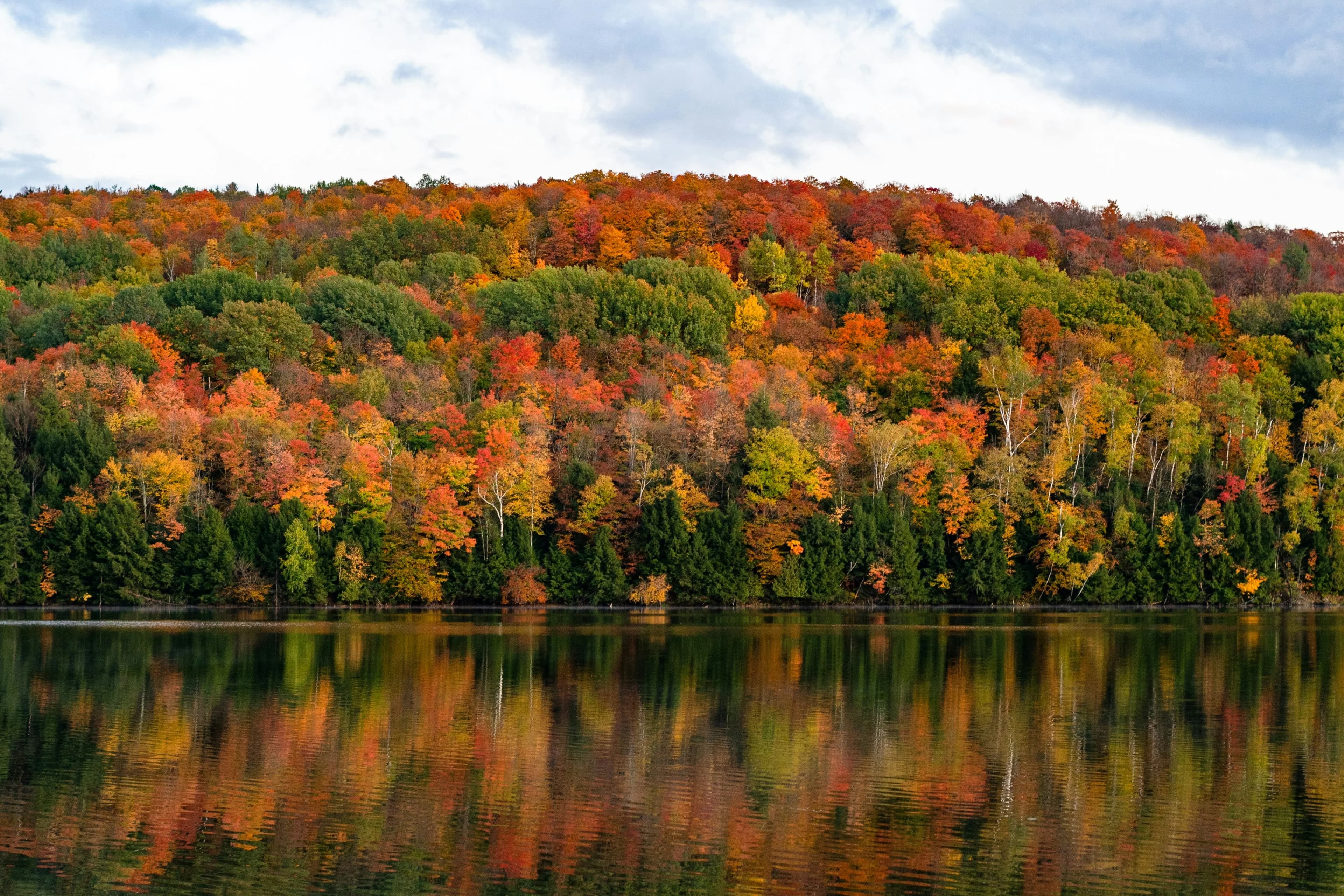
Autumn, from late September through mid-October, is the most demanded period. The foliage shift across the hardwood canopy, a consequence of the state's maple, birch, and beech coverage, draws significant visitor volume. Suite availability is constrained and lead times are long. Travelers who value space and quiet should book several months in advance or consider the shoulder weeks of late September before peak color arrives.
Winter, from December through March, is organized around skiing. Stowe Mountain Resort and Sugarbush are the primary anchors. Suites adjacent to ski terrain are in consistent demand during school holidays and Presidents' Week. January and early February tend to offer more availability and lower price pressure than the December and March peaks.
Spring, known locally as mud season, runs roughly from mid-March through May. Properties reduce rates significantly, and the landscape carries its own austere quality: bare trees, cold light, and the first movement in the sugar maples. This is the period for travelers who want Vermont without the crowd, and for whom a well-appointed suite is sufficient company.
Summer, from June through August, is warmer and greener than most visitors expect. The Green Mountains support hiking, cycling, and open-water swimming. Properties that face south or west capture long evening light. This season suits families and those who want the landscape in its most accessible register.
Understanding Vermont's luxury hotel standards
Vermont does not operate within a formal prestige classification system equivalent to France's Palace designation. The state's luxury hotel market is instead organized around a set of recognizable typologies, each carrying its own expectations.
The historic inn is the most characteristic Vermont form. Many of the state's most respected properties occupy Federal or Greek Revival structures dating from the eighteenth and nineteenth centuries. Suites in these buildings reward guests who appreciate architectural texture: wide-plank floors, original millwork, and proportions that reflect a pre-industrial sense of domestic scale.
The resort hotel, concentrated in the ski corridor, offers a different proposition. These properties tend toward larger footprints, with amenities calibrated to active travelers: spa facilities, ski concierge, and suites designed for families or groups. The architecture is less historically charged but compensates with spatial generosity and direct access to mountain terrain.
Farm-to-table culinary culture has become a genuine marker of quality in Vermont hospitality. Properties that maintain kitchen gardens, source from named local farms, or employ chefs with serious agricultural relationships are a reliable signal of overall standard. In Vermont, food provenance is a legitimate luxury credential.
How to choose the right luxury suite in Vermont
Several considerations are specific to this destination and bear on the suite selection process.
Seasonality is structural, not incidental. The suite that performs in February, with a wood-burning fireplace and proximity to ski terrain, may offer a fundamentally different experience in July. Travelers should assess properties against the specific season of their visit rather than relying on year-round reputation.
Architecture matters here more than in destinations where climate and landscape dominate. Vermont's best suites are often distinguished by their relationship to the building they occupy: a corner room in a nineteenth-century inn carries a different spatial logic than a purpose-built resort suite, and neither is inherently superior. The choice reflects the traveler's preference for historical weight versus contemporary amenity.
Privacy and land access are considerations that rarely surface in urban suite selection but are central in Vermont. Properties with private grounds, direct trail access, or exclusive use of a lake frontage offer a qualitatively different experience from those where the luxury is contained within the room itself.
Finally, the distance to the nearest settlement matters. Vermont's most remote properties are genuinely remote: a forty-minute drive to the nearest town is not uncommon. Travelers who want the landscape without logistical friction should calibrate expectations accordingly.
Why a curated selection by La Suite serves this destination well
Vermont's luxury hotel market is modest in scale but uneven in quality. The state has no large metropolitan center to anchor consistent hospitality standards, and the range between an exceptional historic inn and a property that merely markets itself as luxury is significant. This unevenness makes curation more valuable, not less.
La Suite applies consistent spatial and experiential criteria across all listed properties. In a destination where the category of luxury suite can encompass anything from a converted carriage house to a purpose-built alpine residence, a curated selection by La Suite removes the interpretive work from the traveler's process. The result is a shorter path from intent to the right room.