Best areas to stay in Washington D.C. for a luxury suite
Downtown and Penn Quarter
The central business district and Penn Quarter form the city's commercial and civic spine. Hotels here sit within walking distance of the National Mall, the Smithsonian museums, and the major federal buildings. This corridor suits travelers whose schedule is dense with institutional visits, private meetings, or cultural programming. Suites in this area tend to occupy historic buildings converted into full-service properties, offering commanding views over the city's deliberately low skyline.
Georgetown
Georgetown predates the capital itself and retains the physical texture of Federal-era America: cobblestone streets, red-brick rowhouses, and a waterfront along the Potomac Canal. Staying here places you in one of the most architecturally coherent neighborhoods on the East Coast. Luxury hotel suites in Georgetown often occupy converted mansions or boutique properties, with an intimacy that the larger downtown hotels cannot replicate. The neighborhood is also home to serious dining and independent retail, making it a self-contained base for those who prefer to explore on foot.
Dupont Circle and the Embassy Row corridor
Dupont Circle and the stretch of Massachusetts Avenue known informally as Embassy Row carry a quiet, diplomatic weight. The architecture here shifts toward Gilded Age and Beaux-Arts townhouses repurposed as chanceries and private clubs. This is Washington at its most European in character, with bookshops, gallery spaces, and wine bars punctuating the residential streets. Suites in this corridor appeal to travelers who value discretion and proximity to the city's cultural institutions over direct access to the monuments.
The Wharf and Southwest Waterfront
The Wharf is Washington's most recent large-scale urban development, reshaping the Southwest Waterfront into a contemporary mixed-use district with direct access to the Potomac. Properties here are modern in construction and orientation, with suites designed around water views and access to a concentrated dining and entertainment program. This area suits travelers arriving for performing arts events at the nearby Arena Stage or Kennedy Center, or those who prefer a riverside perspective on the city.
When to visit Washington D.C. for a luxury hotel experience
Washington operates on a year-round calendar shaped by political cycles, cultural events, and seasonal rhythms that directly affect suite availability and pricing.
Spring (March through May) brings the National Cherry Blossom Festival, one of the most photographed events on the East Coast. During peak bloom, typically in late March or early April, demand for luxury suites in the city reaches its annual high. Booking several months in advance is standard practice during this window. The climate is mild and conducive to outdoor movement between sites.
Late September through November represents a second period of strong demand, driven by the congressional calendar, state visits, and a robust schedule of museum openings and cultural galas. The light in autumn Washington is notably clear, and the city's street tree canopy, much of it mature oak and elm, turns through amber and burgundy across October.
Summer (June through August) brings heat and humidity that can be significant, particularly in July. Leisure travel peaks during this period due to school holidays, and the Mall is at its most crowded. Hotels often offer more competitive rates for suites during midsummer weekdays, which can represent genuine value for flexible travelers.
Winter, from December through February, is the quietest period on the tourism calendar. The city's interiors, including the museums and galleries, remain fully operational, and the absence of crowds makes winter a particularly considered choice for travelers whose interest is primarily cultural rather than ceremonial.
Local luxury standards: what to expect from top-tier suites in Washington
Washington does not operate on the same hotel classification framework as European capitals. There is no domestic equivalent to France's Palace designation, but the city has developed its own tier of prestige properties that set the benchmark for the American luxury hotel market.
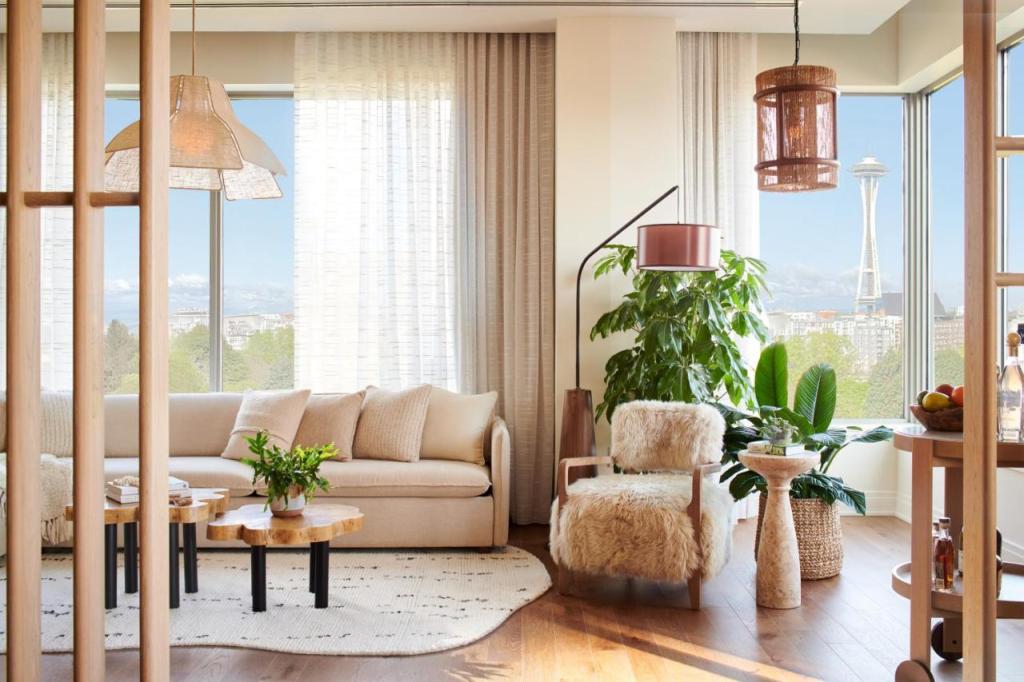
The most storied properties in Washington carry historical weight: associations with heads of state, diplomats, and figures from American political history. This history is often embedded in the physical fabric of the buildings, in original millwork, mosaic lobbies, and the proportions of rooms that were designed for a particular idea of civic grandeur. A luxury suite in one of these properties is not simply a well-appointed room; it is an argument about continuity and place.
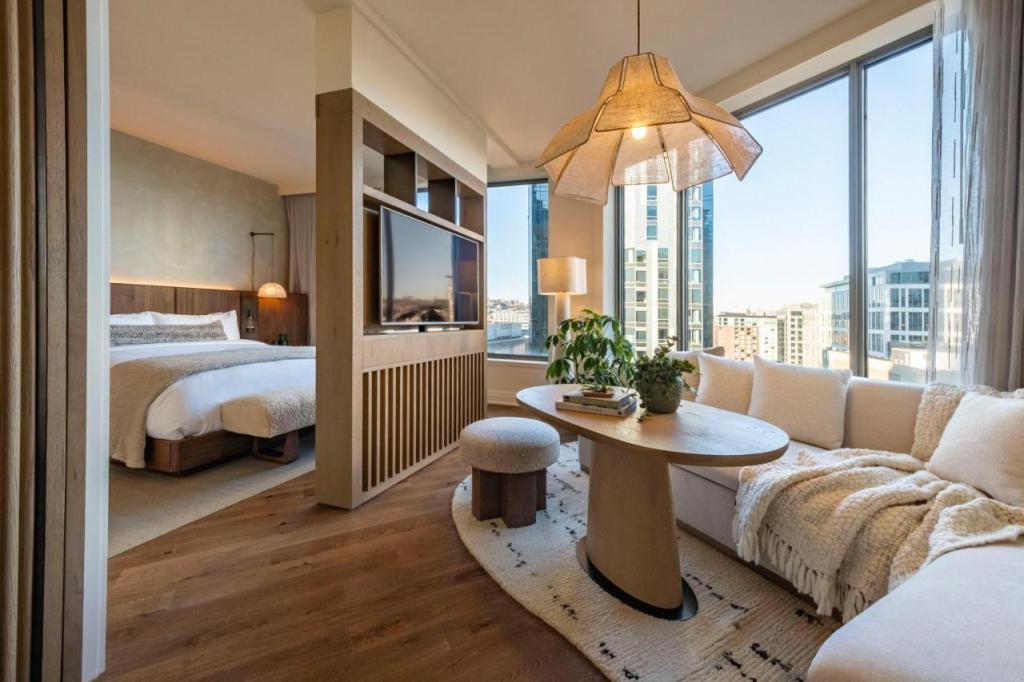
More contemporary luxury hotel suites in Washington prioritize spatial generosity, local sourcing in their food and beverage programs, and a service model built around anticipatory discretion rather than performative hospitality. Private dining arrangements, in-suite meeting setups, and access to curated cultural programming are increasingly standard offerings at the highest tier.
How to choose the best luxury suite in Washington D.C.
The most important variable when selecting a luxury suite in Washington is the relationship between the property's location and your specific itinerary. The city is walkable in theory but large in practice, and the distance between Georgetown, the Mall, and the Wharf is significant on foot.
Consider the architectural character of the building. Historic properties offer ceiling heights, molding profiles, and room geometries that newer constructions rarely replicate. Contemporary properties, by contrast, often offer superior technical specifications: soundproofing, climate control, and integrated technology that older buildings struggle to retrofit. Neither is categorically superior; the choice depends on whether you are traveling for the sensory experience of American institutional history or for operational efficiency in a high-performance environment.
For extended stays of four nights or more, suites with a separate living room and a kitchenette or bar setup allow for a degree of domestic rhythm that standard hotel rooms cannot provide. Washington's proximity to Virginia wine country and the Chesapeake Bay means that room service and in-suite dining can be anchored in genuinely regional produce and wine programs, which distinguishes the best properties from competent ones.
Why curated selection by La Suite matters in Washington
Washington has a significant volume of hotel inventory, and not all of it reaches the standard that the city's reputation implies. The gap between a hotel that markets itself as luxury and one that delivers it consistently in the suite category is substantial.
La Suite's curated selection for Washington filters that inventory against criteria specific to the suite experience: room proportion, natural light, service architecture, and the coherence of the property's overall offering. For a traveler arriving in a city dense with protocol and expectation, knowing that the accommodation has already been evaluated removes a layer of uncertainty that even the most experienced travelers find meaningful. The curated selection by La Suite exists precisely to make that decision clear, informed, and confident.