Where to stay in West Virginia: distinct areas for luxury travelers
The New River Gorge area, now anchored by a national park designation, draws travelers seeking proximity to one of the oldest rivers in North America. The gorge itself is dramatic in a geological sense, with sandstone walls and a forest canopy that shifts through the seasons. Properties in this corridor tend to position themselves around access: to the river, to the trails, to the bridge that defines the region's skyline. A luxury hotel suite here typically prioritizes views and connectivity to the outdoors over urban amenity.
The Greenbrier Valley, centered on the historic resort town of White Sulphur Springs, represents a different tradition entirely. This is where American resort culture took one of its earliest formal shapes, with mineral spring tourism giving way to a grand hotel tradition that persists today. The architecture is monumental, the grounds are designed for leisure at scale, and the expectation of service is embedded in the region's identity. Suites here often occupy historic structures with proportions that reflect the ambitions of an earlier century.
The Eastern Panhandle, bordering Maryland and Virginia, functions more as a gateway zone for Washington DC travelers. Its landscape is gentler, its towns more oriented toward weekend retreats, and its properties tend toward the intimate and the boutique rather than the grand resort format.
The Potomac Highlands, including Canaan Valley and Snowshoe Mountain, attract winter travelers and those seeking high-altitude clarity. At elevations above four thousand feet, these areas offer a cooler, more austere version of Appalachian terrain, suited to travelers who want seasonal contrast.
When to visit West Virginia for a suite stay
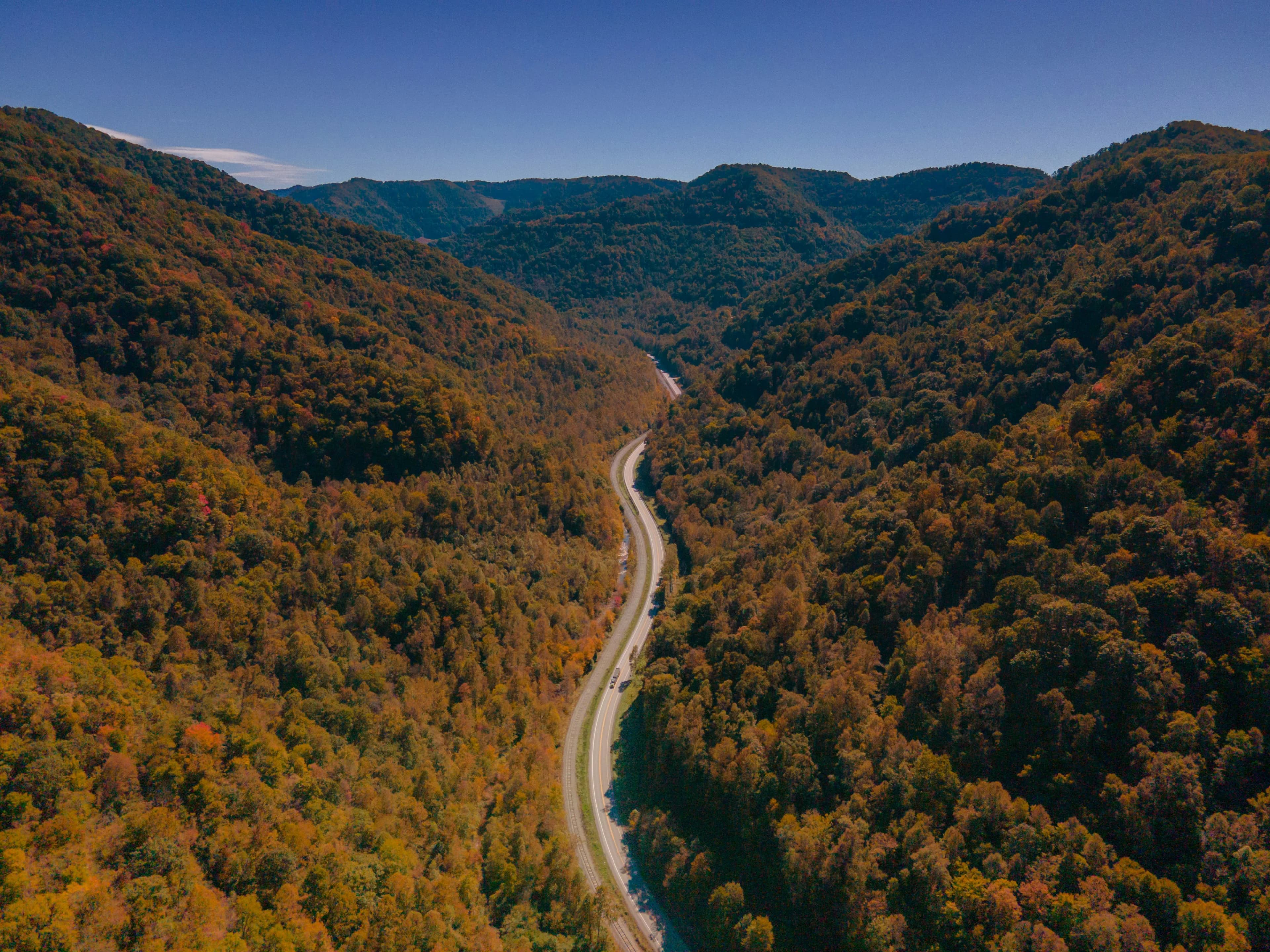
Autumn is the dominant season for luxury travel in West Virginia. The state's hardwood forests produce a foliage event of considerable intensity between mid-October and early November, drawing visitors from across the Mid-Atlantic and Northeast. Suite availability at top properties tightens significantly during peak color weeks, and advance planning is advisable.
Spring brings whitewater season to the New River and Gauley River systems. The Gauley River is particularly regarded among serious kayakers and rafters, with a release schedule tied to the Army Corps of Engineers' dam operations at Summersville Lake. Properties near the gorge experience their own seasonal demand during these release weekends in September and October.
Summer offers the most consistent access across the state, with long days and moderate temperatures at elevation making it well-suited for extended stays. The Greenbrier region operates its full calendar of activities during summer, and golf on its historic courses draws a dedicated seasonal audience.
Winter is selective. Snowshoe Mountain maintains a ski operation and draws a specific clientele, but much of the state's lower-elevation inventory reduces its programming in the colder months. Travelers who want solitude and price flexibility will find winter an underrated window, particularly for properties in the Greenbrier Valley.
Understanding luxury standards in West Virginia
West Virginia operates outside the formal designation systems found in Europe. There is no equivalent of the French Palace label or a nationally governed tier above five-star classification. Quality here is assessed through a combination of brand affiliation, property history, service ratios, and the physical standards of the suite product itself.
The Greenbrier resort is the state's most architecturally significant luxury address, a property with a documented history stretching back to the eighteenth century. Its Federal-style main building, its collection of cottage suites, and its position as a former government relocation site during the Cold War give it a layered cultural identity that few American resorts can match. Suites at this scale are measured in square footage, in the quality of their furnishing, and in the access they provide to the property's facilities.
Elsewhere in the state, luxury tends toward the intimate. Boutique properties and lodge-style hotels built around natural amenities characterize much of the market. The expectation is not of urban hotel formality but of considered comfort: high-thread-count linens, locally sourced provisions, fireplaces in suite, and staff-to-guest ratios that allow for genuine personalization.
For travelers accustomed to international luxury standards, West Virginia rewards a recalibration of expectation. The luxury here is spatial and experiential rather than decorative. A suite overlooking the New River Gorge or set within the forest at elevation delivers a specific kind of sensory quality that urban properties cannot replicate.
How to choose the right luxury suite in West Virginia
The first consideration is purpose. West Virginia's suite inventory is not uniform, and the right choice depends on whether the trip is oriented toward active outdoor experience, historic resort immersion, or private retreat.
For active travelers, proximity to the New River Gorge National Park or the Gauley River corridor is the primary filter. Suites in this zone should be evaluated for their operational partnerships with outfitters, for the quality of their in-suite recovery amenities (spa facilities, soaking tubs, and meal service), and for their logistical convenience relative to trailheads and put-ins.
For those drawn to the Greenbrier tradition, the question is one of suite category within a complex property. The main hotel building offers formal suites with historic character. Cottage accommodations provide more privacy and a residential scale. Understanding the difference between these categories is essential to choosing correctly.
Architecture is a relevant variable throughout the state. Some properties occupy converted historic structures, farmsteads, or industrial buildings repurposed with design intention. Others are purpose-built resort structures where contemporary comfort takes precedence over historic character. Both can deliver quality at the suite level, but they offer fundamentally different atmospheres.
Seasonal access is also a practical consideration. Some properties in the highlands have limited road access during winter months, and confirming operational status and suite availability before committing is a basic step that La Suite's curation process systematizes for the traveler.
Why curated selection matters in West Virginia
West Virginia's luxury hotel market is smaller and more dispersed than those of coastal or urban American destinations. The absence of a dense hotel cluster in any single city means that identifying genuine quality requires knowledge of the territory rather than reliance on density as a proxy for choice.
La Suite's curated selection for West Virginia is built around direct property assessment and a consistent quality standard applied across suite categories. Rather than presenting every available option, the platform filters for the properties where the suite product specifically meets the criteria of spatial quality, service standard, and experiential coherence that the La Suite traveler expects.
For a destination where the difference between a well-positioned property and a poorly conceived one can determine the entire character of a trip, this filtering function is not a convenience. It is the essential starting point for planning a stay that reflects the actual quality of what West Virginia, at its best, has to offer.