Where to stay in Wyoming for a luxury suite experience
Jackson Hole and the Teton corridor
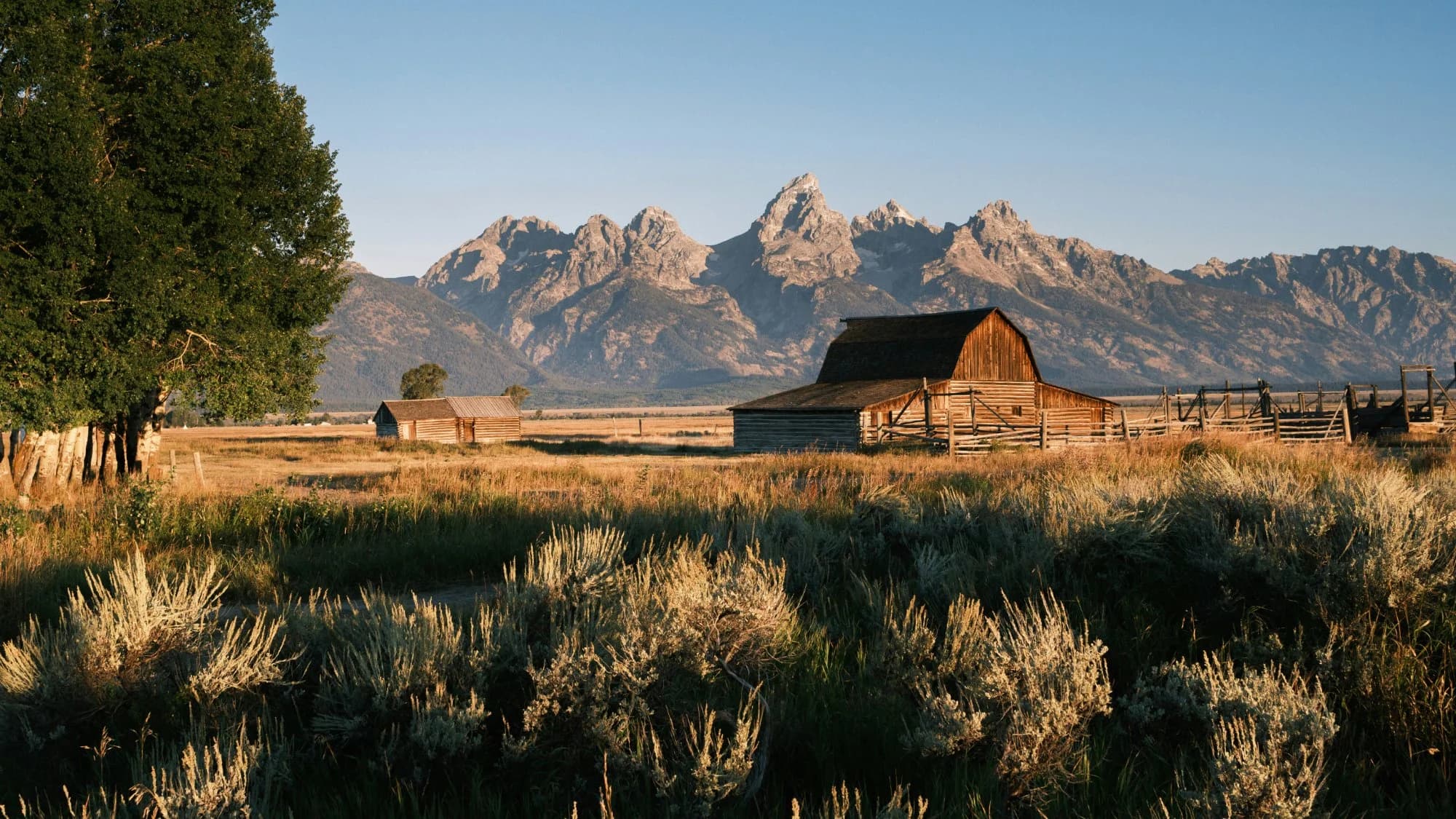
The valley floor of Jackson Hole sits at roughly 6,200 feet elevation, flanked by the Teton Range to the west and the Gros Ventre to the east. This corridor concentrates the highest density of premium hospitality in the state. Properties here tend to position themselves in direct visual conversation with the mountains, and suites are frequently designed to frame that relationship through floor-to-ceiling glazing, private decks, and materials that echo the surrounding geology: reclaimed timber, local stone, raw iron. The town of Jackson itself operates as a cultural anchor, with gallery infrastructure and a culinary scene that has matured considerably over the past decade. Teton Village, at the base of Jackson Hole Mountain Resort, offers a more ski-oriented version of the same premium register.
Yellowstone country and the northern ranges
The area surrounding Yellowstone National Park and the Absaroka Range offers a fundamentally different proposition. Fewer properties, more distance between them, and a landscape defined by geothermal phenomena, high-altitude meadows, and the Lamar Valley's wildlife corridors. Luxury here skews toward the ranch model: working or semi-working operations that have been refined over generations into full-service retreats. These are not hotels that happen to have land. They are land-first experiences with hotel-grade service layered carefully on top. Suite equivalents in this context often take the form of private cabins or lodge rooms with significant square footage, dedicated outdoor space, and intentional separation from other guests.
When to visit Wyoming for a premium stay
Wyoming's calendar divides cleanly into three high-value windows, each attracting a different traveler profile.
Summer, from late June through early September, is the broadest window. Temperatures in the valleys are moderate, wildflowers are measurable across the high country, and wildlife activity in Yellowstone and Grand Teton is at its most accessible. This is peak season for suite availability, and advanced planning of three to six months is standard for top-tier properties.
Winter, from December through March, draws a more specific visitor: skiers and those seeking genuine isolation. Jackson Hole Mountain Resort operates one of the most technically demanding ski areas in North America, and the surrounding lodges calibrate their programming and pricing accordingly. Suite rates during the holiday window (late December through early January) represent the highest price point of the year.
The shoulder periods of October and May occupy their own category. October in particular carries a quality that summer cannot replicate: aspen groves turn a precise gold, elk rut through the valleys, and the crowds recede sharply. Properties that remain open through October often offer their most favorable conditions for a quiet, considered stay.
Understanding luxury standards in Wyoming
Wyoming does not operate within the European palace hotel tradition, and it does not attempt to. The luxury register here is defined by a different set of coordinates: square footage over ornamentation, outdoor access over ballroom infrastructure, and staff who have genuine knowledge of the land rather than rehearsed concierge scripts.
The dominant prestige format in Wyoming is the dude ranch, a term that has evolved considerably from its early twentieth-century origins. At the upper end of this category, properties offer private suite accommodations, curated expedition programming, farm-to-table culinary programs with named sourcing, and a staff-to-guest ratio that competes with any urban five-star property. The key differentiator from a conventional luxury hotel is the all-inclusive structure: most premium ranches include lodging, all meals, and guided activities in a single rate, which changes the financial calculus considerably.
Within the hotel segment proper, Wyoming's top properties tend to carry Forbes Travel Guide recognition rather than the French Palace designation, which is specific to France. The relevant signals here are suite size (expect a minimum of 600 to 800 square feet at the top tier), fireplace presence, dedicated outdoor terraces, and the quality of the spa infrastructure, which at leading properties integrates local botanicals and altitude-adapted protocols.
How to choose the right suite in Wyoming
The first decision is architectural orientation: do you want a property that faces the mountains or one that sits within working ranch land? These are not interchangeable experiences. Mountain-facing suites in the Teton corridor offer a more theatrical visual proposition. Ranch-format accommodations offer a more immersive relationship with the land, where the boundary between interior and exterior is deliberately blurred.
The second consideration is season-specific infrastructure. A suite with a wood-burning fireplace and heated floors is a different object in February than it is in July. Conversely, a property with exceptional outdoor dining and direct trail access earns its value in summer months. Match the suite's specific features to the season you are traveling.
A third variable is access to wildlife programming. Wyoming's wildlife density, particularly in the Greater Yellowstone Ecosystem, is among the highest on the continent for megafauna. Properties that employ naturalist guides or maintain formal partnerships with Yellowstone's ranger infrastructure offer a materially different experience from those that simply provide proximity to the park boundary. This distinction is worth investigating before committing to a specific property.
Finally, consider altitude. Jackson Hole sits above 6,000 feet, and some properties in the surrounding ranges operate above 7,000 feet. For guests arriving from sea level, the first 24 to 48 hours carry a physiological adjustment period that well-run properties actively accommodate through hydration protocols, modified activity schedules, and suite amenities designed for recovery.
Why a curated selection by La Suite matters in Wyoming
Wyoming's luxury hospitality market is smaller than those of comparable American destinations, but it is not simple. The distance between a genuinely exceptional suite and an adequately premium one is significant, and the variables that determine that distance are not always visible in standard booking interfaces. View orientation, cabin placement within a property, proximity to shared facilities, and the specific programming available in a given season all require granular knowledge to evaluate correctly.
La Suite approaches this market with the same editorial discipline applied to the Maldives or the Swiss Alps: every property is assessed on the quality of its suite inventory specifically, not its general reputation or star rating. The curated selection for Wyoming reflects properties where the suite experience is architecturally coherent, spatially generous, and calibrated to the landscape it occupies. For travelers who want to arrive with confidence rather than optimism, that distinction is the entire point.