Bolivia's distinct regions for luxury suite stays
The altiplano and La Paz
At over 3,600 metres above sea level, La Paz is one of the highest administrative capitals in the world. The city operates at an altitude that disciplines the pace of arrival. The Sopocachi and Zona Sur districts concentrate the most architecturally coherent luxury hotel offerings, where properties blend contemporary Bolivian design with Andean textile traditions. Suites in this zone frequently feature panoramic views over the canyon city, with the Illimani peak defining the southern horizon. Altitude acclimatisation is a genuine consideration, and the best properties in La Paz provide oxygen support as a standard amenity.
Uyuni and the salt flats
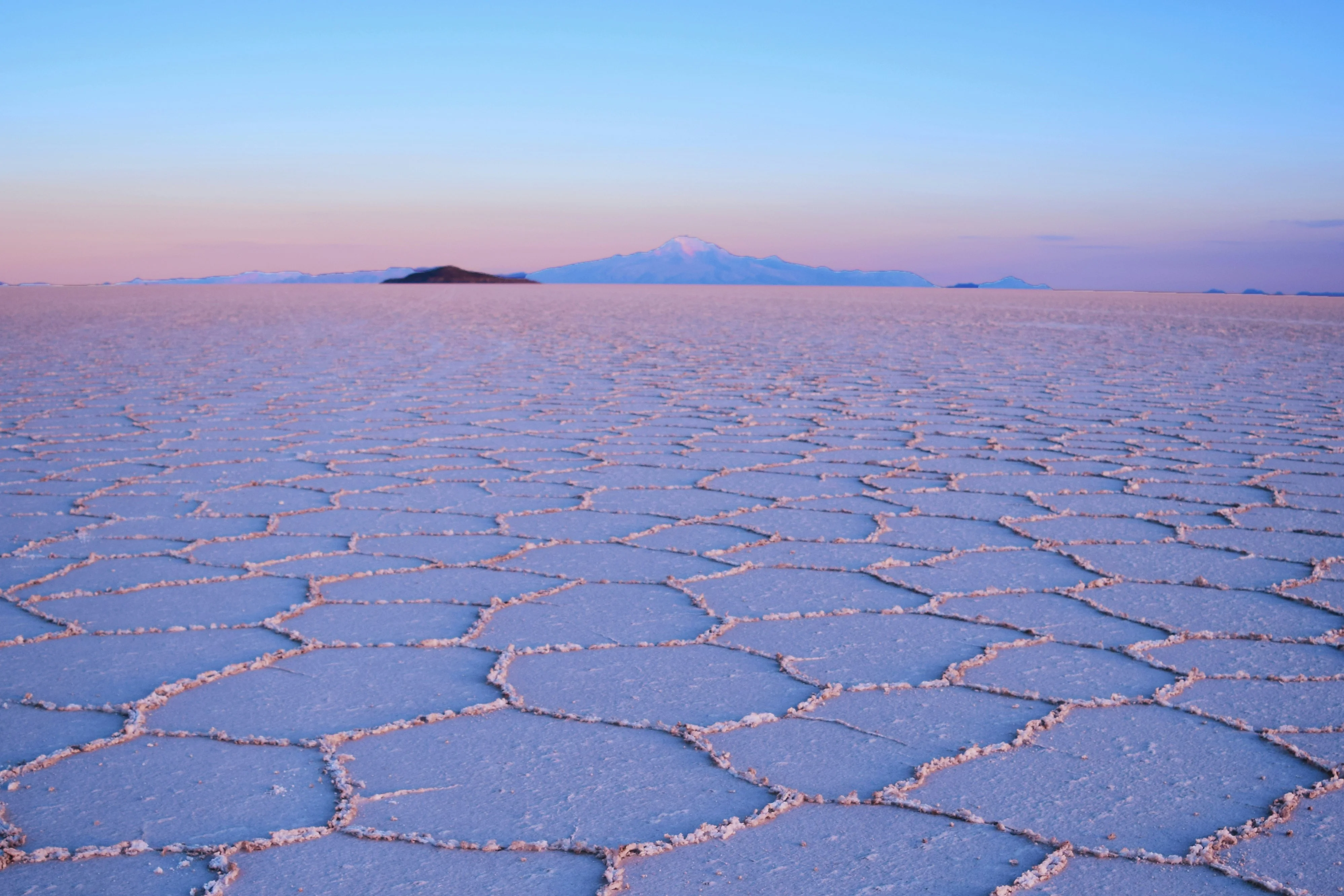
The Salar de Uyuni is one of the defining geographical spectacles of South America. At roughly 10,582 square kilometres, it constitutes the world's largest salt flat, and its optical qualities, particularly during the wet season when a thin film of water creates a near-perfect mirror, have made it one of the most photographed landscapes on the continent. Uyuni itself is a small town, and the luxury accommodation options near the flats are deliberately minimal in number. Salt-construction lodges represent the most architecturally distinctive typology here, offering suites where the walls, floors, and furniture are carved from compressed salt blocks.
Sucre and the colonial south
Sucre, Bolivia's constitutional capital, is a UNESCO World Heritage city. Its whitewashed colonial architecture has been maintained with unusual rigour, making it one of the most visually coherent historic centres in the Americas. Boutique luxury properties here occupy converted republican-era mansions, where internal courtyards, hand-painted tilework, and locally woven textiles characterise suite interiors. The pace is quieter than La Paz, and the climate at 2,810 metres is markedly more temperate.
Santa Cruz de la Sierra and the lowlands
Santa Cruz de la Sierra represents a different Bolivia entirely. Bolivia's most populous city sits in the tropical lowlands and operates with a commercial intensity absent from the altiplano. Luxury hotels here trend toward contemporary international standards, with larger suites, business-oriented infrastructure, and proximity to the Jesuit missions circuit, a collection of baroque churches in the surrounding countryside that constitutes a lesser-known but architecturally significant UNESCO heritage trail.
When to visit Bolivia for a luxury suite stay
Bolivia's seasons are shaped by altitude rather than latitude. The dry season, running from May through October, is the primary window for high-altitude travel. Roads are passable, trekking conditions are reliable, and the altiplano landscape takes on a clarity that makes the Andean light particularly precise. For the Salar de Uyuni, the dry season produces the famous salt hexagon textures across the flat surface. The wet season, from November through March, transforms the salar into a reflective plane and is preferred by photographers and travelers seeking a more unusual sensory encounter with the landscape.
June and July represent peak visitor months, with European and North American travelers comprising the majority. For suite availability at premium properties near Uyuni, advance planning of three to six months is advisable during this window. Sucre and Santa Cruz are navigable year-round, with the lowland city experiencing its most comfortable temperatures between May and September.
Local luxury standards: what to expect from top-tier suites in Bolivia
Bolivia does not operate a formal luxury hotel classification system comparable to the French Palace designation or the Leading Hotels of the World tier in Europe. The concept of prestige accommodation here is more artisanal and less institutionalised. The most respected properties tend to be independently owned boutique hotels, often family-operated, where the suite experience is defined by material authenticity rather than scale.
Andean luxury is characterised by specific tactile and visual languages: hand-loomed alpaca and llama wool textiles, fired adobe walls, altiplano ceramics, and architectural references to pre-Columbian Tiwanaku culture. In the lowlands, hardwoods and colonial proportions dominate. In both cases, the finest suites offer spatial generosity without the corporate anonymity of international chain properties.
Altitude management is a functional consideration unique to Bolivia. Properties in La Paz and near Uyuni that operate at the highest standard will provide oxygen concentrators in-suite, coca leaf tea as a standard welcome amenity, and staff trained in altitude sickness recognition. This is not a supplementary service; it is a marker of genuine operational competence at altitude.
How to choose the best suite in Bolivia: practical considerations
The choice between altitude and lowland Bolivia is the first and most consequential decision for any luxury traveler. Those who arrive directly from sea level and plan to spend their first nights in La Paz or at the Salar should build in acclimatisation time. A night or two in Santa Cruz before ascending is a medically sound approach that the best travel advisors routinely recommend.
For the Salar de Uyuni, the most distinctive accommodation options are the salt lodges located directly on or near the flats. These properties are remote by design, with limited external connectivity, which makes them appropriate for travelers seeking genuine disconnection. Suite selection here should prioritise thermal insulation, as nighttime temperatures at altitude can drop sharply even in the dry season.
In La Paz and Sucre, the architectural character of the property matters considerably. Colonial conversions offer patina and spatial interest, while contemporary builds offer altitude-adapted engineering and modern insulation. Both are legitimate choices, but they deliver different sensory registers. Consider also that La Paz's topography means that altitude varies significantly between the city centre and the residential zones of Zona Sur, which sits approximately 400 metres lower and tends to be more temperate.
For travelers exploring South America more broadly, Bolivia pairs naturally with northern Argentina or the Chilean Atacama, the latter sharing the geological DNA of the altiplano across the border. A multi-destination suite itinerary through the Andean corridor is one of the most architecturally and experientially coherent ways to understand the region.
Why curation matters in Bolivia
Bolivia's luxury accommodation market is small, dispersed across vast distances, and inconsistent in quality. The difference between a property that genuinely understands high-altitude hospitality and one that simply charges high-altitude prices is not always legible from a standard booking interface. This is where the editorial work of La Suite becomes operationally useful.
The curated selection by La Suite filters Bolivia's suite inventory by criteria that go beyond room size and thread count: material integrity, staff training, altitude competence, and the coherence of the guest experience from arrival to departure. For a destination where logistical complexity is real and the margin between a remarkable trip and a difficult one is narrower than in more established markets, a curated shortlist is not a convenience. It is a structurally sound starting point.