







The Complete Guide to the Best Luxury Suites in Lisbon | LaSuite.com
BY Jules Peulet

Discover our selection of the most exceptional luxury suites in Lisbon. Explore historic Pombaline palaces, contemporary minimalism, and spectacular views of the Tagus River.
Lisbon no longer sits at the periphery of European luxury; it has firmly claimed its position among the world's most dynamic hospitality markets. Propelled by an unprecedented influx of international high-net-worth travelers and design-savvy expatriates, the Portuguese capital has swiftly evolved from a landscape of charming small boutique keys to a competitive theatre of sovereign world-class luxury estates. Yet within a historic city defined by its steep hills and century-old structures, navigating this booming market demands a highly discerning architectural eye. A standard premium room in Lisbon is frequently constrained by the narrow boundaries of ancient footprints; to truly unlock the city's spatial rewards, one must demand the spacious, light-flooded volumes of its finest signature suites.
At La Suite, we operate with an inflexible editorial filter that privileges structural authenticity, volumetric grandeur, and seamless interior-exterior fluidity. In a metropolis celebrated for its extraordinary Atlantic luminosity, a world-class suite must function as a private sanctuary where historic architectural gravity meets the timeless ease of modern living. This guide serves as a strategic roadmap for navigating Lisbon's greatest hotel assets, mapping magistrally restored palacetes, radically minimalist penthouses, and sun-drenched private terraces suspended above the glittering expanse of the Tagus.
Discover our top suites in Lisbon !
1. Architectural DNA and Spatial Philosophy
The architectural framework of Lisbon's ultra-luxury hotel suites is shaped by an exquisite contrast: the structural discipline of late eighteenth-century urban planning operating in harmony with the fluid and radical minimalism of contemporary Portuguese design. The city's unique aesthetic identity is rooted in its spectacular reconstruction following the cataclysmic 1755 earthquake. This gave rise to the Pombaline style, an illuminated architectural vernacular characterized by strict geometric symmetry, prefabricated wood frames known as gaiola pombalina (the Pombaline cage), and noble, restrained façades.
Inside the city's elite hotel sanctuaries, this historic shell is articulated through the use of Lioz stone, rare fossiliferous limestone with cream and pink hues that have paved Lisbon's palaces and monuments for centuries. In prestigious heritage properties, these stone foundations support imposing ceilings adorned with delicately hand-restored stucco motifs, majestic enfilades of reception halls, and exquisite panels of azulejos (tin-glazed ceramic tiles) hand-painted from the Baroque and Pombaline eras. The materials chosen for these spaces reflect an ethic of discrete and organic luxury: solid Portuguese pine (pinho nacional), nubby raw linens, brushed brass, and superior-quality structural cork insulation.
This historic vernacular idiom has been brilliantly reinterpreted by a select elite of contemporary architects and interior designers. The internationally renowned brothers Manuel and Francisco Aires Mateus, the undisputed masters of modern Portuguese minimalism, have completely redefined the luxury suite experience in properties like Santa Clara 1728. Their design philosophy strips away all superfluity, using monolithic blocks of limestone, seamless matte plaster walls and pure geometric cuts to create refined spaces where Lisbon's golden and brilliant light becomes the principal architectural element.
In striking contrast, master interior architect Lázaro Rosa-Violán infuses a sense of dramatic storytelling and haute couture into properties like The Ivens. Rosa-Violán employs richly maximalist textures, hand-blown glass fixtures and deep velvet tones to celebrate Portugal's historic Age of Discovery, proving that a luxury suite can resemble the opulent private salon of a globe-trotting explorer.
Meanwhile, the collaborative genius of Pritzker Prize laureate Eduardo Souto de Moura and design studio Bastir at Bairro Alto Hotel seamlessly bridges these two worlds, restoring historic wooden arches while integrating refined and functional layouts that emphasize spatial fluidity and absolute comfort.
2. Mapping neighborhoods & atmosphere
Lisbon is a city built on seven dramatic hills, creating a topographically fragmented landscape where a shift of a single street or elevation completely transforms the social energy, architectural context and water views.
Avenida da Liberdade: Monumental status & Haute couture
Portugal's majestic "Champs-Élysées." Designed in the late nineteenth century as a grand public promenade, this wide avenue is shaded by centuries-old jacarandas and paved with intricate black and white calçada portuguesa stone mosaics. Avenida da Liberdade is the undisputed capital of international haute couture and majestic luxury.
The suites in this area, led by the iconic Four Seasons Hotel Ritz Lisbon and the discreet Valverde Hotel, occupy grand turn-of-the-century façades and mid-twentieth-century architectural monuments. The ambiance here is international, refined and highly structured. It appeals to chief executives, diplomats and high-profile travelers who demand monumental spatial volumes, reinforced security and immediate proximity to the world's most prestigious luxury boutiques.
Chiado & Bairro Alto: Cultural vitality & Historic palaces
The intellectual, theatrical and artistic heart of Lisbon. Perched on an abrupt ridge overlooking the city center, Chiado and Bairro Alto effortlessly merge nineteenth-century literary culture with vibrant contemporary energy. The signature suites of this district, particularly within the Bairro Alto Hotel or the spectacular Verride Palácio Santa Catarina, are masterfully rehabilitated aristocratic estates.
The way of life here is deeply connected to the street: as soon as you step through your private living room door, you are surrounded by historic theaters, Michelin-starred restaurants and cutting-edge design studios. The energy is cosmopolitan, elitist and visually stimulating, attracting collectors, gastronomes and travelers who wish to live at the cultural heart of the city.
Príncipe Real: Aristocratic trend and creative curation
Located just north of Chiado, Príncipe Real is Lisbon's most elegant residential enclave. Characterized by its magnificent nineteenth-century romantic palacetes and lush botanical gardens, this neighborhood has become a sanctuary for independent conceptual luxury boutiques, contemporary art galleries and high-end organic gastronomy.
Accommodations such as the Palácio Príncipe Real embody this unique and natural elegance. The suites feature massive footprints, ceilings with original frescoes and private access to hidden exotic gardens. The atmosphere is creative, at ease and deeply local, making it the first choice for global trendsetters who reject corporate luxury in favor of authentic life centered on the neighborhood.
Lapa and Estrela: secure discretion and old-money sovereignty
The tranquil, foliage-lined domain of Lisbon's historical nobility, foreign embassies and private residences. Away from the footsteps of mass tourism, Lapa and Estrela reign majestically over the city's western hills. The undisputed jewel of this neighborhood is the Olissippo Lapa Palace, a magnificent nineteenth-century count's residence surrounded by private subtropical gardens.
Suites in Lapa emphasize monumental and old-fashioned luxury: grandiose marble bathrooms, fine furnishings and stone terraces extending with views over the Tagus. The atmosphere is peaceful, highly secure and intensely private, serving as the ultimate destination for wealthy families, heads of state and travelers seeking absolute peace far from the urban center.
Alfama and Graça: medieval labyrinth and raw Moorish authenticity
The ancient and deeply moving heart of Lisbon that survived the 1755 earthquake. Alfama is an abrupt and winding maze of Moorish alleyways, hidden staircases and historic stone walls that cascade toward the river. Rather than traditional luxury beach resorts, this neighborhood features highly exclusive and high-end conversions of former convents and noble mansions, such as Santa Clara 1728 or The Lumiares.
Suites here are intimate and tranquil sanctuaries defined by thick stone walls, raw exposed beams and dramatic views framing red-tiled rooftops and the vast blue estuary of the Tagus. The atmosphere is mystical, historic and deeply romantic, attracting purists, artists and independent travelers seeking raw architectural character and total immersion in Lisbon's ancient past.
3. Residential arrangements and volumes
The boundary defining a standard room key in a premium luxury hotel and an elite suite in Lisbon lies in the strategic acquisition of authentic historical volume. Due to the unique disposition of Portuguese palacetes, standard rooms are often arranged in former service quarters or stables, resulting in reduced ceiling heights and fragmented dimensions. Booking a true signature suite unlocks the Piano Nobile (the noble first floor), the historical residential heart of the estate where ceiling heights double and rooms flow in a majestic and symmetrical sequence.
The distinctive characteristic of this residential layout is the classical Portuguese enfilade of formal salões (reception halls). Guests enter through a grand vestibule lined with period tilework, which opens onto a vast reception room featuring vertiginous four-meter-high ceilings and imposing French doors. This public entertainment zone is completely separated from the main sleeping quarters and spacious dressing rooms by recessed double doors or secret corridors carved into thick masonry walls. This layout allows an international executive or private investor to host business meetings, high-level entertainment, or catered dinners in absolute confidentiality.
Furthermore, Lisbon's spectacular topography has fueled the evolution of the ultimate contemporary layout: the rooftop penthouse suite with an integrated private miradouro (belvedere). Integrated into the upper levels of historical ridge palaces, these expansive suites employ frameless sliding glass walls that completely dissolve the boundary between interior and open horizon.
The exterior stone terraces, often larger than interior living spaces, feature private heated infinity pools, outdoor kitchens, and built-in hearths overlooking the Tagus estuary and the emblematic 25 April Bridge. For traveling families or diplomatic delegations, these penthouses frequently feature interconnected wings combining multiple independent suites into a single secure enclave with private elevator access and dedicated staff preparation areas.
4. The living ecosystem: gastronomy and elevated commerce
An elite suite in Lisbon operates as the heart of an ultra-sophisticated and hyper-private living ecosystem, seamlessly connecting the absolute pinnacle of contemporary Portuguese gastronomy to the closed-door worlds of historical craftsmanship.
Culinary integration within Lisbon's premier suites transforms private dining into a form of curatorial art. Properties featuring acclaimed culinary masters, such as Chef José Avillez of two-Michelin-starred Belcanto or Chef Henrique Sá Pessoa of Alma, treat the dining rooms of their most prestigious suites as exclusive extensions of their main kitchens. Suite guests can arrange private dinners where multi-course tasting menus are prepared in-suite by dedicated sous-chefs and paired with undisclosed rare Colheita Ports or single-estate red wines from Douro selected directly from the hotel's private reserves by the head sommelier.
Simultaneously, the city's most prestigious signature suites unlock highly exclusive, off-market connections with Portugal's legendary luxury houses. For occupants of Lisbon's premier suites, shopping entirely bypasses the public boutique.
Through executive concierge networks, personal shoppers can arrange private viewings by appointment and bespoke orders from the iconic porcelain house Vista Alegre. Similarly, the master jewelers of the historic house Leitão & Irmão, the official goldsmiths of the former Portuguese Royal Family, will transport rare fine jewelry collections and archival pieces as well as precious timepieces directly to your suite's secure salon, offering an entirely private acquisition experience away from public view.
5. The Cultural Tapestry and Historical Anchors
Lisbon's finest hotel suites function as living cultural vaults, meticulously curated to connect the modern traveler directly to the rich artistic history of the Iberian Peninsula. The interiors of these spaces are designed with museum-level precision, treating historical relics not as static décor, but as vital design elements that coexist alongside cutting-edge contemporary art.
Within these premium sanctuaries, original art is woven into the very fabric of architecture. It is common to discover suites where beautifully preserved cobalt blue azulejo tile panels from the eighteenth century form the backdrop for bold modern installations by world-renowned contemporary artists like Joana Vasconcelos, or expressionist paintings by masters of the Portuguese avant-garde.
Beyond the physical artworks displayed within the rooms, staying in a first-class suite in Lisbon offers completely unprecedented, off-market access to the city's most guarded cultural monuments through elite hotel partnerships:
After-hours museum access: Private midnight visits without crowds at the MAAT (Museum of Art, Architecture and Technology) or the Museu Nacional de Arte Antiga, guided by senior curators after public opening hours.
Ceramic archives access: Exclusive behind-the-scenes access to the restricted conservation vaults of the Museu Nacional do Azulejo, allowing clients to study historical tile production techniques alongside master restoration experts.
Sovereign architectural tours: Private by-appointment access to the privately-held Palácio dos Marqueses de Fronteira, renowned for its spectacular seventeenth-century battle scene tiles and meticulously maintained formal gardens, guided by members of the aristocratic family.
6. The Aesthete's Insight (Our signature critique)
A rigorous and entirely objective architectural critique of Lisbon's ultra-luxury suite landscape reveals that the romantic appeal of staying within a beautifully converted historic palacete frequently introduces significant operational and technical friction.
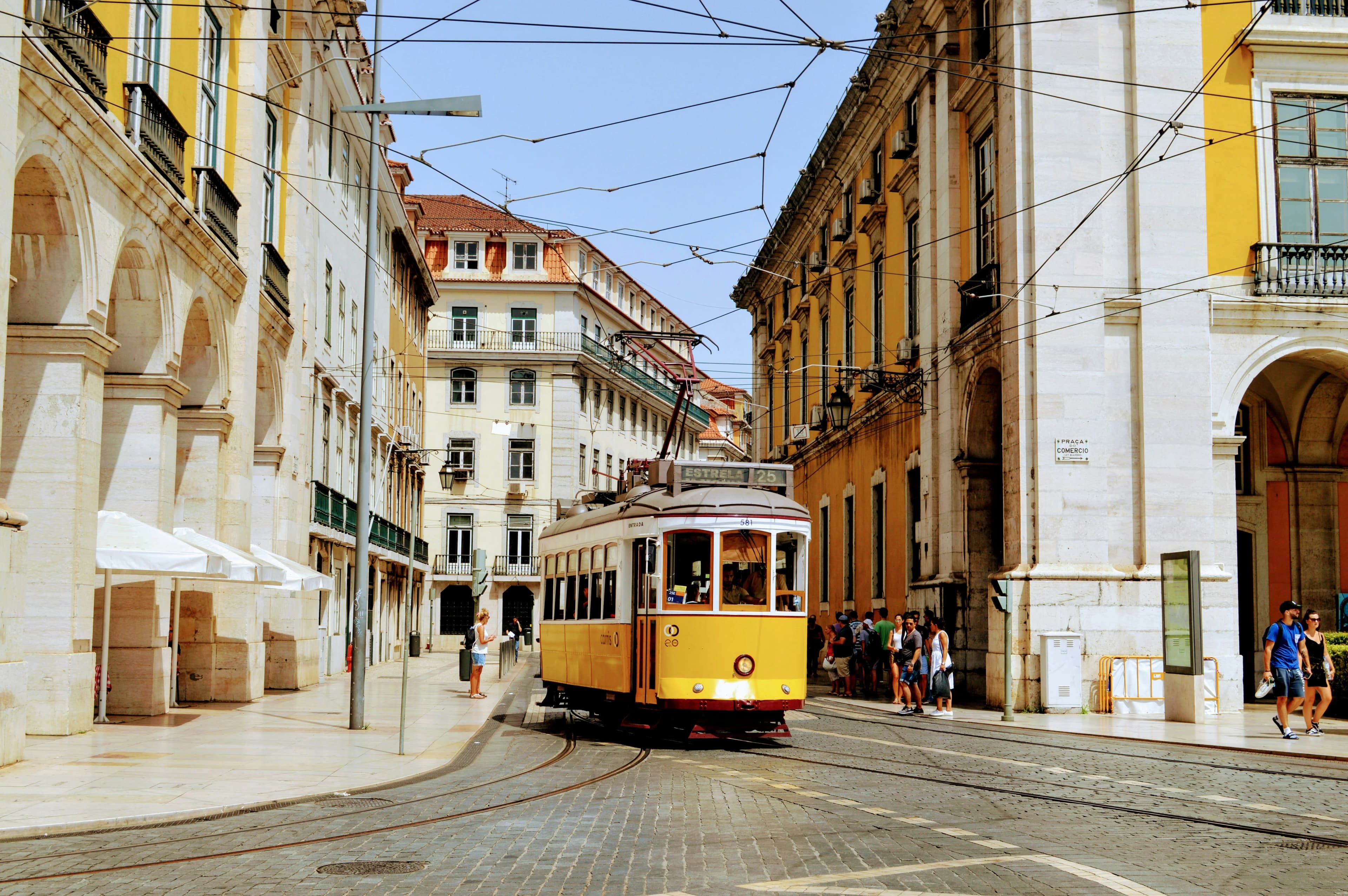
The primary and most disruptive challenge of the historic centre is the Tram Trap. Lisbon's iconic yellow iron trams (Os Eléctricos) are a cherished symbol of the city, but they present a major acoustic hazard for luxury hotels. When these heavy iron vehicles screech along the tight metal tracks of Chiado, Bairro Alto and Alfama, they generate loud metallic sounds and intense low-frequency structural vibrations. Because many historic hotel façades are strictly protected under heritage classification laws, properties are legally prohibited from installing heavy modern double-glazing acoustic frames. Despite interior secondary double glazing, these vibrations can easily rattle original sash windows and penetrate lower-floor suite rooms, destroying any illusion of peaceful isolation from 6:00 a.m. onwards.
Secondly, the technical challenge of managing the Atlantic humidity factor in ancient masonry structures is a persistent source of interior friction. Lisbon's proximity to the vast Tagus estuary creates patterns of salt-laden humid air. Historic palacetes were built with exceptionally thick stone walls designed to trap cool air during hot summers; however, when renovated with modern heating and centralized climate control, these structures can easily trap moisture. Clients staying in basement suites or historic wings may notice persistent musty odours, which hotels frequently attempt to control using loud industrial dehumidifiers hidden within suite wardrobes, directly compromising the serene acoustic and visual environment of a premium stay.
Finally, the steep and uneven topography of Lisbon's hills creates major structural limitations for interior circulation. Integrating modern passenger elevators into century-old palaces requires an incredible architectural compromise. As a result, clients booking penthouses on the top floor may find themselves navigating a chaotic interior maze: taking a tiny retrofitted elevator that can barely accommodate two large suitcases, followed by traversing narrow and uneven wooden corridors and climbing steep historic staircases to reach the final entrance of their room. This architectural reality proves that even at the highest price points, Lisbon's historic soul demands a certain degree of physical compromise from the traveler.
In final analysis, booking an elite hotel suite in Lisbon is far more than a simple transaction; it is an intentional choice to align yourself with the city's unique architecture and light. The capital's finest accommodations successfully dissolve the boundary between historic gravitas and modern luxury, allowing you to live intimately alongside centuries of Portuguese craftsmanship, culinary mastery, and grand maritime vistas. Whether your design preference leans toward the pristine minimalism of white limestone of an Aires Mateus sanctuary or the grand reception halls adorned with frescoes of a Pombaline-style palace in Chiado, the appropriate space must successfully master the challenges of its historic structure. By prioritizing protection from wind and noise, verifying elevator accessibility, and choosing the authenticity of material craftsmanship, the discerning traveler can look beyond the veneer of superficial luxury to secure a private Lisbon sanctuary that offers an unforgettable aesthetic stay.
FAQ Architecture & Traveler
What exactly differentiates a Lisbon "Palacete Suite" from a standard modern luxury suite?
The fundamental difference lies in historic layout and ceiling volumes. A standard modern luxury suite is constructed within a contemporary concrete framework, offering uniform ceiling heights (typically around 2.8 meters) and linear glass walls. A Palacete Suite, by contrast, occupies the Piano Nobile (noble floor) of a rehabilitated aristocratic townhouse hotel. This ensures extraordinary historic proportions, notably ceilings four to five meters high, hand-sculpted stucco, period hardwood floors, and grand enfilades of reception rooms that allow you to live within authentic Portuguese history.
How can I guarantee a suite with complete acoustic protection against the emblematic Eléctrico tramways?
To ensure absolute acoustic silence, you must avoid suites on lower floors that open directly onto narrow alleyways where tram lines run (particularly in Chiado, Bairro Alto and Alfama). When making your reservation, explicitly request suites facing the hotel's peaceful interior courtyard (pátio), or opt for penthouses on upper floors that dominate the urban canyon. Otherwise, concentrate your search on Avenida da Liberdade or the Lapa neighbourhood, where wide boulevards and residential amenities are completely free of tram lines.
What is the impact of Lisbon's microclimates and seasonal winds on private rooftop terraces?
Due to its geographical position on the Atlantic coast, Lisbon is subject to the Nortada, a strong, cool northerly wind that sweeps across the city during the summer months of July and August. If you book a high-altitude penthouse suite on a north-facing ridge, your vast private terrace can become quite windy and uncomfortable in the late afternoon. To ensure a pleasant outdoor lifestyle, seek suites facing south or properties situated on the lower slopes of hills (such as Lapa or lower Chiado), which offer natural topographical protection against Atlantic winds.
More from the Journal

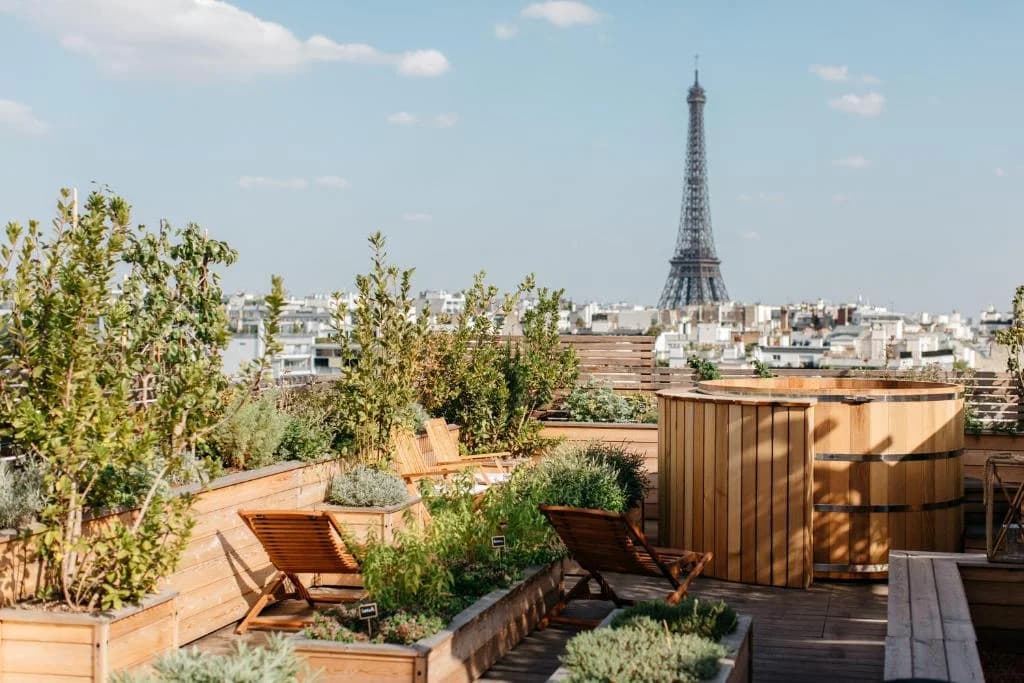
Paris / Romance: Suites with Eiffel Tower Views to Book for Two
Paris and the Eiffel Tower embody intimacy for two. Discover four Parisian retreats where the view of the Iron Lady becomes the discreet setting for shared moments, between private balconies and suspended gardens.
BY Jules Peulet

Edinburgh / Autumn: The 5 Suites Where Season Becomes Art
In autumn, Edinburgh reveals a raking light that redraws every urban volume. Five exceptional suites transform this seasonal alchemy into a residential experience, where Gothic velvet mingles with refined marble and perspectives over the misty castle.
BY Jules Peulet

New York / December: Inside the Most Coveted Suites
December transforms Manhattan into a competitive arena for access to the most exclusive suites. Between structural scarcity and exponential demand, luxury hotels reveal the mechanisms governing seasonal luxury.
BY Jules Peulet