







The Definitive Guide to the Most Beautiful Luxury Hotel Suites in Paris
BY Jules Peulet

An elite selection of the most beautiful luxury hotel suites in Paris, exploring majestic volumes, renowned designers and the ultimate residential lifestyle of the world's finest Palaces.
Paris does not simply possess hotels; it commands an empire of Palaces. For the international traveler seeking the absolute quintessence of refinement, the French capital remains the ultimate canvas of high-end living. Yet, in a metropolitan market where every establishment promises luxury, a profound distinction has emerged between the standard premium room and the architectural mastery of a true signature suite. To cross the threshold of a world-class Parisian suite is to enter a carefully conceived private sanctuary, where space is the ultimate currency, and design is treated as refined art.
At La Suite, we believe your accommodation choice should be as visually striking and structurally significant as the city itself. This guide is an elitist architectural exploration of Paris's most exceptional hotel suites, spaces defined by imposing volumes, inherited expertise, and undeniable residential soul. Whether you seek a historic Haussmannian drawing room overlooking the Seine or a minimalist, refined penthouse hidden beneath iconic zinc rooftops, this is the definitive map for navigating Paris's ultimate spatial rewards.
Discover Our Selection of 10 Best Luxury Suites in Paris
1. Architectural DNA and Spatial Philosophy
To understand the spatial architecture of Paris's ultra-luxury hotel suites is to understand the layers of French history carved in stone. The city's hotel landscape does not merely welcome travelers; it maintains an ongoing dialogue between the classical symmetry of the Grand Siècle, the urban rigor of Baron Haussmann's nineteenth century, and the precise minimalist interventions of contemporary design. The ultimate Parisian suite is not defined by superficial opulence, but by its structural authenticity and the emotional resonance of its volumes.
The foundational basis of this aesthetic authority rests upon ashlar stone, the cream-colored Lutetian limestone that absorbs and reflects soft, silvery-gray Parisian light. Within the most prestigious suites of the city's designated Palaces, this structural envelope articulates itself through strict classical codes. The soaring ceilings (often reaching heights of four to five meters on the coveted noble floor (second floor)) dictate a specific spatial choreography. These volumes are framed by finely hand-sculpted plaster moldings (boiseries), historic ceiling rosettes, and majestic open fireplaces carved in Peach Blossom or Calacatta marble. Beneath one's feet, the characteristic amber patina of solid oak parquetry, arranged according to traditional Chevron (Point de Hongrie) or Versailles patterns, establishes a tactile connection with historical French craftsmanship.
In the modern era, the challenge for the world's greatest interior architects has been to respect this monumental heritage while introducing contemporary habitability and fluid spatial dynamics. The masters of the craft have approached this question with distinct philosophical perspectives. Pierre-Yves Rochon, celebrated for his work at Bristol Paris and Four Seasons Hôtel George V, employs a profoundly classical approach, elevating historical proportions through silk wall coverings by Maison Veraseta and hand-gilded leaves that honor eighteenth-century heritage. Conversely, designer Sybille de Margerie infuses classical structures with feminine textures and haute couture sensibility, using bespoke embroidery and subtle metallic threads to soften rigid architectural lines.
The contemporary counterweight to this classicism is carried by visionary studios such as Gilles & Boissier and legendary architect Jean-Michel Wilmotte. Wilmotte's transformative work on the emblematic Hôtel Lutetia on the Left Bank stripped away decades of non-original additions to expose the raw Art Deco and Art Nouveau bones of the property, incorporating dark brushed linear woods and refined functional stone. Gilles & Boissier infuse dramatic and theatrical tension into their spaces, juxtaposing refined contemporary art and monolithic blackened oak furniture against immaculate white plaster Haussmann ornaments. This tension between historical preservation and cutting-edge spatial design forms precisely the architectural DNA that distinguishes a true luxury suite from a mere premium room in the French capital.
2. Mapping Neighborhoods and Atmosphere
Paris is an archipelago of distinct micro-cultures, where a shift of a single block or a crossing of the Seine entirely recalibrates the stylistic atmosphere, historical context, and psychological profile of the destination. For the discerning aesthete, choosing a suite is an act of alignment with one of these geographical identities.
The First Arrondissement: Place Vendôme & Tuileries
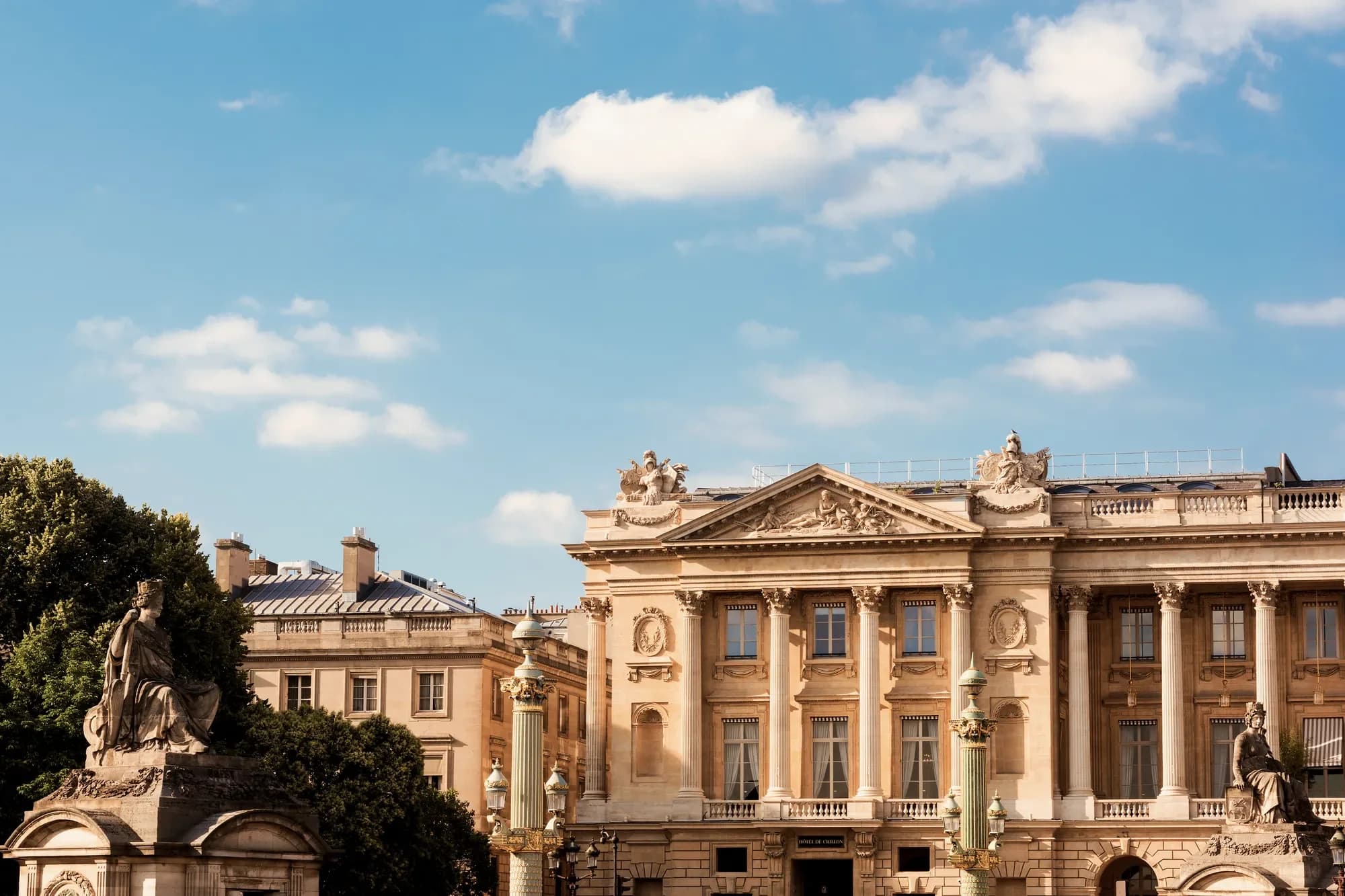
The absolute epicenter of timeless and sovereign luxury. This area is defined by the impeccable classical architecture of the seventeenth century by Jules Hardouin-Mansart. Staying in a grand suite here, such as those at the Ritz Paris or the Meurice, means living within the architectural manifestation of absolute monarchy. The atmosphere is unhurried, highly structured and intensely formal. Views open onto the geometric symmetry of the Jardin des Tuileries or the monolithic bronze column of Place Vendôme. It appeals to traditional purists who demand historical gravity and the ultimate expression of Paris's timeless prestige.
The Golden Triangle : 8th Arrondissement (Montaigne / George V / Champs-Élysées)
The epicenter of high-tension fashion, cinematic grandeur and international influence. Bounded by Avenue Montaigne, Avenue George V and the Champs-Élysées, this district pulses to the rhythm of global commerce and haute couture. Hotel architecture here is monumental, typified by the Art Deco lines of the Prince de Galles or the classical palatial Haussmannian facades of the Four Seasons George V and the Plaza Athénée. Suites here are designed for maximum visibility, large-scale entertainment and immediate proximity to the world's most powerful luxury boutiques. The energy is vibrant, cosmopolitan and unabashedly opulent.
Saint-Germain-des-Prés & The Left Bank : 6th Arrondissement
The intellectual, artistic and profoundly residential sanctuary of Paris. Exempt from the monumental tourism of the Right Bank, Saint-Germain-des-Prés offers narrow and winding medieval streets as well as discreet and confidential luxury. The suites of this neighborhood, notably within the prestigious Hôtel Lutetia or boutique bastions such as J.K. Place Paris, privilege an artisanal and curated way of life. The aesthetic turns toward mid-century Italian design, curated literary libraries and rich, textured velvet. It is the playground of the discreet traveler, writers, art collectors and unobtrusive executives who seek total anonymity and an authentic residential experience, anchored in the neighborhood.
Le Marais : 3rd & 4th Arrondissements
A maze of avant-garde design, contemporary art galleries and preserved history of the Old Regime. Because the Marais escaped intact from Baron Haussmann's demolition in the nineteenth century, its architectural vernacular is composed of seventeenth-century hôtels particuliers with hidden courtyards, exposed beams and frescoed ceilings. Accommodations such as la Cour des Vosges or Le Grand Mazarin capture this eclectic and hyper-creative energy. The atmosphere is historic yet intensely young and artistic, making it the premier choice for collectors, designers and travelers who reject traditional palatial formality in favor of bold and curated eclecticism.
The Sixteenth Arrondissement : Trocadéro & Passy
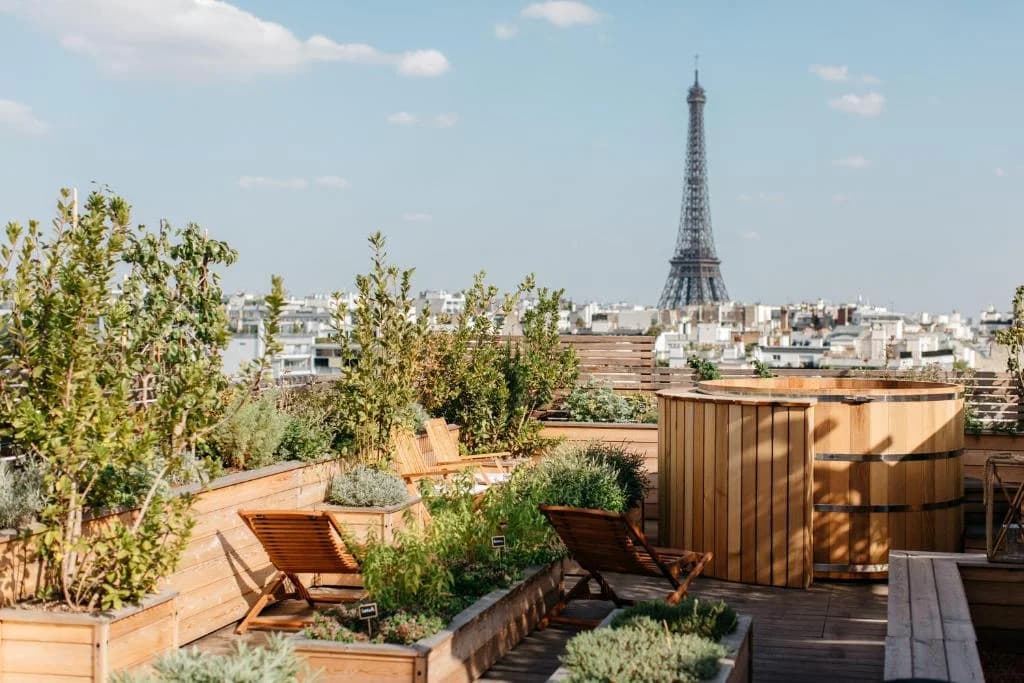
A district of monumental scale, diplomatic security, and cinematic views. Dominated by Belle Époque and imperial-era architecture, the tree-lined broad avenues of the 16th Arrondissement provide a sense of space and tranquility impossible to find in the city center. Properties such as the Shangri-La Paris (former palace of Prince Roland Bonaparte) and The Peninsula Paris offer unparalleled structural volume. This area is selected for two precise reasons: absolute security and discretion away from the bustling city center, as well as the most dramatic and unobstructed terrace views of the Eiffel Tower and the winding Seine.
Discover our selection of suites in Paris.
3. Residential Configurations & Volumes
The defining boundary between a standard luxury hotel room and an elite suite lies in the transition between temporary accommodation and a true private Parisian apartment. In a city where space is the ultimate currency, the architecture of a premium suite must emulate the circulation, intimacy, and functional zoning of a historic residential dwelling.
The cornerstone of this residential layout is the classic enfilade, an architectural succession of rooms aligned with one another along a central axis. When interior doors open, they create a striking visual perspective from the entrance vestibule through the grand salon, to the master bedroom and dressing rooms. This arrangement, inherited from seventeenth-century French châteaux, allows for a masterful orchestration of public and private zones. A CEO organizing an impromptu business meeting or an intimate dinner can utilize the grand salon and its adjoining dining room without ever compromising the complete privacy of the main rest quarters.
Furthermore, the unique architecture of Parisian rooflines introduces extraordinary structural typologies: the penthouse duplex and triplex. Concealed behind traditional zinc and slate mansard roofs, these multi-level suites are connected by custom-designed helical staircases in brushed steel, glass, or polished concrete. They offer striking architectural duality: a lower level dedicated to spacious reception areas with soaring ceilings, and an upper level carved directly into the roof structure, opening onto landscaped private terraces.
These private terraces, often exceeding 100 square meters, function as elevated outdoor living rooms completely insulated from the noise of the metropolis below. For traveling families or affluent multigenerational individuals, these arrangements frequently feature interconnected structural configurations, combining multiple independent junior suites into a single secured wing with private corridor access, dedicated staff quarters, and secondary entrances for absolute operational discretion.
4. The Lifestyle Ecosystem: Gastronomy and haute couture
An elite Parisian suite does not exist in a vacuum; it operates as the anchoring point of a highly integrated luxury ecosystem that merges culinary arts with haute couture. The physical boundaries of the suite dissolve to grant unprecedented hyper-private access to the city's cultural and material masterpieces.
Culinary integration within Parisian suites represents the absolute pinnacle of in-room service evolution. Rather than offering standardized menus, the kitchens of the city's multi-Michelin-starred establishments are directed to treat the private salons of their signature suites as extensions of their main dining rooms. Suite service is elevated to the rank of performative art: service à l'anglaise in white, bespoke menu designs conceived by emblematic chefs such as Christian Le Squer or Alain Ducasse, and dedicated sommeliers who wheel custom tasting carts directly into the suite's living room to pair rare vintages from the hotel's deep underground cellars.
Simultaneously, the relationship between grand Parisian suites and elite fashion houses on Avenue Montaigne, Rue Saint-Honoré, and Place Vendôme is deeply institutionalized. For ultra-high-net-worth individuals, the traditional luxury boutique is entirely circumvented. Through dedicated haute couture concierges, the world's most exclusive brands, including Chanel, Dior, and Hermès, arrange private styling consultations in-suite.
Entire collections are securely transported to the suite's dressing rooms before the guest's arrival, accompanied by personal tailors and private atelier specialists. For the acquisition of haute joaillerie at Place Vendôme, masterpieces from houses such as Cartier or Van Cleef & Arpels are brought directly to the suite under private security, allowing clients to examine rare stones and archive timepieces in the absolute safety and comfort of their private living room.
5. The Cultural Canvas & Historical Anchors
Paris's finest hotel suites are functional living museums, working in direct synergy with the city's artistic heritage and cultural institutions. The walls of these spaces are treated with curatorial precision, acting as physical extensions of the galleries and museums that border the Seine's banks.
Within these sanctuaries of prestige, original artworks replace generic decoration. It is commonplace to discover seventeenth-century oil paintings and Louis XVI furniture standing alongside mid-century modernist sculptures, rare lithographs, and site-specific contemporary installations commissioned from prominent European artists. Hotels regularly partner with major contemporary art fairs, such as Paris+ by Art Basel, and elite galleries like Galerie Thaddaeus Ropac or Galerie Perrotin, to circulate museum-quality works throughout their high-end suites, allowing clients to live intimately alongside masterpieces before their transition to public exhibitions or private collections.
Beyond the physical walls of the suite, the true measure of a property's cultural authority lies in its ability to unlock the otherwise inaccessible corners of Paris. The concierge networks of the city's top-tier hotels maintain deep historical ties with national cultural institutions. This enables them to orchestrate entirely bespoke, off-market cultural experiences for suite clients:
Midnight private visits: Exclusive after-hours access to the Louvre Museum or the Musée d'Orsay, completely free of crowds, guided by chief curators.
Architectural access: Private tours of the hidden costume workshops and historic dome of the Palais Garnier.
Contemporary art access: Private and VIP access to the Bourse de Commerce (Pinault Collection) or the Louis Vuitton Foundation, including access to private conservation laboratories closed to the public.
6. The aesthete's overview (Our signature critique)
Though the mythology of the Parisian palace suite is steeped in absolute perfection, rigorous architectural criticism reveals that historical gravity often introduces distinct operational frictions. The very elements that lend a suite its undeniable romantic charm can frequently compromise modern functional utility.
The first and most persistent challenge is acoustic insulation within listed historic monuments. Many of Paris's most prestigious properties occupy buildings benefiting from strict exterior listing protections. This means that while interior walls can be reinforced, the original timber framing and window casements cannot be fundamentally altered. Despite the installation of advanced secondary acoustic glazing, low-frequency vibrations from the city's underground metro lines or the relentless hum of metropolitan traffic can still infiltrate suites located on lower floors facing major thoroughfares such as Rue de Rivoli or the Avenue des Champs-Élysées.
Secondly, the integration of modern home automation (smart home technology) frequently conflicts with historical architecture. Attempting to weave complex automated climate control systems, motorized draperies, and multi-layered lighting systems into the plasterwork ornaments of the eighteenth century often results in highly fragmented user experiences. It is not uncommon to find a suite where controlling a simple reading lamp requires navigating an excessively complicated and unlabeled digital touch panel, which seems fundamentally disconnected from the classical and analog soul of the room.
Finally, the architectural disposition of the classical Parisian block creates a marked hierarchy of natural light. To maximize street-facing façades, hotels are built around deep and narrow interior courtyards (cours intérieures). While grand salons overlooking the street enjoy brilliant morning or afternoon sunlight, secondary bedrooms and bathrooms overlooking these interior courtyards, particularly on the first, third, and fourth floors, can suffer from severe natural light shortage. These spaces may feel cavernous and sinister, requiring artificial lighting even at midday on a summer's day. The discerning traveler must carefully weigh the desire for historical atmosphere against these inescapable architectural realities.
Ultimately, booking an elite suite in Paris is far more than a simple transactional reservation; it is an intentional investment in a private residential heritage. The city's finest suites succeed in abolishing the boundary between hospitality and haute culture, offering travelers an unparalleled opportunity to live intimately alongside museum-caliber art, bespoke fashion, and world-class gastronomy. Navigating this highly competitive landscape requires a keen and uncompromising eye that balances the romantic allure of historical architecture with the strict functional requirements of modern habitability.
By aligning your personal aesthetic sensibilities with the unique spatial DNA of Paris's distinct neighborhoods, you transform a simple stay into an unforgettable aesthetic milestone. Whether you choose the sovereign symmetry of the 1st arrondissement or the discreet intellectual sanctuary of the Left Bank, the right suite does not merely accommodate your journey, it entirely redefines your perspective of the City of Light.
Architectural FAQ and Travelers
What truly distinguishes a Parisian "Signature Suite" from a standard luxury room or Junior Suite?
In Paris, distinction resides in structural zoning and "apartment-style" layout. A standard luxury bedroom or Junior Suite is typically a single, open space where the bed and a small seating area coexist within the same volume (generally between 35 m² and 55 m²). A true Signature Suite offers entirely separate architectural zones: a formal entrance vestibule, a large distinct living room for entertaining, a separate master bedroom, and often a dedicated dressing room. Choosing a complete suite guarantees the fluidity and total privacy of a historic private residence, allowing you to receive guests or hold business meetings without exposing your personal quarters.
Which neighborhoods and hotels guarantee the best unobstructed views of the Eiffel Tower from their private suites?
For the most spectacular and front-row views of the Eiffel Tower, concentrate your search on the 16th arrondissement and the western boundary of the 8th arrondissement. Properties such as Shangri-La Paris (particularly their Terrace Suites) and The Peninsula Paris offer monumental and elevated perspectives thanks to their geographic topography. If you prefer the classic, cinematic view framed by red awnings and avenues, the Eiffel Tower suites at Plaza Athénée or the high-rise penthouses at Four Seasons George V offer the ultimate postcard views. Always verify that the suite conditions specify an "Eiffel Tower View Guaranteed" rather than a partial or "city" view.
What is the optimal booking window for exceptional suites at Paris's finest palace hotels, and how do seasonal events impact availability?
Since the inventory of true signature suites and penthouses at Parisian palaces is extremely limited (often fewer than 5 to 10 units per establishment), the optimal booking window is 4 to 6 months in advance. This window shrinks dramatically around major global events. During Paris Fashion Weeks (January and July) and international contemporary art fairs in autumn, the city's finest suites are booked up to a year in advance by major international fashion houses and ultra-wealthy collectors, causing rates to spike and availability to drop to near zero.
More from the Journal

Paris / Romance: Suites with Eiffel Tower Views to Book for Two
Paris and the Eiffel Tower embody intimacy for two. Discover four Parisian retreats where the view of the Iron Lady becomes the discreet setting for shared moments, between private balconies and suspended gardens.
BY Jules Peulet

Edinburgh / Autumn: The 5 Suites Where Season Becomes Art
In autumn, Edinburgh reveals a raking light that redraws every urban volume. Five exceptional suites transform this seasonal alchemy into a residential experience, where Gothic velvet mingles with refined marble and perspectives over the misty castle.
BY Jules Peulet

New York / December: Inside the Most Coveted Suites
December transforms Manhattan into a competitive arena for access to the most exclusive suites. Between structural scarcity and exponential demand, luxury hotels reveal the mechanisms governing seasonal luxury.
BY Jules Peulet