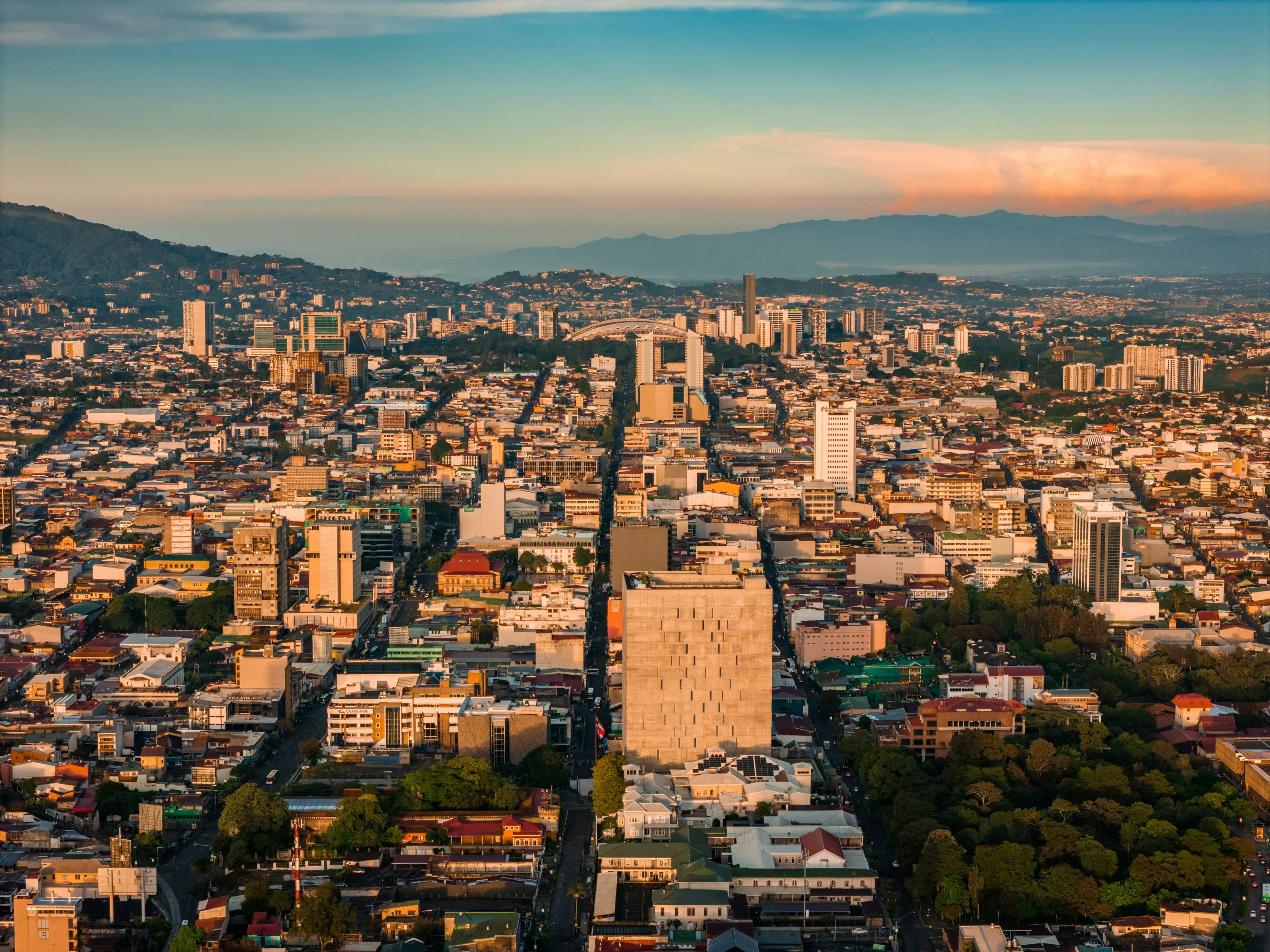
Understanding San José as a luxury base
The neighbourhoods of Escazú and Santa Ana, located in the western metropolitan area, have become the default coordinates for international travellers seeking refined accommodation. These districts offer a concentration of international dining, private medical facilities, and business infrastructure that aligns with the expectations of senior executives and affluent families. The historic Barrio Amón district, by contrast, provides a denser engagement with the city's architectural identity, where Victorian-era townhouses and early twentieth-century mansions have been adapted into boutique properties with considerable character.
Best areas to stay in San José for luxury travellers
Escazú and Santa Ana
The western suburbs represent the most internationally oriented residential and hospitality corridor in the country. Properties here tend toward contemporary construction with high-specification finishes, infinity pools overlooking the Central Valley, and proximity to the high-end commercial districts of Multiplaza and Avenida Escazú. For travellers arriving with security and convenience as primary concerns, this zone remains the default choice among repeat visitors to Costa Rica.
Barrio Amón and the historic centre
For those whose priorities are cultural immersion and architectural texture, the historic centre and its immediately adjacent neighbourhoods offer a markedly different proposition. Barrio Amón contains the highest concentration of late nineteenth and early twentieth-century residential architecture in the country. Converted mansions in this area often deliver suite-level experiences within intimate, design-forward settings that larger international properties cannot replicate. Proximity to the National Theatre of Costa Rica and the Pre-Columbian Gold Museum adds genuine cultural weight to a stay in this quarter.
San Pedro and Los Yoses
East of the city centre, San Pedro and Los Yoses function as the university and cultural district, with a lower international profile but a more authentic urban rhythm. Properties in this zone appeal to travellers who prioritise neighbourhood integration over resort-style separation, and who value access to independent restaurants, galleries, and the University of Costa Rica campus environment.
When to visit San José
Costa Rica operates on two primary seasons: the dry season, known locally as verano, runs from December through April, and the wet season, or invierno, covers May through November. San José itself, due to its elevation, receives rainfall more evenly distributed than the coastal zones, but the dry season remains the period of peak international demand and optimal conditions for onward travel to the national parks and coastal reserves.
December through March represents the most competitive window for luxury suite availability in the capital, coinciding with North American and European winter travel and the country's festival calendar. The Festival Internacional de las Artes, typically held in March, draws a culturally engaged international audience and places meaningful pressure on premium room inventory. Travellers with fixed dates in this window should engage with a curated platform well in advance to secure preferred suite categories.
The shoulder periods of May and November offer a more favourable balance of availability, pricing, and climate, particularly for those whose itinerary includes the Pacific coast, where green season surf conditions are considered optimal by experienced travellers.
Local luxury standards: what to expect from top-tier suites in San José
Costa Rica does not operate within the European palace hotel tradition, nor does it have a formalised national prestige classification equivalent to France's Palace designation. The local hotel rating system, administered by the Instituto Costarricense de Turismo, runs to five stars, but the category is applied inconsistently relative to international luxury benchmarks. Discerning travellers should look beyond star ratings toward independent assessments and curated selections that evaluate spatial quality, service staffing ratios, suite architecture, and material specification.
The most accomplished luxury suites in San José tend to distinguish themselves through spatial generosity, private terrace access with Central Valley views, and a calibrated integration of local materials: volcanic stone, tropical hardwoods, and handcrafted textiles sourced from indigenous artisan communities. Butler service, airport transfer coordination, and direct connectivity to private tour operators for national park access are standard expectations at the upper tier. Properties that have invested in genuine architectural identity, rather than generic international hotel design, represent the more compelling long-term choice for suite travellers.
How to choose the best luxury suite in San José
The primary axis of decision for a San José suite is the tension between urban access and resort separation. Properties in the western suburbs deliver superior facilities and contemporary infrastructure but require transport for any engagement with the city's cultural assets. Historically situated properties in Barrio Amón or Los Yoses place the traveller closer to the city's genuine texture but may offer fewer ancillary amenities.
A second consideration is the role San José plays within the broader itinerary. If the capital is a transit point before a primary stay at a coastal or jungle lodge, the suite criteria should weight arrival logistics, airport proximity, and day-one comfort. If San José is itself a primary destination, the emphasis should shift toward neighbourhood character, dining access, and cultural programme connectivity.
Travellers with privacy as a primary requirement should prioritise properties that offer dedicated suite entrances, in-suite dining programmes, and controlled occupancy limits. San José's compact size means that even centrally located suites can deliver meaningful separation from general hotel traffic when the property has been designed with that intention.
The value of a curated selection by La Suite
San José's luxury accommodation market is relatively compact by global capital standards, but the quality differential between properties that genuinely operate at suite level and those that apply the category loosely is significant. For a traveller arriving from London, New York, or Singapore with calibrated expectations, the distinction matters in immediate, experiential terms.
La Suite applies a consistent editorial framework to this market: spatial quality, architectural integrity, service depth, and the capacity to anchor a high-calibre Costa Rican itinerary. The curated selection by La Suite removes the research overhead and presents only properties where the suite experience is the operational and design priority, not a supplementary revenue category. For a destination where the wider journey is often more celebrated than the capital itself, getting the San José base precisely right is the decision that sets the condition for everything that follows.