Where to stay in Mexico City for a luxury suite experience
Polanco
Polanco is the city's most internationally legible luxury address. Its grid of wide, tree-lined streets houses flagship boutiques, Michelin-recognized restaurants, and several of the city's most formally positioned hotels. The barrio sits adjacent to Bosque de Chapultepec, one of the largest urban parks in the western hemisphere, which provides a rare sense of open air within the capital. Luxury hotel suites in Polanco tend toward classical scale: high ceilings, extensive square footage, and uninterrupted park or city views. The area operates at a pace calibrated to business travel and international diplomacy, which shapes the service culture at every property.
Roma and Condesa
Roma Norte and Condesa represent a different register of prestige. Both colonias developed primarily during the early twentieth century, and their Art Deco and Porfirian architecture has been carefully preserved and selectively converted into boutique properties. The density of independent restaurants, design studios, and cultural institutions in these neighborhoods makes them compelling bases for travelers who engage with a city through its creative class. Suites here are often smaller in absolute footprint but architecturally considered, with renovation work that preserves original detail while integrating contemporary comfort.
Historic Centre (Centro Histórico)
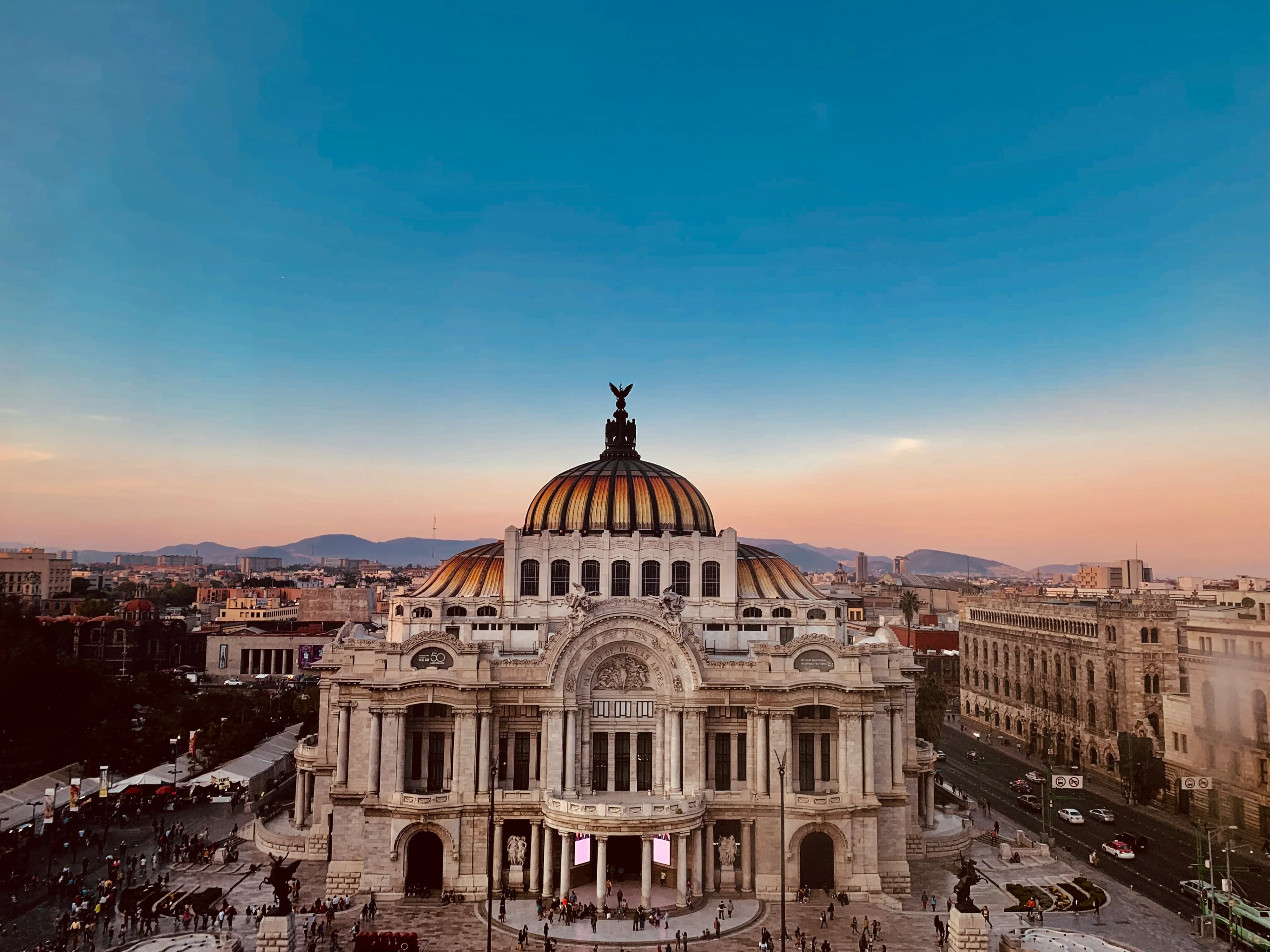
The Centro Histórico occupies the original footprint of Tenochtitlán and contains the highest concentration of listed colonial buildings in the Americas. A small number of luxury hotels have converted significant historic structures here, offering suites with direct sightlines onto the Zócalo or the city's baroque cathedral. Staying in the Centro requires a tolerance for sensory intensity and urban density, but the proximity to the Templo Mayor, the Palacio de Bellas Artes, and the city's primary markets is without equivalent elsewhere.
When to visit Mexico City
Mexico City sits at an altitude of approximately 2,240 metres above sea level, which moderates its climate considerably relative to the surrounding lowlands. The city does not experience extreme heat. The dry season, running broadly from November through April, is the conventional high season for hotel occupancy and is generally considered the most comfortable period for extended urban exploration. The rainy season, from June through September, brings afternoon storms that rarely last more than two hours but can affect outdoor plans. October and November are locally distinguished by the Día de los Muertos celebrations, which attract significant cultural tourism and cause occupancy rates to rise sharply across better properties. The contemporary art fair Zona Maco, held annually in February, draws a concentrated audience of collectors and design professionals, placing pressure on suite availability at premium properties across Polanco and Roma.
Local luxury standards: what to expect from top-tier suites in Mexico City
Mexico does not operate a formal national hotel classification equivalent to France's Palace designation, but the international five-star category here is competitive by any global comparison. The leading luxury hotels in Mexico City are typically members of collections such as Leading Hotels of the World or affiliated with major international luxury groups, which standardizes a minimum expectation of service protocol and physical plant quality.
What distinguishes the finest suites specifically is often the integration of Mexican craft and material culture. Handwoven textiles from Oaxaca, Talavera ceramics, volcanic stone surfaces, and furniture produced by Mexican designers are increasingly present in properties that take their cultural positioning seriously. This is not decorative afterthought. It reflects a deliberate editorial decision by hotel ownership to align the physical environment with the country's material heritage.
Service culture in Mexico City's premium segment is formal without being stiff, and personal attention is a genuine differentiator. Butler services at the suite level, private dining arrangements, and connections to the city's most sought-after cultural experiences are offered as standard at the top tier. Guests should expect staff who speak English fluently and who can navigate the city's cultural and gastronomic landscape with specificity.
How to choose the best luxury suite in Mexico City
Several considerations are specific to Mexico City and should inform any suite selection.
Altitude is a practical factor. Travelers arriving from sea level may experience mild symptoms during the first day or two of their stay. Suites at properties with attentive medical concierge services, or those offering altitude-adjustment protocols, are a meaningful consideration for arrivals from low-altitude origins.
Security infrastructure varies by colonia and by property. Polanco and the better-positioned Roma hotels maintain consistent private security and controlled access. The Centro Histórico requires more specific knowledge of safe transit corridors, which a well-briefed hotel concierge will provide. Suite-level guests at serious properties receive orientation as a matter of course.
Architecture is a deciding variable. Mexico City's luxury hotel stock includes colonial conversions, purpose-built modernist towers, and adaptive reuse of Art Deco structures. Each typology produces a different suite experience. The tower format maximizes city views and separation from street level. The conversion format maximizes architectural character and spatial idiosyncrasy. Neither is superior; the choice depends on what the traveler is optimizing for.
Views in Mexico City are rarely the primary draw in the way they might be in a coastal or mountain destination. What matters more is orientation relative to light, access to terrace space, and the acoustic quality of the suite's position within the building. Mexico City is a loud capital, and sound attenuation is a material factor in suite comfort.
Why a curated selection by La Suite matters in Mexico City
Mexico City's hotel market has expanded rapidly over the past decade, and the range of properties marketing themselves at the luxury tier is now significant. The distance between a property with the correct price point and a property with genuine quality at the suite level is not always legible from a standard booking interface.
La Suite's curation applies a consistent editorial lens: suite-specific quality, architectural integrity, service credibility, and location intelligence. In a city where the gap between marketing and reality can be considerable, that lens matters. The curated selection by La Suite identifies the properties in Mexico City where the suite experience specifically, not merely the hotel overall, meets the standard that a traveler at this level should expect. It removes the research burden without removing the sense of discovery.