Understanding Tulum's luxury suite landscape
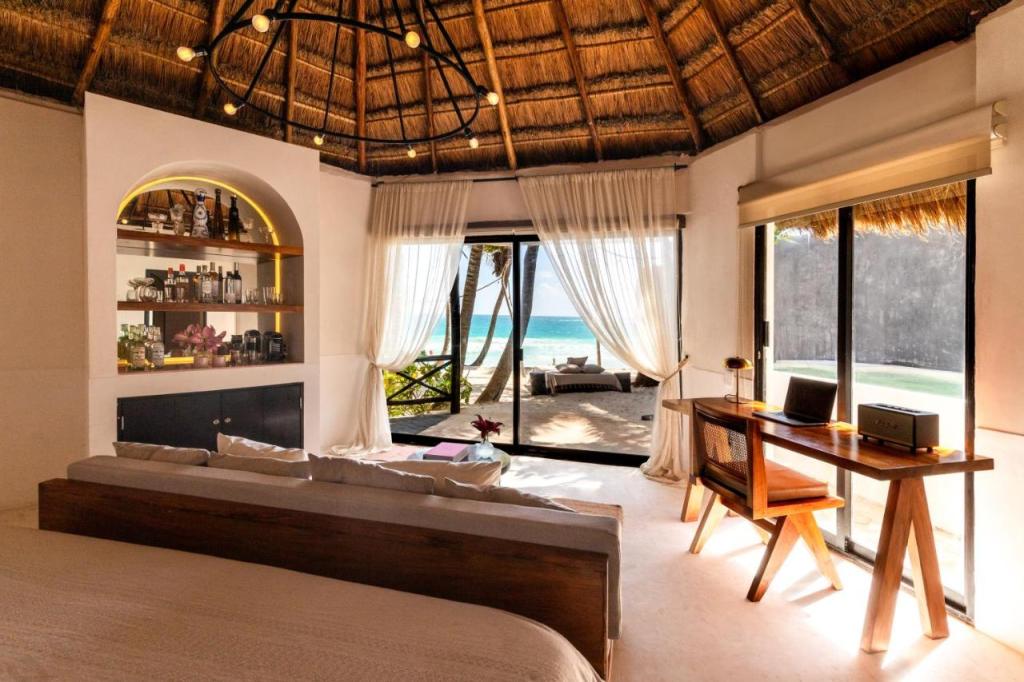
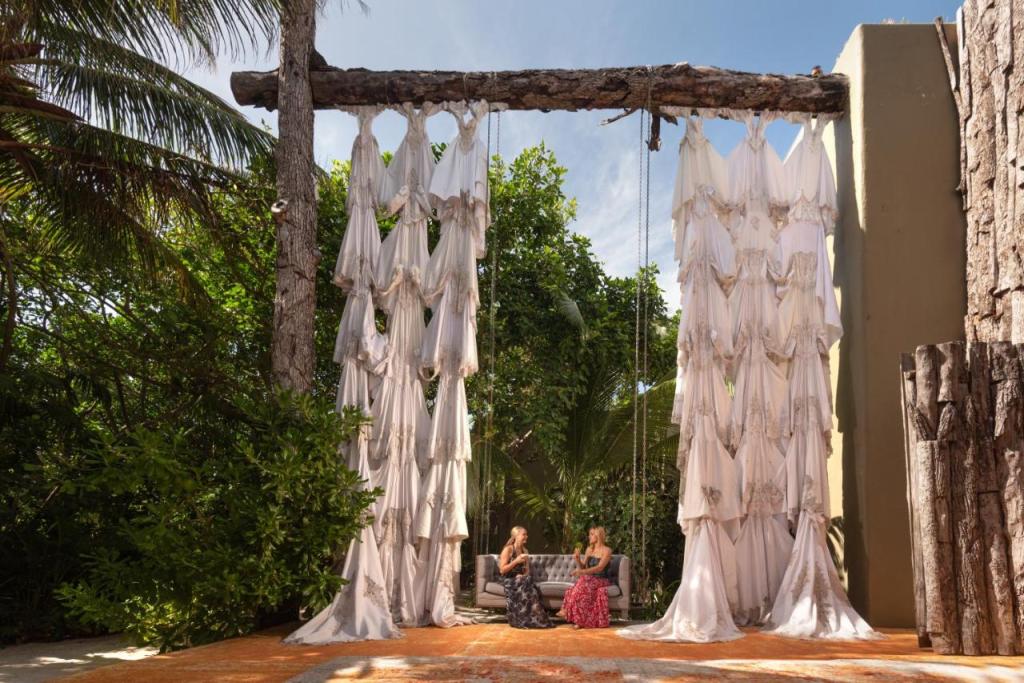
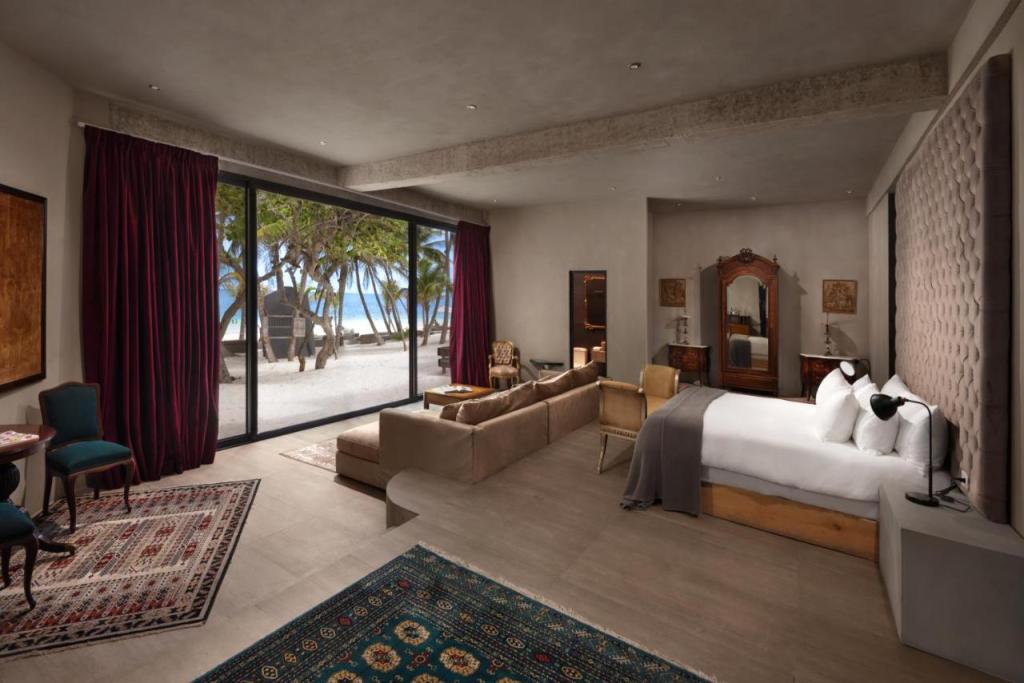
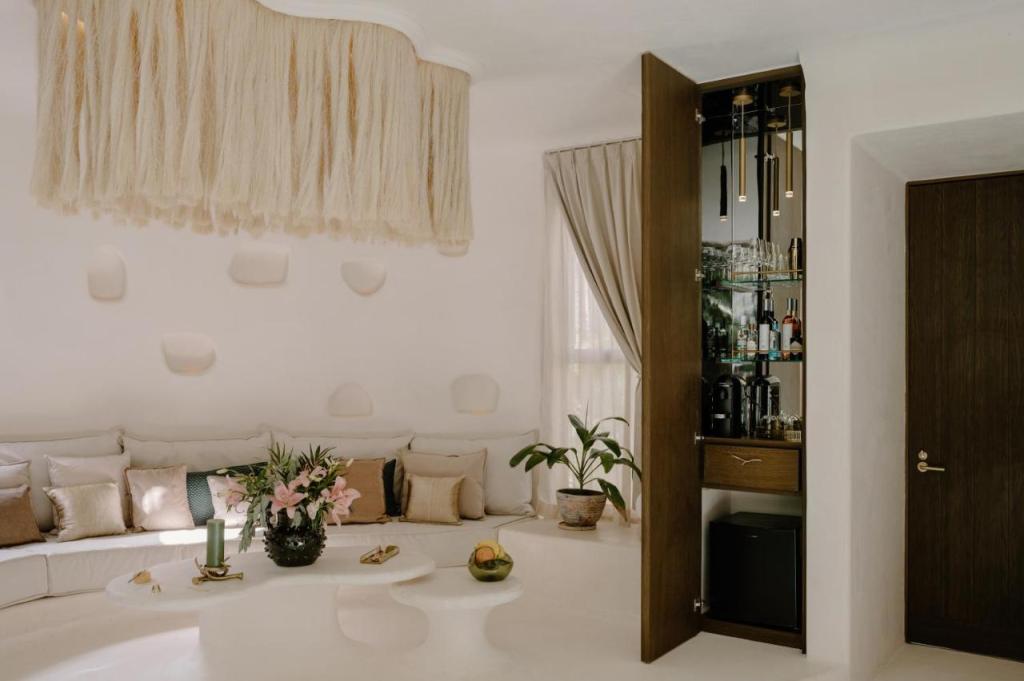
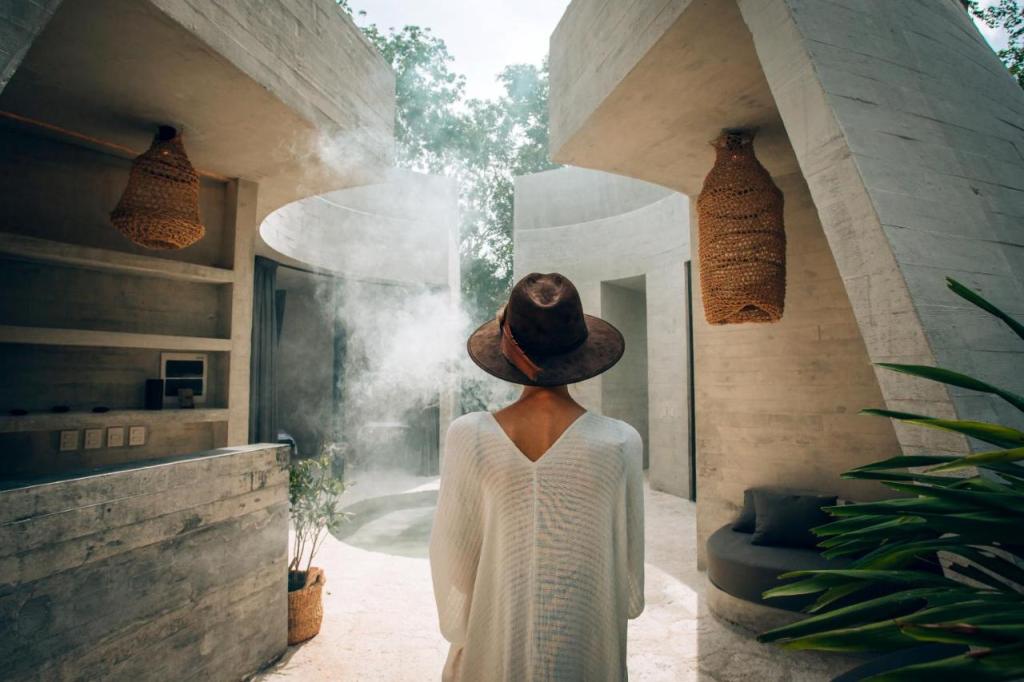
Suites in this context are rarely conventional. Expect open-air bathrooms, thatched ceilings, outdoor showers fed by rainwater cisterns, and bed configurations that face the sea or the treeline rather than a television screen. The most considered properties treat architecture and natural setting as inseparable, where the suite itself functions as a controlled encounter with the surrounding environment.
Best areas to stay in Tulum
The hotel zone (Zona Hotelera)
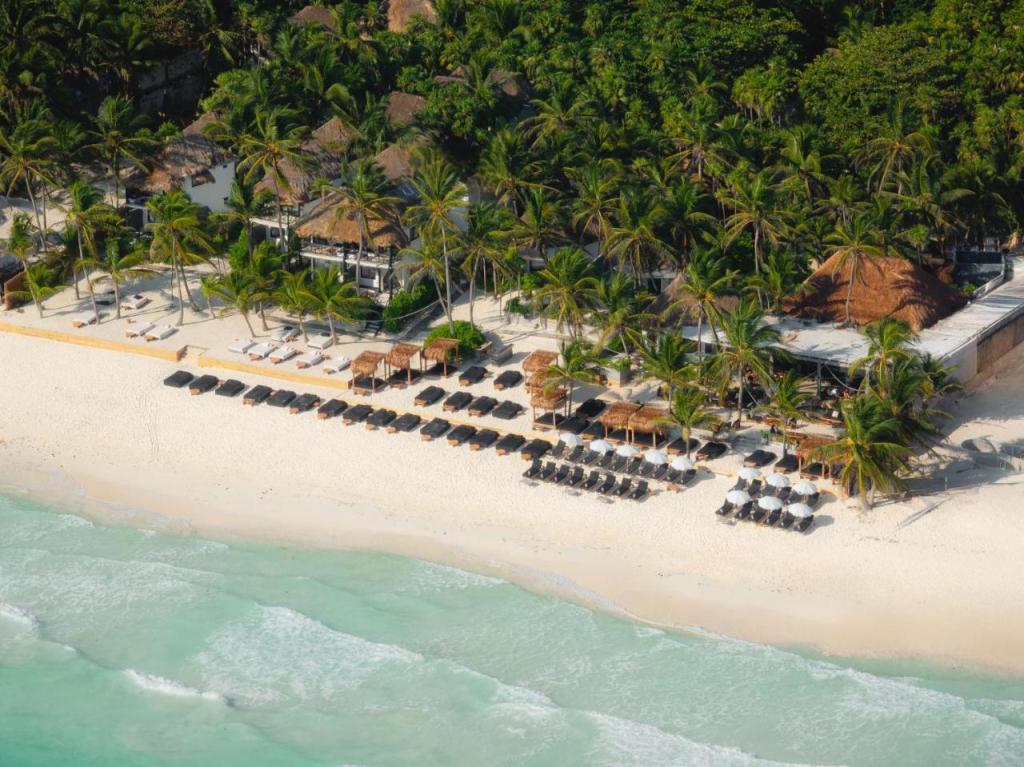
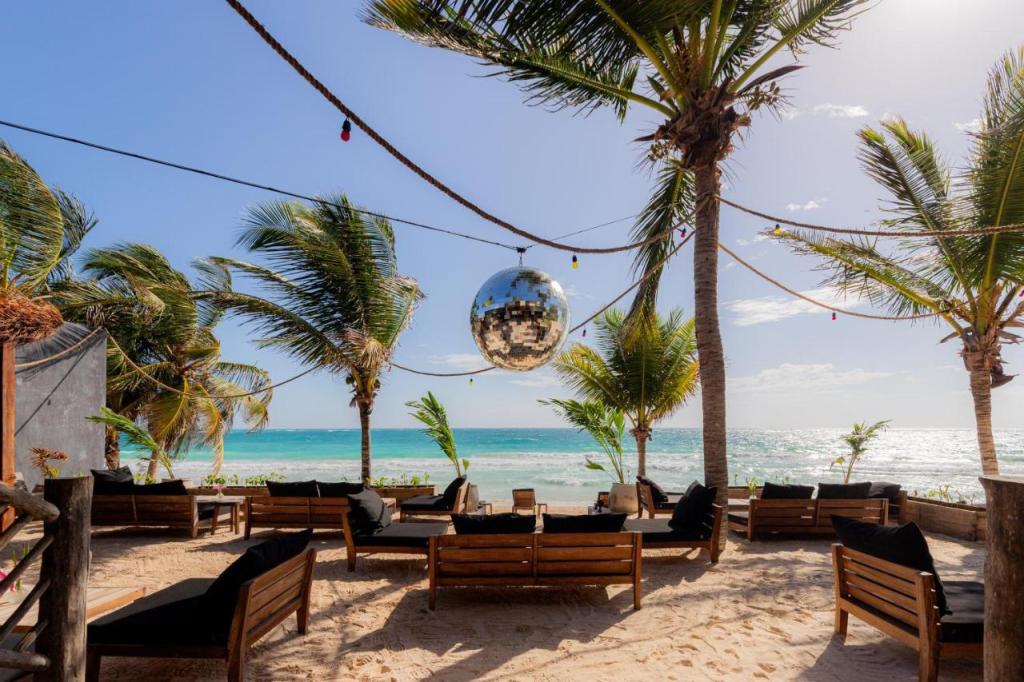
The Zona Hotelera is Tulum's primary luxury accommodation corridor. Properties here sit on or near the coast, offering direct Caribbean access, immediate proximity to the beach clubs that have become central to the social infrastructure of the destination, and views toward the Tulum ruins, which sit on a clifftop at the northern end of the strip. Suites in the hotel zone vary considerably in architectural approach, from minimalist concrete and glass to thatched, open-plan structures that blur interior and exterior thresholds. This is the area best suited to travelers whose priority is coastal proximity combined with ease of access to Tulum's culinary and cultural offerings.
Tulum town (El Pueblo)
Tulum Pueblo, the town center located approximately three kilometers from the coast, has developed its own luxury infrastructure in recent years. Boutique properties with well-appointed suites are increasingly present here, appealing to travelers who prefer the texture of a local commercial environment over the isolation of the hotel corridor. The town offers direct access to independent restaurants, markets, and transportation hubs, and represents a quieter, less performative entry point into the destination.
The Sian Ka'an buffer zone
Properties positioned at the southern end of the hotel corridor, adjacent to the Sian Ka'an Biosphere Reserve (a UNESCO-designated protected area), offer a materially different quality of privacy and environmental immersion. Development here is strictly limited. The suites that exist in this zone are typically smaller in number, more deliberately remote, and oriented toward travelers for whom ecological authenticity is as important as physical comfort.
When to visit Tulum
Tulum operates within a tropical climate with two distinct seasons. The dry season runs from approximately November through April, during which the Caribbean coast receives consistent sun, low humidity, and temperatures that remain moderate rather than oppressive. This is the period of highest demand, peak suite rates, and the most concentrated cultural programming across the destination's event calendar.
December through March represents Tulum's most competitive booking window. Major international events, art and wellness festivals, and significant DJ and cultural programming are concentrated in this period. Suite availability at the leading properties narrows considerably during these months, and advance reservation planning of three to six months is standard practice among experienced travelers.
The wet season, from May through October, brings afternoon rainfall, higher humidity, and the periodic influence of Atlantic hurricane systems. Suite rates drop significantly during this period, and the destination takes on a different character: quieter, greener, and considerably less crowded. For travelers whose priority is privacy and environmental atmosphere over social programming, the shoulder months of May, June, and October offer a compelling alternative.
Local luxury standards: what to expect from Tulum's top-tier suites
Tulum does not operate within a conventional hotel classification system in the way that France's Palace designation or Thailand's resort zoning frameworks impose formal hierarchical standards. Quality here is largely self-declared by properties and mediated by reputation within the international design and travel press. This creates both opportunity and risk for the discerning traveler.
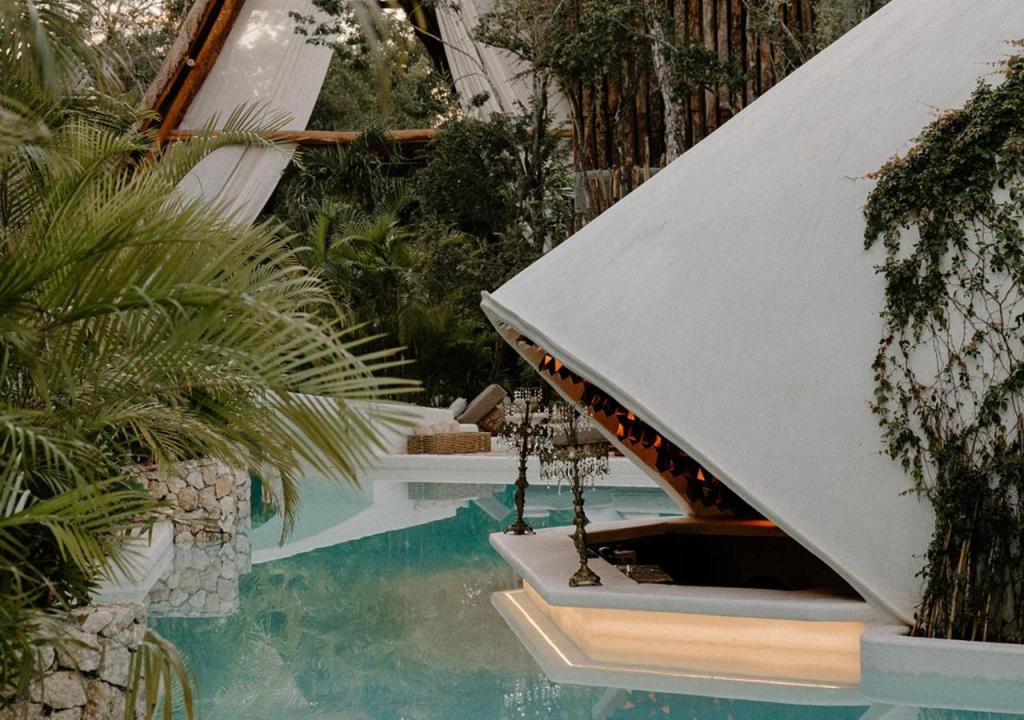
The highest-performing suites in Tulum tend to share several architectural and operational characteristics. Construction materials are typically locally sourced or sustainably certified: chukum plaster (a traditional Mayan material derived from tree bark), teak or reclaimed wood, and natural stone drawn from the Yucatan Peninsula's limestone base. Lighting is low and warm by design. Air conditioning, where present, is often concealed or framed as an amenity rather than a default. Private plunge pools fed by freshwater or filtered seawater are common in the leading properties. The cenote, a naturally occurring freshwater sinkhole endemic to the Yucatan, functions as a defining amenity in some properties, with direct access integrated into the suite experience.
Service culture in Tulum's luxury segment draws from a combination of local Mayan hospitality tradition and an internationally trained hotel management infrastructure that has expanded significantly over the past decade. The tone is typically warm and attentive without the formal hierarchy that characterizes luxury hotel service in more institutionally structured destinations.
How to choose the best suite in Tulum
Several practical distinctions shape the choice between competing luxury options in Tulum. The first is the question of setting: coastal versus inland. Suites positioned directly on or near the beach carry a premium and offer immediate sea access, but the most architecturally resolved properties are sometimes set back within the jungle, where the cenote or garden setting defines the experience. Neither configuration is inherently superior. The choice depends on whether the traveler's primary orientation is toward the sea or toward the forest.
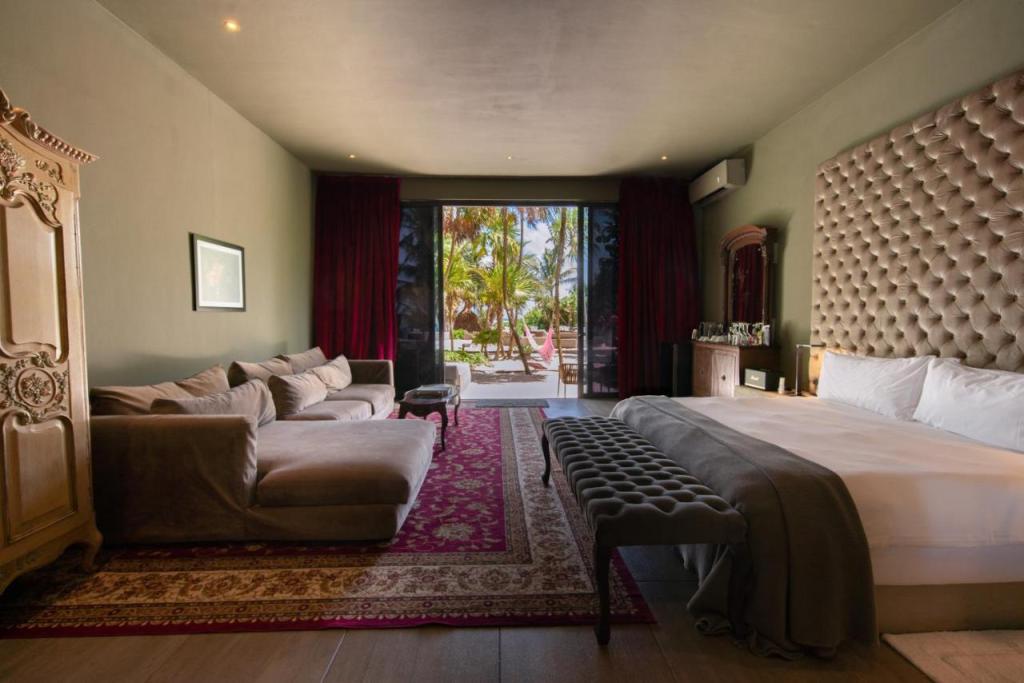
The second distinction is structural: open-air versus climate-controlled. Tulum's most photographed suites tend to be largely open to the elements, which produces a specific kind of sensory experience that aligns well with the destination's identity. However, travelers sensitive to humidity, insects, or variable nighttime temperatures should examine the specific construction and environmental controls of any suite before committing. Properties that have invested in discreet climate management systems alongside the aesthetic of open-air construction represent the strongest technical offering in the category.
A third consideration is generator and infrastructure dependency. Tulum's electrical grid has historically been unreliable, particularly during peak demand periods. The leading properties operate on independent generator systems with seamless transition protocols. This is a practical detail worth confirming before arrival, particularly for extended stays.
Why curation matters in Tulum
The proliferation of boutique properties in Tulum over the past decade has produced a market where visual identity and social media presence often operate independently of actual suite quality. Properties can achieve significant visibility through aesthetic positioning without delivering on the operational and spatial standards that define genuine luxury. The gap between presentation and experience is wider here than in most comparable destinations.
La Suite's curated selection for Tulum is built on direct editorial assessment of architectural integrity, suite-level spatial quality, privacy standards, and service infrastructure. The goal is to provide the discerning traveler with a reliable framework for navigating a destination that rewards knowledge and penalizes assumption. A curated selection by La Suite removes the interpretive burden that Tulum's visual noise tends to impose on the independent decision-maker.