Abbaye Des Vaux-De-Cernay, Cernay-la-Ville
Like an immense playground in the heart of unspoiled nature, the Abbaye Des Vaux-De-Cernay promises to make every moment a daydream. With its attentive service to the highest degree, the enveloping in

Île-de-France covers eight departments radiating outward from Paris, each with a distinct character and a different relationship to luxury hospitality. Choosing where to base yourself is an architectural and experiential decision as much as a logistical one.
139 hotels available

Like an immense playground in the heart of unspoiled nature, the Abbaye Des Vaux-De-Cernay promises to make every moment a daydream. With its attentive service to the highest degree, the enveloping in

Auberge du Jeu de Paume is 2789 feet from Château de Chantilly, 0.6 mi from Chantilly-Gouvieux Train Station providing direct access to central Paris and 1.2 mi from Bourgognes Stadium. A heated, indo

Brach Paris occupies a singular position in the Parisian five-star landscape: a property where wellness architecture and design intention operate at the same frequency. The suites are the clearest expression of that coherence. Explore the La Suite selection to understand why.

Bulgari Hotel Paris is not a hotel that adapts to its city. It arrives with a position: Italian material intelligence, applied to Paris without concession. The suite collection, conceived by Antonio Citterio Patricia Viel as complete spatial statements, is the reason La Suite selected this address. Explore the curation below.

Elegant Accommodations Bus Palladium in Paris offers a 5-star hotel experience with a terrace, restaurant, bar, and free WiFi. Private check-in and check-out, a 24-hour front desk, and concierge s

Located in central Paris next to the Maison Chanel, Hotel Castille is just a short walk from the Jardins des Tuileries and Place Vendome. This 5-star hotel, built in the 18th-century, offers contempor

Set in the center of Paris, Château des Fleurs Hôtel & Spa Paris features à la carte breakfast and free WiFi throughout the property. Boasting a bar, the hotel is close to several noted attractions, a

Nestled in the heart of a wooded park in Chantilly, just 22 mi north of Paris and 20 minutes from Charles de Gaulle Airport, Le Château Jeanne & The Forest – formerly Château de Montvillargenne – welc

Elegant Accommodations Château Voltaire in Paris offers a 5-star experience with a spa and wellness center, sauna, indoor swimming pool, and free WiFi. Guests enjoy private check-in and check-out,

Exceptional Facilities Cheval Blanc Paris & Dior Spa Cheval Blanc Paris in Paris offers a spa and wellness center, sauna, fitness center, indoor swimming pool, and free WiFi. Private check-in and

A private-scale address on Place des Vosges — where 17th-century architecture, Roman Bath wellness, and the irreplaceable intimacy of Le Marais converge in one of Paris's most quietly authoritative suite properties.

Elegant Accommodations Domaine de la Reine Margot Paris-Issy in Issy-les-Moulineaux offers luxurious rooms with air-conditioning, private bathrooms, and modern amenities. Guests enjoy garden or city v

A 15-minute walk from Pompidou Center in Paris, Edgar Suites - Bouchardon features accommodations with access to a fitness room. Among the facilities at this property are an elevator and full-day security, along with free Wifi throughout the property. Featuring a private…

Esprit Saint Germain is set in the 6th arr. District in Paris, 0.6 mi from Louver Museum. It offers free WiFi and a fitness center with a sauna and steam room. A flat-screen TV, Blu-ray player and DV

Elegant Accommodations Experimental Marais in Paris offers a 5-star hotel experience with spa facilities, a modern restaurant, bar, and free WiFi. Private check-in and check-out, a 24-hour front d

Located in Paris, a 8-minute walk from the Place de la Concorde and a 2-minute walk from Madeleine Metro Station, Fauchon l'Hotel Paris offers accommodations with a fitness center and a Beauty Spa. Th

Just steps from the Champs-Elysées, on Avenue George V, Four Seasons Hotel George V features private terraces with commanding Paris city views, signature lavish flower displays imagined by Jeff Leatha

Francois 1er is located on a residential street 656 feet from the Champs Elysées and 1804 feet from the Arc de Triomphe. The hotel's cocktail bar features a winter garden. The air-conditioned guest ro

Check-in is from 15:00. Please inform the property in advance if you plan to arrive before this time. Please note that the property will pre-authorize your credit card at check-in. The entrance to Ind

Set within an 18th-century building, the Grand Hotel is located in the heart of Paris, 656 feet from the Louver museum and Tuileries Gardens. It features fine works of art, a spa by Holidermie, à la c
The inner arrondissements, particularly the 1st, 8th, and 16th, concentrate the highest density of certified Palace hotels in any city in the world. France's Palace designation, awarded by Atout France, requires a property to meet criteria that go well beyond five-star classification: surface area minimums for suites, concierge availability in multiple languages, a culinary offering of institutional standing, and a demonstrable connection to French heritage or contemporary culture. For travelers whose primary goal is to be close to the Louvre, the Palais-Royal, or the major couture houses, staying in this core means no distance between the suite and the city's defining institutions.
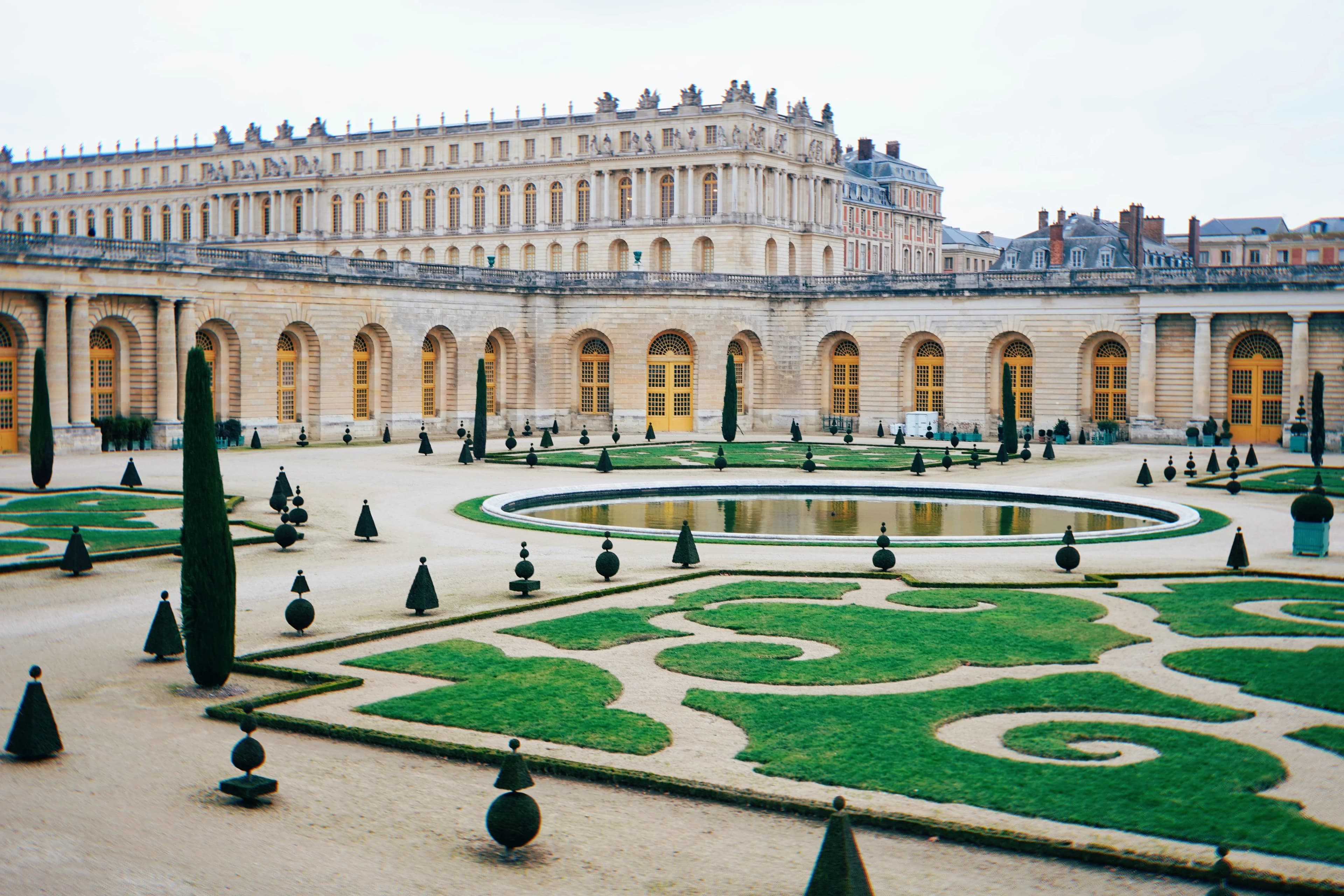
The departments of Yvelines and Hauts-de-Seine offer a counterpoint to urban density. Properties here tend to occupy converted châteaux, manor houses, or purpose-built estates with park grounds. The Palace of Versailles and its gardens define this corridor culturally, and several high-end hotels position themselves as residential alternatives to the capital, appealing to travelers who want formal French landscapes without urban pace. The Seine valley between Paris and Giverny draws culturally motivated visitors seeking Impressionist references in the actual geography that produced them.
The Oise valley and the forests of the Valois represent an older, less visited layer of French prestige. Chantilly, with its racecourse, its château, and its exceptional equestrian culture, supports a luxury hospitality ecosystem oriented around sport, gastronomy, and historical quietude. Suite hotels in this part of Île-de-France tend to attract travelers who are deliberately stepping back from the capital's rhythm while remaining within an hour's reach of it.
The region operates at high occupancy year-round, which reflects its status as the most visited tourism destination on earth by volume. However, the quality of the experience in a luxury hotel suite shifts considerably by season.
Late spring (May and June) offers the most balanced conditions: temperate weather, formal gardens at their most considered, and the social calendar at full intensity. The Prix de Diane at Chantilly and the Roland-Garros tournament at the Stade Roland Garros both fall within this window, creating demand spikes at properties in the western and central zones respectively. Suite availability at Palace-tier hotels during these events requires planning several months in advance.
September and October represent a second peak. Fashion Week in Paris (both men's and women's seasons), the return of cultural institutions after summer closures, and the quality of light in the Île-de-France countryside make this a period favored by design-literate and culturally engaged travelers. Rates are generally lower than June and the pace is more deliberate.
July and August see significant occupancy from international visitors but reduced engagement from the Parisian cultural community itself, as many institutions reduce programming. Winter, from November through February, offers the most accessible suite rates at non-Palace properties and a particular kind of atmospheric concentration in the city, though some estate hotels in the outer departments operate on reduced schedules.
France's Palace designation is the most rigorous formal classification in European luxury hospitality. It is not awarded automatically to any five-star property and must be renewed periodically. The criteria include architectural significance, the quality of the suite product specifically (size, finish, dedicated service), culinary standards, and a requirement that the property contribute to the cultural identity of France in a documentable way.
In practical terms, a Palace suite in Île-de-France is a spatial and service experience calibrated to a very specific standard. Suites typically include a dedicated living area, butler service, and access to spa facilities of meaningful scale. The culinary offering within the property will often include at least one Michelin-recognized restaurant. The concierge function is considered a professional vocation, not an administrative role, and extends to private access arrangements at cultural institutions, transport curation, and event access that is not publicly available.
Outside the Palace tier, Île-de-France also offers high-quality five-star hotel suites in contemporary design properties, converted historical buildings, and estate hotels. These properties may not hold the Palace designation but often deliver a more intimate or architecturally specific experience that some travelers prefer to the grand-hotel format.
The first distinction to make is between urban and non-urban positioning. A luxury suite in central Paris offers proximity, cultural access, and the social texture of a major capital. A suite in a château hotel in Yvelines or a manor house near Chantilly offers space, silence, and a more controlled environment with less ambient stimulation. Both are legitimate luxury experiences; they are not interchangeable.
The second consideration is architectural character. Île-de-France contains properties ranging from 17th-century royal-adjacent estates to purpose-built modernist structures and sensitive conversions of industrial or institutional buildings. Travelers with a strong visual sensibility will find the architectural specificity of a property as important as its service rating. The suite itself, its proportions, its material palette, its relationship to natural light and to the surrounding landscape, is the primary product.
Third, consider the service model. Palace hotels operate with high staff-to-guest ratios and a formalized service architecture. Smaller boutique properties offer a more direct, less protocol-driven relationship. Neither is superior in absolute terms; the choice depends on whether the traveler finds formal service structures reassuring or constraining.
Finally, consider access to specific experiences. Some properties in Île-de-France have structural relationships with adjacent cultural institutions, estates, or gastronomic figures that create exclusive access not available to non-guests. These affiliations are worth understanding before booking.
Île-de-France presents a paradox for the high-end traveler: the density of luxury hotel supply is exceptional, but the variation in quality at the suite level is equally wide. A five-star designation in Paris does not guarantee a suite product of architectural or service distinction. The gap between properties that genuinely deliver at the suite tier and those that simply price accordingly is significant and not always visible from standard booking interfaces.
La Suite applies an editorial filter to this market. The selection focuses specifically on the suite experience as a product: its spatial quality, its service coherence, its relationship to the surrounding cultural context of Île-de-France, and its value relative to the alternatives. For a traveler arriving in this region without prior knowledge of its hospitality landscape, a curated selection removes the cost of a poor decision at the level where poor decisions are most expensive.

The Palace designation is a French government-issued distinction awarded by Atout France to a select number of five-star hotels that meet criteria beyond standard classification, including suite dimensions, multilingual concierge service, cultural significance, and culinary standing. Île-de-France holds the highest concentration of Palace-certified hotels in France, primarily located in central Paris. The list is reviewed periodically and currently includes a small number of properties, each required to demonstrate an ongoing contribution to French cultural identity.
For major cultural and sporting events such as Paris Fashion Week, Roland-Garros, or the Prix de Diane at Chantilly, Palace-tier suites are typically reserved three to six months in advance by repeat clients and through private travel networks. For general peak periods in May, June, and September, a booking window of two to three months is advisable for the suite category specifically, as suite inventory is significantly more limited than standard room inventory at any given property.
The Yvelines department, anchored by Versailles and the Seine valley, offers estate hotels and converted châteaux with formal grounds and proximity to the Palace of Versailles. The Oise valley near Chantilly provides equestrian culture, forest landscapes, and a quieter pace. Both zones are accessible from central Paris within 30 to 60 minutes by road or rail, making them viable bases for travelers who prioritize space and natural context over urban proximity.
At the suite level in this region, the primary differentiators are spatial autonomy, dedicated service, and architectural specificity. A suite typically includes a separate living area, a higher-specification bathroom, and access to butler or personal concierge services not available to standard room guests. In Palace-certified properties, the suite product also implies access to exclusive areas of the hotel and priority arrangements with external cultural or gastronomic partners.
Île-de-France, and Paris in particular, holds more Michelin-starred restaurants per square kilometer than any comparable area in the world. Many Palace hotels and high-tier luxury hotels in the region have in-house restaurants with Michelin recognition, and the wider ecosystem of the region supports exceptional gastronomic experiences from formal tasting menus to market-driven bistros of serious quality. A suite stay in this region can be structured almost entirely around gastronomic appointments without repetition.
A Palace hotel is a government-certified designation applied to urban grand hotels meeting specific quantitative and qualitative criteria. A château hotel is a property type defined by its architectural context: a historic estate, often with parkland, converted into a hotel. Some château hotels in Île-de-France hold five-star ratings but not the Palace designation. They typically offer a more intimate scale, a stronger connection to the surrounding landscape, and a less formalized service model than the grand-hotel Palace format.
Several properties in Île-de-France, particularly estate hotels in the outer departments and certain Palace hotels in Paris, offer suite configurations suited to stays of a week or longer, including kitchenette facilities, separate sleeping and working areas, and service arrangements calibrated to residential rhythms. The region's cultural, gastronomic, and commercial density means that an extended suite stay rarely creates a problem of insufficient activity, though some travelers find the pace of central Paris more stimulating over time than restorative.
At the high end of the market, properties in Île-de-France can arrange private access to museum collections outside public hours, including the Louvre and the Palace of Versailles, through institutional partnerships. Private ateliers, couture appointments, chef's table experiences, and access to cultural events not publicly available are also part of the concierge service architecture at Palace-certified hotels. These arrangements are generally organized through the hotel's concierge function and are not standardized, varying by property and by the client relationship.
Île-de-France operates at the highest price point and the highest density of supply for luxury hotel suites in France. The Côte d'Azur offers strong seasonal competition, particularly in summer, with a different architectural and cultural character oriented around coast and climate. Provence and the Loire Valley present a more diffuse luxury offering, weighted toward small estate hotels and wine tourism. Île-de-France is the only region where the full formal Palace tier is concentrated and where urban, cultural, and estate options coexist within a single administrative zone.
The choice is primarily one of spatial and sensory preference. Historic properties, including Palace hotels with 19th-century architectural bones and converted estate hotels, offer a material richness, ceiling height, and contextual depth that is irreproducible in new construction. Contemporary design hotels offer controlled acoustics, current technical infrastructure, and a visual coherence that some travelers find more legible and less encumbered. Both categories exist at the top of the market in Île-de-France, and the suite product in each can be of equivalent service quality while delivering a fundamentally different atmospheric experience.