Why Beaulieu-sur-Mer occupies a distinct position on the Côte d'Azur
Unlike Cannes or Saint-Tropez, Beaulieu-sur-Mer has never reoriented itself around mass tourism. The port accommodates yachts rather than ferries. The promenade is measured in hundreds of metres rather than kilometres. This compression is an asset for the traveller who wants proximity to the energy of the Riviera without immersion in it.
The best areas to stay in Beaulieu-sur-Mer
The seafront and the Baie des Fourmis
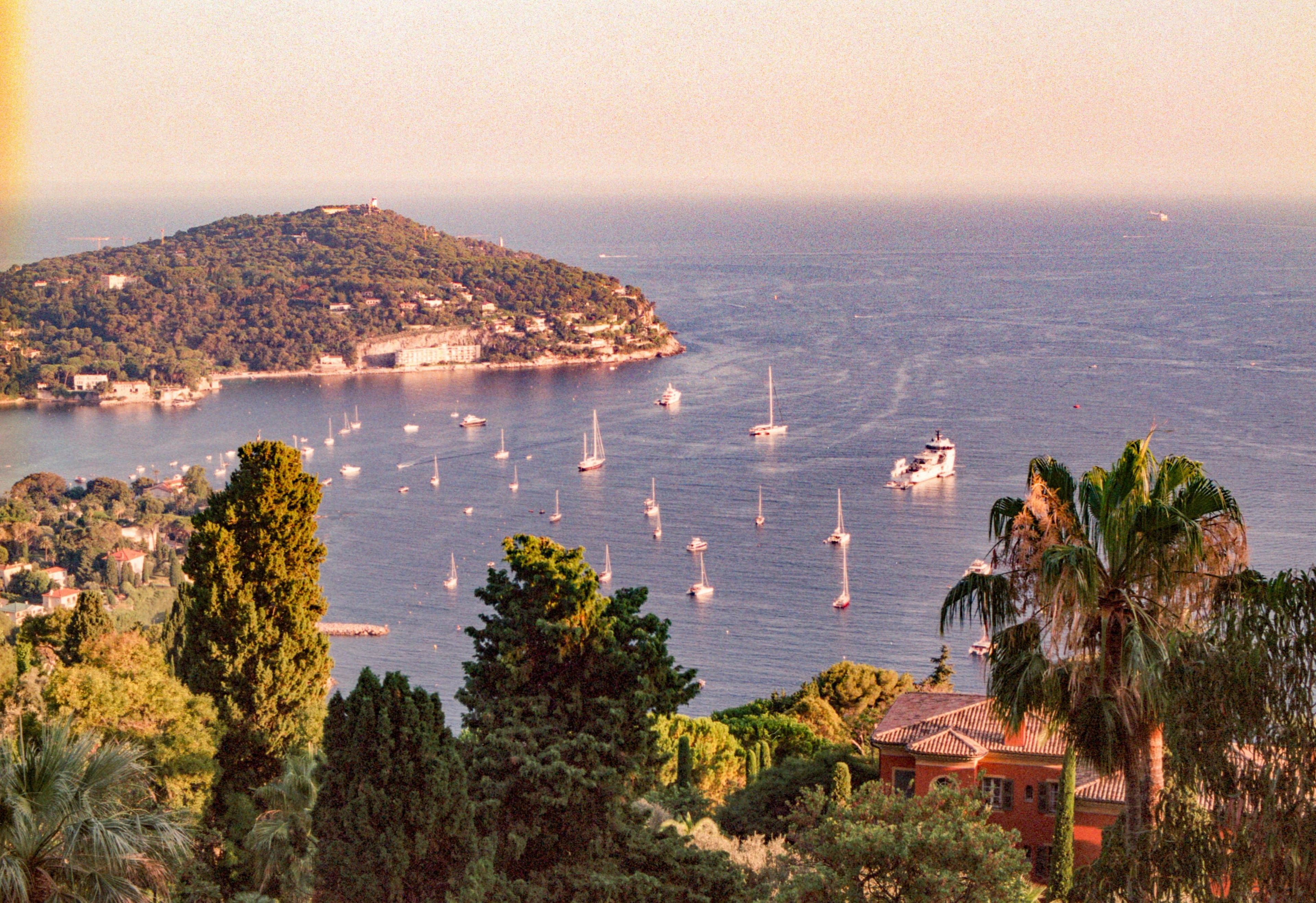
The Baie des Fourmis is the town's defining geographic feature: a calm, south-facing bay with unusually clear water and a fine shingle beach. Properties positioned along or near this bay offer direct sensory access to what makes Beaulieu-sur-Mer singular. Morning light on the water, the outline of Cap Ferrat to the west, and the near-total absence of commercial noise create a specific atmospheric register that inland or elevated positions do not replicate. For those selecting a luxury hotel suite here, seafront orientation is a material consideration, not simply a preference.
The avenue Fernand Dunan and the historic centre
A short distance from the waterfront, the town's main avenue and surrounding streets contain the concentrated commercial and social life of Beaulieu-sur-Mer. Patisseries, the market square, the casino, and several notable restaurants occupy this compact zone. Staying adjacent to this area suits travellers who want pedestrian access to daily life in the town without the full exposure of a beachfront position.
The hillside approaches toward Èze
The roads climbing from Beaulieu-sur-Mer toward the medieval village of Èze offer a different proposition: elevated properties with panoramic views across the bay, greater privacy, and a cooler microclimate in summer. This position suits travellers arriving by car and less dependent on direct beach access, particularly those combining a Riviera stay with excursions to Monaco, the Corniche roads, or the Italian border.
When to visit Beaulieu-sur-Mer
The town's microclimate makes it genuinely functional as a destination across a longer season than most of the coast. Late spring, from mid-April through June, delivers reliable warmth, uncrowded streets, and full flowering of the mimosa and bougainvillea that characterise private gardens in the area. This period is broadly considered the most comfortable for extended stays.
July and August bring the density of high season to the wider Riviera. Beaulieu-sur-Mer absorbs this pressure better than its neighbours, but suite availability at preferred properties tightens considerably and should be secured well in advance. The Monaco Grand Prix in late May generates a secondary demand spike across the entire coast from Menton to Cannes, and Beaulieu-sur-Mer, positioned between Monaco and Nice, is directly affected.
September and early October represent a compelling alternative to summer. Water temperatures remain high from the accumulated warmth of the season, crowds thin noticeably after the first week of September, and the quality of light shifts toward a lower, more golden register that is photographically and experientially distinct from summer. Many informed travellers now treat this window as the primary season for the French Riviera.
Winter in Beaulieu-sur-Mer is mild by European standards. The town's sheltered position means that frost is rare and daytime temperatures often permit outdoor dining from February onward. The clientele in this season tends toward retirees, long-stay guests, and those seeking rest rather than activity.
Local luxury standards: what to expect from a top-tier suite in Beaulieu-sur-Mer
France maintains a formal classification system for its highest-performing hotels through the Atout France agency, with the Palace designation sitting above the five-star category. A Palace hotel must demonstrate consistent excellence across service, architecture, food, and cultural engagement with its region. On the Côte d'Azur, several properties hold this designation, and while Beaulieu-sur-Mer is a small town, its legacy properties are benchmarked against this standard.
Suites in the finest Beaulieu-sur-Mer hotels tend to reflect the Belle Époque inheritance of the town: high ceilings, generous proportions, and an emphasis on sea-facing terraces or balconies as extensions of the living space. The architectural vocabulary here differs from the more Provençal interior of the region, leaning toward a refined Riviera classicism: pale stone, wrought iron, deep shutters, and interiors that balance period detail with contemporary comfort.
Service in established properties of this scale tends toward the attentive and personalised. Given the small size of the town, the ratio of hospitality staff to guests is often higher than in larger resort towns, which translates into a measurable difference in the quality of individual attention.
How to choose the right luxury suite in Beaulieu-sur-Mer
The first practical distinction is orientation. A suite with direct sea view over the Baie des Fourmis commands a specific experience that an equivalent interior or garden-facing room does not. Given the bay's compact geometry, even a partial sea view tends to retain most of the spatial and atmospheric benefit. Confirm the precise view category at the point of selection rather than relying on general category descriptions.
The second consideration is access to private outdoor space. Terraces and balconies are not universally available across all suites in the town's historic properties, where the architecture was not always designed with current expectations of private outdoor living. Properties that have invested in creating meaningful outdoor spaces at suite level, rather than simply Juliet balconies, offer a substantially different experience during a warm-season stay.
Third, consider the relationship between the property and the town's walking infrastructure. Beaulieu-sur-Mer is small enough to navigate entirely on foot, and a property within five minutes of the beach and the market retains a different character from one requiring a car for daily movement. For families or groups with varied schedules, this proximity has logistical and social value.
The value of a curated selection for Beaulieu-sur-Mer
Beaulieu-sur-Mer is a focused destination with a limited but precise hotel offering. The number of properties capable of delivering a genuine luxury suite experience is small, and the differences between them are material rather than cosmetic. A curated selection by La Suite maps these distinctions clearly: view categories, terrace availability, suite typologies, and the specific character of each property's service culture. For a destination where the margin between a correct and an incorrect choice is narrow, that precision matters. La Suite exists to make that margin legible.