Understanding Cannes as a luxury destination
The architecture of central Cannes reflects this dual demand. Belle Époque facades on the Croisette coexist with mid-century rationalist structures and contemporary renovations that have introduced clean-lined interiors behind preserved historical envelopes. A luxury hotel suite in Cannes is often the product of this layering: an exterior of considerable age and formal gravitas, an interior that has been entirely rethought for contemporary standards of comfort and technology.
The distinct areas of Cannes and where to base yourself
La Croisette and the central seafront
The Croisette remains the primary address for luxury hospitality in Cannes. The boulevard runs approximately 1.5 kilometres along the Golfe de la Napoule, lined with palm trees, private beach concessions, and the most recognized hotel facades on the Riviera. Suites facing the sea from this axis command direct views over the Lérins Islands and the open Mediterranean. The social and commercial life of Cannes concentrates here during major events, making the Croisette simultaneously the most exposed and most coveted address in the city.
Le Suquet and the old town
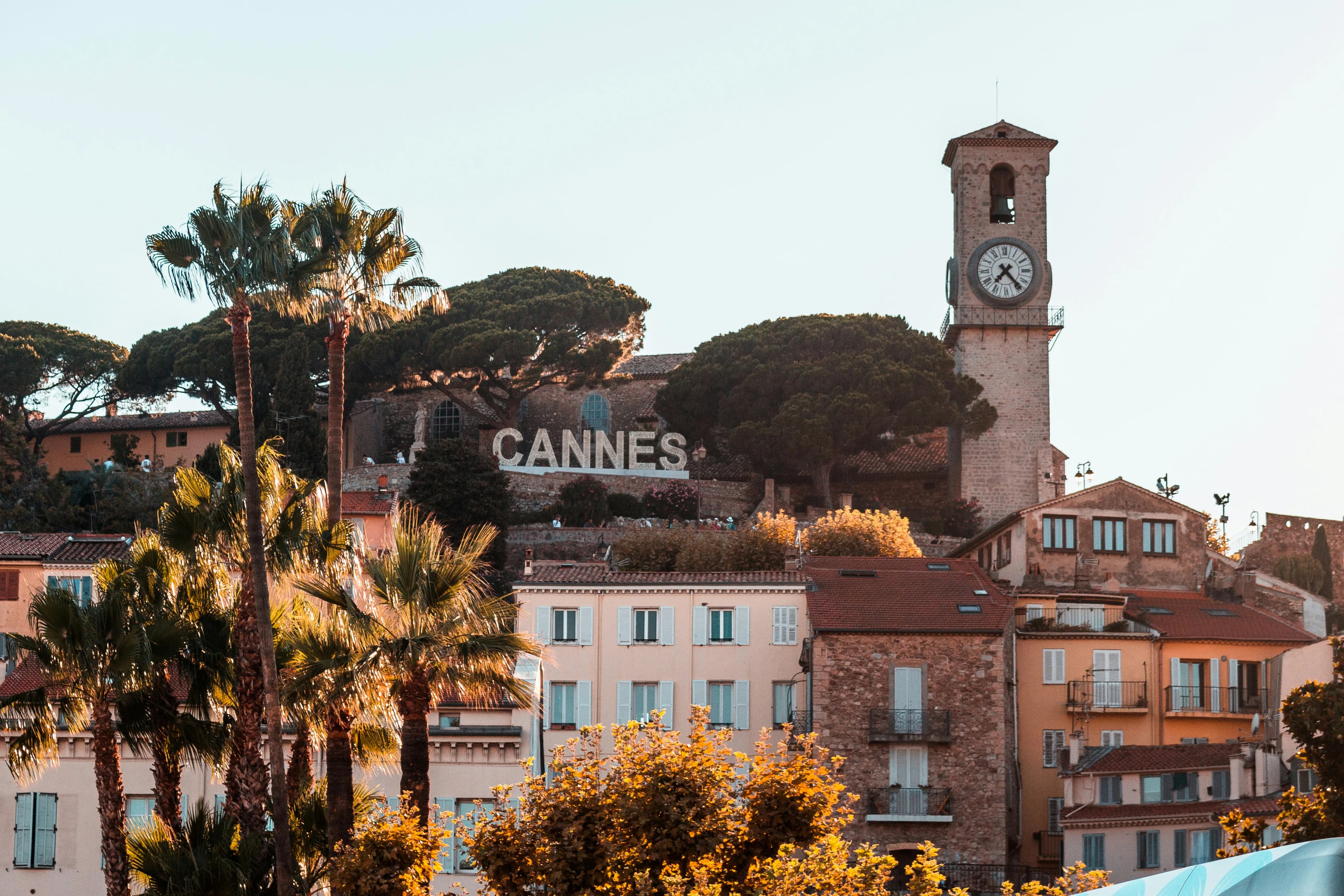
Rising above the Vieux-Port to the west, Le Suquet is the historical nucleus of Cannes. Its narrow streets, Provençal market, and elevated position above the harbor offer a quieter register of the city. Properties in this area tend toward smaller scales and more intimate architectures, though the proximity to the port and the morning markets at Forville adds a sensory dimension absent from the seafront corridor.
La Californie and the residential heights
To the east of the center, the hillside district of La Californie has long attracted private villas and discreet residential properties. This quarter offers elevated panoramas over the bay and the Esterel massif to the west. The atmosphere is residential and considered, with larger grounds and greater acoustic privacy than the seafront. Travelers seeking suite accommodations away from the density of the Croisette will find this area offers a different, more contemplative version of Cannes.
The Lérins Islands
Technically outside the city, the Îles de Lérins sit 15 minutes from the Vieux-Port by boat. Île Saint-Honorat hosts an active Cistercian monastery producing wine, while Île Sainte-Marguerite is known for the fortress where the Man in the Iron Mask was held. These islands form a natural counterpoint to the intensity of Cannes and are accessible as a day excursion from any suite on the Croisette.
When to visit Cannes for a luxury suite stay
Cannes operates at different registers depending on the month. May is the most internationally recognized period due to the Festival de Cannes, which transforms the city into a concentrated arena of film industry activity, private screenings, and invitation-only events. Suite availability during the festival is extremely limited and should be planned many months in advance. Rates during this period reflect the compression of demand.
June through early September represents the high summer season, with beach culture, yacht arrivals, and a consistent social calendar anchored by the private clubs along the Croisette. The quality of light in this period, particular to the Riviera coast, is a significant atmospheric factor for guests with an architectural or visual sensibility.
September and October offer arguably the most considered conditions for a Cannes stay. Temperatures remain warm, the Lérins Islands are accessible without summer congestion, and the MIPIM Autumn and other professional congresses fill the city with a more purposeful crowd. Provençal markets, access to the hinterland villages of the Pays de Grasse, and the olive harvest in the arrière-pays make autumn an especially complete season for a curated Riviera itinerary.
Winter brings the lowest occupancy rates and the most negotiable suite terms. The city does not close; it consolidates. Some beach concessions reduce operations, but the architecture, the light, and the access to the Alpes-Maritimes interior remain entirely intact.
Local luxury standards: what to expect from top suites in Cannes
France maintains a formal classification system for its highest-tier hotels, with the Palace designation awarded by Atout France to properties meeting strict criteria across service, architecture, culinary standards, and amenity provision. Several Cannes properties hold or have been considered for this classification. For the suite traveler, this label functions as a reliable baseline indicator of what the property has committed to maintaining.
Beyond classification, Cannes suites at the top tier typically include private terraces with sea or garden views, dedicated butler service, independent entrance protocols for guests requiring discretion, and concierge teams with direct access to the yacht charters, Michelin-starred restaurants, and private event infrastructures that define the city's social calendar. Bathroom architecture in Cannes suites at this level has become an area of particular design investment, with properties commissioning marble work, soaking bath configurations, and integrated outdoor shower terraces that respond to the coastal climate.
How to choose the right suite in Cannes
The primary axis of choice in Cannes is orientation: sea-facing suites on the Croisette offer the definitive Riviera visual experience but sit within a more activated urban environment. Garden or hillside suites in the residential quarters prioritize acoustic privacy and spatial generosity. Neither is categorically superior; the decision should reflect the purpose of the trip.
For guests attending the Festival de Cannes or a professional congress, proximity to the Palais des Festivals and the Croisette corridor is functionally important. For guests treating Cannes as a base for Riviera exploration, including day trips to Saint-Paul-de-Vence, the Gorges du Verdon, or Monaco, a position slightly away from the seafront may offer a more comfortable operational base.
Suite size, private terrace configuration, and service model should be evaluated against the length of stay. For stays exceeding four nights, the spatial quality of the suite itself becomes a primary variable. The room should function as a living environment, not simply a sleeping space.
Why curation matters in Cannes
Cannes presents a deceptively complex selection challenge. The city's international profile means that hotel inventory ranges from genuinely exceptional to merely expensive, and the marketing language applied to suites across the category rarely differentiates between the two. A property may command a high nightly rate on the basis of its address alone, without the interior quality, service architecture, or suite-specific programming that justifies the investment for a discerning traveler.
La Suite applies editorial criteria to this selection, assessing properties not on their public reputation alone but on the specific quality of their suite offerings: design coherence, spatial logic, service customization, and the relationship between the suite and the broader experience of the city. The curated selection by La Suite for Cannes represents properties where these criteria are met at a consistent level, giving travelers a reliable starting point for a decision that is worth getting right.