Understanding Èze as a luxury destination
The distinct zones of Èze and where to position yourself
Èze Village (the perched village)
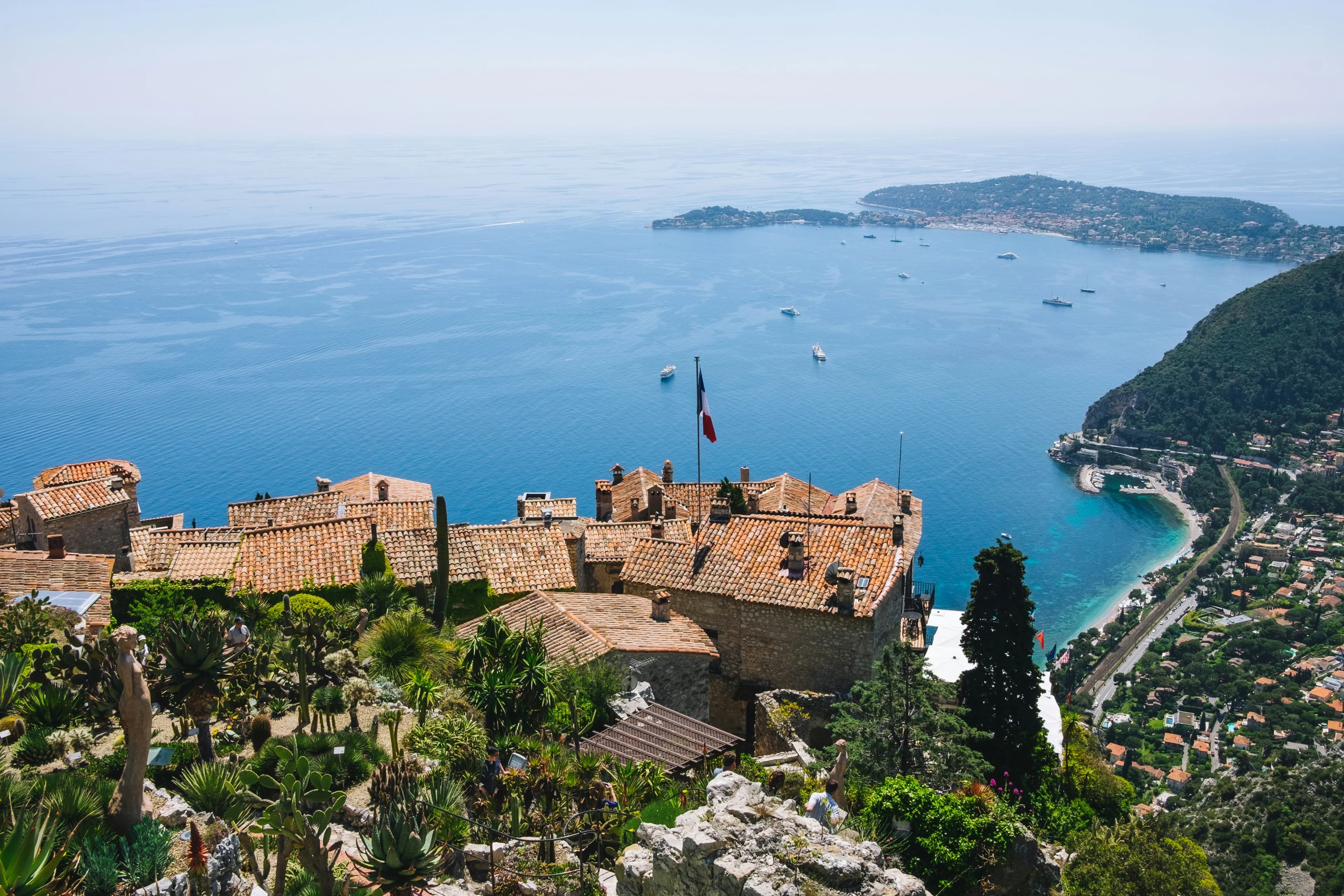
The historic core sits at the summit, enclosed within medieval ramparts. Properties here are integrated into centuries-old stone structures, and suites typically offer direct views over the coastline toward Cap-Ferrat and the Italian border. Space is architectural rather than expansive: thick walls, vaulted ceilings, and windows that frame the landscape like paintings. Access is on foot only within the village, which makes the experience genuinely removed from the pace of the Riviera below.
Èze-sur-Mer (the coastal district)
The lower district sits directly on the water and connects to the village by a steep footpath historically known as the Nietzsche Path, named for the philosopher who walked it regularly during his time in the area. Suites in this zone tend toward a more contemporary register, with direct beach and sea access. The contrast with the village above is deliberate and worth understanding before choosing where to base yourself.
The Grande Corniche corridor
Several properties occupy the road between Èze and the surrounding communes, offering the altitude and panoramic orientation of the village without the strict pedestrian constraints of the historic core. These positions suit travelers who prefer the visual drama of the elevated coastline combined with easier motor access.
When to visit Èze for a suite stay
The Côte d'Azur climate is defined by over 300 days of sunshine annually, but the character of those days shifts considerably by season. Late spring, specifically May and early June, offers the most balanced conditions: mild temperatures, lower occupancy at luxury hotels relative to peak summer, and the landscape in its most photogenic state with wildflowers across the hillsides. July and August are the highest-demand months, when Monaco's proximity and the general concentration of high-net-worth visitors on the Riviera pushes suite availability to its tightest point. Advance planning of three to six months is standard for premium inventory during this window. September and October represent a genuine alternative: the sea retains summer warmth, the crowds have receded, and the quality of afternoon light changes in a way that photographers and design-sensitive travelers tend to find more interesting than midsummer. The Monaco Grand Prix in May and the Cannes Film Festival, approximately thirty minutes west, both generate significant demand spikes in the region.
Local luxury standards and what to expect from top-tier suites in Èze
France operates a formal classification system for its most distinguished hotels, with the Palace designation awarded by Atout France to properties that exceed the standard five-star criteria across architecture, service, and cultural contribution. While the Palace label is more concentrated in Paris, several Riviera properties hold or pursue equivalent recognition. In Èze specifically, the intimacy of the village scale means that suite counts per property tend to be low, which has a direct effect on the quality of attention guests receive. A property with four suites operates on a fundamentally different service logic than a resort with forty. The architectural constraints of the historic village also mean that truly exceptional suites here are often bespoke: carved from existing structures rather than purpose-built, which gives them a spatial individuality that modern construction cannot replicate. Expect stone, wood, hand-applied plaster, and proportions determined by centuries of use rather than contemporary hospitality standards.
How to choose the right suite in Èze
The primary consideration is altitude versus access. Suites within Èze Village deliver the most concentrated sense of place, with views, architecture, and atmosphere aligned, but they require physical comfort on uneven stone terrain and an acceptance that motorised access ends at the village gates. Travelers with mobility considerations, or those prioritising pool access and contemporary amenity, may find the coastal or corridor properties more functional. View orientation matters significantly in Èze. A suite facing west captures the long late-afternoon light over the Cap-Ferrat peninsula. A suite facing east opens toward the Italian coast and the first light of the morning. Neither is objectively superior; they are experientially different, and the choice should be made deliberately. Suite size in the historic village is often smaller than comparable price points elsewhere on the Riviera, a direct result of structural constraints. What is exchanged for square footage is a quality of enclosure and material authenticity that larger modern suites rarely achieve.
Why a curated selection by La Suite matters in Èze
Èze has a small inventory of genuinely distinguished properties. The village's protected status and limited buildable land mean that no significant new construction is likely, and the character of the existing stock is stable. Within that small field, however, the differences between properties are consequential: in view angle, in suite typology, in the balance between historic integrity and contemporary comfort. A curated selection by La Suite removes the research burden from that decision. Rather than navigating a generalist platform that applies the same filters to Èze as to a city with hundreds of hotels, La Suite's editorial process identifies the properties where the suite experience is genuinely aligned with the destination's specific character. For a village where the right room and the wrong room can differ by a single floor or a single orientation, that precision is not a convenience. It is the point.