Understanding Marseille as a luxury destination
The distinct areas of Marseille worth understanding before you book
The Vieux-Port and Le Panier
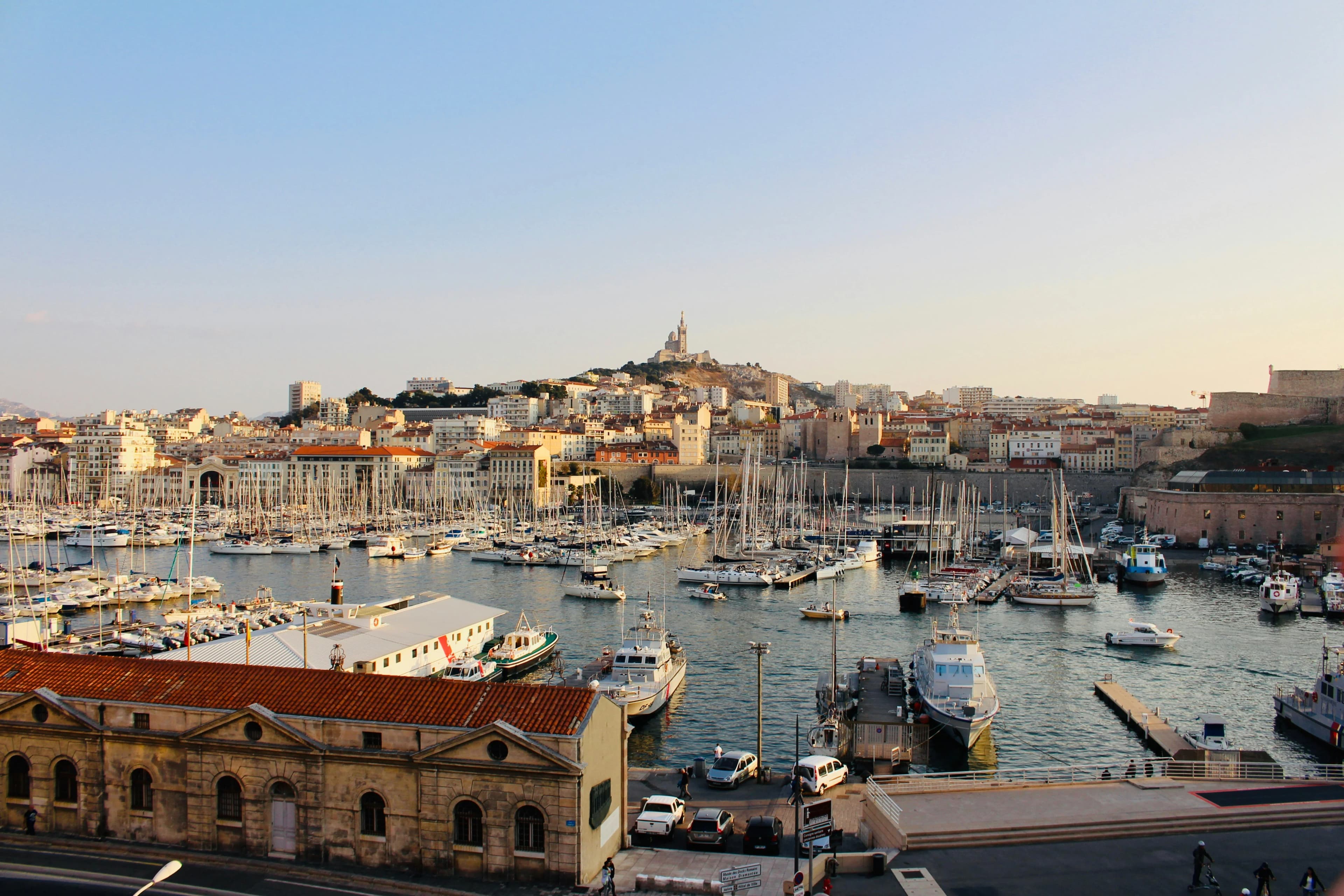
The old port remains the geographic and social center of the city. Le Panier, the oldest quarter, rises directly above it: a dense grid of narrow streets, independent ceramicists, and restaurants that require a reservation weeks in advance. Staying in proximity to this area places you within walking distance of the MuCEM (Museum of European and Mediterranean Civilisations), a landmark building by Rudy Ricciotti that sits at the junction of sea and city. Hotels in this zone tend to occupy converted historic structures and offer a more intimate scale of suite accommodation.
The Corniche Kennedy and the southern districts
The Corniche Kennedy is Marseille's coastal road, running south from the city center along a sequence of small beaches and rocky inlets. The neighborhoods adjacent to it, including the 7th and 8th arrondissements, carry a quieter, more residential energy. Properties here typically offer direct or near-direct sea exposure, with suite configurations designed around view and light rather than urban proximity. This is the part of Marseille that most resembles a coastal retreat without fully becoming one.
The Calanques corridor
Southeast of the city, the Calanques National Park begins almost without warning: limestone cliffs dropping into water of an extraordinary mineral clarity. Several properties position themselves as access points to this landscape. Suites in this zone prioritize outdoor space, natural light, and the specific silence that comes from being at the edge of a protected wilderness, minutes from a major city.
When to visit Marseille for a suite stay
The Marseille climate is Mediterranean in the classical sense: long, dry summers with consistent heat and a winter that remains mild by northern European standards. The optimal window for a suite visit, combining comfortable temperatures with full access to the Calanques and coastal areas, runs from late April through June and from September through October. July and August bring peak domestic and European tourism, with higher rates and reduced availability at the limited number of high-end properties. The Mistral, the region's defining northwesterly wind, can arrive at any time of year and reshapes the sensory experience of the city considerably. It is not a deterrent; it is part of the character.
For travelers with cultural programming as a priority, the Marseille-Provence festival calendar includes significant events in late spring and autumn. The city's restaurant scene, which has produced multiple Michelin-recognized addresses in recent years, operates at full capacity year-round.
Local luxury standards: what defines a high-end suite in Marseille
France operates a formal classification system for its most distinguished hotel properties, with the Palace designation sitting above the five-star category. The criteria are rigorous and include architectural significance, service ratios, and cultural programming requirements. Marseille's luxury hotel landscape does not yet include a Palace-classified property, which distinguishes it from Paris, the Riviera, and select Parisian resort contexts. What the city offers instead is a category of independently positioned hotels where the suite experience is defined by location specificity, material quality, and a direct relationship with the city's identity.
Expect suites in Marseille's better properties to prioritize sea views, private terrace access, and interiors that reference Mediterranean materiality: stone, linen, matte ceramics, and light-diffusing fabrics. The most considered properties commission local artists or artisans for specific pieces, creating interiors that function as an extension of the city's creative economy rather than a departure from it.
How to choose the right suite in Marseille
The primary variable in Marseille suite selection is orientation. The city's topography, built around a natural amphitheater facing the sea, means that position relative to the water determines the character of the experience almost entirely. A suite facing the Vieux-Port delivers an urban, social energy: the movement of ferries, the light on the water at different hours, the ambient sound of a working port. A suite on the Corniche or in the southern districts offers a more contemplative frame, with the sea as a constant visual and acoustic presence.
The second variable is scale. Marseille's luxury offer is concentrated rather than extensive, which means suite categories are often limited within each property. Booking significantly in advance, particularly for the shoulder seasons when the combination of good weather and reasonable rates aligns, is a practical necessity rather than a precaution.
Consider also whether the property's food and beverage offer matters to your itinerary. Several of Marseille's most discussed restaurants operate independently of hotel structures, which means the suite itself need not anchor your dining experience. For travelers who prefer to treat the hotel as a base rather than a destination, this is a relevant consideration.
Why a curated selection matters in a city with a limited luxury offer
When a destination has a small number of genuinely high-quality suite properties, the curation function becomes more critical, not less. The challenge is not choosing between many options; it is identifying which single property or small group of properties actually delivers on the expectations that a luxury suite traveler brings to a city like Marseille. La Suite applies consistent editorial criteria across the properties it lists: architectural quality, suite-specific design attention, service standards, and location integrity. In a city where the difference between a well-marketed hotel and a genuinely exceptional one is not always visible from the outside, that process of selection carries real value. The curated selection by La Suite removes the ambiguity from the decision without removing the discovery from the experience.