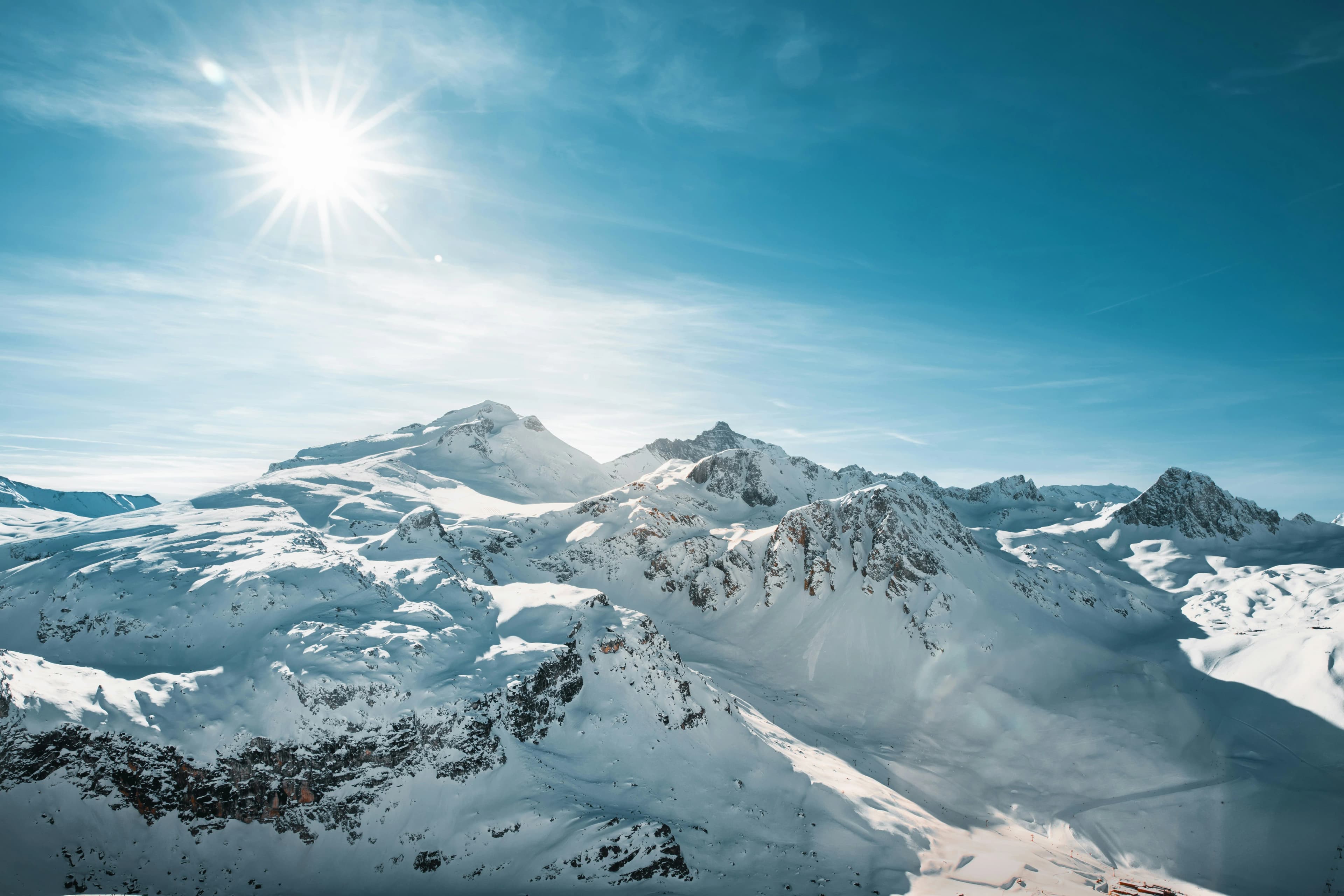
Understanding Val-d'Isère as a luxury destination
The clientele this resort attracts reflects its positioning. Val-d'Isère draws experienced skiers, families with multi-generational winter traditions, and a significant proportion of British, French, and Northern European travelers who return annually. The luxury infrastructure, from private ski schools to high-end après-ski, has developed in proportion to that demand. A luxury hotel suite in this context is not simply a room with a view. It is a considered logistical and sensory choice.
Best areas to stay in Val-d'Isère
The village centre
The historic core of Val-d'Isère, clustered around the original Savoyard church and the main pedestrian thoroughfare, offers the most direct access to ski lifts, restaurants, and the resort's social infrastructure. Properties here tend towards traditional Alpine architecture with contemporary interiors. Suites in this zone prioritise ski-in access and proximity to the après-ski circuit, which in Val-d'Isère includes some of the most recognised mountain bars in Europe.
La Daille and Le Fornet
La Daille, at the entrance to the valley, and Le Fornet, at the far eastern end, offer quieter alternatives with distinct characters. La Daille provides direct funicular access to the Bellevarde face, the terrain used for World Cup downhill events. Le Fornet, by contrast, is smaller, less trafficked, and gives access to the Pisaillas glacier. For travelers seeking spatial separation from the resort's central energy, these sectors offer a different register of Alpine experience.
Above the village: altitude properties
A small number of properties and chalets are positioned above the main village, taking advantage of south-facing exposures and unobstructed sightlines across the valley. These locations sacrifice some pedestrian convenience for panoramic orientation and quiet. For guests who prioritise the visual and atmospheric dimension of the mountain over immediate resort access, this geography makes a strong case.
When to visit Val-d'Isère
The ski season
The primary season runs from late November to early May, with the Espace Killy benefiting from high-altitude snowpack and glacier skiing that extends the reliable window beyond most Alpine resorts. December and January are the most socially active months, with peak demand around Christmas and New Year generating the highest suite premiums and the most competitive availability. February is densely booked due to French and British school holiday schedules. March is considered by many experienced visitors to be the optimal balance: reliable snow conditions, longer daylight, and a slightly lower intensity of demand relative to midwinter peaks.
The Critérium de la Première Neige
Val-d'Isère hosts one of the opening events of the FIS Alpine Ski World Cup season each December, the Critérium de la Première Neige. This brings an additional layer of professional athletic energy to the resort and creates a specific atmosphere around the Bellevarde face. For guests with an interest in elite competitive skiing, the timing of this event is worth factoring into planning.
Summer in Val-d'Isère
The resort operates a reduced summer season, primarily oriented around hiking, mountain biking, and access to the Pisaillas glacier for off-season ski training. The village is quieter, accommodation pricing adjusts accordingly, and the landscape shifts to expose the underlying topography of the valley. A summer visit delivers a fundamentally different sensory register, with wildflower meadows above the treeline and a pace that bears no resemblance to the winter calendar.
Luxury standards in Alpine accommodation: what to expect in Val-d'Isère
French Alpine luxury operates within a specific set of conventions. The national Palace designation, awarded by Atout France to properties meeting criteria across service, architecture, culinary offering, and facilities, applies to a small number of mountain properties nationally. Val-d'Isère has historically attracted investment from operators who understand the expectations of an internationally mobile clientele, resulting in a hotel stock that takes suite design seriously.
Suites in top-tier Val-d'Isère properties typically incorporate natural materials: reclaimed timber, local stone, wool textiles, and artisan ironwork. Fireplaces are standard in premium categories. Spa facilities in mountain hotels here tend towards thermal programming rather than purely cosmetic treatments, reflecting the physical demands of skiing. Private terraces with valley or piste orientation are considered a baseline expectation at the luxury level, not a feature. Butler service and private ski storage with boot heating are common at the upper end of the market.
How to choose the right luxury suite in Val-d'Isère
Ski access versus village access
The first practical consideration is the relationship between the property and the ski lifts. True ski-in, ski-out access exists for a limited number of properties in Val-d'Isère. Others offer shuttle services or are within walking distance of lifts. For guests with children or those who ski frequently throughout the day, this distinction has material consequences for the experience. For guests who prioritise dining and evening activity over maximum time on piste, proximity to the village centre may take precedence.
Suite typology: traditional versus contemporary
Val-d'Isère offers a spectrum from restored Savoyard architecture with period detailing to properties built or renovated in the last decade with a more minimal, design-forward interior language. Neither is categorically superior. The choice depends on whether the guest seeks immersion in regional material culture or prefers a neutral, contemporary frame through which the mountain landscape becomes the dominant visual element.
Group and family suite configurations
The resort has a strong tradition of family skiing, and many properties offer interconnecting suite configurations, duplex arrangements, or apartment-style suites that accommodate multiple generations without sacrificing the spatial and service standards of a hotel stay. Identifying properties with this flexibility is a specific curation task that generic booking platforms handle poorly.
Why curation matters in Val-d'Isère
Val-d'Isère has a concentrated but competitive luxury hotel market. The difference between a suite that genuinely delivers on its positioning and one that applies the vocabulary of luxury without the substance is not always visible in photography or room descriptions. La Suite approaches this market with direct editorial judgment: properties are assessed on the quality of their suite offering specifically, not on brand recognition or star category alone.
For a destination where availability windows are short, pricing is dynamic, and the physical context of the suite within the resort has direct consequences for the quality of the stay, a curated selection by La Suite removes the most significant friction from the decision process. The result is a shortlist defined by genuine quality rather than marketing volume.