
Hugo Toro: The Architect of Cinematic Maximalism and Hotel Emotion
BY Jules Peulet

In the hushed world of luxury hospitality, the trend has long been toward erasure. White walls, cold marble, silent minimalism: the goal was above all not to offend anyone. But as we theorized in our manifesto Masters of Space, Who Designs Tomorrow's Suites, a new elite of travelers now refuses this anesthetizing neutrality. They no longer want to "rent a room," they want to inhabit a story. They seek aesthetic thrill, color, historical depth. At the pinnacle of this narrative revolution stands one name: Hugo Toro.
At just 35 years old, this Franco-Mexican architect and designer has stormed the luxury industry. Far from monastic "Quiet Luxury," Hugo Toro champions a lush, eclectic, and deeply warm style. He is the architect of voluptuousness. From the renaissance of Mas Candille on the Côte d'Azur to the monumental Orient Express La Minerva project in Rome, his agency (hugotoro.com) is redesigning the geography of glamour.
A clinical dive into the heart of "Cinematic Maximalism," an architectural signature designed for travelers who view hospitality as the opening act of a grand romantic adventure.
1. The Narrator-Architect: At the Roots of Hugo Toro
Understanding the spaces created by Hugo Toro first requires understanding his roots. Born of a Mexican mother and a French father (from Eastern France), he grew up at the intersection of two aesthetically opposite yet complementary worlds. From his Mexican heritage, he draws chromatic boldness, dense shadow, the warmth of ochres, and the masterful influence of architect Luis Barragán. From his European side, he draws a fascination with Art Deco rigor, the classical proportions of Viennese architecture (that of Otto Wagner), and French artisanal expertise.
A graduate of the prestigious Penninghen school in Paris, then having refined his architectural approach between Vienna and Los Angeles at UCLA, Hugo Toro is no mere decorator. He defines himself as a "narrator-architect." As a child, he built huts he conceived down to the smallest detail, from floor to ceiling, already orchestrating light and colors. Today, with his Parisian studio of about twenty collaborators, this childhood obsession with creating "total worlds" has become his hallmark.
Quickly propelled into the highly prestigious AD100 ranking (which lists the hundred best architects in the world), Hugo Toro first captivated the Parisian and international scene with restaurants that became legendary (the Gigi restaurant saga, the PUR' at Park Hyatt Vendôme) before being entrusted with the keys to the most iconic hotels of our time.
2. Stylistic DNA: Cinematic Maximalism
If one were to dissect the "Blueprint" of a suite signed Hugo Toro, one would find no trace of conformism. His approach is theatrical, immersive and relies on the densification of the senses. This is what at La Suite, we call Cinematographic Maximalism.
The Metaphor of the "Train Carriage"
One of Toro's great spatial obsessions is the luxury train journey. He often conceives space, even in his static residential or hotel projects, as a succession of Orient Express carriages. It is hardly a coincidence that the Accor group chose him to embody the renaissance of this mythical brand. Space is always optimized to the millimeter, creating intimate cocoons, dressed in precious woodwork, where every corner holds a surprise (a mini-bar in walnut burl, a reading light in brushed brass).
Expressive Materiality
Where others advocate for emptiness, Hugo Toro advocates for texture. His interiors refuse the smooth. He uses marbles with dramatic veining (such as "Rain Forest" marble or deep reds), emerald or amber corduroy velvet enhanced with oversized piping, patinated leather, custom-woven tapestries and hand-painted ceramics. He is particularly fond of exotic woods (smoked liquidambar, ziricote, walnut) which he pairs with travertine stone and pigmented lime finishes. The tactile result is extraordinary: the eye never tires, the hand is constantly invited to touch.
The Scenography of the "Golden Hour"
Toro's stroke of genius lies in his absolute mastery of lighting. He refuses aggressive ceiling lights. His luminous architecture is designed to reproduce the flattering and sensual effect of the Golden Hour (that warm light of late afternoon). By multiplying indirect light sources (vintage sconces, 70s table lamps, backlit brass recesses), he sculpts his clients' faces and gives the space a mysterious and enveloping dimension.
3. The Hotel Portfolio: Where to Experience Hugo Toro?
Booking a suite designed by Hugo Toro is giving yourself the leading role in a film whose sets he has conceived. Here are the properties where his narrative genius expresses itself most powerfully, and which stand out as essential addresses for the La Suite community.
Le Mas Candille, Mougins: California-Provence Hybridization
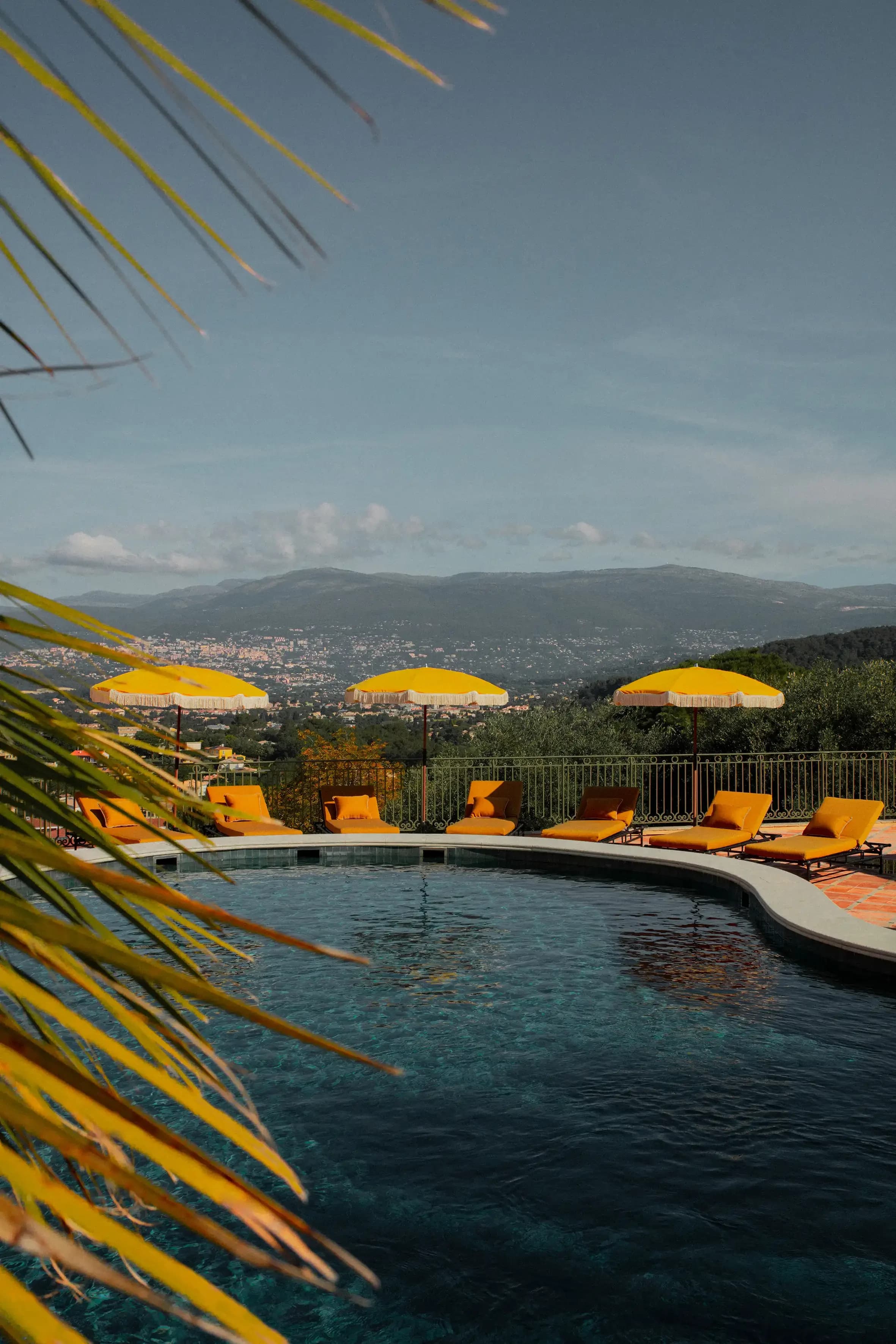
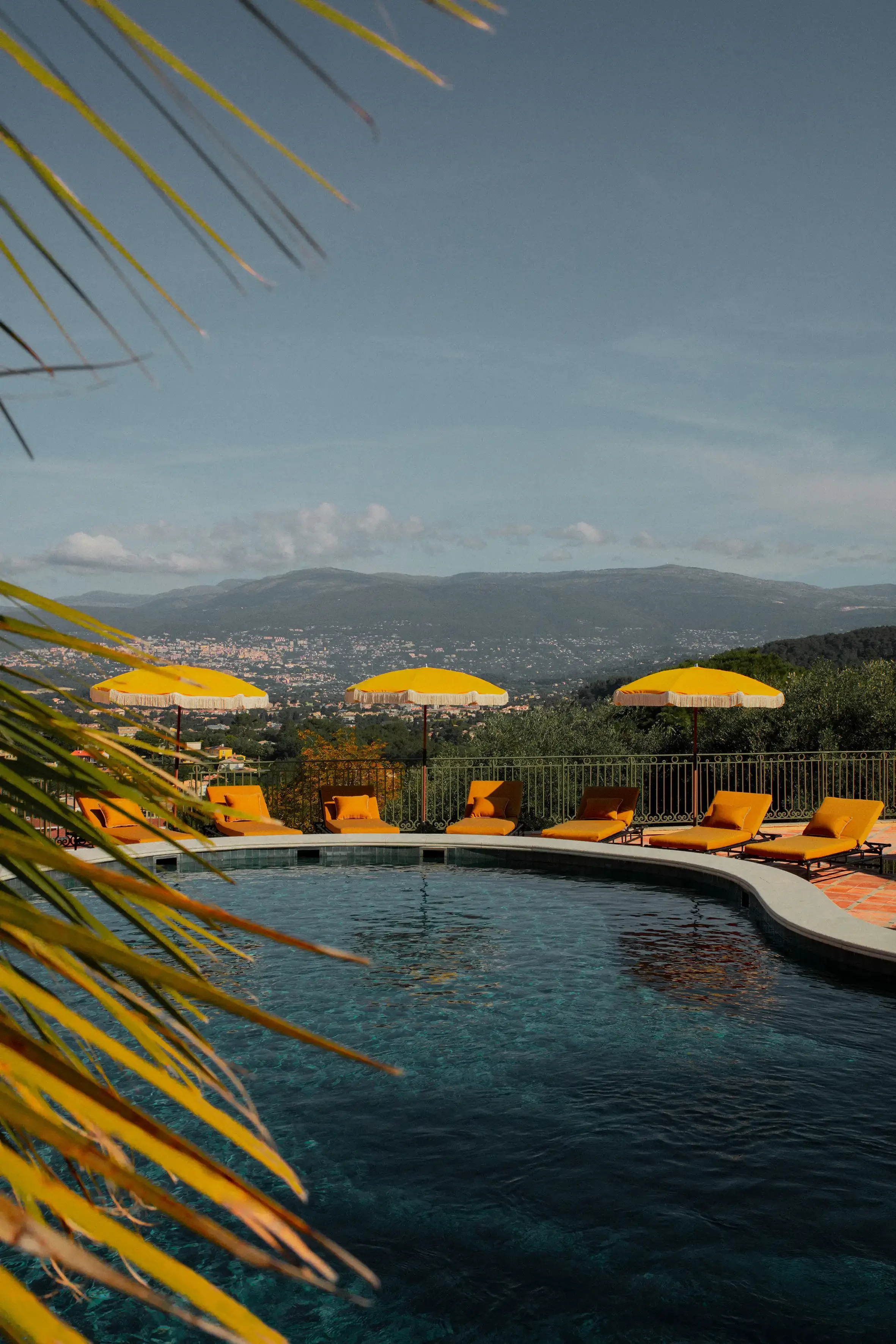
For this five-star jewel located on the hills overlooking Cannes and Grasse, Hugo Toro realized his first global hotel project. The starting point? An old Provençal farmhouse that the young architect transformed into a sublime 1960s California villa, worthy of a Slim Aarons photograph. He erased the clichéd rustic aspect to inject solar energy into it. The 21 rooms and suites are adorned with red marble, stained oak, leather seating and a palette of watery greens evoking Hollywood pools. Toro himself designed almost all of the furnishings, from carpet patterns to curtain details. It is the ultimate address for experiencing the Mediterranean summer with a decidedly vintage jet-set twist.
For whom? Hedonists, Mid-Century design enthusiasts and those seeking absolute light.
Orient Express La Minerva, Rome: The Grand Heritage
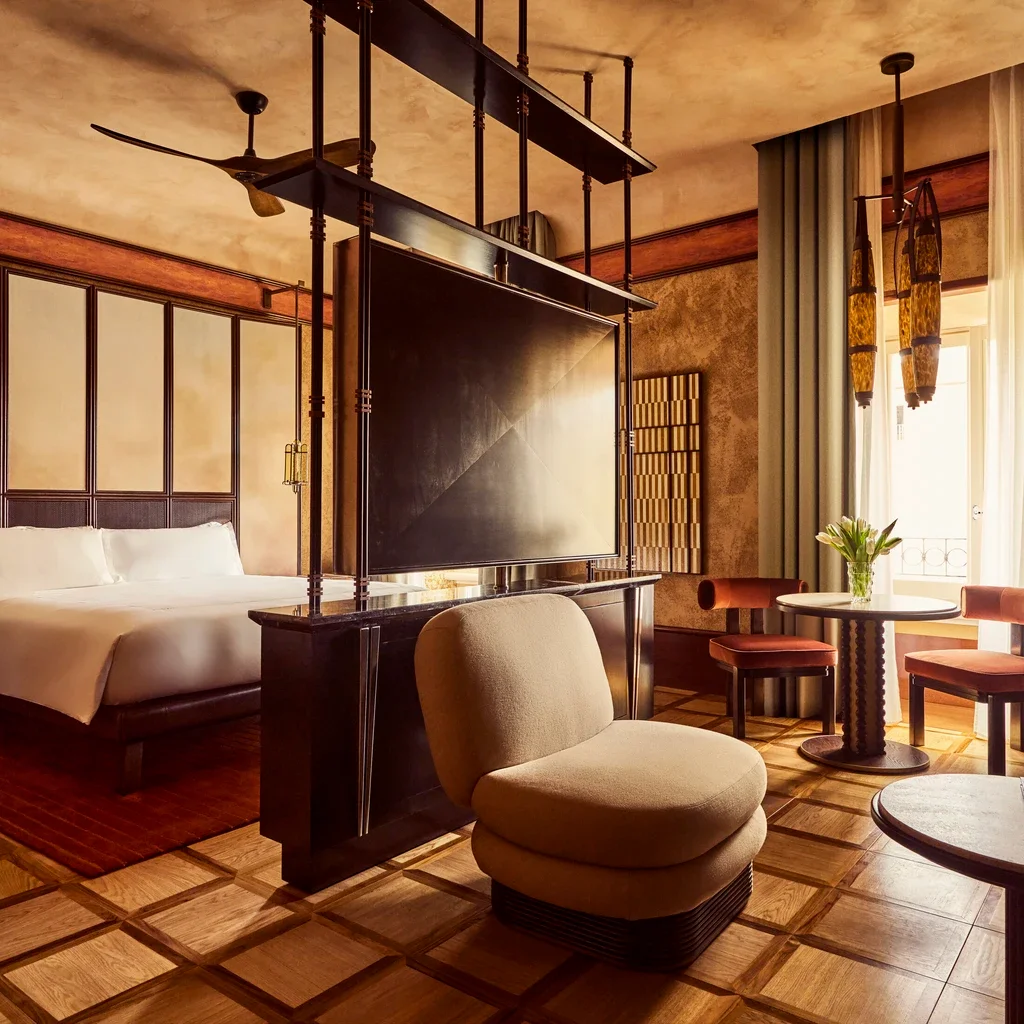
(Opening soon). This is the monumental project that definitively established Hugo Toro on the world stage. In the heart of Rome, just steps from the Panthéon, he signs the interior architecture of the Orient Express brand's very first hotel. Within this former 17th-century Palazzo Fonseca, Toro revives the spirit of the Roman domus while infusing it with the mystery of great railway journeys. The historic frescoes have been restored and now dialogue with haute couture fabrics, period columns and custom-designed furniture to embrace the majesty of the volumes. The luxury here is of a formidable sophistication, celebrating "the art of travel" at its pinnacle.
For whom? Purists of history, the elegant and those who consider Rome the eternal capital of good taste.
St Pancras Renaissance Hotel, London: The Sulfurous Gothic
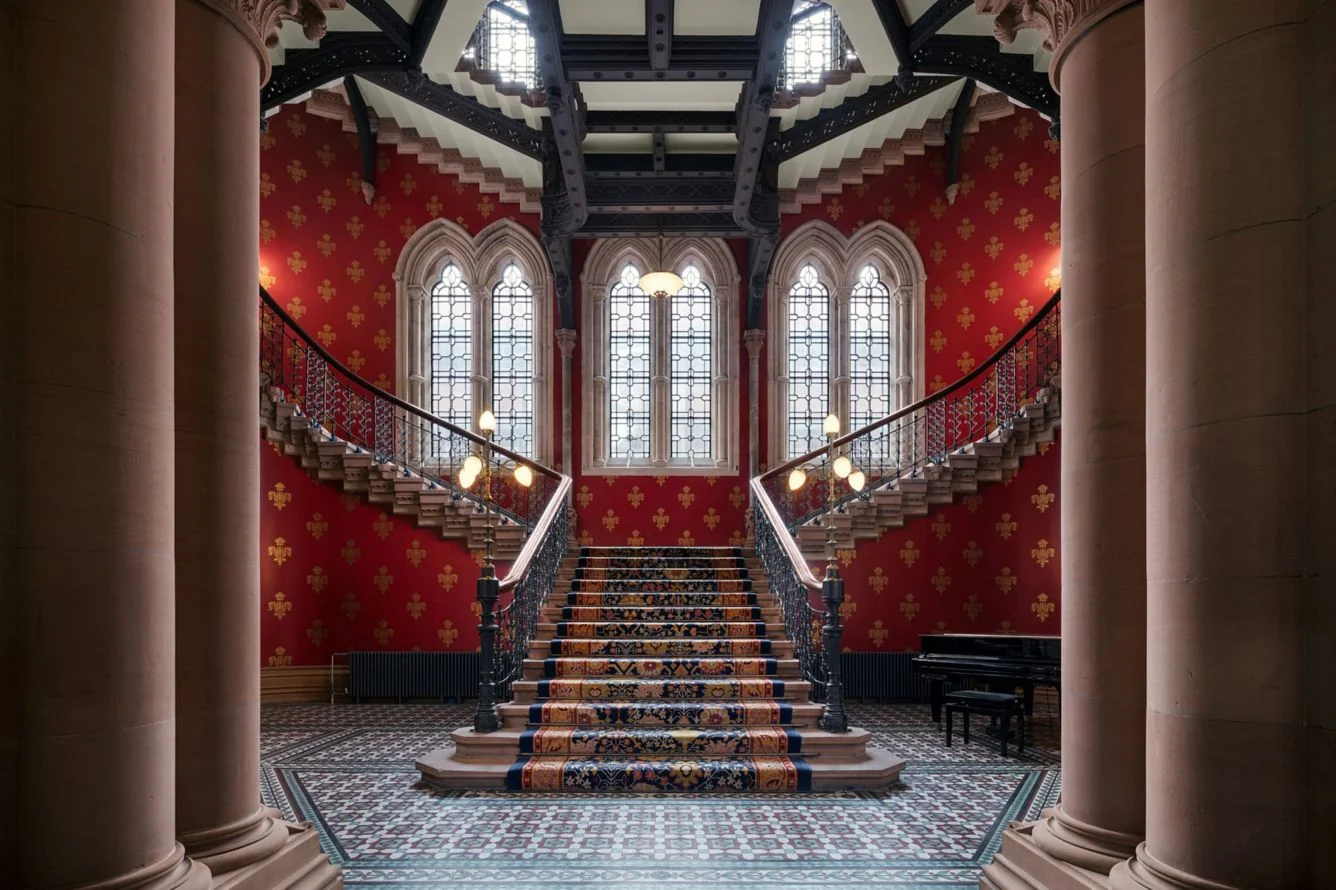
Although it is not the rooms, Hugo Toro's intervention in the public spaces of this iconic London hotel (notably the Booking Office 1869 and the Midland Grand Dining Room) alone justifies a stay. Toro confronted the original Victorian neo-gothic architecture with rare courage. He introduced giant palm trees, tawny velvets, spectacular chandeliers and gleaming brass. The contrast between historic London brick and the sensual glamour of the furnishings transforms the space into one of the most vibrant salons in the British capital.
For whom? Creatives, business travelers who reject boredom, and mixology enthusiasts evolving in dramatic settings.
The "Gigi" spirit and alpine retreats
Toro's hotel approach extends beyond bedrooms. To understand its impact on luxury hospitality, one must observe his restaurants, which function as private salons for elite travelers. Whether it's the solid stone and wood chalet of the Gigi Val d'Isère (at 2,551 meters altitude facing the Vanoise) or the Milanese spirit cabochons of Gigi Paris Montaigne, Toro achieves the remarkable feat of combining the warmth of a collector's home with the effervescence of a fashionable private club.
4. Why choose a suite designed by Hugo Toro? La Suite's Opinion
As curators of excellence, we believe that architecture dictates your state of mind. If the minimalism of a Festen (as mentioned in our previous articles) aims to lower your heart rate, Hugo Toro's approach aims for precisely the opposite: emotional and social activation.
You should book a suite designed by Hugo Toro if your journey is for celebration, creativity, or inspiration. The density of his patterns, the saturation of his colors, and the theatricality of his lighting act as cognitive stimulants. In a Toro suite, you want to dress for dinner, read a great novel, order a classic cocktail from room service, and receive friends.
His design never apologizes for being luxurious. It assumes it with a panache and indulgence that are sorely lacking in contemporary hospitality. With Hugo Toro, travel is no longer a displacement, it's a truly habitable work of art.
5. Frequently Asked Questions (FAQ)
1. How do you define architect Hugo Toro's style?
His style is often described as "Cinematic Maximalism" or "eclectic luxury." Unlike minimalism, Hugo Toro embraces abundance: warm colors (ochres, emeralds), rich materials (velvet, walnut, veined marbles, brass), and cross-influences between European Art Deco, South American modernism, and 1970s aesthetics.
2. What are Hugo Toro's main inspirations?
A Franco-Mexican architect, he draws heavily from his dual culture. He frequently cites the warmth and color of great Mexican architect Luis Barragán, the rigor of Vienna's Otto Wagner architecture, Mid-Century design from Los Angeles, but also the muted and ultra-optimized world of the mythical Orient Express carriages.
3. Is Hugo Toro's layered design comfortable for sleeping?
Absolutely. While day spaces (lounges, restaurants) are vibrant and social, Hugo Toro masters "the psychology of materials". In night spaces, he uses thick carpets, enveloping wood paneling (the "train car" concept) and very warm indirect lighting (Golden Hour) that foster an immense sense of protection and comfort.
4. Which hotel should you choose to discover Hugo Toro's work on the Côte d'Azur?
The Mas Candille in Mougins is the architect's Riviera jewel. It is his first comprehensive hotel project. There he recreated the atmosphere of a Californian villa set in the heart of Provence, blending the nostalgia of the 1960s Riviera with ultra-contemporary and warm luxury.
5. How can you be certain of staying in a suite that matches your current "Mood"?
The aesthetics of your room will dictate the mood of your stay. If you need stimulation and warmth, a suite signed by Toro is ideal. If you're unsure, don't hesitate to use the La Suite chat: our virtual concierge will guide you toward the creator (Toro, Festen, Dirand...) who corresponds exactly to your emotional needs for this trip.
More from the Journal

Perth and Broome, Mapping Coastal Luxury in the West
Australia's western coast remains a discreet territory for luxury hospitality. Between the mineral verticality of Perth and the colonial elegance of Broome, four exceptional addresses reveal how contemporary architecture dialogues with raw materials, the harsh desert light, and the infinite horizons of the Indian Ocean.
BY Jules Peulet

New Zealand / Design & Architecture: suites where architecture dialogues with landscape
In New Zealand, hotel architecture reinvents itself through a radical vision: the suite becomes an instrument for observing the great southern landscape. From raw wood to mineral facades, discover how four exemplary establishments create a dialogue between interior space and the volcanoes, lakes and mountains of the South Island.
BY Jules Peulet

Megève / Design & Architecture: Wood and Stone as the Signature of Luxury Suites
In Megève, four prestigious establishments redefine the language of the contemporary chalet by making raw materials their signature. Larch, local stone and refined linen become the protagonists of an architecture where each texture tells the story of the mountain.
BY Jules Peulet