
The New Architects of Luxury: The Visionaries Shaping the World's Finest Suites
BY Jules Peulet

The era of standardized luxury bedrooms, gilded with gold leaf, is over. Today's global elite no longer book a hotel for its brand or location; they seek impeccable spatial authorship. From the intimate residential minimalism of Paris to monumental sanctuaries rooted in place across the globe, the interior architect has emerged as the true curator of the modern travel experience. Discover the visionary minds, from Joseph Dirand to Kelly Wearstler, who are completely redefining the psychology of the luxury suite, and find the exact architectural signature that matches your next journey's purpose.
The global hospitality industry has undergone a radical and irreversible transformation. For decades, the luxury traveler chose a hotel almost exclusively based on the predictability of a corporate brand's reputation or the convenience of a privileged geographical location. Today, the most sophisticated global clients operate according to a completely different paradigm: they choose their destination based on the rigorous spatial narrative signed by an elite architect. We are currently traversing an era where the interior architect has supplanted the hotelier to become the true curator of the luxury travel experience.
As we established in our founding design manifesto, Masters of Space, the era of the anonymous, standardized, and gilt hotel suite is officially over. Today's elite traveler suffers from profound aesthetic fatigue. He no longer wants a room; he seeks a "rigorous spatial authorship", he wants to inhabit a signed masterpiece that alters his psychological state the moment he crosses the threshold.
But who are the visionary minds actually shaping these structural sanctuaries? From the avant-garde, residential-focused French scene to the monumental masters obsessed with geometry who shape the global stage, we decode the twelve architectural signatures currently defining the modern ultra-luxury suite.
1. The French avant-garde: mastering intimacy and architectural drama
The contemporary Parisian hospitality scene has transformed into the world's premier laboratory for boutique design. These leading architects and interior designers do not simply "decorate" preexisting rooms; they actively sculpt volumes, demolish generic walls, and orchestrate natural light to completely dictate how a client lives, breathes, and rests in the space.
Joseph Dirand: the high precision of classical minimalism
Joseph Dirand is the undisputed master of high-precision reduction and structural elegance. His work functions as the architectural equivalent of a perfectly tailored haute couture suit, each line is intentionally drawn, each shadow revelation is mathematically calculated, and each material transition is impeccable. In iconic properties such as J.K. Place Paris or Monsieur George, Dirand's signature lies in his unparalleled ability to render heavy monolithic materials, such as raw stone and solid wood, both monumental and weightless.
He systematically rejects superfluous ornamentation, instead choosing to elevate raw materials through absolute geometric clarity. His suites are characterized by high-contrast monochromatic palettes, perfectly matched veined Calacatta marble, and an impeccable and transparent balance between 19th-century Haussmannian Parisian architecture and strictly modernist furniture.
The sensory experience: A suite designed by Dirand is conceived for the highly stressed traveler who needs immediate cognitive decompression. It is a highly isolated and acoustically insulated sanctuary where the mind can finally become silent, completely free from any visual friction and urban noise.
Dorothée Meilichzon: The Art of Storytelling
If Dirand is the master of structural silence, Dorothée Meilichzon (founder of the agency CHZON) is the absolute master of character and historical narrative. She single-handedly pioneered the modern renaissance of the "boutique" across Europe. Meilichzon transforms hotels like the Hôtel des Grands Boulevards in Paris or the sun-drenched Menorca Experimental into immersive and cinematic environments. Her approach is intrinsically poetic and deeply documented; she designs spaces that resemble the set of a classic film, ensuring that the property is deeply rooted in the cultural history of its specific neighborhood.
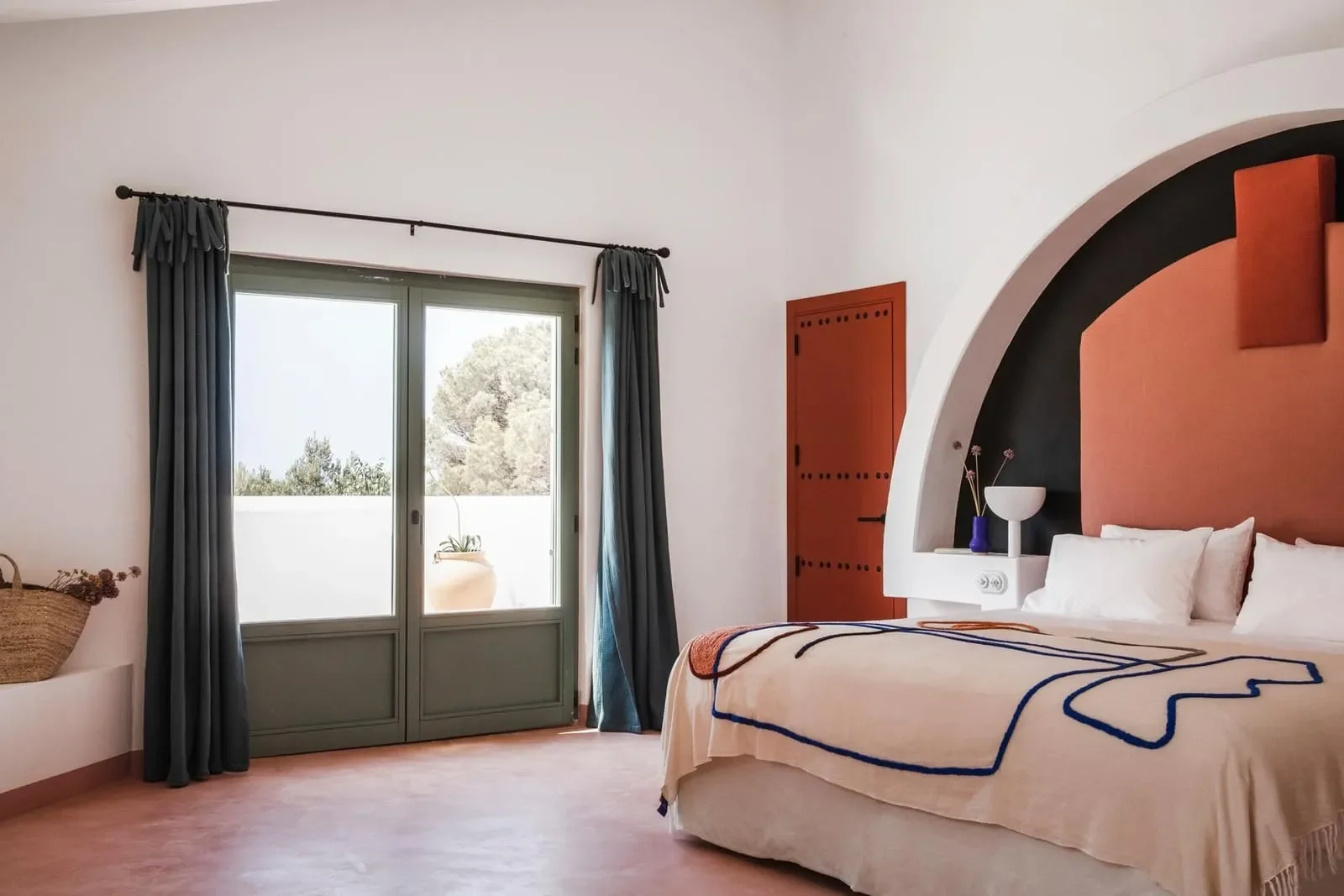
The Architectural Signature: Breathtaking organic forms, grand vaulted ceilings, geometric textiles with bespoke patterns, and bold, highly saturated color use (deep terracottas, sage greens and navy blues). It incorporates local craftsmanship, such as hand-painted tiles and woven rattan, ensuring the suite feels like a vibrant, inhabited private home rather than a sterile commercial property.
The Sensory Experience: Its suites are specifically designed for the creative director or urban explorer who actively finds inspiration in vibrant textures, historical layering and thoughtful, eclectic tactile details.
Discover the vibrant design narrative of Meilichzon at Menorca Experimental
Festen: The Art of Radical Residential Restraint
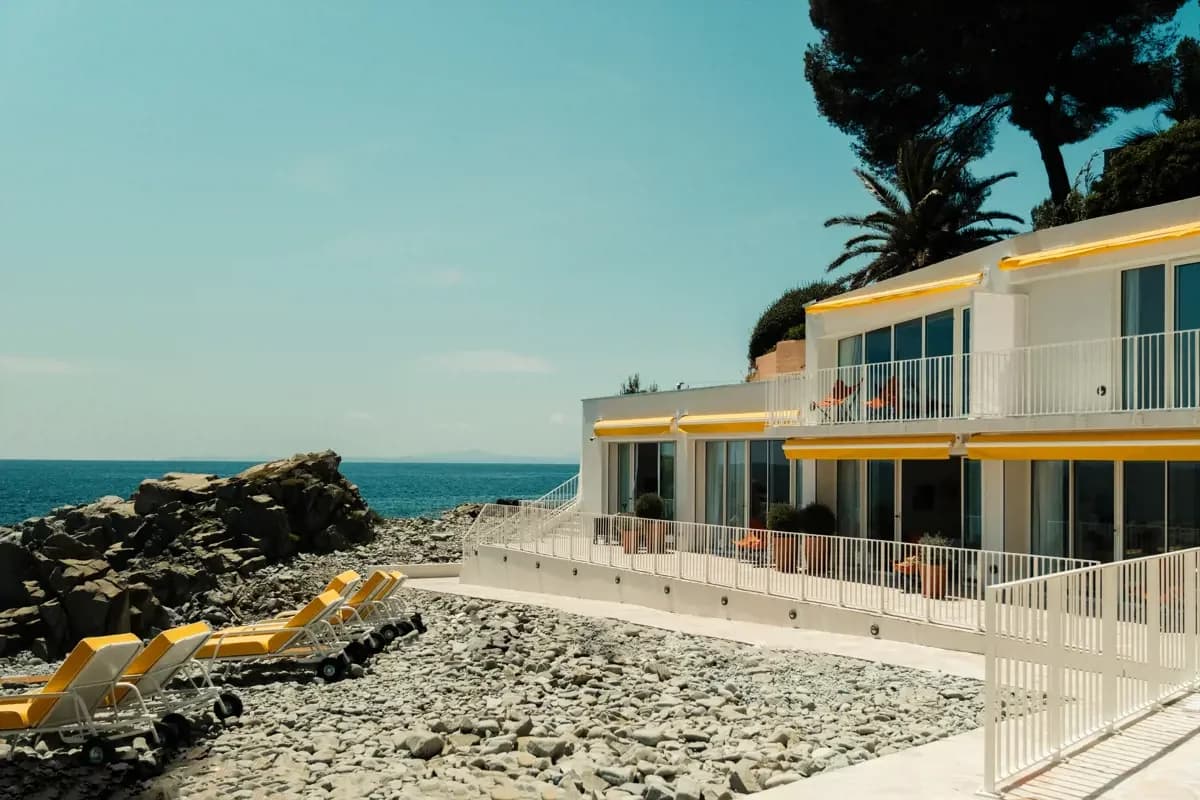
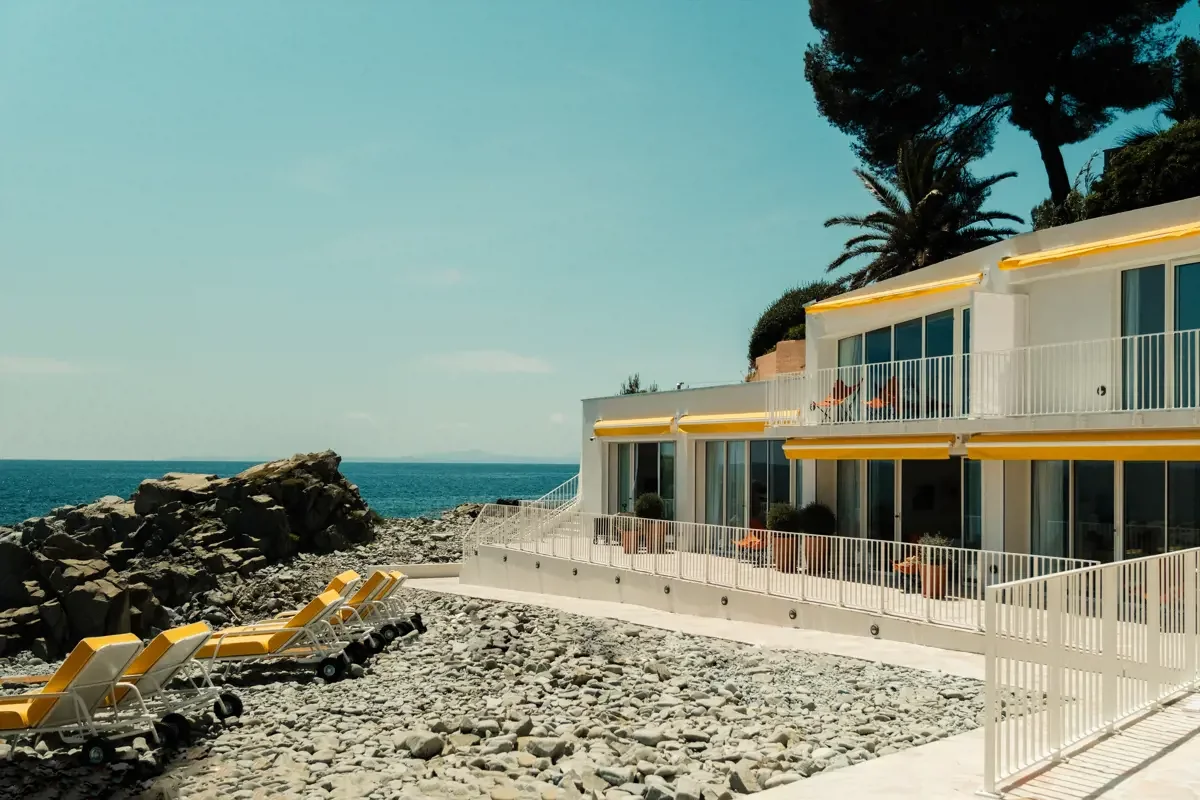
Charlotte de Tonnac and Hugo Sauzay, the fiercely independent duo heading Festen Architecture, are the essential architects for elite travelers who actively despise traditional hotel aesthetics. Their internationally renowned work at Château Voltaire in Paris and by the seaside at Les Roches Rouges on the Côte d'Azur constitutes a masterclass in creative anonymity and residential intimacy. Festen's central philosophy is to completely erase the commercial markers of traditional hospitality. They strive to give the guest the feeling that they have been handed the keys to a highly confidential, unlisted pied-à-terre belonging to an old-money intellectual.
The Architectural Signature: Custom-made seats that are low and deeply comfortable, warm corduroy, reclaimed open-pore oak flooring, and unlacquered brass hardware beautifully aged that develops a natural patina over time. They use a palette of muted, earthy colors that absorb light rather than reflect it, creating a discreet environment rich in shadows.
The Sensory Experience: Festen creates the ultimate protective cocoon. If your absolute priority when traveling is total privacy, soothing comfort, and the feeling of living as a true local insider, their signature is the definitive choice.
Enter the ultimate private Parisian apartment at Château Voltaire
Hugo Toro: Cinematic Maximalism and Theatrical Warmth
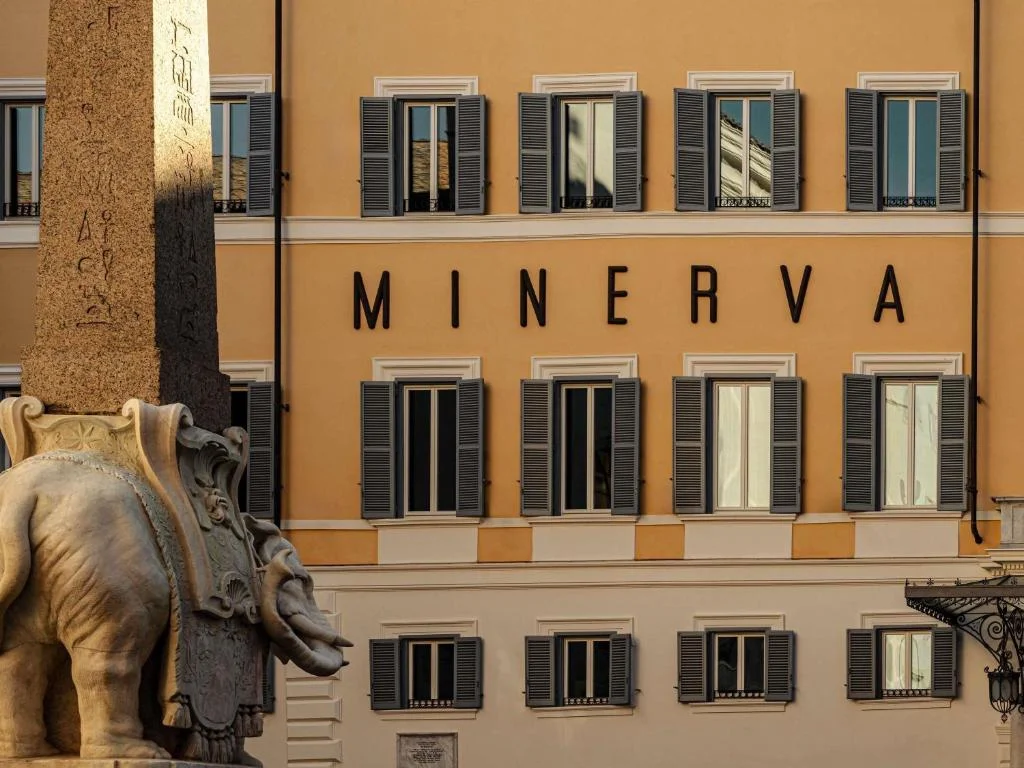
Hugo Toro, architect and designer of Franco-Mexican heritage, designs a hotel suite not as a static room, but as a dynamic canvas for a profound sensory journey. His highly acclaimed hotel interiors, ranging from the sun-drenched Le Mas Candille to Mougins to his monumental work on the Orient Express La Minerva in Rome, employ what he calls "theatrical lighting revelations." Toro understands that modern luxury is fundamentally about emotional atmosphere; his suites not only photograph beautifully, they feel physically enveloping and emotionally resonant.
The Architectural Signature: Deep and mesmerizing chromatic saturation (emerald greens, ochres and crimsons), highly stylized material stratification comprising pierced brass, richly textured velvets and bespoke woven tapestries. He frequently orchestrates spatial circulation to mimic the intimate and sequential discovery of a luxury train car, employing continuous "golden hour" lighting to soften the entire volume.
The Sensory Experience: His suites are designed for the aesthete who considers travel an act of personal representation and creative discovery. He provides intense visual inspiration for the culturally-seeking traveler seeking an escape from minimalism.
Fabrizio Casiraghi: The Mastery of Modern Nostalgia
Fabrizio Casiraghi possesses a rare ability to bridge the profound gap between intense historical weight and light, contemporary agility. He is the modern master of "Italicized French elegance." His work, visible in properties such as Hotel Providence in Paris, often resembles a magnificent love letter to the sophisticated Milanese design of the 1950s, yet his rigorous editorial process ensures his spaces never resemble dusty museum pieces or retro pastiches.
The Architectural Signature: Expert and unobtrusive use of ambient amber light, integration of highly polished wavy wood veneers and masterful pairing of airy, muted wall colors with massive, anchored antique furnishings. He possesses a rare architectural ability to render an immense room incredibly intimate and a structurally small space majestic.
The Sensory Experience: Casiraghi's creations seduce the traveler who appreciates timeless, classical elegance but demands pristine execution and impeccable ergonomics of contemporary luxury.
2. The Global Masters: Architectural Signatures Beyond Borders
While the French scene dictates boutique intimacy, the international landscape is dominated by leading global masters who have fundamentally changed the way the world perceives structural volume, nature integration and the psychology of seclusion.
David Chipperfield: The Master of Monumental Restraint
Sir David Chipperfield (Pritzker Prize laureate) is not simply a commercial architect; he is a poet of strict structural integrity and historical preservation. His monumental hospitality projects, such as the Hotel Café Royal in London and The Bryant in New York, perfectly exemplify his signature: the rare ability to restore historical grandeur while simultaneously introducing uncompromising contemporary minimalist clarity. Chipperfield's suites are austere architectural statements that deeply respect local heritage while eliminating all unnecessary decorative noise.
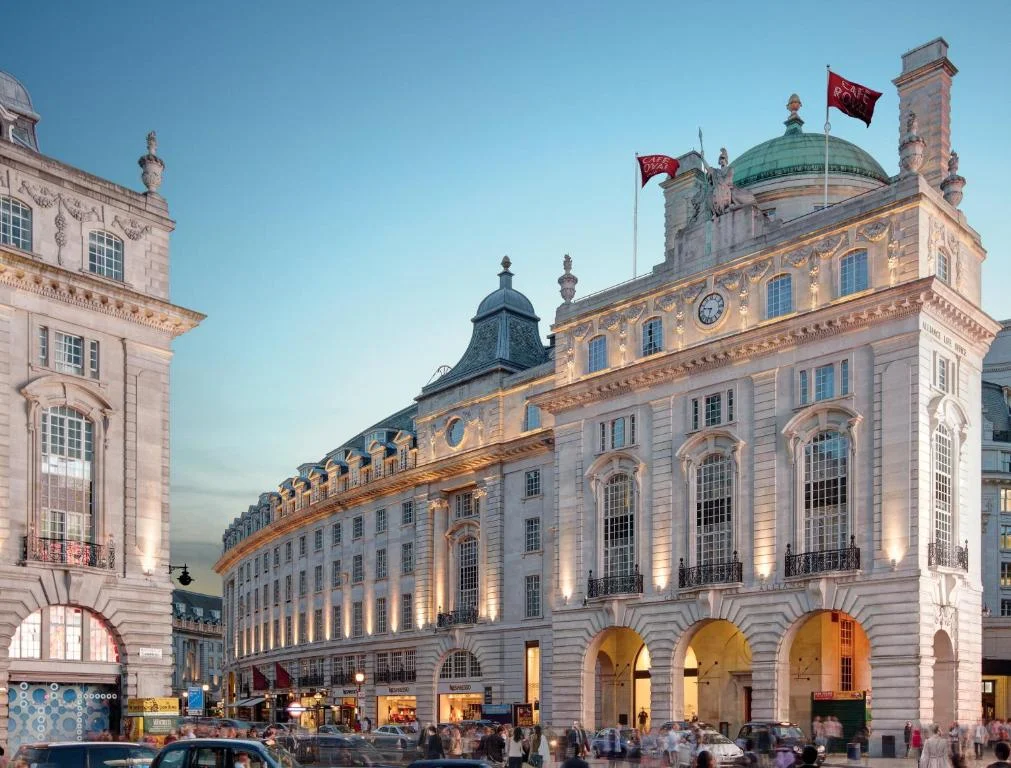
The Architectural Signature: Generous use of raw Portland stone, flawless custom terrazzo, massive monolithic marble blocks, and strict adherence to geometric grids. His spaces master the interplay between natural light and deep structural shadows, avoiding any material that would appear synthetic or temporary.
The Sensory Experience: Designed specifically for the architectural purist who views a hotel stay not as a vacation, but as an immersive study of art, volume, and history. His suites demand concentration, absolute clarity, and an almost reverent silence.
Martin Brudnizki: The King of Theatrical Elegance
Operating from London and New York, Martin Brudnizki Design Studio (MBDS) is the creative force behind the world's most glamorous and dynamic social hubs. From his work on Le Grand Mazarin in Paris to The Fifth Avenue Hotel in Manhattan, Brudnizki has perfected the lucrative art of "maximalist comfort." His spaces are intentionally overwhelming in the best way: intensely layered, joyfully vibrant, and incredibly tactile.
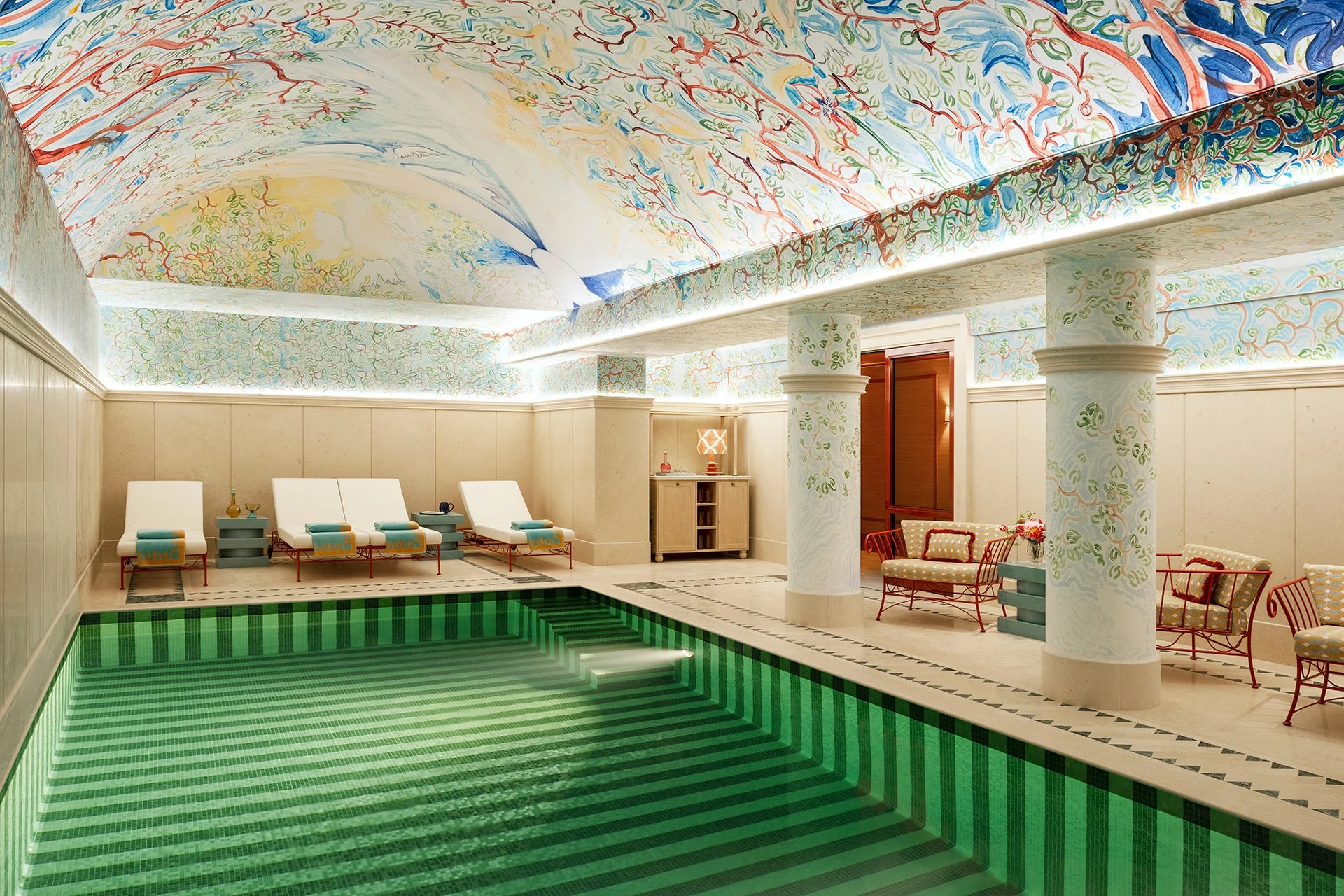
The Architectural Signature: A bold blend of vintage glamour and playful modernity. Its suites feature undulating edges, fringed mohair velvet, hand-painted ceiling murals, and intricate brass details that shimmer seductively under controlled, low-wattage ambient lighting. Every surface invites human touch.
The Sensory Experience: Brudnizki's suites are designed for the traveler who wishes to be anchored directly at the heart of the city's social energy, surrounded by an environment that feels simultaneously historical, decadent, and highly "current."
Yabu Pushelberg: The Science of Sensory Engineering
George Yabu and Glenn Pushelberg form the most powerful design duo in global mega-luxury. They are the invisible hands behind the world's most experiential properties, notably The Londoner and the worldwide rollout of the EDITION London brand. Their foundational philosophy is scientific: design fundamentally concerns how humans feel, not merely visual aesthetics. They actively use complex textures and indirect lighting to subtly manipulate how a guest moves, breathes, and relaxes within a room.
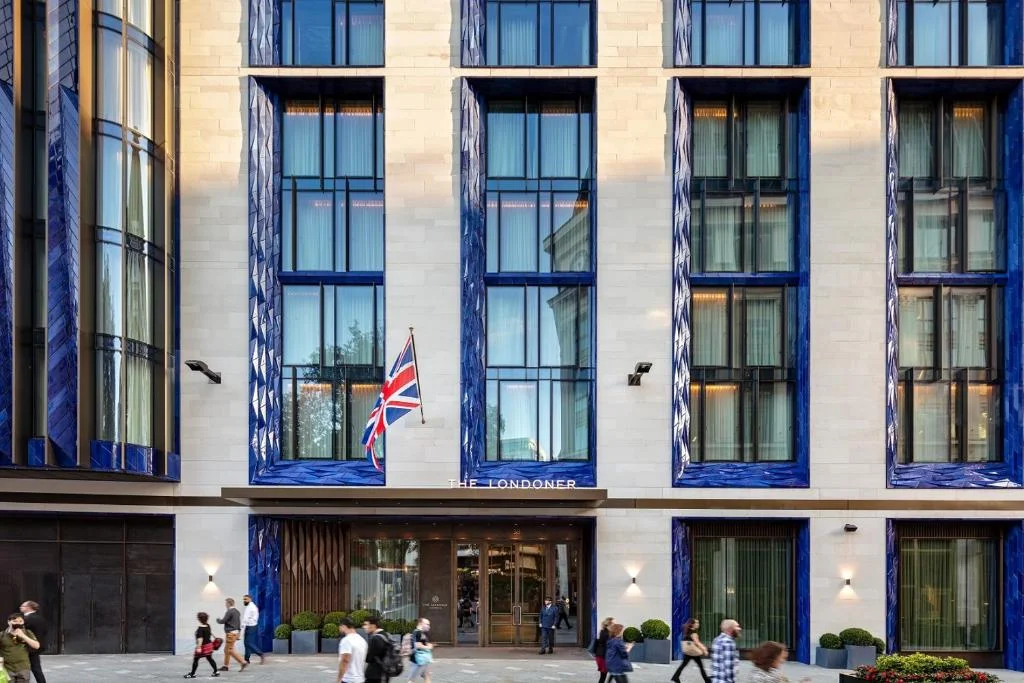
The Architectural Signature: A profound attention to tactile transitions, moving a guest from a hard, textured stone entry hall to a soft room with dampening acoustics, cocoon-like. They rely heavily on fluted wood paneling, fluid curved geometries, and completely concealed indirect lighting to erase the sharp angles of a standard guest room.
The Sensory Experience: Perfect for the exhausted executive who appreciates the "science" of physical comfort. Their suites are clinically designed to slow your heart rate, help you sleep more deeply, and enable clearer thinking by eliminating all environmental friction.
Kelly Wearstler: The Queen of Organic Maximalism
Representing the absolute pinnacle of American West Coast influence on global luxury, Kelly Wearstler's collaboration with the Proper Hotels chain (in Santa Monica, Austin, and DTLA) has revolutionized the boutique hospitality industry. She aggressively breaks the rules of traditional luxury, embracing an "earth maximalismo." Wearstler effortlessly blends raw, unpolished local stone with highly sculptural, avant-garde and retro-futuristic furnishings to create a high-energy visual feast.
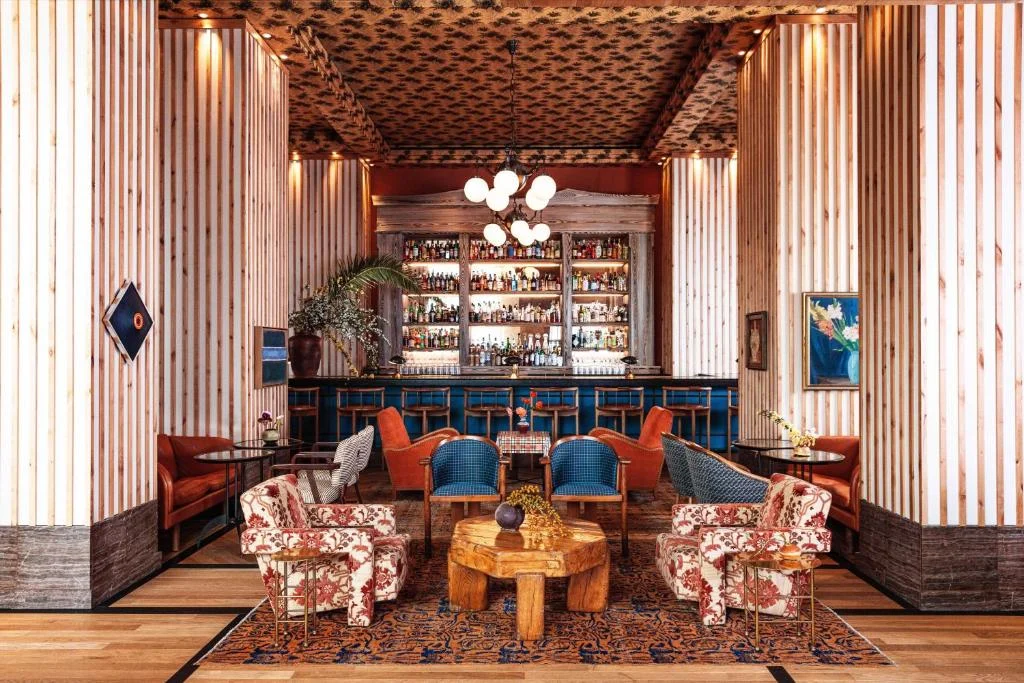
The Architectural Signature: The integration of sun-bleached solid wood, monolithic reception elements, bold geometric tiles, and an earthy color palette rooted in rust, sand, and sea foam. Her spaces resemble a highly curated gallery of global curiosities and custom art, constantly challenging the eye.
The Sensory Experience: Wearstler's suites are designed for the social connector, the influential creative, and the traveler who demands a space conceived for social stimulation, high-energy gatherings, and immediate visual impact.
Vincent Van Duysen: The Belgian Monastic Master
Based in Antwerp, Vincent Van Duysen is arguably the most globally respected name in the "Quiet Luxury" and warm minimalism movements. His work in hospitality, particularly visible at August in Antwerp, is entirely devoted to the structural and the sacred. Van Duysen operates with a discipline bordering on the monastic, using a strictly limited palette of materials to create spaces that feel eternal, massive, and completely shielded from the outside world.
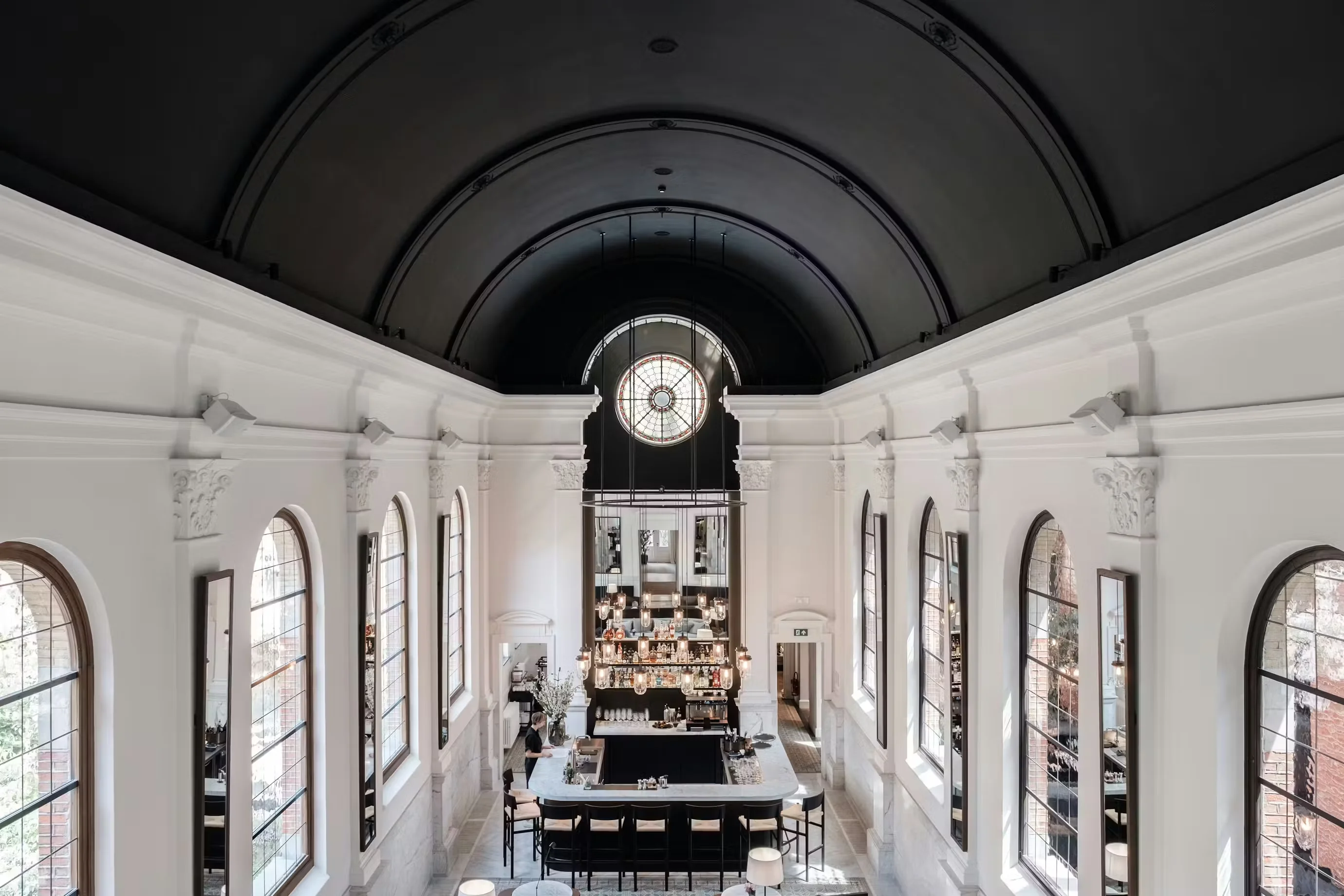
The Architectural Signature: Monumental ceilings, blackened wood, raw unpainted lime plaster, and exemplary mastery of natural light to create a sense of deep spiritual calm. He avoids anything that seems ephemeral or purely decorative.
The Sensory Experience: His suites constitute the absolutely essential choice for extended stays where deep restorative rest, silent contemplation, and isolation are the primary objectives of the journey. The absence of visual clutter translates directly into mental clarity.
Kerry Hill Architects: The Absolute Aesthetic of Serenity
The influence of architect Kerry Hill and his active architectural practice on the global Aman group cannot be overstated; they have literally defined the modern concept of "serene luxury". Their approach is deeply rooted in the philosophy of "framing nature". In masterpieces such as Aman Tokyo and Amanemu, they use clean and precise architectural lines to make the wild landscape or expansive urban landscape visible from the window the primary work of art within the room.
The Architectural Signature: The seamless and threshold-free transition between interior and exterior space, the generous use of aromatic Japanese cypress (hinoki), dark basalt stone, sliding screens inspired by ryokan, and an absolute commitment to material purity and rigorous geometric alignment.
The Sensory Experience: The ultimate and incomparable destination for the global elite seeking complete digital, physical and sensory detoxification in an environment of serene and impeccable perfection.
3. How to Choose Your Architect: An Operational Guide
Choosing the right suite is a highly strategic decision that must rest entirely on the specific operational and psychological objective of your journey. Do not book based on the city; book based on the state of mind you need to achieve. We invite you to use this clinical guide as your booking compass:
Conclusion: Your Choice of Residence
Tomorrow's luxury suite is no longer a generic and mass-produced product of the corporate hospitality machine; it is a serious intellectual and emotional investment. By booking a space created by a world-renowned architect, you are not simply booking a bed for the night, you are actively choosing a specific frequency of life.
At La Suite, our fundamental mission is to curate these masterpieces so you don't have to navigate the chaotic and unvetted noise of generic travel aggregators. We believe that your time on this planet is far too precious to be spent in a space that does not deeply inspire you.
More from the Journal

Perth and Broome, Mapping Coastal Luxury in the West
Australia's western coast remains a discreet territory for luxury hospitality. Between the mineral verticality of Perth and the colonial elegance of Broome, four exceptional addresses reveal how contemporary architecture dialogues with raw materials, the harsh desert light, and the infinite horizons of the Indian Ocean.
BY Jules Peulet

New Zealand / Design & Architecture: suites where architecture dialogues with landscape
In New Zealand, hotel architecture reinvents itself through a radical vision: the suite becomes an instrument for observing the great southern landscape. From raw wood to mineral facades, discover how four exemplary establishments create a dialogue between interior space and the volcanoes, lakes and mountains of the South Island.
BY Jules Peulet

Megève / Design & Architecture: Wood and Stone as the Signature of Luxury Suites
In Megève, four prestigious establishments redefine the language of the contemporary chalet by making raw materials their signature. Larch, local stone and refined linen become the protagonists of an architecture where each texture tells the story of the mountain.
BY Jules Peulet