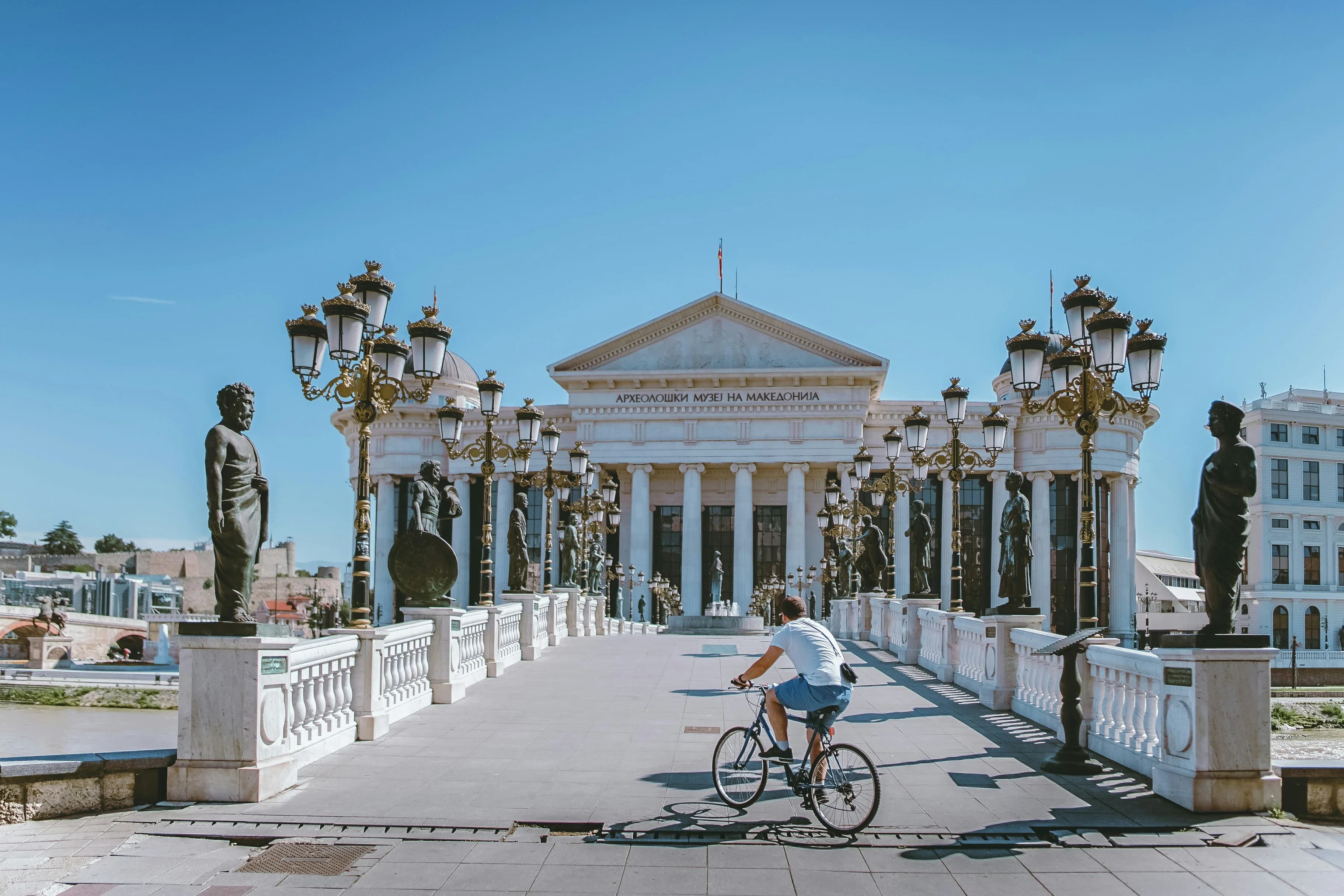
Understanding Skopje as a luxury destination
Areas of the city worth understanding before you book
The city centre and Macedonia Square
The area immediately surrounding Macedonia Square concentrates the highest density of new construction, international-facing hotels, and formal public architecture. Properties here offer proximity to the main cultural institutions, the National Museum, the Museum of Macedonian Struggle, and the Stone Bridge, which connects the modern centre to the old city. The visual environment is maximalist by any standard, and the best suites in this zone use interior restraint as a deliberate counterpoint to what lies outside the window.
The Old Bazaar district
Across the Stone Bridge, the Old Bazaar quarter operates on a different sensory register entirely. The lanes are narrow, the pace is slower, and the architecture transitions into timber-framed structures, mosques, hans, and caravanserais. Boutique properties in this zone are fewer in number but tend to offer a more textured experience, with accommodation that references local craft traditions in materials and spatial organisation. For travelers prioritising cultural immersion over brand familiarity, this side of the river rewards attention.
Vodno and the periphery
The slopes of Mount Vodno, which rises immediately to the south of the city, offer an alternative residential logic. The area is quieter, greener, and physically elevated, which translates to a degree of separation from the urban density below. Properties in this zone tend toward the villa or resort format, with larger footprints, garden access, and views across the Skopje basin. The tradeoff is distance from the historic core, which requires planned movement rather than spontaneous walking.
When to visit Skopje for a suite-led stay
Skopje operates on a continental climate with pronounced seasonal variation. Summers are dry and hot, with July and August averaging above 30 degrees Celsius. This is the peak period for regional tourism, and the city is at its most active, with outdoor dining, festivals, and evening movement along the riverfront embankment. Spring, particularly April and May, offers temperate conditions, lower visitor volumes, and the city's parks and hillsides in full growth. Autumn follows a similar logic: the light in September and October is particularly clear, and the cultural calendar resumes after the summer pause. Winter is cold and occasionally foggy in the valley, but the city continues to function fully, and rates across the better properties tend to soften considerably.
The Skopje Jazz Festival, held each autumn, draws an internationally recognised programme and represents one of the city's most consistent cultural moments. The Taksirat festival of urban culture and the various exhibitions hosted at the Museum of Contemporary Art are additional reference points for the culturally motivated traveler.
What luxury hotel standards look like in North Macedonia
North Macedonia does not operate a formal palace hotel classification equivalent to France's Palace designation or Spain's Gran Lujo category. The five-star designation, as applied locally, encompasses a wide range of properties, and the gap between the upper end and the lower end of that category is significant. The most reliable indicators of genuine suite quality in Skopje are spatial generosity, the presence of a dedicated living area separate from the bedroom, the quality of bathroom specification including materials and fixture selection, and the coherence of interior design across the whole property. International hotel groups operating in the city bring their own brand standards, which provide a degree of predictability. Independent properties require more scrutiny but occasionally deliver experiences that branded hotels cannot replicate in terms of character and local specificity.
Service culture in Skopje is attentive and generally warm without the formalised distance that characterises luxury hospitality in some Western European capitals. Staff in the better properties tend to speak fluent English and are accustomed to the expectations of international business travelers and discerning leisure guests. The city receives a growing flow of visitors from the Gulf, Western Europe, and the wider Balkan region, and the hospitality infrastructure has adjusted accordingly over the past decade.
How to choose the right luxury suite in Skopje
The first consideration is what the suite is meant to do. If the visit is primarily cultural, proximity to the Old Bazaar and the central museums reduces friction and increases the likelihood of spontaneous exploration. If the visit centres on business, properties close to the government district and the main commercial corridors are the more practical choice. If the intention is withdrawal and rest, the elevated periphery around Vodno offers the spatial conditions for that mode of stay.
Beyond location, the key variable is what the suite actually contains. In a city where the term is applied inconsistently, it is worth verifying whether a listed suite includes a genuine separate living space, what the bathroom configuration is, whether natural light is present in both rooms, and what the views consist of. Suites facing the river or the mountain tend to offer more considered visual environments than those overlooking the denser parts of the commercial centre.
Finally, consider the size of the property itself. Skopje's largest hotels can feel transactional at scale. Smaller properties with a limited number of suites tend to calibrate service more precisely to individual guests, which at the level of a luxury stay makes a measurable difference to the experience.
Why a curated selection by La Suite matters in Skopje
Skopje is a city where the luxury hotel market is still forming its identity. The volume of genuine suite-quality accommodation is limited, the variation in standards is wide, and the information available through generalist booking platforms is frequently incomplete or misleading in its classification of room types. La Suite applies a consistent editorial and quality framework to every destination it covers, which in an emerging market like Skopje carries particular weight. The platform's selection process filters out properties that use the suite designation loosely and surfaces the options that genuinely deliver on space, design, and service. For a traveler arriving in Skopje for the first time with high expectations, that curatorial work removes a significant variable from the planning process.