Where to stay in Cornwall for a luxury suite experience
The north coast
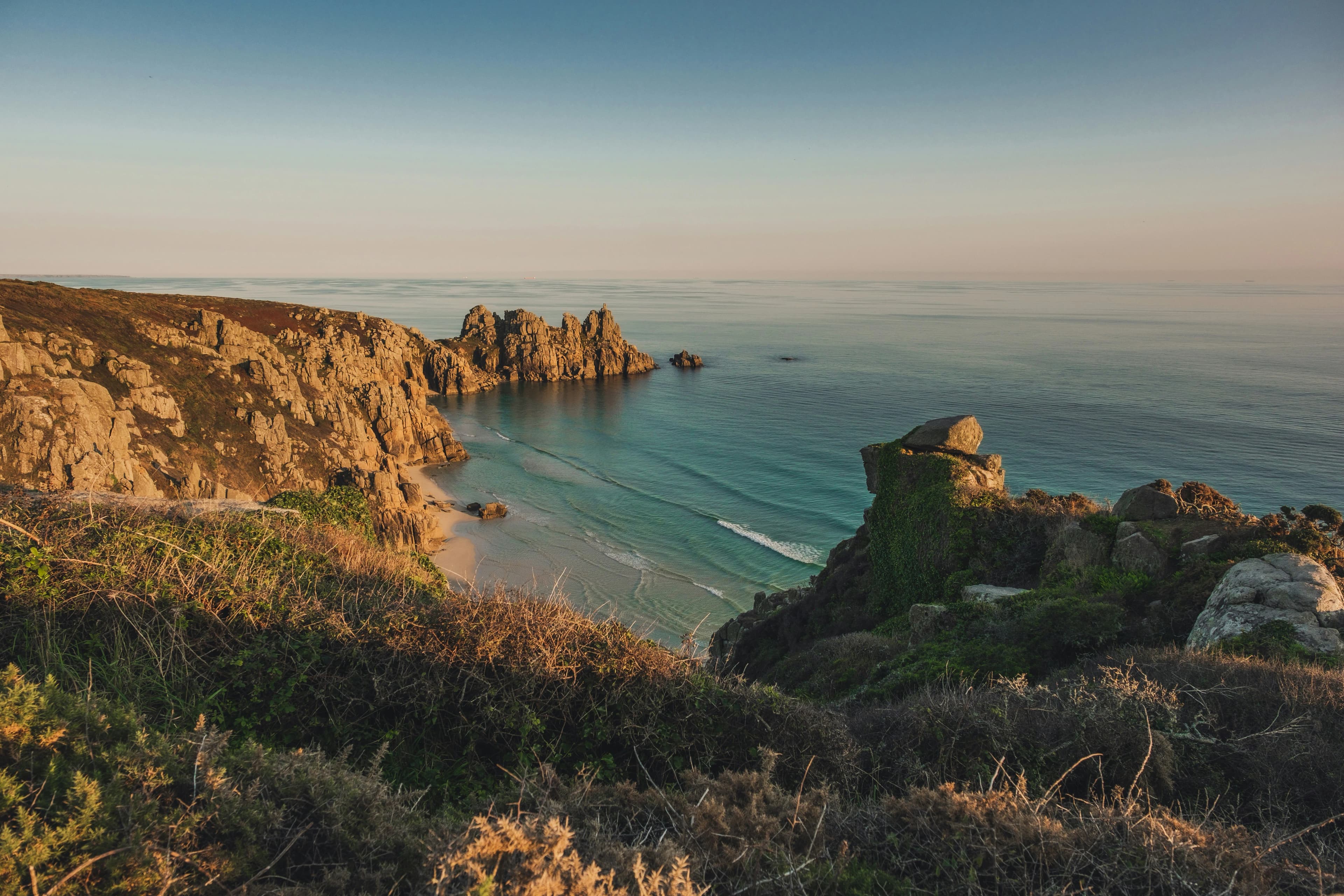
The Atlantic-facing north coast carries a more elemental character. Headlands drop sharply into open water, surf breaks roll in from the west, and villages like Padstow and Port Isaac maintain working identities alongside their culinary reputations. Padstow in particular has become a serious food destination, anchored by Rick Stein's long presence there. Luxury hotel suites on this stretch tend toward bold natural positions: clifftop settings, converted farmhouses, and properties that foreground the weather as a feature rather than an inconvenience.
The south coast and the Roseland Peninsula
The south coast, sheltered from prevailing Atlantic winds, operates at a different register. Estuaries cut deep inland at Fowey, Helford, and the Fal, creating a quieter, greener landscape more reminiscent of the Mediterranean than the popular image of Cornwall. The Roseland Peninsula, in particular, offers relative seclusion. Properties here lean toward manor conversions and country house hotels, often set within private grounds that extend to the water's edge. This is Cornwall at its most composed.
The far west: Penwith and the Lizard
West of Penzance, the Penwith peninsula and the Lizard point represent Cornwall's most remote and geologically distinct territory. The Lizard is the southernmost point of mainland Britain, and its serpentine rock formations give the coastline an unusual, almost prehistoric quality. Penwith carries the legacy of the St Ives art scene: the Tate St Ives and the Barbara Hepworth Sculpture Garden have made this corner of England a legitimate cultural destination for design-literate travellers. Luxury suites in this area often draw on the heritage of the local arts community in their interiors and overall approach.
When to visit Cornwall for a luxury hotel stay
Cornwall's season is longer than most English coastal destinations, but timing still matters for suite availability and experience quality.
Late spring and early autumn
May, June, and September represent the strongest case for a luxury hotel visit. The light is at its most architectural in these months: long golden hours that explain why painters were drawn here long before the tourism industry arrived. Hotels are busy but not saturated, and the landscape is fully green without the peak-summer crowds that compress space in smaller villages.
Summer
July and August bring the highest demand, particularly around Port Isaac, Padstow, Rock, and St Ives. Availability for top-tier luxury suites narrows considerably, and lead times of six months or more are standard at the most sought-after properties. If summer is the only option, prioritise suite categories that include private outdoor space, as the social areas of even the finest hotels can feel pressured in peak weeks.
Winter
Cornwall's winter has a specific appeal that is undervalued by most visitors. The Gulf Stream keeps temperatures mild by British standards, and the landscape takes on a more exposed, unguarded quality. A luxury hotel suite on the north coast in January, with fire, clean Atlantic air, and empty beaches, is an entirely different proposition from the summer experience. Some smaller properties close for the season, but the larger country house hotels and spa-focused retreats operate year-round and often offer their best rates in these months.
Understanding luxury standards in Cornwall
England does not operate a formal palace classification equivalent to France's official Palace designation. The relevant quality markers in Cornwall are primarily independent: AA rosettes and stars for dining, and the broader critical consensus established through publications such as The Good Hotel Guide and Mr and Mrs Smith.
Country house hotels
The dominant format for luxury accommodation in Cornwall is the converted country house or estate. These properties, often built in the eighteenth or nineteenth century for landed Cornish families, have been adapted into hotels of varying ambition. The best of them retain the spatial logic of the original house while introducing contemporary standards for bathrooms, bedding, and service. A top-tier suite in one of these properties will typically occupy a principal bedroom with period architectural detail, significant square footage, and views across private grounds or open countryside.
Coastal and clifftop hotels
A smaller but distinct category of luxury hotel in Cornwall is purpose-built or substantially rebuilt around its coastal position. These properties compete primarily on outlook and architecture. Suite quality here is assessed differently: the quality of glazing, the orientation of terraces, and the acoustic design all become relevant considerations in a way that they are not in a manor house context.
Boutique and design-led properties
Influenced by the St Ives arts tradition and a broader shift in British hospitality toward considered interiors, a generation of smaller properties has emerged that prioritise design over scale. These hotels may offer fewer suites, but the individual rooms are often commissioned with a rigour comparable to residential architecture. Artists, ceramicists, and furniture makers from the local creative community are frequently involved in these projects.
How to choose the right luxury suite in Cornwall
Several practical considerations shape the decision beyond price and category.
Architecture: historic versus contemporary
The choice between a Georgian manor and a design-led coastal property is not simply aesthetic. Historic properties offer volume and proportion that newer buildings rarely match, but they may carry constraints around noise transmission, uneven heating, and the general unpredictability of old structures. Contemporary properties offer tighter environmental control and more consistent technical standards, but may lack the sense of settled permanence that defines a great country house stay.
Coastal access
Not all properties described as coastal have direct or convenient beach access. In Cornwall, where the South West Coast Path runs the full perimeter of the peninsula, a hotel can be dramatically positioned above the sea while being twenty minutes from any accessible beach. Verify the practical walking distance and terrain before selecting a suite on the basis of its coastal identity.
Driving and connectivity
Cornwall's road network is predominantly single-track in rural areas, and journey times within the county can be significantly longer than map distances suggest. The A30 connects Exeter to Penzance and is the primary artery, but travel from the north coast to the south coast, or from east to west, requires patience. For travellers planning to explore widely, a central position matters. For those intending to stay within a specific area, proximity to the villages and coastline they prioritise is more relevant than regional centrality.
Why curated selection matters in Cornwall
The Cornish luxury hotel market includes a wide spectrum of quality, and the gap between the finest properties and those that use the language of luxury without the substance is considerable. La Suite applies a consistent editorial lens to this market, filtering for suites that meet genuine standards of space, service, and design. For a destination as geographically varied as Cornwall, curation also means matching the right type of property to the right type of traveller. The curated selection by La Suite exists precisely to make that distinction legible.