Where to stay in Derbyshire: distinct areas and their character
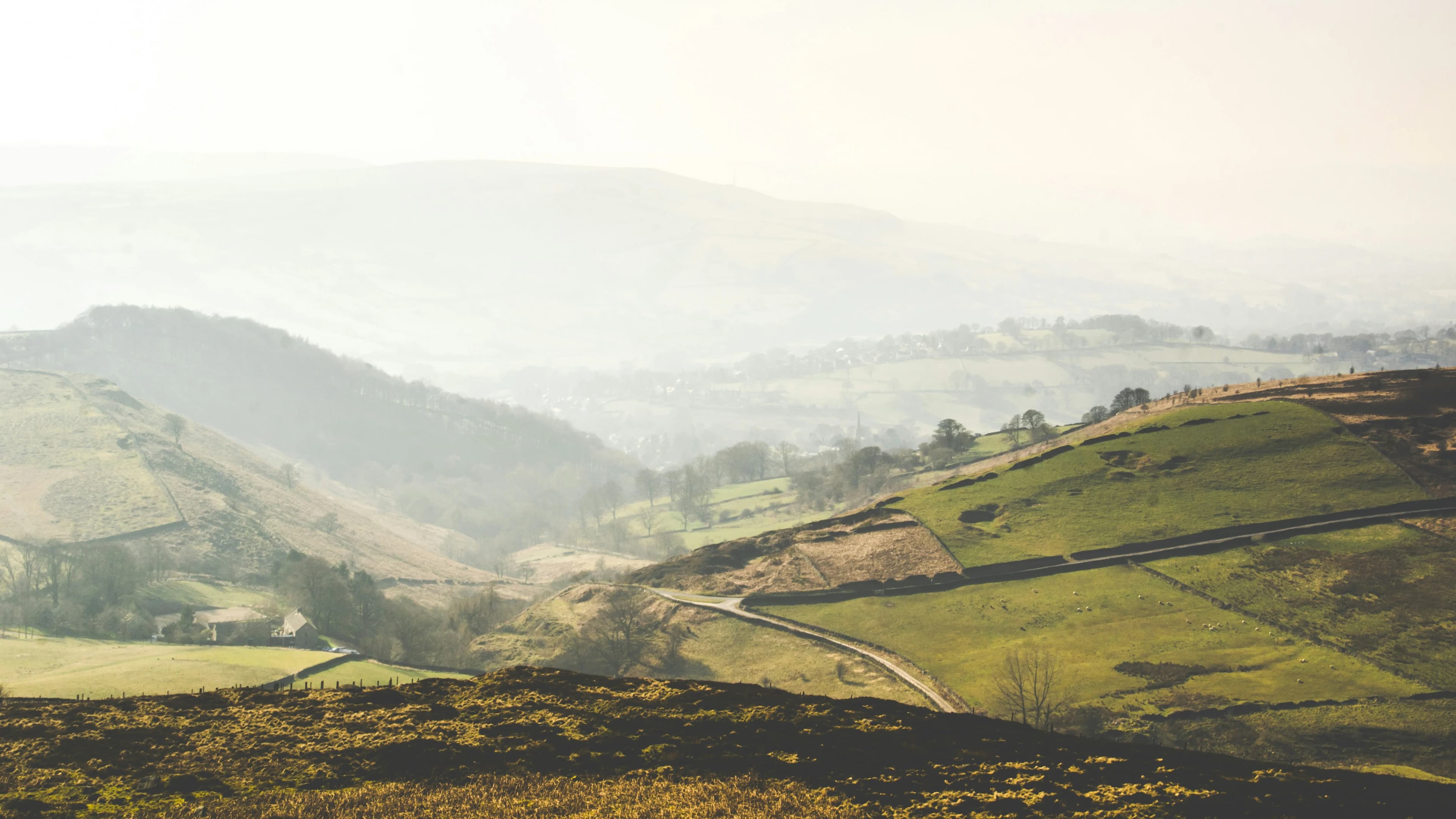
The Peak District covers much of the northern and central county, itself split between the gritstone moors of the Dark Peak and the softer, paler limestone country of the White Peak. The Dark Peak, stretching across Kinder Scout and the eastern edges, is raw and elemental: wide skies, exposed ridgelines, and a quality of light that shifts rapidly with weather. Properties in this zone tend to occupy converted farmhouses or restored mill buildings, offering a more austere aesthetic that suits travelers seeking genuine remoteness.
The White Peak, centred on the limestone dales of Dove Dale, Lathkill Dale, and Monsal Dale, is more ordered and pastoral. Villages of pale stone, dry-stone walls, and river valleys define this area. Country house hotels here benefit from a setting that is scenically refined without being severe. It is well suited to those who want access to walking and cycling from a comfortable, considered base.
The southeastern corner of Derbyshire, around Ashbourne and the Derbyshire Dales, carries a quieter, more agricultural tone. Further east, the county edges toward market towns such as Bakewell, a useful orientation point for the broader Chatsworth estate and the broad arc of the Derwent Valley. This central corridor holds the highest concentration of formal country house properties in the county.
When to visit Derbyshire for a luxury stay
Derbyshire has no single dominant season. Each period of the year offers a distinct register of the landscape, and the timing of a visit should be chosen deliberately.
Late spring, from May into early June, produces the clearest light and the most legible version of the limestone dales: foliage is fresh, river levels are manageable, and the moorland transitions from brown to a tentative green. This is one of the most photogenic windows for the White Peak in particular.
Summer, from July through August, is the peak period for visitor numbers across the Peak District. Bakewell and the major dales attract significant traffic. For those staying in a luxury suite, this pressure is largely absorbed by the property itself, but travel times on the A6 and B roads through the dales can be material. The Chatsworth Country Fair, held annually in early September, draws a specific type of visitor and coincides with the estate looking its most composed before the autumn shift.
Autumn in Derbyshire is considered by many walkers and photographers to be the most rewarding season. The gritstone edges of the Dark Peak take on a deep amber character, and the beech woodlands around the Derwent Valley reservoirs become intensely coloured through October. Temperatures drop sharply after October, and the higher moors become wet and exposed.
Winter occupies a different register entirely. The county contracts into itself. Country house hotels that remain open during December and January offer a quality of stillness and privacy that is impossible in warmer months. Frost on limestone walls, low light across the moors, and open fires in stone-floored interiors: this is Derbyshire at its most atmospheric for those who seek it deliberately.
Understanding luxury standards in Derbyshire
England does not operate a formal palace classification in the manner of France. The relevant quality markers for high-end properties in Derbyshire are typically the AA rosette and star system, membership in collections such as Relais and Chateaux or Small Luxury Hotels of the World, and historic designation status such as Grade I or Grade II listed building classification.
The most significant luxury properties in Derbyshire tend to occupy converted country houses, Georgian halls, or estate buildings. The physical fabric of these buildings is central to their character: original stonework, period plasterwork, and proportioned reception rooms that cannot be replicated in a modern build. Suite design in these properties navigates a particular tension between heritage preservation and contemporary guest expectation. The best properties resolve this without compromise: period architecture retained with accuracy, bathrooms and technology integrated without damaging the interior logic of the building.
Derbyshire also has a growing category of contemporary rural retreats: smaller properties with a more architectural and design-forward language, occupying converted agricultural buildings or purpose-built structures. These tend to prioritise spatial quality, natural materials, and direct landscape connection over formal service rituals. Both categories are represented within the La Suite curation.
How to choose the right suite in Derbyshire
Several practical considerations are specific to booking a luxury hotel suite in this county.
First, the relationship between property and landscape. In Derbyshire, the view from a suite is not incidental. A room facing open moorland at dawn operates differently from one overlooking a formal parterre garden. Establish what you are looking for experientially before selecting on the basis of interiors alone.
Second, the question of access. Derbyshire's road network is beautiful but slow. Properties in the more remote parts of the Peak District can be 30 to 45 minutes from the nearest rail connection, typically Manchester Piccadilly or Sheffield. If you are travelling without a car, this has real logistical implications. Confirm transfer arrangements before booking.
Third, the size and proportion of suites in historic buildings varies considerably. A suite in a Georgian country house may have very high ceilings, large original windows, and deep bay alcoves, but the bathroom square footage may be more constrained than an equivalent price point in a purpose-built urban hotel. This is not a deficiency; it is an architectural condition. Understanding this in advance leads to a better match between expectation and experience.
Fourth, consider the season against the specific property type. Open moorland locations that are extraordinary in October can be logistically difficult in January. Conversely, a valley property sheltered by woodland may be at its best in winter, when the surrounding trees are bare and the views extend further than in summer.
The value of a curated selection in Derbyshire
Derbyshire's luxury hospitality landscape is not large, but it is uneven. The county holds a number of genuinely exceptional properties alongside a broader category of well-marketed country hotels that do not perform at the same level of spatial or experiential quality.
The role of La Suite's curated selection is to remove that uncertainty. Each property included has been evaluated against consistent criteria: the quality of the suite itself (proportions, materials, light, bathroom standard), the coherence of the wider property experience, and the degree to which the setting is genuinely integral to what is being offered rather than incidental to it.
For a destination like Derbyshire, where the landscape is the primary reason for the visit, the relationship between interior and exterior is the central curatorial question. A suite that does not engage with its setting, whether through aspect, material palette, or the quality of light it admits, misses the point of being here at all. La Suite's selection is built around properties where that relationship is resolved with intelligence and care.