Where to stay in Devon: distinct areas and their luxury profile
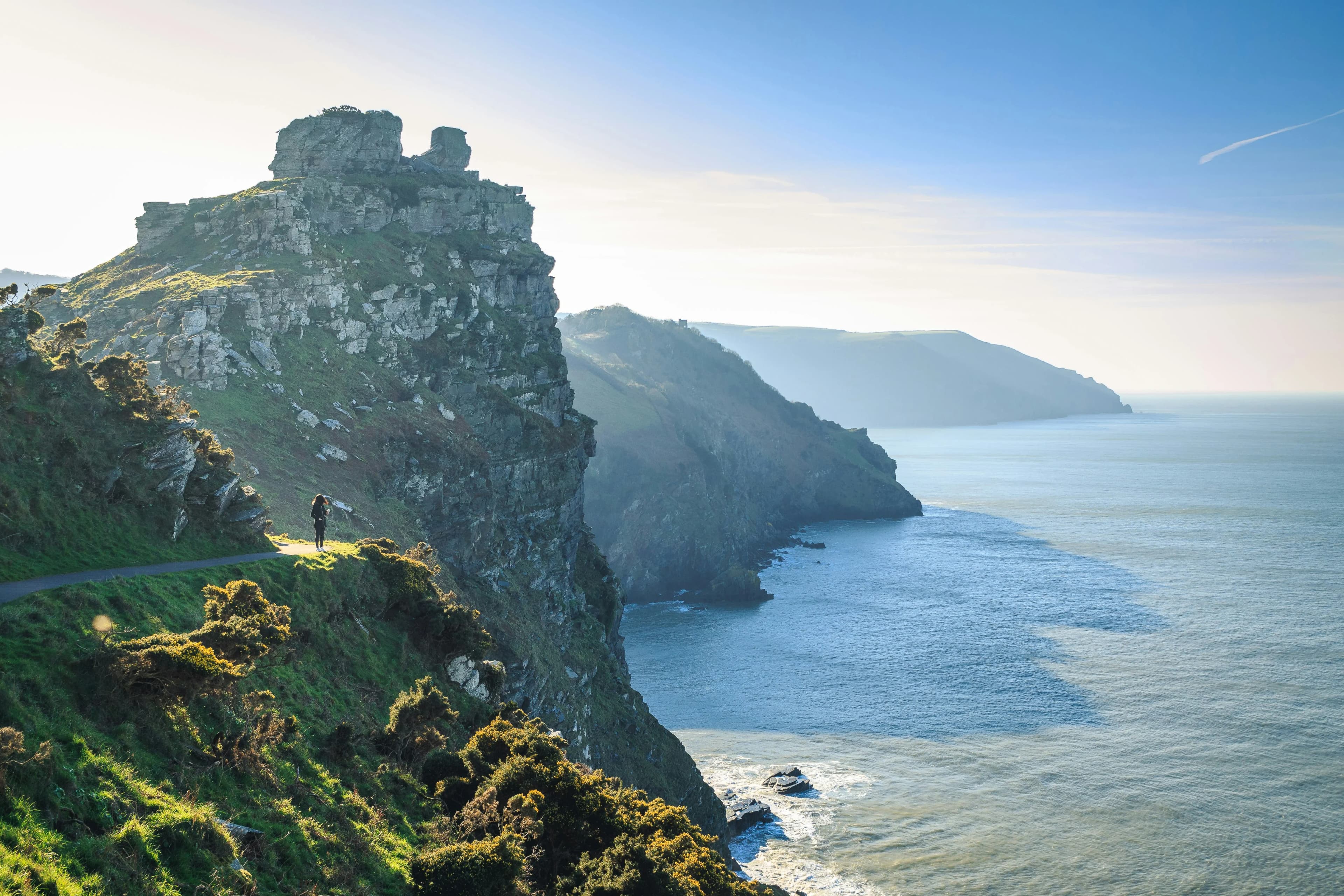
The North Devon coast, anchored by the Taw and Torridge estuaries and flanked by the surf beaches of Croyde and Saunton, operates at a different register: wilder, more exposed, with a landscape vocabulary drawn from the writing of Henry Williamson and the paintings of the Newlyn School's northern counterparts. Luxury here tends toward the understated: properties that wear their quality quietly, where the suite's primary asset is framed glass and unobstructed Atlantic swell.
Dartmoor, the 365-square-mile granite upland that forms Devon's interior, offers a third option. Country house hotels in converted Victorian shooting lodges or Georgian manor houses position the moor as both backdrop and subject. Suites in this zone are typically larger, furnished with period pieces and open fireplaces, and oriented toward walking, riding, and the particular silence that descends after rain on moorland.
The Exe Estuary and the area around Exmouth and Topsham offer a quieter proposition: estuary sailing, independent restaurants, and converted Georgian townhouses that have been adapted into boutique hotels of real refinement.
When to visit Devon for a luxury suite stay
Devon operates across a longer season than much of England. The Gulf Stream moderates the climate, and the South Devon coast in particular retains warmth into October. The shoulder months, April through May and September through October, are operationally significant for the suite traveller: occupancy drops, service ratios improve, and the landscape sheds its summer crowds without losing its light.
August is the county's peak month by volume. Coastal roads in the South Hams and the lanes around Salcombe reach saturation on summer weekends. If coastal access is the priority, selecting a suite within walking distance of the water becomes not a preference but a practical consideration.
Winter in Devon has an underappreciated quality. Dartmoor under frost, the Jurassic Coast in January with empty beaches and low horizontal light, the wood-panelled dining rooms of country house hotels drawing guests who have chosen the experience deliberately rather than by default. Several properties run reduced winter programmes with preferential rates, and availability at the suite level becomes more negotiable.
The Dartmouth Royal Regatta in late August and the various food and drink festivals concentrated in autumn draw a specific traveller who values cultural programming alongside accommodation quality.
Understanding luxury standards in Devon
England does not operate a formal Palace classification equivalent to France's system, but the domestic hotel grading framework, administered historically through the AA and VisitEngland, provides a working orientation. Five-red-star properties represent the ceiling of the English grading system, and Devon holds several within this tier.
The county's luxury vocabulary draws heavily from its country house tradition. Properties that were private estates until the mid-twentieth century, converted over decades into hotels, carry a spatial generosity that purpose-built hotels rarely replicate: double-height entrance halls, suites formed from former master bedrooms with original cornicing and fireplaces intact, kitchen gardens that supply the dining room directly. This is a different kind of luxury from the design-hotel model: less about the signature aesthetic and more about the accumulation of material quality over time.
Coastal properties introduce a second typology: the converted harbourmaster's house, the cliff-edge hotel rebuilt in the mid-century around panoramic glazing, the boutique property in a fishing village where the suite occupies the top floor and the operational ceiling is set by the size of the building rather than by the ambitions of a developer. Smaller does not mean lesser here: several of Devon's most precise hospitality experiences operate at twelve to eighteen rooms.
How to choose the right luxury suite in Devon
The first question is architectural preference. Devon's luxury suite inventory divides broadly between the country house register (period buildings, large grounds, indoor pools often housed in converted stable blocks or orangeries) and the coastal contemporary register (architect-designed interventions, glazed facades, minimal material palettes designed to defer to the view). These are genuinely different experiences, and the choice should be made deliberately rather than by price point alone.
The second consideration is access. Devon's road network is largely pre-motorised in its logic: single-track lanes, blind summits, routes that were designed for cattle movement and have since been paved without being widened. Properties that appear close on a map may require thirty minutes of careful driving from the nearest A-road. For guests arriving by train, the mainline from London Paddington reaches Exeter in under two hours, with branch lines extending to Paignton, Barnstaple, and the Tamar Valley. Several properties of note are within reasonable distance of a station.
View orientation matters in Devon in a way that differs from urban hotel selection. A south-facing suite on the South Hams coast will hold afternoon light until well into the evening in summer. A moorland suite oriented east will present Dartmoor at its most atmospheric in early morning, when low cloud sits in the valley. These are details worth confirming before booking rather than discovering on arrival.
Finally, the question of season and purpose: a suite selected for a winter retreat on Dartmoor serves a different function from one chosen for a sailing-focused week in the Salcombe estuary. Devon's luxury properties are sufficiently differentiated that matching the property to the purpose is a realistic exercise rather than an aspirational one.
Why curated selection matters in Devon
Devon's hotel landscape includes a significant number of properties that present well photographically but do not sustain scrutiny at the suite level: rooms that are large by local standards but lack the finish, the outlook, or the service infrastructure that justifies the designation. The gap between a standard double and an actual luxury suite, in terms of spatial quality, amenity, and the deliberateness of the experience, is wider in Devon than in markets with higher average accommodation standards.
The curated selection by La Suite filters this landscape with precision. The focus is on suites that earn the description through architecture, materiality, service standard, and the quality of the view or setting. For the traveller approaching Devon as a destination of genuine intent, that filter removes significant friction from the planning process and ensures that the accommodation matches the standard of the trip itself.