Where to stay in Dorset: understanding the county's distinct zones
The Jurassic Coast and the west
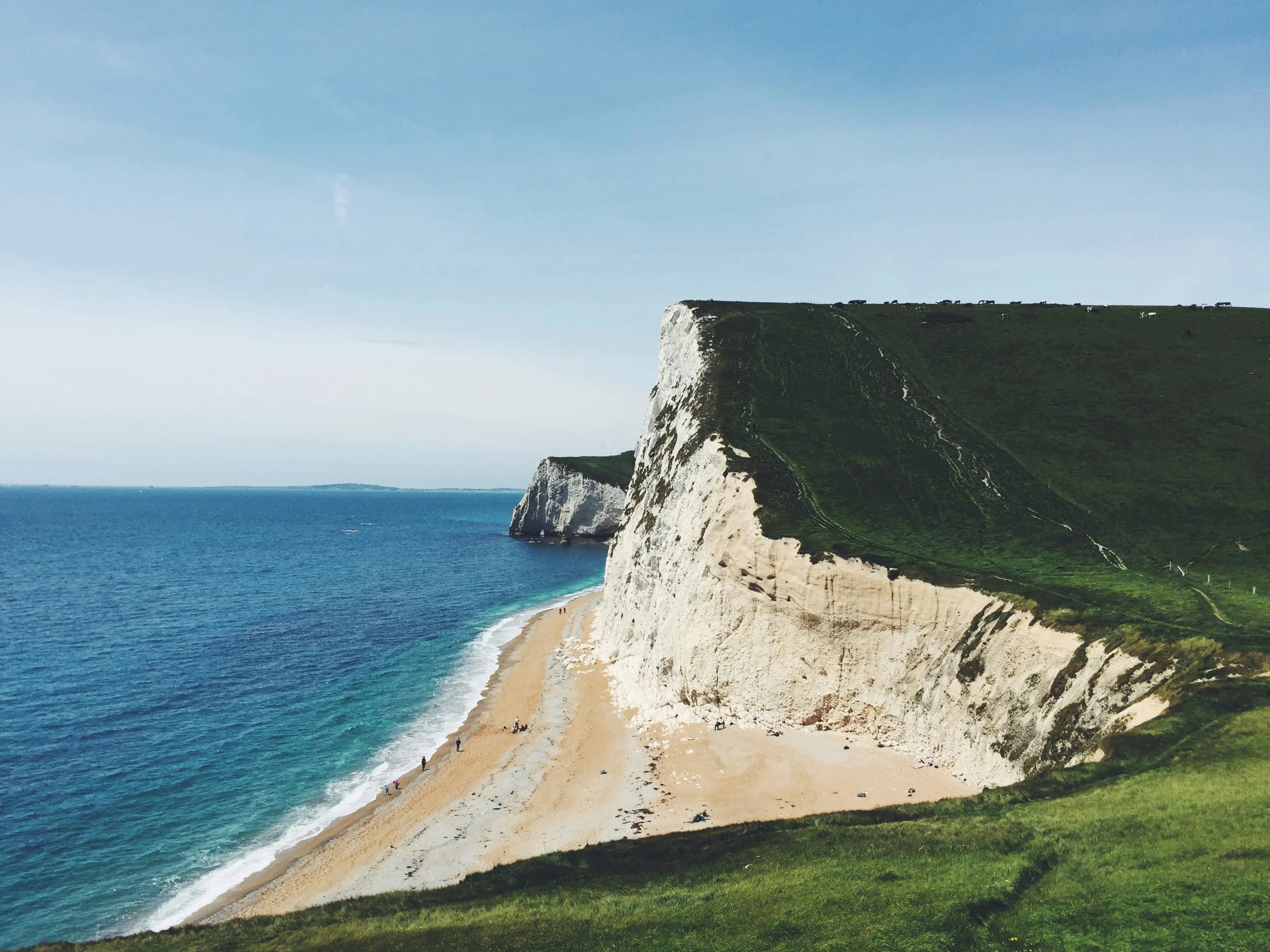
The stretch from Lyme Regis eastward through Charmouth, West Bay, and the Chesil Beach corridor is defined by geological drama and a certain studied quietness. Properties here tend to position themselves around access: to coastal paths, to fossil beaches, to the peculiar light that arrives off the Channel. Suite accommodation in this zone rewards guests who want their mornings structured by tides rather than schedules. The architecture ranges from converted Georgian villas to carefully modernised farmhouses, and the best properties treat the coastal panorama as a primary design element rather than an amenity to mention in passing.
The Isle of Purbeck and the south-east
Technically a peninsula rather than an island, Purbeck contains some of the most ecologically intact heathland in lowland Britain. Studland Bay, Corfe Castle, and the chalk ridge that runs toward Swanage define a landscape that resists the merely picturesque. Luxury stays here tend toward the discreet: converted manor houses and estate properties where the grounds absorb the guest into the working countryside. The proximity to Poole Harbour, the second-largest natural harbour in the world, adds a nautical dimension that attracts a specific kind of traveller.
Inland Dorset: the chalk country and the Blackmore Vale
Thomas Hardy's geography, essentially. The interior of Dorset is composed of chalk ridges, water meadows, and market towns whose centres have changed comparatively little since the nineteenth century. Sherborne, with its two castles and its abbey, anchors the north-west. The Blackmore Vale spreads south and east in a pattern of dairy farms and hedged lanes. Suite accommodation in this zone tends to occupy country house hotels and converted rectories where the emphasis falls on territorial calm: long dining rooms, walled kitchen gardens, and the kind of silence that requires deliberate travel to locate.
When to visit Dorset for a luxury suite stay
Dorset is a year-round destination for the traveller who understands that each season delivers a structurally different experience.
Late spring, from May into early June, is the period when the chalk downland flowers, the coastal paths are passable without crowds, and the quality of afternoon light is at its most architectural. Availability at top properties is stronger than in high summer, and rates reflect this. Early autumn, September through October, carries similar advantages: the summer visitors have departed, the sea retains residual warmth, and the low sun sharpens the colour of the heathland in ways that photographers and painters have documented for two centuries.
High summer, July and August, brings the county to full occupancy. The Chesil Beach corridor, the coastal towns, and the Purbeck villages attract significant visitor volumes. For suite travellers, this period requires planning several months in advance, particularly at smaller properties where a single flagship suite constitutes a genuine scarcity. The Dorset County Show in September and the Dorset Seafood Festival in Weymouth during July are calendar markers that affect availability in their respective localities.
Winter in Dorset is underused by visitors and consequently presents genuine value at properties that remain open. The coast acquires a severity in November and December that reads as an asset rather than a liability for the traveller who prefers atmosphere over amenity.
Local luxury standards: what defines a top-tier suite in Dorset
England does not operate the formal Palace classification that France applies to its highest-category hotels, nor does it have an equivalent of Italy's regional prestige designations. The English luxury hotel market is regulated primarily by AA and Visit England star ratings, but these systems are incomplete guides to actual suite quality. A five-star rating describes service infrastructure; it does not describe whether the suite has been conceived with architectural intelligence or positioned to make use of its landscape.
In Dorset specifically, the most reliable indicators of suite quality are independent of official classification. The county's top properties tend to be privately owned or managed by small groups with long-term investment perspectives. They occupy buildings of genuine age and material quality: stone, flint, brick, and timber construction rather than contemporary construction dressed with heritage detailing. The suites themselves are frequently defined by their ceiling heights, their fireplace proportions, and the quality of their views, rather than by surface amenities alone.
Expect working fireplaces in the better country house properties. Expect, also, a strong emphasis on local produce in dining: Dorset has a coherent food culture built around its dairy tradition (Dorset butter, clotted cream, and the county's artisan cheese producers), its game season, and its coastal seafood. The best properties integrate this directly into in-suite dining and breakfast rather than treating it as a marketing footnote.
How to choose the best luxury suite in Dorset
The primary variable is landscape orientation. Dorset presents a genuine choice between coastal and inland positions, and the experiences are architecturally distinct. A suite facing the sea from a cliff-top position delivers a different temporal structure to a day than a suite set within parkland looking across a valley. Neither is superior; they are different instruments.
The second variable is building age and fabric. Dorset's stock of historic buildings is one of the densest in England, and the better hotel conversions have preserved structural character: flagstone floors, original panelling, and room proportions that predate twentieth-century construction conventions. If the physical intelligence of a building matters to you as a traveller, this is a county where it is worth reading the property's history before booking.
Consider also the question of grounds and access. The most considered suite properties in Dorset include either direct access to coast path or significant private grounds. The distinction between a property that sits near the landscape and one that is genuinely embedded in it is measurable at the experiential level.
Finally, assess whether the property's dining offer aligns with your use pattern. Many of Dorset's finest suite hotels are not proximate to restaurant destinations in the way that urban properties are, and the quality and ambition of in-house dining becomes a structural element of the stay rather than a supplementary option.
Why curated selection by La Suite matters in Dorset
Dorset's luxury accommodation market is not large by the standards of metropolitan destinations, but it is genuinely heterogeneous. The difference between a well-reviewed country house hotel and a property where the suite has been conceived with real spatial and experiential intelligence is not always visible in photography or star ratings. It emerges in the specific details: the orientation of the primary windows, the acoustic quality of the interior, the degree to which the property's service model has been calibrated to the particular traveller rather than the average guest.
La Suite's curation process isolates these variables and presents only the properties where the suite experience has been considered as a complete proposition. In a county where the landscape is genuinely extraordinary and the accommodation stock is uneven, that selection function is not a convenience. It is the difference between a stay that confirms a preconception and one that recalibrates your understanding of what this part of England is capable of delivering.