Where to stay in Durham: distinct areas and their character
To the west, the North Pennines Area of Outstanding Natural Beauty constitutes one of the quietest upland landscapes in England. Teesdale and Weardale cut through this territory with rivers, moorland, and stone villages that see relatively little tourist traffic. A suite in a country house hotel within this corridor offers genuine seclusion, particularly for travelers whose priority is privacy over proximity to cultural sites.
The eastern edge of the county reaches the Durham Heritage Coast, a stretch of magnesian limestone cliffs with designated geological significance. This coastline, running through areas such as Seaham and Easington, is less developed than comparable stretches of the English coast, which gives it a particular character: unpolished, geologically distinct, and historically tied to the coal industry that shaped the region's identity through the nineteenth and twentieth centuries.
When to visit Durham for a high-end stay
Durham operates without the sharp seasonal peaks that affect coastal or metropolitan destinations. Spring (April to June) brings clear light across the dales and cathedral close, with university events and local festivals adding a degree of animation to the city. The Durham Miners' Gala in July is one of the most distinctive civic events in England: a procession of brass bands and trade union banners with roots in the 1870s, drawing tens of thousands of people to the city in a single day. It is not a luxury event by nature, but it is culturally specific and worth understanding when planning a visit.
Autumn (September to November) is widely regarded as the optimal period for those interested in the countryside. The North Pennines shift in tone as the season progresses, and availability at smaller country house properties tends to be more flexible outside the summer school holiday period. Winter in Durham is cold and occasionally severe at higher elevations, but the cathedral in December carries a particular atmospheric weight that justifies the temperature.
Understanding local luxury standards in Durham
England does not operate a formal palace classification equivalent to France's system, but the country has its own reference points for top-tier accommodation. The AA's five-star hotel rating and Red Star designation are the most authoritative domestic benchmarks. Historic England's listed building classifications (Grade I and Grade II*) are also relevant when choosing a property: they indicate architectural significance and often correlate with estates or manor houses that have been converted into hotels of genuine character.
In Durham specifically, luxury hospitality tends toward the country house model rather than the urban boutique format that dominates in London or Manchester. Expect properties set within parkland or agricultural land, with interiors that balance period features (oak paneling, stone fireplaces, sash windows) against contemporary amenities. Spa facilities are common at the upper end of the market, often positioned as retreats in their own right given the surrounding landscape. Service at the best properties follows the English country house tradition: attentive without formality, knowledgeable about the local area, and oriented toward ease rather than theater.
How to choose the right suite in Durham
The primary decision for most travelers is between a city-centre property and a rural estate. Each serves a different kind of trip. A suite in or near Durham city offers walking access to the cathedral, the university colleges, and the market; it works well for cultural travelers or those combining a Durham stay with visits to Newcastle (approximately 15 minutes by train). A rural property in the dales or on the Heritage Coast requires a car but delivers an entirely different register of experience: longer, quieter, less structured.
Architectural preference is also a practical consideration. Durham's finest buildings are Norman and Georgian; properties in converted historic structures will have specific physical characteristics, including uneven floors, low ceilings in older wings, and rooms that vary significantly in proportion and aspect. These are features, not deficiencies, but they reward travelers who prefer character over uniformity. Those who prioritize consistent contemporary design may find more satisfaction in newer properties on the periphery of the city.
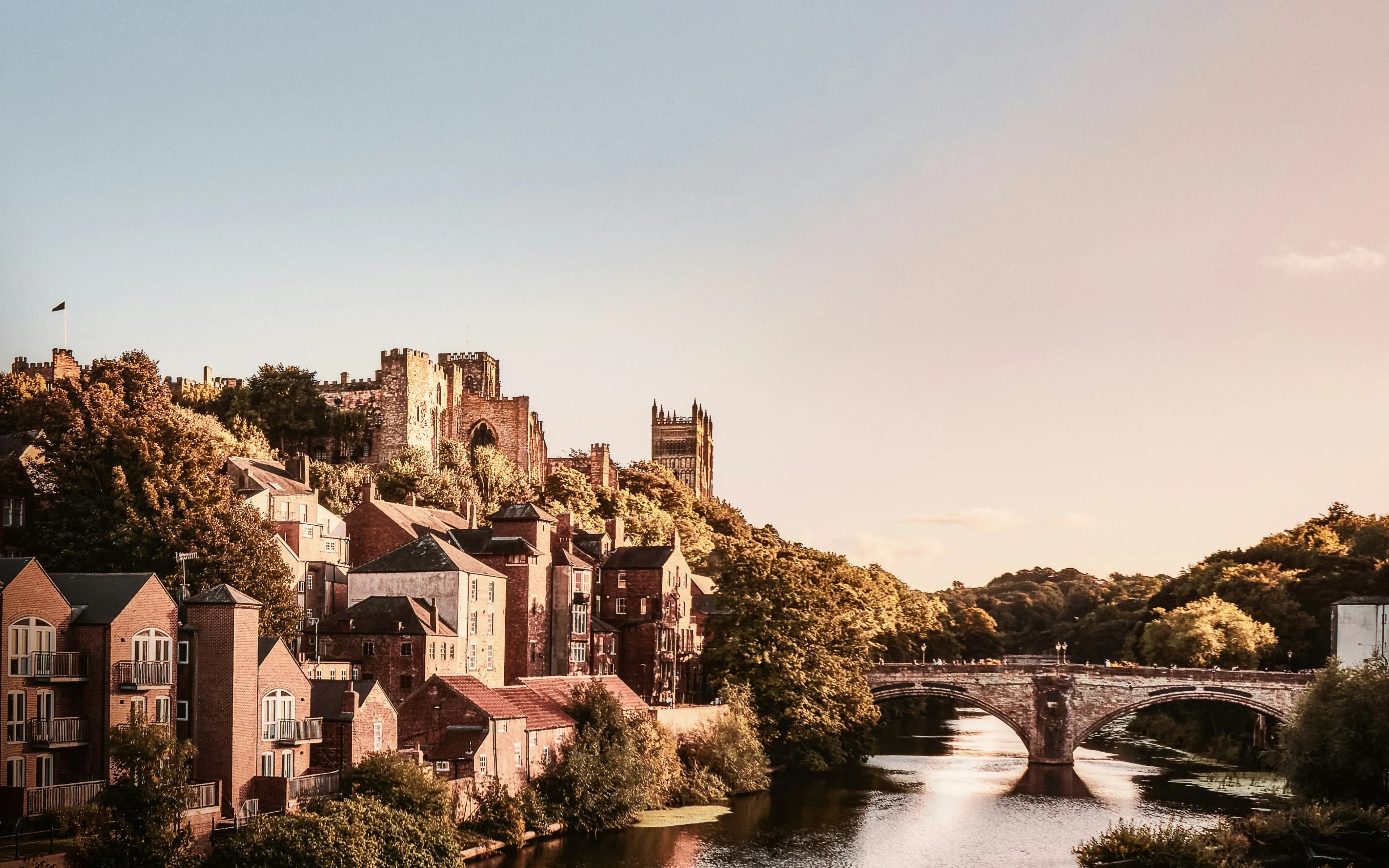
Views carry weight in Durham. A suite with a direct sightline to the cathedral and castle, particularly from across the River Wear, occupies a position that is difficult to replicate. Equally, a suite in the dales with an unobstructed aspect over farmland or moorland offers a form of visual calm that is specific to this part of England. Both are worth specifying when making a selection.
The value of a curated approach in Durham
Durham's luxury accommodation market is smaller and less internationally publicized than equivalent territories in the Cotswolds or the Lake District. This means the research process is less straightforward: the best properties are not always the most visible ones, and the gap between a well-marketed average hotel and a genuinely exceptional suite can be significant.
La Suite approaches this territory with the same criteria applied across every destination on the platform: architectural integrity, spatial quality, service standard, and a demonstrable relationship between the property and its setting. In a county where the landscape and history are the primary attractions, that last criterion matters. The right suite does not merely provide a place to sleep; it contextualizes the visit. A curated selection by La Suite removes the friction from this decision and ensures that the property chosen matches both the traveler's standards and the specific character of the Durham experience.