Where to stay in Hampshire: understanding the county's distinct zones
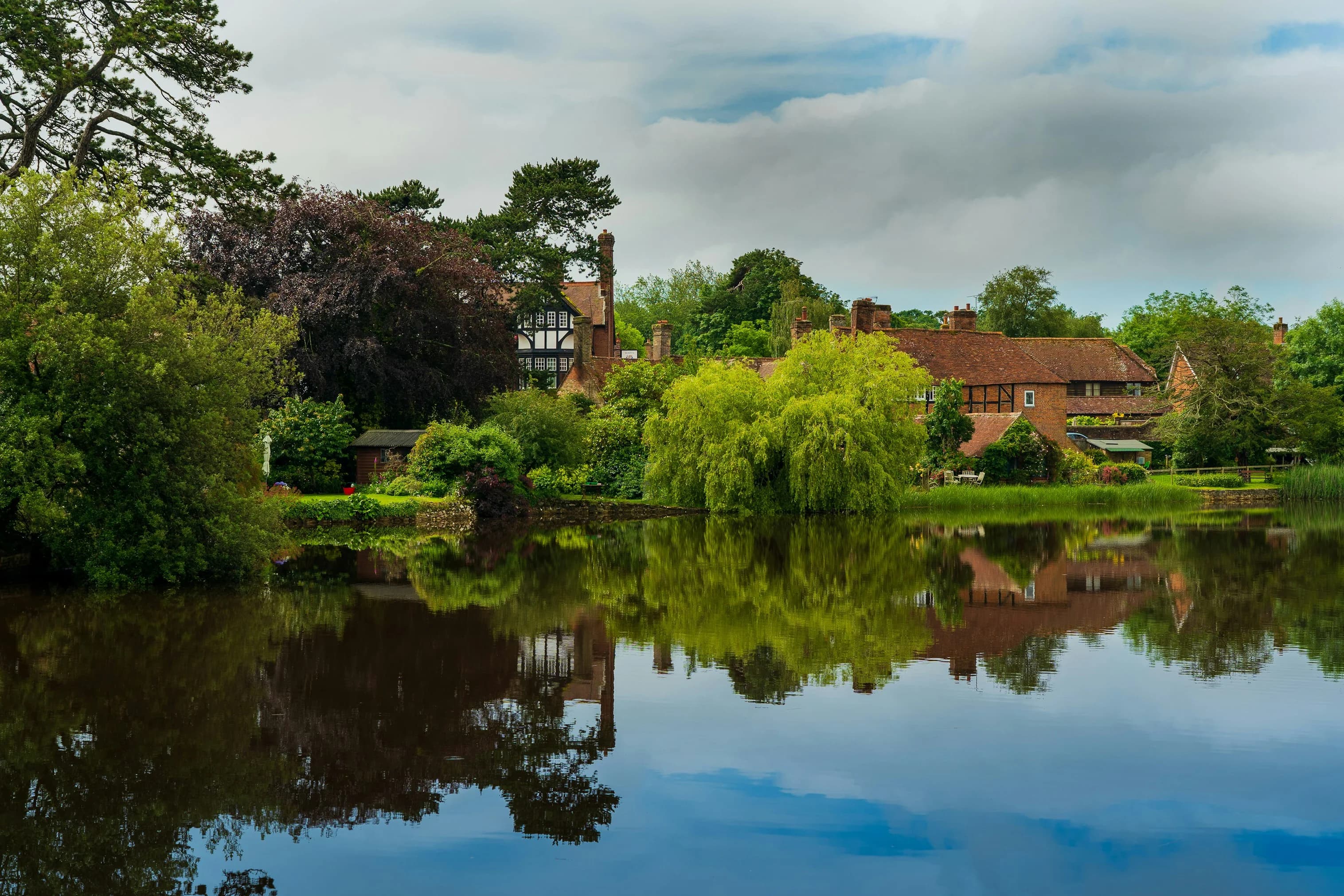
The New Forest, designated a national park, sits to the southwest of the county. It is one of the largest remaining tracts of ancient pasture woodland in Western Europe, and its hotel offer reflects that context: low-density, estate-focused properties where the grounds are as deliberate as the interiors. Country house hotels here tend toward the traditional, with a strong emphasis on field sports, equestrian culture, and the kind of silence that is genuinely difficult to find elsewhere in southern England.
The Test Valley, running northwest from Southampton toward Andover, is the spiritual home of English chalk-stream fly fishing. The River Test is considered by many anglers to be the definitive dry-fly river. Properties in this corridor cater to a specific kind of guest: one who values the agricultural and sporting landscape as the primary amenity, with the suite itself serving as a place of restoration after time spent outdoors.
The South Downs National Park extends into Hampshire from the east, offering open rolling hills, long ridgeline walks, and a visual spaciousness that contrasts with the county's more forested interiors. Country retreats in this zone tend toward the contemporary, with an increasing number of properties integrating wellness architecture into their offer.
Winchester and its surrounding villages represent Hampshire's cultural and ecclesiastical core. The city contains one of England's longest medieval cathedrals, a well-preserved high street, and a concentration of independent culinary and retail operators that reward slow exploration. For travellers who want proximity to history alongside the comfort of a considered suite, this corridor is the most obvious base.
The Solent coastline, facing the Isle of Wight, carries a different register entirely: maritime heritage, sailing culture, and a horizontal light that is specific to this stretch of water. Accommodation here ranges from converted Victorian coaching inns to more modern coastal properties, with the view and the tidal rhythm being the primary architectural event.
When to visit Hampshire for a luxury stay
Hampshire is a year-round destination, though each season makes a different argument.
Late spring, from May through early June, is widely regarded as the optimal period. The chalk streams are running well, the New Forest is at its most photogenic, and the Solent sailing calendar is beginning in earnest. The RHS Chelsea Flower Show draws design-literate visitors to London during this window, and Hampshire functions naturally as a quieter counterpart.
Summer brings the Glorious Goodwood racing festival in neighbouring West Sussex, a significant event in the English social calendar that places additional demand on high-quality accommodation across the region. The Cowes Week regatta on the Isle of Wight, visible from the Hampshire coastline, draws an international sailing audience in late July and early August.
Autumn is the preferred season for serious fly fishers on the Test and Itchen rivers, and the New Forest takes on a particular quality of light and colour from September through October. Country house suites during this period offer the combination of long evenings, log fires, and seasonal menus that define the English country house experience at its most coherent.
Winter in Hampshire is mild relative to the north of England, and the county's cathedral cities and market towns are well suited to the kind of slow, interior-focused travel that the season encourages. Christmas and New Year programming at leading country house hotels tends to be heavily subscribed.
Luxury hotel standards in Hampshire: what to expect
England does not operate the formal Palace designation used in France, but Hampshire's leading properties are typically benchmarked against the AA Five Star hotel classification and, in some cases, against Relais and Chateaux membership criteria. These frameworks prioritise service consistency, suite dimensions, culinary quality, and the integration of the property within its landscape.
The defining characteristic of the finest Hampshire suites is the relationship between interior and exterior. In the New Forest and Test Valley particularly, the grounds are treated as an extension of the living space: terraces are furnished and heated for year-round use, kitchen gardens supply the restaurant directly, and the transition from suite to estate is designed to feel seamless.
Architecture in Hampshire ranges from the Tudor and Jacobean (particularly around the Winchester and Romsey corridors) to the Palladian Georgian and the Victorian Gothic. Each period creates a different suite typology: exposed timber beams and deep window seats in the older structures; high ceilings, sash windows, and formal proportions in the Georgian; dramatic stairwells and ornamental fireplaces in the Victorian. Contemporary insertions exist, though they are less common in Hampshire than in counties with a stronger modern hospitality culture.
Spa infrastructure at the county's leading properties has expanded significantly in the last decade, with a number of New Forest estates developing purpose-built wellness facilities that draw on the forest's natural environment as part of the treatment philosophy.
How to choose the right luxury suite in Hampshire
The most important variable when selecting a suite in Hampshire is the relationship between the property type and the purpose of the visit. A fishing trip to the Test Valley demands a different property from a cultural visit to Winchester, and a sailing weekend on the Solent requires a different logic from a wellness retreat in the New Forest.
For guests prioritising outdoor access, properties with direct estate grounds or national park adjacency will deliver more than those with proximity to transport links. Conversely, travellers with an interest in the county's heritage architecture, its markets, and its independent food and wine culture will find the Winchester corridor more rewarding than the more remote forest and downland properties.
Suite categories vary from superior rooms with separate sitting areas to full standalone lodges with private terraces and outdoor bathing. In Hampshire's country house context, the distinction between a junior suite and a principal suite is often significant: the principal rooms in converted manor houses frequently occupy the principal floor of the building, with the proportions and views that that position implies.
It is also worth considering seasonality within the property itself. Some Hampshire estates operate reduced programming outside the fishing and shooting seasons, with spa, kitchen garden, and outdoor activities scaling back accordingly. Confirming the full range of amenities for the specific travel dates is a practical step that the La Suite curation process addresses directly.
Why curated selection matters in Hampshire
Hampshire's luxury hotel market is geographically dispersed and, in some cases, deliberately discreet. A number of the county's finest properties do not invest heavily in their own marketing, relying instead on reputation and repeat guests. This means that the distance between an excellent suite and a merely adequate one is not always legible from a standard search result.
The curated selection by La Suite applies a consistent editorial lens across the county's offer, filtering by suite quality, spatial standards, service architecture, and the integrity of the property's relationship to its landscape. The result is a shortlist that reflects the specific expectations of the traveller who knows what a well-designed suite should deliver, and who does not want to spend time eliminating options that should never have appeared in the first place.