Where to stay in Lancashire: distinct areas and their character
The Ribble Valley, occupying the central and eastern part of the county, is the most recognised area for upscale travel. Towns such as Clitheroe anchor a landscape of limestone valleys, working farms, and country estates converted into refined hotel properties. The pace here is deliberate. Guests come for long walks, local producers, and rooms that reward the decision to slow down.
The Forest of Bowland, a designated Area of Outstanding Natural Beauty, is a moorland plateau that sees comparatively few visitors. This is a territory for travellers who understand that remoteness is itself a luxury. Properties here tend toward the intimate: converted farmhouses, manor houses with small room counts, and an emphasis on the land immediately outside the door.
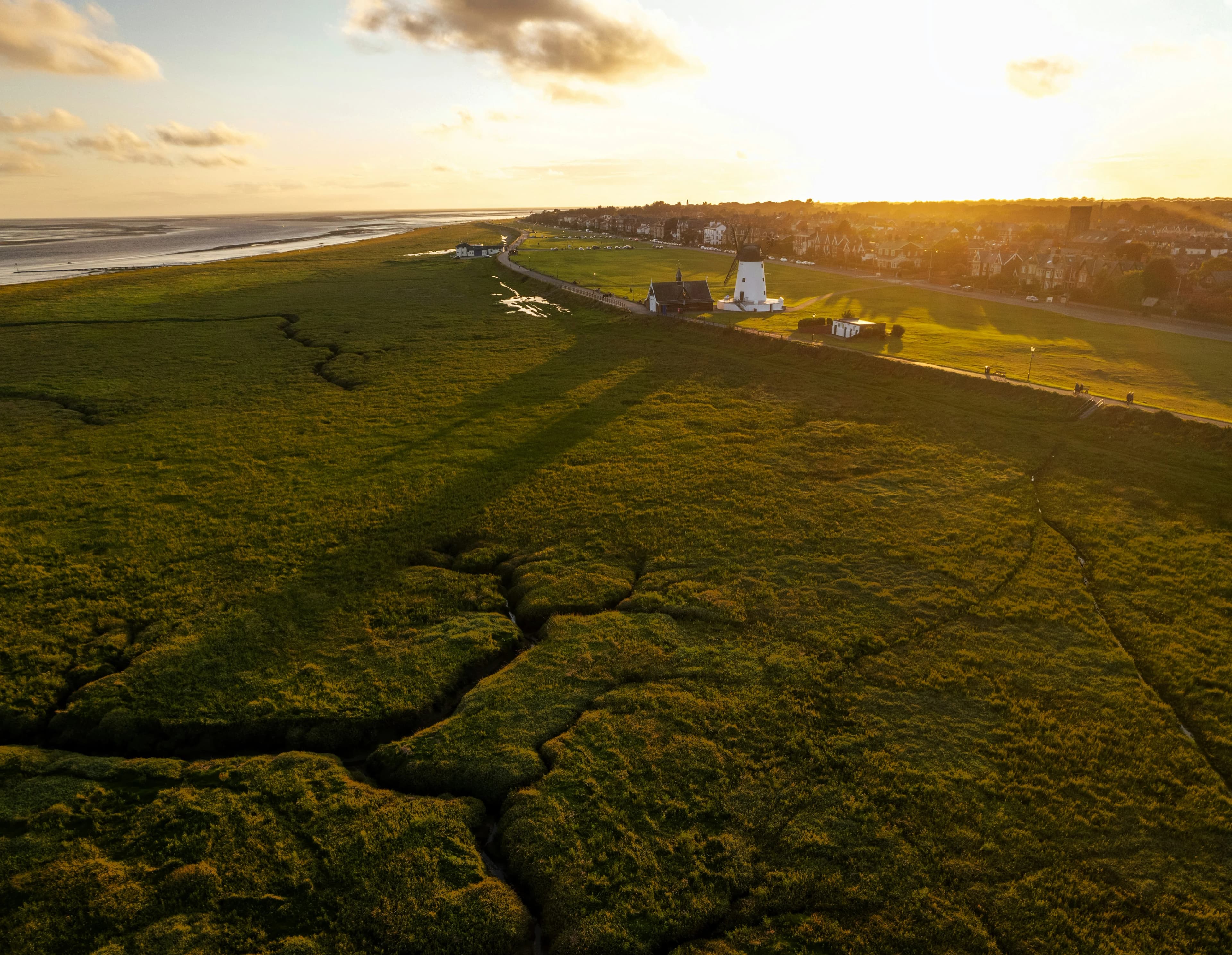
The Fylde Coast, stretching toward Blackpool and the Irish Sea, offers a different proposition. Lytham Saint Annes carries architectural consistency and a calm residential character that distinguishes it from its more commercial neighbour. Golf is the dominant leisure framework here, with Royal Lytham and Saint Annes regularly hosting The Open Championship.
The Lune Valley, running northwest toward the sea near Lancaster, is a quieter corridor with a strong agricultural identity. It connects naturally with the southern edges of the Lake District, making it a practical and aesthetically coherent base for travellers covering both territories.
When to visit Lancashire for a luxury stay
Lancashire performs well across a wider seasonal window than many English counties. The core considerations are as follows.
Late spring, from mid-April through June, delivers the clearest light over the moorland and the lowest level of visitor pressure. Country house properties in the Ribble Valley are accessible without competition, and room rates reflect the shoulder positioning of the season.
Summer, particularly July and August, aligns with the main golf calendar. Visitors arriving for Open Championship events at Royal Lytham and Saint Annes should plan accommodation well in advance, as inventory in quality properties tightens considerably during tournament weeks.
Autumn is, for many design-literate travellers, the most legible season. The transition across the uplands of Bowland and the Ribble Valley produces a tonal palette that rewards landscape photography and long walks in equal measure. Country house hotels typically operate at full capacity through October, before a quieter November follows.
Winter in Lancashire has an understated appeal that is frequently overlooked. The county's country house properties lean into the season with focused food and drink programming, often built around locally sourced game and regional produce. It is a period for interiors, fireplaces, and a considered read of the property itself.
Understanding luxury standards in Lancashire
England does not operate a formal Palace designation equivalent to France. The relevant prestige frameworks in this territory are different in character and require a specific literacy to navigate.
The AA rosette and star system remains the most consistent quality signal for dining and accommodation in England. Five-star AA ratings indicate properties operating at the highest level of service and physical standard. Rosette awards for restaurant performance are equally instructive, as the best luxury hotel suites in Lancashire are frequently attached to serious kitchen operations.
Historic England and the National Trust maintain designations for listed buildings that provide architectural context. A Grade I or Grade II listed property signals a building of recognised historical significance. Many of Lancashire's finest hotel properties occupy Georgian and Victorian country houses that carry these designations, and the physical fabric of the building is as much a part of the experience as the suite fit-out.
The distinction between a luxury hotel and a country house hotel matters in this context. Lancashire's most compelling properties tend to operate as country house hotels: smaller room counts, high staff-to-guest ratios, and a strong emphasis on the estate or grounds as an extension of the experience. This format suits the county's character more naturally than the large-format hotel model.
How to choose the best luxury suite in Lancashire
Several variables govern the selection process in a county with Lancashire's specific profile.
Architecture is the first filter. Historic properties offer rooms with genuine period character: stone mullions, high ceilings, original fireplaces. Modern insertions within older buildings can work well, but they require careful vetting. The quality of a suite's relationship to the building fabric matters as much as contemporary amenity levels.
Ground floor versus upper floor positioning in a country house context changes the experience materially. Ground floor suites often open directly onto gardens or terraces, trading ceiling height for immediate landscape access. Upper floor rooms in Georgian properties frequently offer better proportions and longer views.
Proximity to the kitchen operation is worth considering for travellers who place dining at the centre of a stay. In Lancashire, the farm-to-table supply chain is genuinely short: the county produces notable cheeses, rare-breed meats, and seasonal vegetables that reach the plate with a directness that larger urban hotel kitchens cannot replicate.
Spa provision varies considerably between properties. Some of Lancashire's most architecturally distinguished hotels operate without formal spa facilities, a deliberate editorial choice that maintains a particular atmosphere. Travellers who require spa access should verify provision at the property level before confirming.
Why curated selection matters in Lancashire
Lancashire is not a destination saturated with easily legible luxury signals. Unlike Paris or the Cotswolds, the county does not operate with the benefit of an established international travel narrative. This opacity is part of its appeal for experienced travellers, but it also means that independent research is less efficient than in better-documented territories.
La Suite approaches Lancashire as a county where the quality gap between properties is wide, and where the distinction between a genuinely exceptional luxury hotel suite and a competent but unremarkable room is not always apparent from standard booking platforms. The curated selection by La Suite is built on direct assessment of the physical standard, architectural integrity, and service consistency of each property.
For the traveller arriving in Lancashire without prior knowledge of the county, this curation removes the principal risk: selecting a property that photographs well but does not deliver at the level the suite category implies. Lancashire rewards the well-briefed visitor. The curated selection by La Suite is designed to ensure that the briefing is accurate.