Where to stay in Suffolk: distinct areas for suite travelers
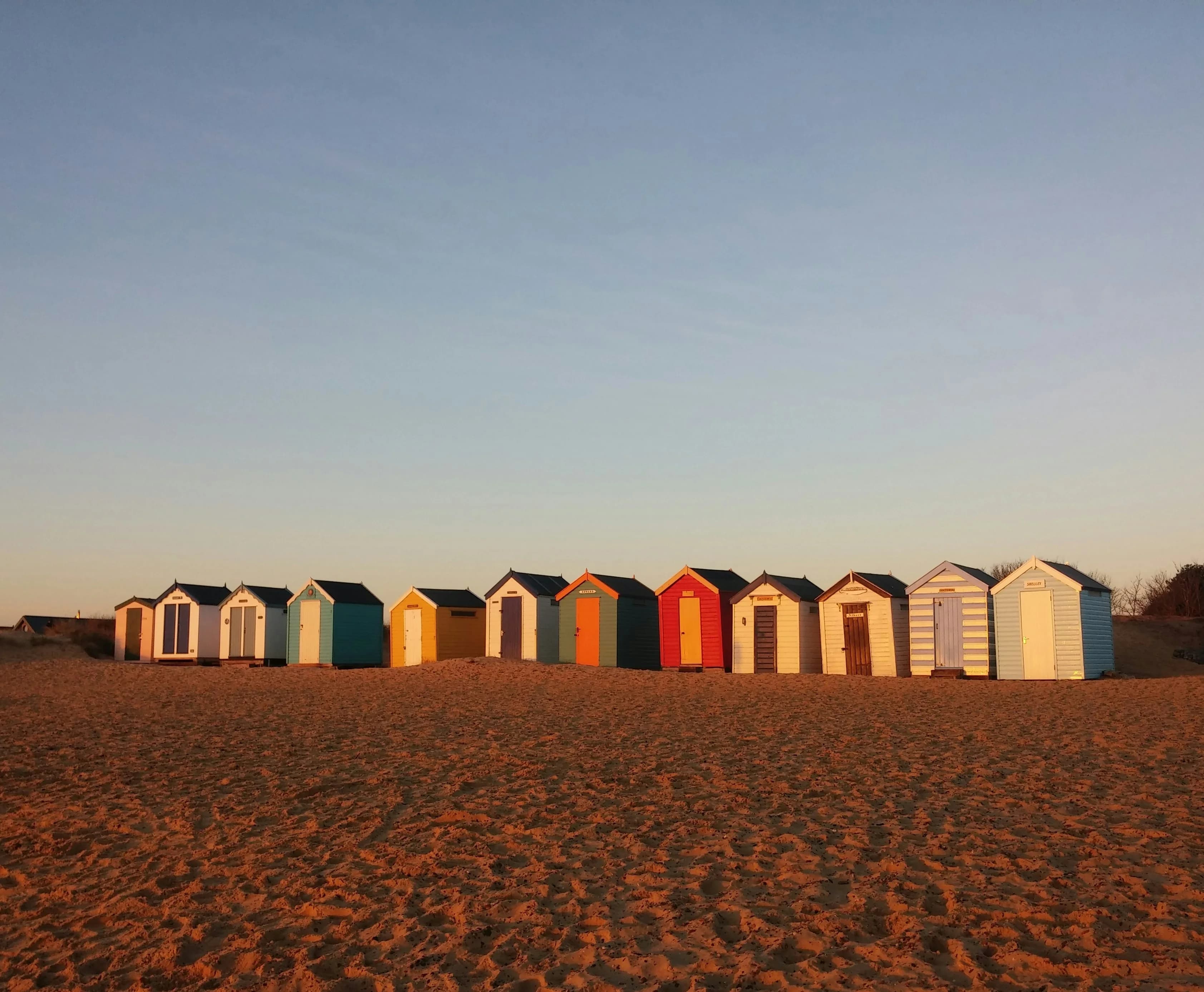
The Suffolk Coast, stretching from Felixstowe in the south to Southwold in the north, is the county's most closely watched area. Aldeburgh, in particular, has a cultural density disproportionate to its size: the annual music festival associated with Benjamin Britten draws a serious international audience, and the town's high street sustains independent food and craft businesses at a level rarely found in English coastal settlements of this scale. Southwold, further north, is architecturally coherent and unusually well-preserved, with a lighthouse standing at its centre and a pier that remains in genuine working use. Accommodation along this stretch tends toward converted period properties rather than purpose-built hotel blocks, and suite-level rooms here typically offer direct access to coastal walking routes or views across the estuary.
The Suffolk Broads and river valleys, centred on the rivers Waveney, Stour, and Deben, offer a quieter proposition. These are landscapes of reed beds, grazing marsh, and navigable waterways. Staying in this zone suits travelers who want proximity to nature without the coastal footfall. Luxury hotel suites positioned near the Deben or Stour estuaries often occupy former agricultural buildings or country estates, and the aesthetic is one of material honesty: exposed beams, stone floors, considered lighting. The Constable Country designation around Dedham Vale, which straddles the Suffolk-Essex border, continues to draw visitors with a serious interest in English landscape painting.
The market towns of the interior, including Lavenham, Long Melford, and Bury St Edmunds, represent a third register entirely. Lavenham contains arguably the finest collection of intact medieval timber-framed buildings in England; the Guildhall alone justifies a detour. Bury St Edmunds is a cathedral city with a formal Georgian street plan and an active independent food scene. Luxury hotels in this zone are typically housed in buildings of genuine historical significance, and the suite product here often reflects that heritage directly: proportioned rooms, period architectural details, and a deliberate quietness.
When to visit Suffolk for a suite stay
Suffolk has a continental-inflected microclimate by English standards. Its position on the eastern coast means it receives less rainfall than much of the country and benefits from early springs. The light in Suffolk is a matter of record among painters and photographers: low, directional, and unusually clear, particularly in the autumn months when the angle of the sun across flat agricultural land produces effects that are specific to this geography.
Late spring and early summer, from May through to early July, offer the most balanced conditions: moderate temperatures, extended daylight, and full availability across the county's hotels. The Aldeburgh Festival, held each June, represents a cultural peak and drives strong demand for accommodation along the coast; advance planning is advisable for suite-level rooms during this period.
September and October carry a case for being the county's finest months. The harvest is in, the summer visitors have largely left, and the coastal and inland landscapes settle into their most characteristic form. Suite availability is generally better in this window, and several of the county's better hotel restaurants reach their seasonal best with locally harvested produce.
December through February is genuinely quiet. The coast is austere and architecturally clear, the interior towns retain their coherence, and the luxury hotel product tends to run at rates significantly below the summer peak. For travelers who find stillness a virtue rather than a shortcoming, the winter months in Suffolk offer a particular form of reward.
Understanding luxury hotel standards in Suffolk
England does not operate a formal prestige designation equivalent to the French Palace classification. Quality assessment for hotels is managed through the AA star rating system and, in parallel, through the AA Rosette system for dining. At the suite level in Suffolk, the relevant markers are typically more specific than star ratings suggest: the quality of the fabric, the caliber of the kitchen, and the considered nature of the public spaces all carry weight.
Suffolk's finest suites tend to be found in two architectural categories. The first is the converted country house hotel, where period rooms have been adapted to accommodate larger footprints and contemporary amenity while retaining original architectural features. The second is the boutique coastal property, where the building stock is more modest in scale but the curation of materials, lighting, and outlook is precise. Both categories share a preference for sourcing locally and presenting the county's landscape as the primary offering, rather than competing with urban luxury on its own terms.
Suffolk also has a notable concentration of independent properties that operate outside the major hotel groups. This matters for suite travelers: the personality of the product is often more defined, the food offer more directly connected to local producers, and the staff knowledge of the surrounding area more specific. The county's relationship with artisan food production, including fishing, arable farming, and cheesemaking, means that the dining dimension of a suite stay here can be genuinely exceptional.
How to choose the right suite in Suffolk
The primary decision for suite travelers in Suffolk is geographic: coast or inland. This is not a trivial distinction. The coastal offer is more concentrated, more culturally active, and more susceptible to seasonal demand peaks. The inland offer is quieter, more architecturally rich in terms of vernacular building, and more appropriate for travelers seeking a slower rhythm.
Within the coastal zone, consider the relationship between the property and the water. Some hotels sit directly on the shingle or estuarine edge; others are positioned in the town centres with a short walk to the foreshore. Suite rooms with direct or unobstructed views of the sea or estuary are a finite resource and should be identified specifically during the selection process.
For inland stays, the key variable is proximity to the market towns versus the rural landscape. Properties on the edge of Lavenham or Bury St Edmunds offer walkable access to architecture, restaurants, and independent retail. Properties in the agricultural interior offer a deeper removal from daily life and a more immersive landscape experience. The decision depends on the traveler's appetite for activity versus stillness.
Practical notes: Suffolk is primarily accessed by road or rail from London Liverpool Street. Journey times by train to Ipswich, the county town, run at approximately one hour ten minutes. Aldeburgh and Southwold have no direct rail connection and require road access. A car remains useful for anything beyond a stay centred on a single town.
Why a curated selection by La Suite matters in Suffolk
Suffolk's luxury hotel market is small, independent, and uneven in quality. The gap between a genuinely considered suite product and a well-marketed but underpowered room is not always visible from a hotel's own presentation. La Suite applies a consistent editorial standard to its selection, prioritising spatial quality, material integrity, and the caliber of the experience delivered at suite level. In a county where the offer is dispersed and the marketing is often understated by design, independent curation provides the clearest path to the right room.