Where to stay in Warwickshire: understanding the county's distinct areas
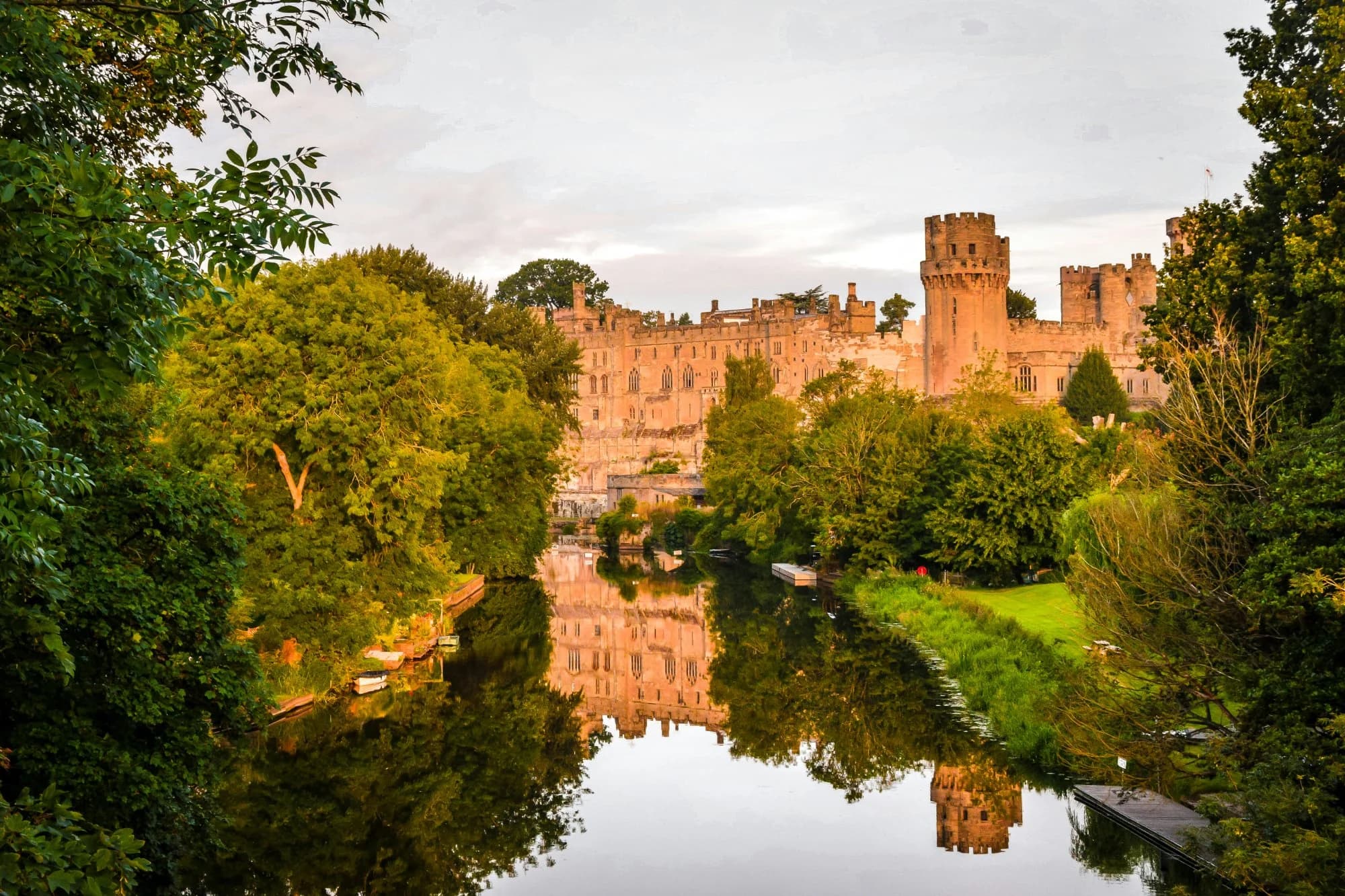
The north of the county, particularly around Kenilworth and Warwick itself, is architecturally dense. Warwick Castle dominates a sandstone ridge above the River Avon, and the surrounding town retains a medieval street plan with Georgian infill. Staying in this corridor places guests within immediate reach of the most concentrated historic fabric in the county. Suite properties in this area tend to occupy converted manor houses or period coaching inns that have been upgraded to contemporary standards while preserving original stone and timber features.
The south of the county, toward the Cotswold fringe near Shipston-on-Stour and Brailes, transitions into honey-limestone village architecture. The pace here is slower, the landscape more enclosed, and the properties more likely to be privately held country house hotels with formal walled gardens. This is the part of Warwickshire that reads most directly as a classic English countryside retreat.
Stratford-upon-Avon and its immediate environs occupy a middle band, drawing a culturally engaged clientele who combine theatre visits at the Royal Shakespeare Company with drives through the Feldon, the southern vale of the county. Properties here range from Georgian townhouses adapted as boutique hotels to riverside manor conversions with dedicated suite wings.
The Arden district to the northwest, named for the ancient Forest of Arden that once dominated the region, offers a greener, more wooded experience. This is where some of the county's most substantial country house estates operate as luxury hotels, with parkland extending across hundreds of acres and suites designed to frame views across private grounds rather than public landscape.
When to visit Warwickshire for a luxury suite stay
Warwickshire is a genuine four-season destination, though each period offers a materially different experience.
Late spring, from late April through June, is when the county performs at its visual peak. Formal gardens attached to historic properties are in full cultivation, and the light at this latitude holds well into the evening. Suite availability is more constrained during this window, particularly around major RSC season openings in Stratford.
Summer brings the highest visitor concentrations around Stratford-upon-Avon, and the town's riverfront can become crowded. Guests prioritizing privacy and space should consider properties in the rural south of the county during July and August, where the experience remains intimate regardless of broader tourist volumes.
Autumn is arguably the most atmospheric season for this particular county. The Arden woodland turns in October, and country house properties lean into the season with shooting, foraging and estate-sourced dining programs. Suite rates can also soften slightly after the summer peak.
Winter in Warwickshire is quiet in the most deliberate sense. Several country house hotels reduce capacity between January and March, and those that remain open often offer the most attentive service ratios of the year. For guests seeking near-total privacy and uninterrupted stillness, a winter suite booking in the rural county is difficult to surpass.
Understanding luxury hotel standards in Warwickshire
England does not operate the French Palace classification system, but it has its own well-established hierarchy for top-tier hotel properties. The AA five-star designation and the AA Red Star award for outstanding hospitality remain the primary formal quality signals for luxury hotels in the UK. Several Warwickshire properties hold these distinctions.
Beyond formal ratings, the English country house hotel is a category unto itself. At its best, it combines genuine historic architecture (Tudor, Jacobean, Georgian or Regency fabric), landscape design that is inseparable from the experience of the property, and a domestic scale of service that is less ceremonial than its equivalent in metropolitan luxury hotels. The best suites in this format occupy principal bedrooms within the original house rather than purpose-built extensions, which means proportions, ceiling heights and architectural detailing that cannot be replicated in new construction.
Within Warwickshire specifically, travelers should pay attention to properties that retain their original walled kitchen gardens, as these often indicate an estate that has been maintained with genuine intention rather than simply converted for commercial purposes. Suite breakfasts sourced from kitchen garden produce represent one of the more distinctive sensory experiences the county offers.
Spa provision in Warwickshire's top hotels tends toward the understated. The model here is less the resort-scale wellness complex and more the dedicated treatment building or converted stable block with a small indoor pool, a limited treatment menu and a strong emphasis on thermal relaxation. This restraint is consistent with the broader aesthetic of the region.
How to choose the right luxury suite in Warwickshire
Several practical considerations distinguish a well-chosen Warwickshire suite from a merely adequate one.
Architecture should be the primary lens. Warwickshire has an exceptional density of listed buildings, and a suite within a Grade I or Grade II listed structure carries a different quality of experience to one in a purpose-built extension. Original features including stone mullion windows, oak paneling, carved fireplaces and period plasterwork are irreplaceable textural elements that define the room in a way that no interior design program can manufacture independently.
Acreage matters in a county where the grounds are as important as the building. Properties with private parkland allow for a quality of morning and evening that is simply unavailable in properties without it. Suites with direct access to gardens or with ground-floor terraces overlooking private estate land are worth specifying at the point of inquiry.
Proximity to cultural programming is a relevant variable for many guests. RSC performances in Stratford run on a seasonal schedule, and guests combining theatre with a countryside stay should consider journey time carefully. A thirty-minute drive from a rural estate to an evening performance is entirely manageable; longer transfers can erode the quality of the evening.
For families or small groups, the question of interconnecting rooms or self-contained cottage suites within an estate becomes important. Several Warwickshire properties offer lodge or cottage-style suites that provide a fully private residential experience within the broader hotel grounds, which suits extended stays or multigenerational travel particularly well.
Why curation matters for Warwickshire suite travel
Warwickshire's hotel market spans a considerable quality range. The county's historic appeal draws significant investment in conversion projects, but not every converted manor or Georgian rectory delivers a suite experience that meets the standards expected by a discerning traveler. The gap between a property that photographs well and one that actually performs at the highest level can be significant.
La Suite's curated selection for Warwickshire is assembled on the basis of architectural integrity, suite-specific quality (not simply overall hotel rating), service consistency and the coherence of the guest experience from arrival to departure. The selection is deliberately narrow. This is a county where fewer, better choices serve the traveler more effectively than an exhaustive directory.
For guests approaching Warwickshire from outside the UK, the curated selection by La Suite removes the research burden entirely, providing a direct path to properties that have been evaluated against the specific criteria that matter for suite-level stays.