Understanding Amman's geography for luxury stays
The First Circle and Third Circle areas of Jabal Amman are especially relevant for guests who want proximity to the city's cultural institutions and the restored early twentieth-century buildings that define its older residential character. Further west, Abdoun offers a quieter, more residential atmosphere, preferred by travelers who prioritize privacy over pedestrian access.
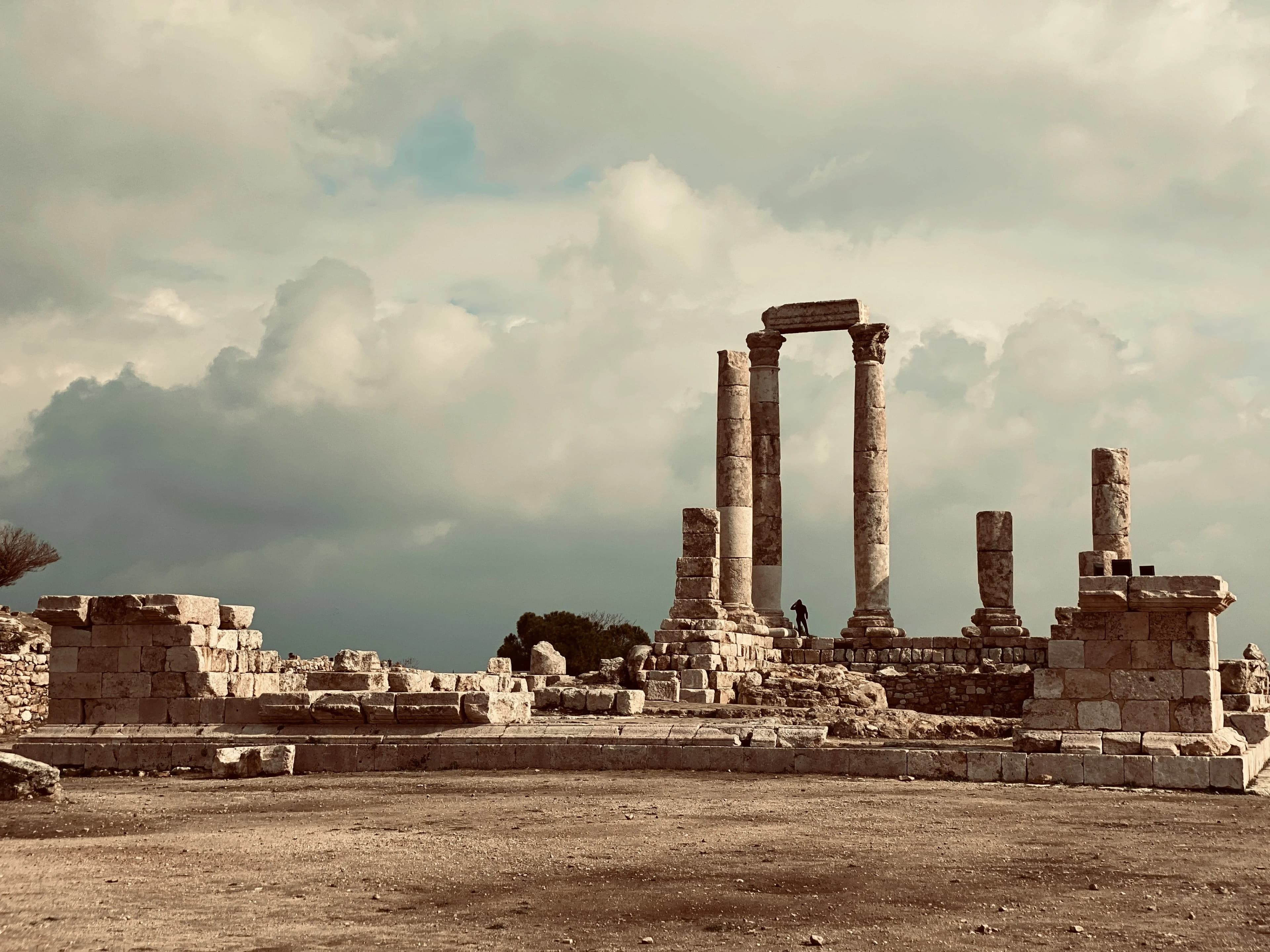
The eastern part of the city, anchored by Downtown Amman and the Citadel district, holds the archaeological and mercantile heart of Jordan's capital. While fewer luxury properties are concentrated here, the area is essential context for understanding the city. A well-positioned suite in the west places both registers within twenty minutes by car.
When to visit Amman for a suite stay
Amman's climate follows a Mediterranean pattern with some continental influence, given its elevation of roughly 800 metres above sea level. Spring, from March through May, is the most consistently favorable season: temperatures sit between 15 and 25 degrees Celsius, the city's outdoor terraces are fully operational, and the surrounding hills carry seasonal wildflowers. Autumn, from September through November, offers a comparable experience with lower tourist volumes.
Summer in Amman is warm but not extreme, with July and August averaging around 30 degrees Celsius during the day. The city sees an influx of visitors from the Gulf region during these months, as Amman's elevation makes it noticeably cooler than Riyadh, Dubai, or Kuwait City. This seasonal dynamic affects suite availability at leading properties, particularly in July and August, so advance reservation is advisable.
Winter is mild by regional standards but can include rain and occasional cold evenings. The city slows considerably, and rates tend to soften. For travelers who prioritize a contemplative, uncrowded experience of Amman, the winter months have a distinct appeal.
Local luxury standards: what to expect from Amman's top hotels
Jordan does not have a formal designation equivalent to France's Palace classification, but Amman's leading properties are measured against international five-star criteria, and the city's top tier is increasingly competitive with comparable destinations in the Levant. Several international luxury hotel groups operate flagships in Amman, and a smaller number of independent properties have developed strong reputations for design-led hospitality.
Suites in Amman's leading hotels typically prioritize generous floor areas, private terraces or balconies with city views, and locally inflected interior design that draws on Jordanian craft traditions: hand-knotted textiles, carved stone details, and ceramics produced in the country's northern regions. The service standard at Amman's top properties is notably attentive without being intrusive, reflecting a local hospitality culture that values personal warmth over formal distance.
Guests should expect comprehensive amenities at the suite level: dedicated butler service, access to executive lounges, curated in-room dining programs, and in several cases, spa access that draws on regional therapeutic traditions. The city's food and beverage offerings within luxury hotels are generally strong, with several properties hosting restaurants that have established independent reputations in the city's dining scene.
How to choose the right suite in Amman
The primary consideration when selecting a luxury hotel suite in Amman is the balance between view orientation and district character. Suites positioned on upper floors of west Amman properties offer panoramic views across the city's rolling limestone topography, a particularly compelling prospect at dusk. Those seeking direct access to the cultural and archaeological core of the city should weigh proximity to Downtown against the quieter residential character of the western hills.
Architectural preference is also a meaningful variable. Amman offers both contemporary tower properties with clean, minimalist interiors and older mid-century buildings that have been sensitively converted to luxury accommodation. Travelers with a preference for historic fabric over modern construction will find a distinct set of options, smaller in scale but often more singular in character.
For guests combining a stay in Amman with travel to Petra, Wadi Rum, or the Dead Sea, the city functions as a natural base. In this context, suite selection should account for practical logistics: proximity to Queen Alia International Airport for efficient departures, and access to the Desert Highway for southward journeys. Several leading properties in the western districts offer concierge services specifically oriented toward regional excursion planning.
Why curation matters in Amman's luxury hotel market
Amman's luxury hotel market is smaller and less internationally mapped than comparable capital cities, which makes independent research both more time-consuming and less reliable. The city's offering ranges from internationally branded flagships to locally owned boutique properties, and the quality gap between marketing presentation and actual suite experience can be significant without firsthand knowledge.
La Suite applies a consistent editorial standard to every property in its Amman selection, assessing suites on architecture, spatial quality, service culture, and the coherence of the overall guest experience. The result is a curated selection that removes ambiguity from the decision process and allows travelers to choose with precision rather than approximation. For a city that rewards deliberate engagement, that precision is not a convenience: it is the appropriate starting point.