Understanding Doha as a luxury destination
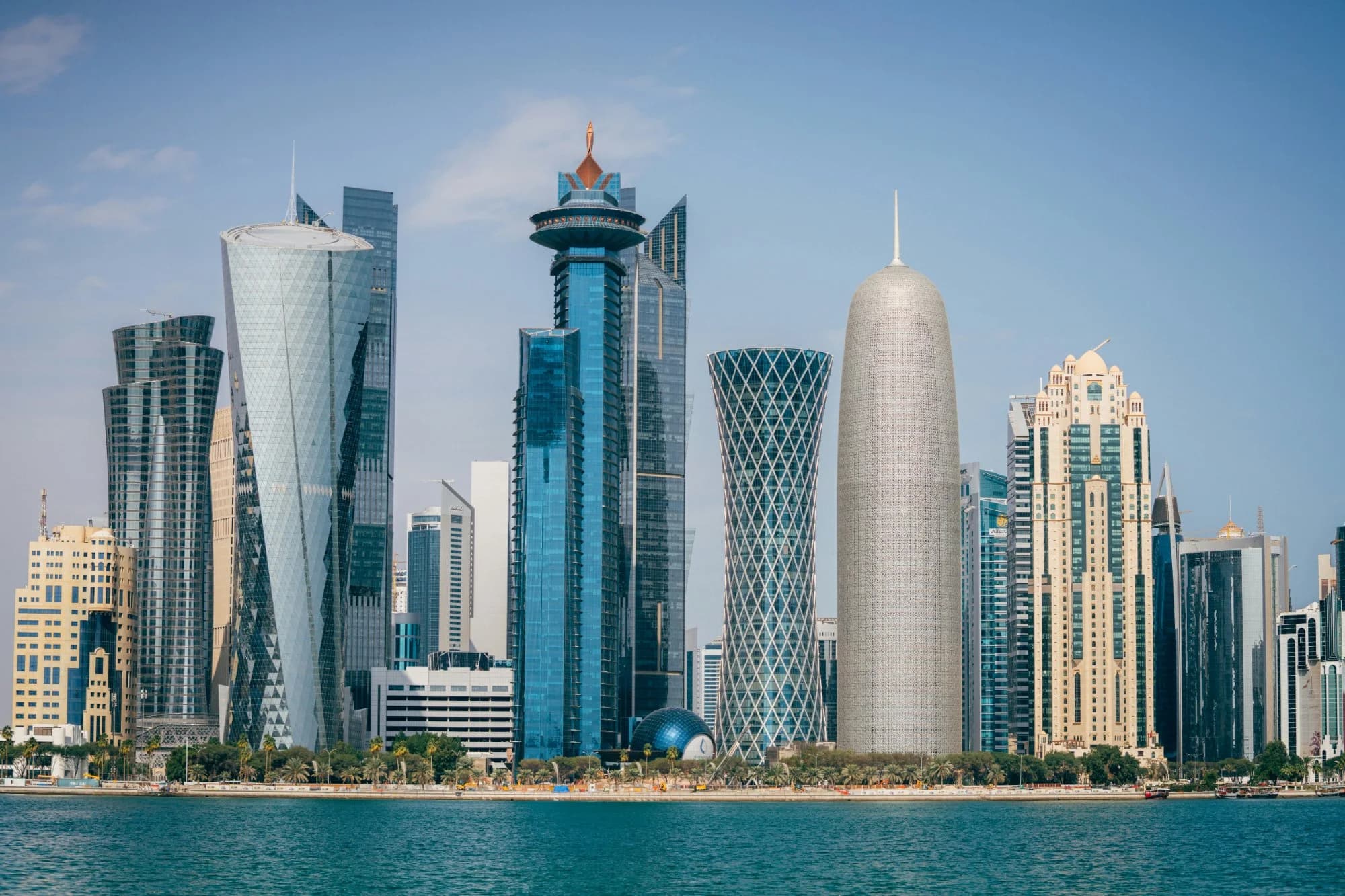
The city is divided between its hyper-modern West Bay district, the quieter peninsular neighborhoods around Al Corniche, the cultural and artisanal fabric of Msheireb and Souq Waqif, and the newer residential and hospitality developments on The Pearl-Qatar. Each of these areas speaks to a different register of the luxury experience, and understanding their distinctions is the starting point for any well-considered stay.
Where to stay in Doha: districts and their character
West Bay
West Bay is Doha's financial and diplomatic spine. Its towers house the headquarters of sovereign wealth funds, international law firms, and government ministries. The hotels here are deliberately positioned to serve heads of state, senior executives, and delegations attending international forums. Suites in this district tend toward the architectural: floor-to-ceiling glass, panoramic views over the bay, and interiors that favor restraint over ornamentation. The atmosphere is controlled, formal, and precise. For travelers whose visit is structured around business, protocol, or international events, West Bay sets the correct register.
The Corniche and the old waterfront
The Corniche stretches along the inner sea, linking the financial towers to the south with the Museum of Islamic Art to the north. Hotels positioned along or adjacent to this axis offer a different quality of stay: the scale is more horizontal, the light more present, and the connection to the water more immediate. This is where the transition between old Doha and new Doha is most legible. Suites here often carry a stronger sense of place, with interiors that may reference Islamic geometric patterns, local craft traditions, or the palette of the desert and sea.
The Pearl-Qatar
The Pearl is an artificial island development that has become Doha's primary address for residential luxury and leisure hospitality. Organized around marinas and promenades lined with international retail and dining, it offers a more relaxed pace than West Bay. Hotels and branded residences here attract travelers seeking privacy, proximity to the water, and a lifestyle environment rather than a purely transactional hotel experience. Suites on The Pearl frequently include private terraces or direct sea access, a configuration that is rare elsewhere in the city.
Msheireb and Souq Waqif
Msheireb Downtown is a significant urban regeneration project built on the site of Doha's original downtown. It integrates contemporary architecture with a deliberate reference to traditional Qatari courtyard design. The hospitality options here are fewer but more culturally specific. Travelers staying in this area are within walking distance of Souq Waqif, the restored traditional market, and the cluster of national museums. For culturally motivated visitors, this location provides a proximity to Doha's pre-oil identity that no other district replicates.
When to visit Doha
The climate of Qatar makes timing a decisive factor. Between May and September, outdoor temperatures regularly exceed 40 degrees Celsius, and humidity levels along the coast can be extreme. During these months, the city functions primarily in air-conditioned interiors, and outdoor cultural or leisure programming is largely suspended. Suite travelers visiting in summer should anticipate a more interior-focused experience, with pools, spas, and indoor dining as the primary environments.
The optimal window for a stay in Doha runs from October through April. During these months, temperatures are mild, outdoor events become viable, and the city's cultural calendar is at its most active. Qatar National Day falls on December 18th and brings significant programmatic activity across museums, public spaces, and hotels. The Art Mill Museum project and the broader expansion of the Qatar Museums portfolio tend to generate major exhibition openings during this cooler season. Travelers with a specific interest in art or architecture should plan their visits to align with these institutional moments.
Ramadan, which follows the Islamic lunar calendar and shifts approximately eleven days earlier each year, brings a distinct change in pace and atmosphere. Hospitality offerings are modified, with dining times and public consumption norms adjusted accordingly. For some travelers, the cultural specificity of experiencing Doha during Ramadan is itself a draw. For others, it requires advance planning around meal schedules and entertainment availability.
Local luxury standards: what to expect from top-tier suites in Doha
Qatar does not operate a formal hotel classification system equivalent to the French Palace designation or the Forbes Travel Guide star system in its most rigorous form, but the country's hospitality sector has developed its own clear hierarchy. The highest tier of hotels in Doha tends to be operated by ultra-luxury international groups, several of which have their global flagship or regional showcase properties here. These establishments compete on service ratios, suite dimensions, private butler access, and architectural investment.
Suites in Doha's top properties are typically large by international standards. The market expectation, shaped partly by the preferences of Gulf Cooperation Council guests and partly by the competition for sovereign and diplomatic travel, has set a high floor for space and privacy. It is not unusual for entry-level suites to begin at 80 to 100 square meters, with presidential or royal configurations running to multiple bedrooms, private dining rooms, and dedicated elevator access. Many properties include Arabic hospitality elements as a standard feature: traditional welcome refreshments, incense, and dedicated prayer facilities within the suite.
Service culture in Doha's top hotels reflects both international luxury norms and local expectations of discretion. Staff-to-guest ratios at the highest tier are among the most generous in the world, and the expectation of anticipatory service is embedded in the operational model of leading properties. Travelers accustomed to European luxury will find the standard broadly comparable in quality, with the added register of Gulf-specific hospitality customs.
How to choose the best suite in Doha
The first consideration is purpose. Doha's luxury hotel market is segmented in ways that map quite directly onto the nature of a visit. A corporate or diplomatic traveler benefits from proximity to West Bay and the convention facilities concentrated there. A culturally motivated traveler gains from positioning near the Museum of Islamic Art, Msheireb, or the National Museum of Qatar. A traveler seeking leisure, privacy, and sea access will find The Pearl the most appropriate base.
View orientation is a meaningful variable in Doha. Suites facing the inner sea or the West Bay skyline offer a visual experience that is genuinely distinct from those facing inland. Given the flatness of the terrain and the clarity of the Gulf light, water-facing rooms deliver a quality of natural light that changes substantially across the day. This is worth specifying explicitly at the time of reservation.
The question of architectural character is also relevant. Doha's top hotels range from maximalist statements of ornamental luxury to more restrained, contemporary interiors with a quieter material palette. Travelers with strong design preferences should review the interior philosophy of a property carefully before selecting.
The value of curation: why La Suite for Doha
Doha's hotel market has expanded rapidly, and the range of properties presenting themselves as ultra-luxury is broad. Not every five-star designation in the city corresponds to the same operational standard or experiential quality. La Suite applies a consistent editorial filter to its selection, assessing suite dimensions, service architecture, design integrity, and the overall coherence of the guest experience. The result is a curated selection that removes the ambiguity from the decision process and presents only the properties that meet the threshold for a genuinely considered stay. For travelers with limited time, high expectations, and a preference for precision over volume, this is the starting point for planning a stay in Doha.