Understanding Abu Dhabi as a luxury suite destination
For the traveler who selects a suite as a matter of course, Abu Dhabi offers something rare: genuine variety within a single city. The choice is not simply between large and larger. It is a choice between distinct neighborhoods, distinct architectural languages, and distinct relationships with the sea, the desert, and the cultural fabric of the emirate.
Key areas to consider when staying in Abu Dhabi
Saadiyat Island
Saadiyat Island is Abu Dhabi's most deliberate cultural investment. It houses the Louvre Abu Dhabi, designed by Jean Nouvel, and the forthcoming Guggenheim Abu Dhabi. The residential and hospitality development on the island has been managed to preserve a sense of space and calm that is almost unusual for a Gulf capital. Suites here tend to occupy low-rise beachfront properties with direct access to natural beaches, long corridors of pale sand that are uncommon in the region. The atmosphere is quieter, more considered, and oriented toward guests who value cultural proximity alongside coastal privacy.
Yas Island
Yas Island was developed as Abu Dhabi's entertainment and leisure hub. It hosts Formula 1 infrastructure, theme parks, and a marina district. The suites in this zone are architecturally bold, designed to signal arrival and spectacle. They suit travelers whose itinerary includes events, motorsport, or extended family groups who require both space and programming. The island's waterfront hotels command views across the marina and benefit from a self-contained environment that simplifies logistics for large parties.
The Corniche and downtown
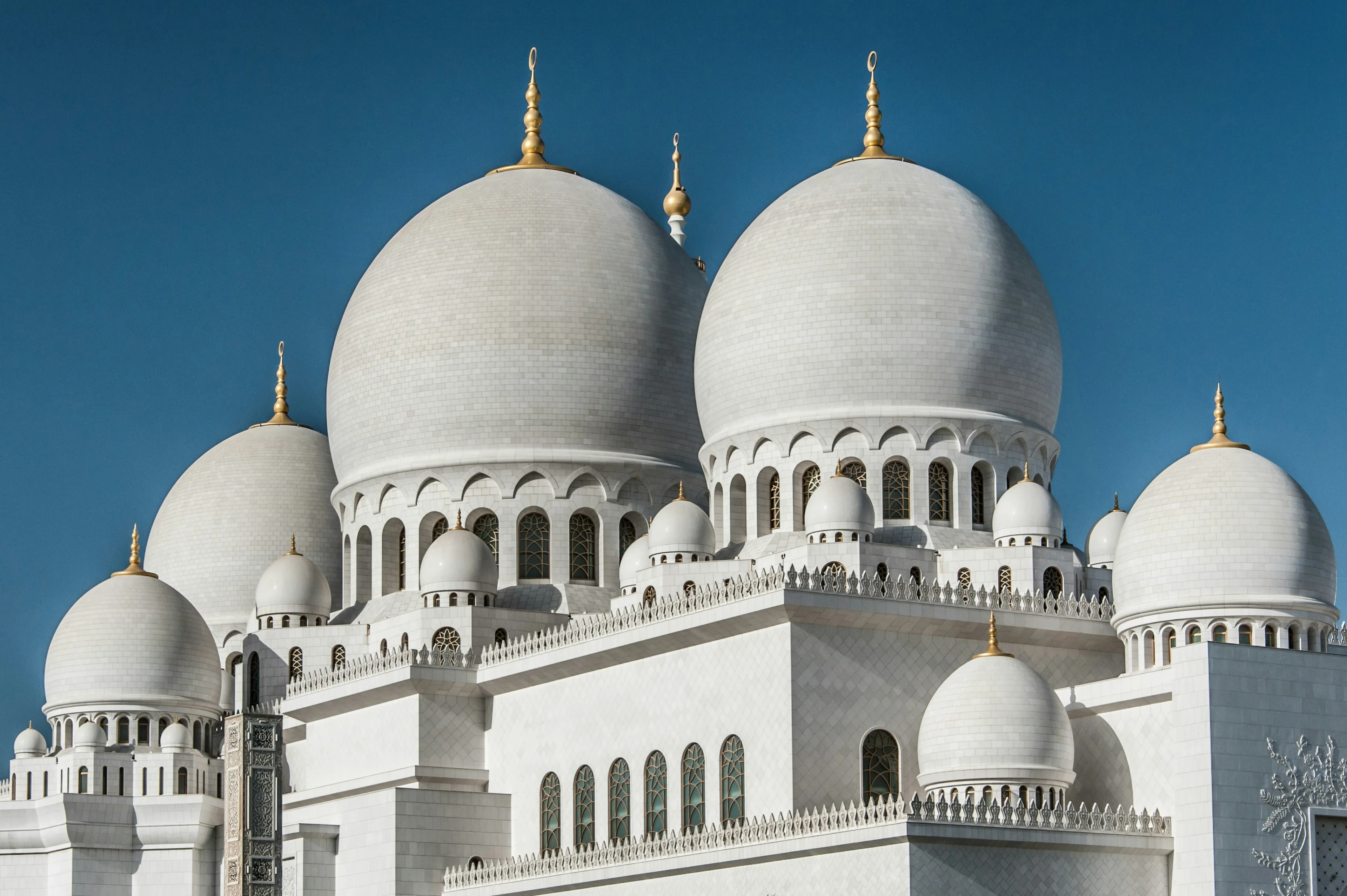
The Abu Dhabi Corniche stretches along the city's main waterfront, framing a skyline that has been carefully regulated to avoid the vertical competition visible in Dubai. The hotels positioned along or near the Corniche offer urban suite experiences with city and sea views, proximity to government and financial districts, and easy access to the Sheikh Zayed Grand Mosque. This zone is the natural base for business travelers and for those whose primary interest is the city's civic and cultural institutions. Suites here tend to be larger in total floor area, reflecting the property scale of downtown towers.
Al Maryah Island
Al Maryah Island is Abu Dhabi's international business district, home to the Galleria mall and several internationally flagged five-star hotels. The suites in this zone are calibrated for corporate and financial travelers, with emphasis on connectivity, discretion, and efficient service. The island's position between the old city and the newer developments gives it a transitional quality that works well for travelers combining business with cultural visits.
When to visit Abu Dhabi for suite travel
The optimal window for Abu Dhabi runs from October through April. Temperatures during this period are manageable and the city's outdoor spaces, including the Corniche walkways, the beach clubs of Saadiyat, and the desert excursion routes south of the city, are fully accessible. The humidity that characterizes the summer months between June and September significantly limits the outdoor experience and concentrates activity indoors.
The Formula 1 Abu Dhabi Grand Prix, held annually at Yas Marina Circuit in November, is one of the single busiest periods for suite bookings in the city. Lead times for premium inventory during race weekend extend considerably, and rates reflect the demand. Travelers who prefer the cultural calendar should note that the Abu Dhabi Art fair, held each November on Manarat Al Saadiyat, draws an internationally significant audience and tends to coincide with heightened activity across Saadiyat Island properties.
Ramadan, which shifts annually according to the Islamic lunar calendar, creates a distinct atmosphere in the city. Many hotels manage this period thoughtfully, with iftar and suhoor programming that offers genuine cultural engagement rather than a packaged approximation. Travelers who time a visit to coincide with Ramadan should expect adjusted service rhythms and a city operating on a different social schedule after dark.
Local luxury standards: what defines a top-tier suite in Abu Dhabi
Abu Dhabi does not have a formal state-administered prestige classification equivalent to the French Palace designation. However, the emirate's Department of Culture and Tourism applies a hotel classification system, and the properties operating at the upper tier of the market are generally those affiliated with internationally recognized ultra-luxury groups or those operated by sovereign-linked hospitality entities.
What distinguishes the best suites in Abu Dhabi is not simply square footage, though the floor areas involved are typically generous. The distinction lies in the ratio of private outdoor space to interior space, in the quality of the acoustic engineering (a meaningful consideration in a city built rapidly and at density), in the resolution of the interior architecture, and in the consistency of the service model. Many top-tier properties in Abu Dhabi operate with butler ratios and service staffing levels that are rarely matched in European capitals.
The presence of a private pool, a direct beach access, or a dedicated arrival sequence separate from the main hotel lobby are indicators of suite quality that hold particular relevance here. The climate for much of the year makes private outdoor water access a functional rather than decorative consideration.
How to choose the right suite in Abu Dhabi
The first decision is geographic. Abu Dhabi's luxury hotel stock is distributed across zones that are not immediately adjacent. Saadiyat, Yas, the Corniche, and Al Maryah each require a different relationship with the city. A traveler planning to divide time between the Louvre Abu Dhabi and the desert should map their suite choice accordingly. The city's road infrastructure is well-developed, but distances between zones are real and worth factoring into a multi-day itinerary.
The second consideration is architectural register. Abu Dhabi has both heritage-inflected properties that reference Islamic architectural traditions and entirely contemporary buildings whose interiors engage with international modernism. Neither is superior; they serve different travel intentions. Travelers for whom the physical environment of a suite is part of the experience should clarify this preference before selecting.
Third, assess the suite's service infrastructure rather than its headline features. A suite with a private terrace and a plunge pool is meaningfully different from one that lists those features but positions them on a north-facing lower floor. Spatial quality in Abu Dhabi's hotel stock is uneven, and the gap between a well-curated choice and an unsatisfying one can be significant.
Why curation matters for suite booking in Abu Dhabi
Abu Dhabi's luxury hotel market has expanded considerably over the past fifteen years, and the volume of options now available to a traveler researching independently is substantial. The challenge is not access to information; it is the quality of that information and the ability to distinguish between properties that perform consistently at a high level and those that trade on brand recognition alone.
La Suite applies an editorial standard to its Abu Dhabi selection, focusing on suites that deliver a coherent experience across architecture, service, and location. The curated selection by La Suite is designed for travelers who have already decided to stay in a suite and need to identify which one is correct for their specific trip, not for travelers still deciding whether a suite is worth it. In Abu Dhabi, where the investment in a top-tier suite is considerable, that precision matters.