Where to stay in the Camargue for a luxury suite experience
The Arles periphery
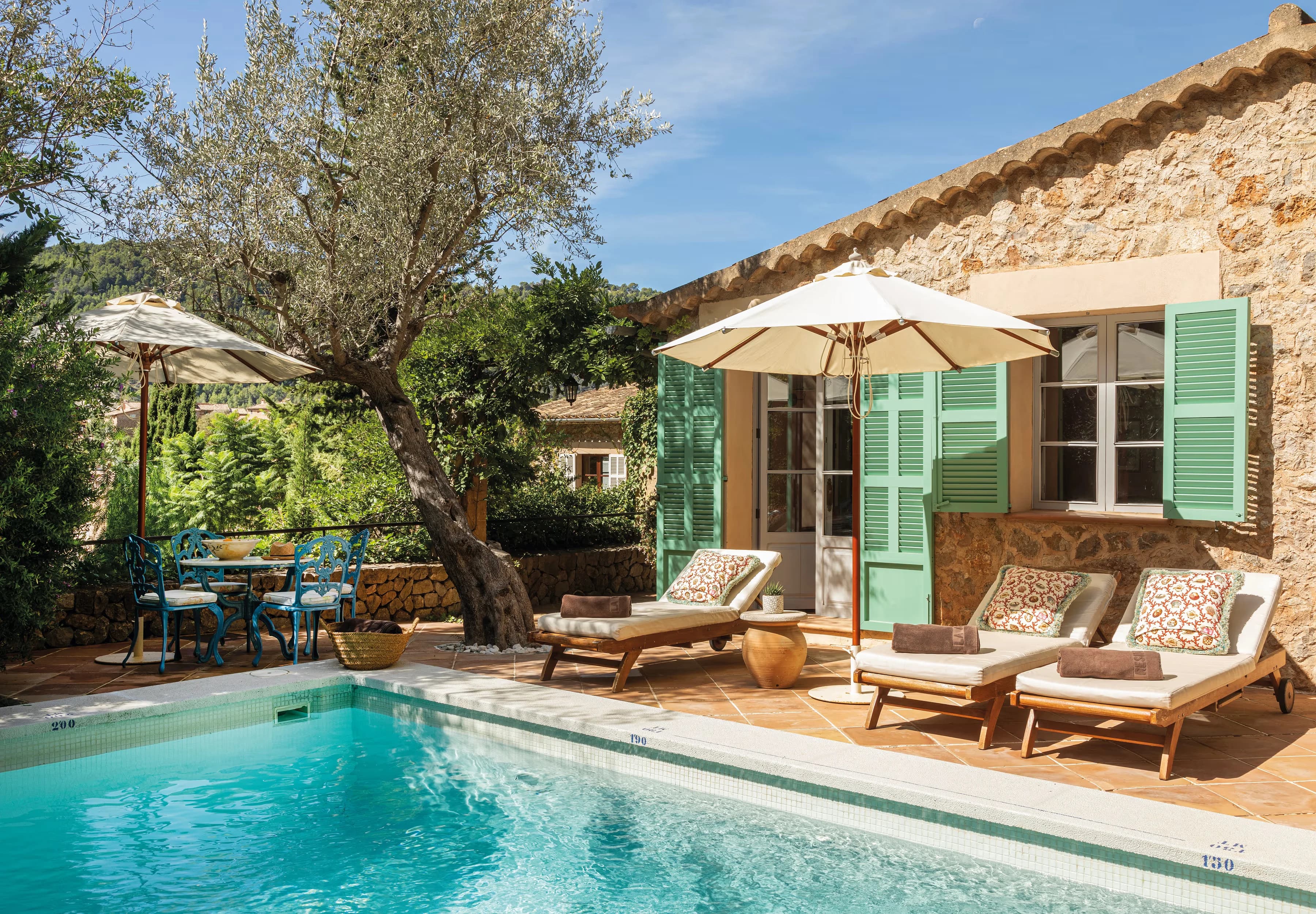
The northern edge of the Camargue, immediately south of Arles, offers the most architecturally refined options. Properties here often occupy converted mas (traditional Provençal farmhouses), with thick stone walls, interior courtyards, and gardens planted with white oak and rosemary. The proximity to Arles itself is a cultural argument: the city holds one of the most important collections of Roman monuments in France and hosts the annual Rencontres de la Photographie, which draws an internationally design-literate audience every summer. A luxury hotel suite in this zone serves both the landscape and the cultural programme.
The Saintes-Maries-de-la-Mer corridor
Further south, approaching the coast, the landscape flattens into open étangs (lagoons) and reed beds. The town of Saintes-Maries-de-la-Mer is the symbolic heart of the Camargue, a pilgrimage site and the base for many equestrian and ornithological experiences. Properties in this corridor tend to be lower-rise, more horizontal in their architecture, and more explicitly oriented toward the natural environment. Suites here often prioritise private terraces, direct lagoon views, and access to guided excursions on horseback or by boat.
The Crau plain and eastern edges
The eastern fringe of the Camargue, bordering the Crau steppe, is less frequented by international visitors but offers a quieter, more austere setting. The light here is notably different: harder, more direct, with none of the soft haze of the coastal zones. This is a landscape for travelers who prioritise solitude and visual clarity over proximity to any town or cultural institution.
When to visit the Camargue for a luxury hotel stay
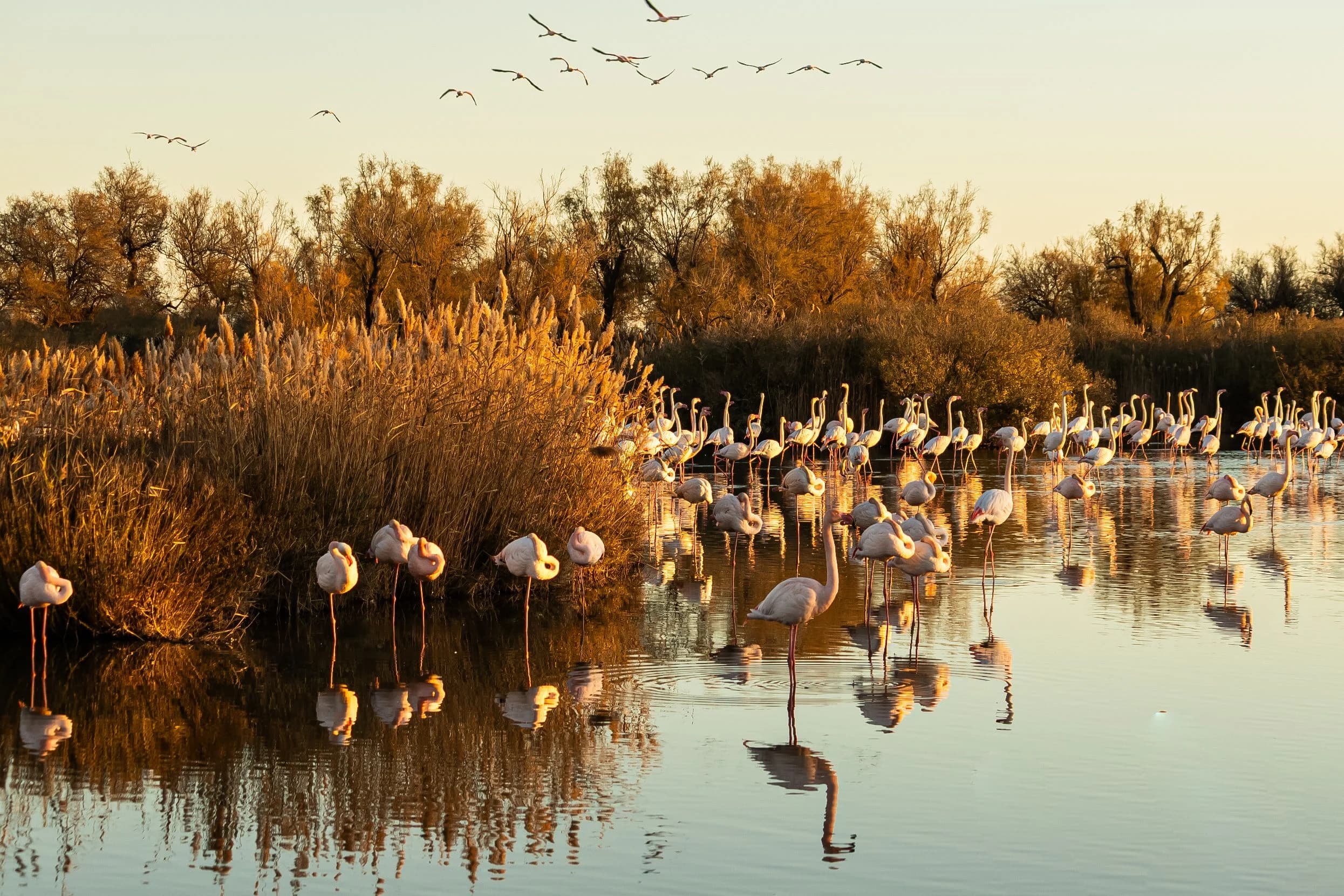
The Camargue has a strongly seasonal character, and the timing of a visit shapes the experience considerably. Spring (April through early June) is broadly considered the optimal period: temperatures are moderate, the flamingo populations are at their most visible, and the landscape carries a quality of green and white that is entirely absent in high summer. Hotel availability in this period is generally good, and rates for luxury suites are often more accessible than in July and August.
Summer (July and August) brings intense heat, significant tourist pressure, and high mosquito activity in the wetland zones. It is the high season by convention, but experienced travelers and those with particular sensitivity to climate tend to avoid the peak weeks. The notable exception is the Feria d'Arles and the broader cultural calendar around Arles in early July, which justifies the heat for those whose primary interest is cultural programming.
Autumn (September through November) is increasingly favoured by a more discerning clientele. The light becomes more dramatic, migratory birds pass through in significant numbers, and the crowds recede almost entirely. Rates reflect the reduced demand. Winter, while cold and sometimes wet, offers a starkly beautiful version of the landscape and near-total privacy in the better properties.
Local luxury standards: what defines a prestige property in the Camargue
The Camargue does not operate within the French Palace hotel system, which is formally concentrated in Paris and a handful of major resort destinations. The prestige benchmark here is different and, in many ways, more demanding for a discerning traveler to navigate without guidance.
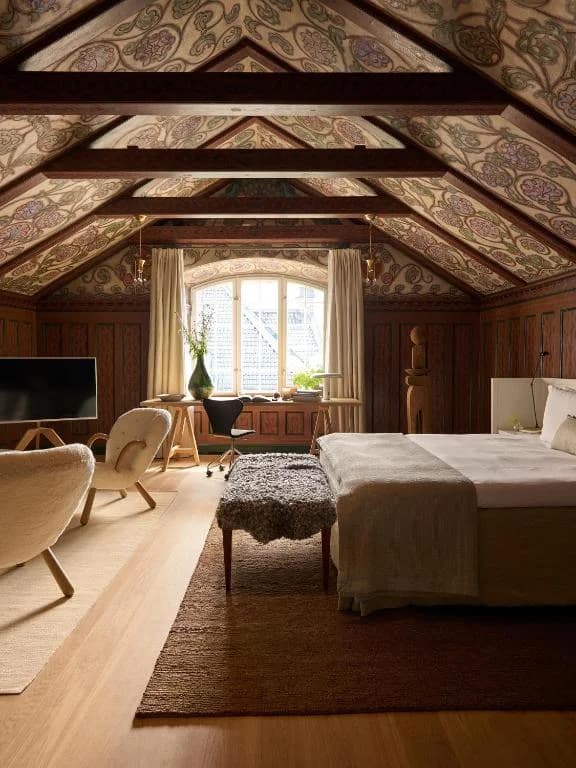
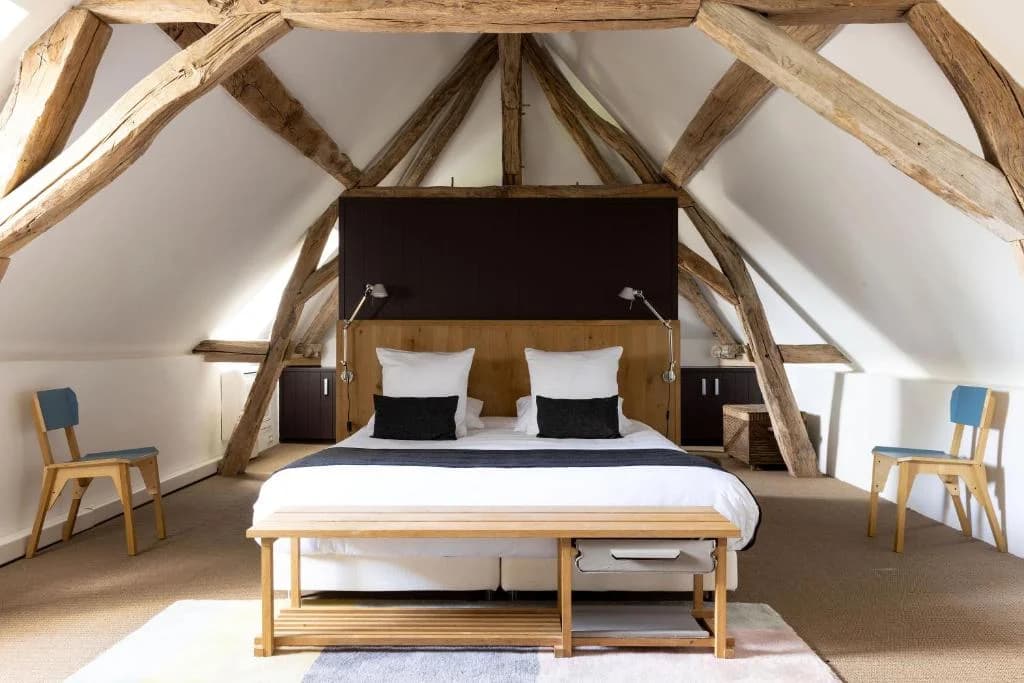
The reference category is the mas de luxe: a converted or purpose-built Provençal farmhouse property operating at a high level of service and spatial quality. The best examples combine authentic architectural materials (local stone, terracotta, hand-hewn timber) with contemporary interior design that does not aestheticise poverty or mistake rusticity for charm. The suite offer in these properties is typically limited, which is structurally significant: fewer rooms means a higher staff-to-guest ratio, greater attention to individual preferences, and a quieter atmosphere throughout the property.
Some properties in the Camargue have achieved recognition through the Relais and Chateaux network, which applies its own set of standards around gastronomy, architecture, and personalised service. This affiliation is a useful reference point but not a guarantee of suite quality, which requires a more granular evaluation.
How to choose the best luxury suite in the Camargue
Several practical considerations are specific to this destination and should inform any suite selection.
First, orientation matters more here than in almost any other French region. A suite facing west will receive the afternoon light over the salt flats, which is photographically and experientially significant. A suite facing east will catch the early morning, which is when the wildlife is most active and the air is coolest. Both have arguments; neither is universally superior.
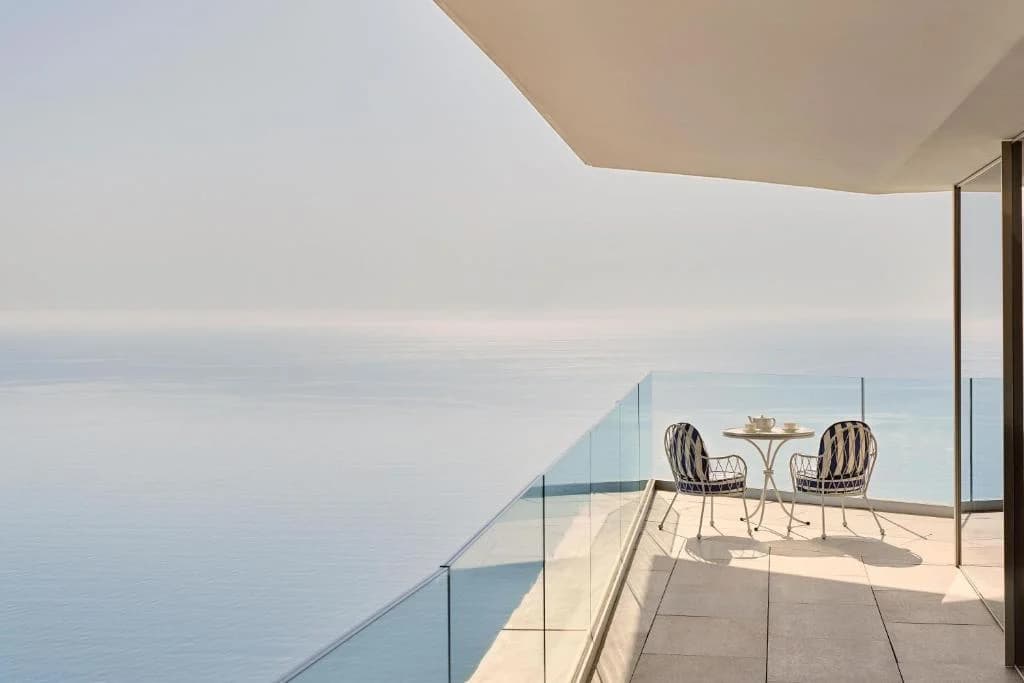
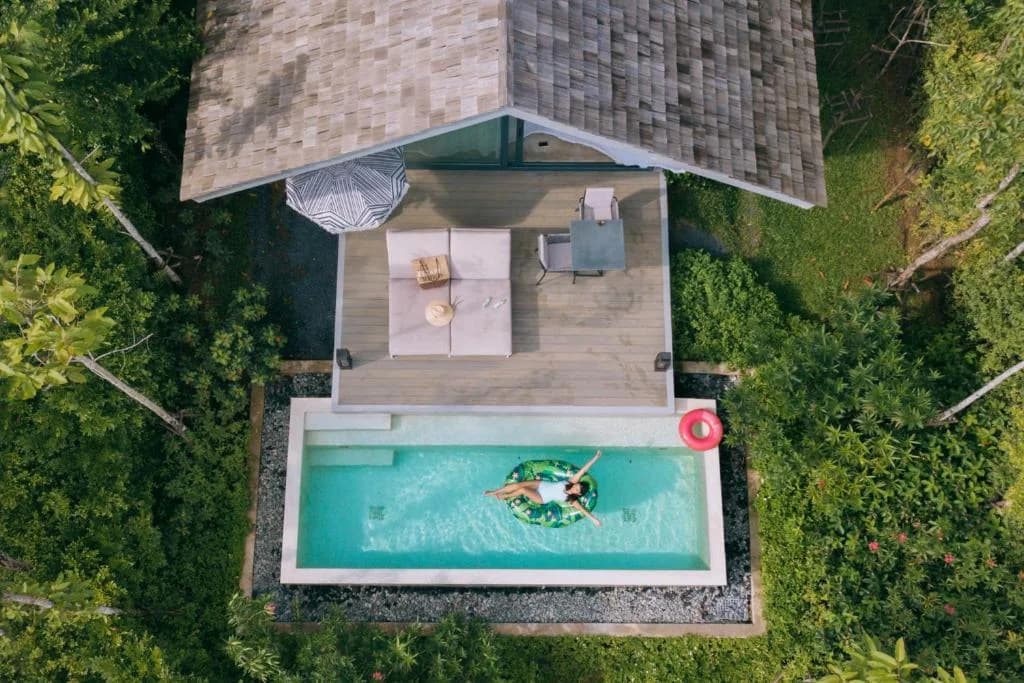
Second, the relationship between suite and landscape should be evaluated carefully. In the Camargue, a private terrace or outdoor space attached to the suite is not a supplementary amenity. It is the primary interface with the reason for being there. Properties that position suites as interior spaces with landscape as backdrop are offering a fundamentally different product from those where the exterior space is treated as the primary room.
Third, access to guided experiences varies significantly between properties. Some of the best luxury hotels in the Camargue operate their own stables, boats, or ornithological guides, integrating these directly into the suite experience. Others rely on third-party arrangements. The distinction in quality is material.
Fourth, insect management is a practical reality in the wetland zones, particularly from May through September. Properties that have addressed this seriously, through architecture, landscaping, and active management, represent a meaningfully different experience from those that have not. This is not a trivial point for a multi-night stay in a suite with significant outdoor space.
The value of curation: why La Suite's selection matters in the Camargue
The Camargue hotel market is small by absolute numbers but uneven in quality. The gap between a well-photographed property and one that genuinely delivers at the level of a luxury suite experience is considerable, and the visual language of Provençal hospitality makes that gap difficult to read from standard booking platforms.
La Suite approaches each property in this territory through a consistent editorial framework: spatial quality of the suite itself, coherence between architecture and landscape, service model, and the degree to which the property has thought seriously about what it means to offer a high-end experience in a protected natural environment. In the Camargue, that last criterion is particularly important. The best properties operate with a clear understanding of the ecology they inhabit, which is both an ethical position and, practically, the foundation of a better guest experience.
The curated selection by La Suite removes the research burden from the traveler and replaces it with a precise, editorially accountable shortlist of properties that meet these criteria in this specific territory.